Route 66: The Ultimate American Road Trip
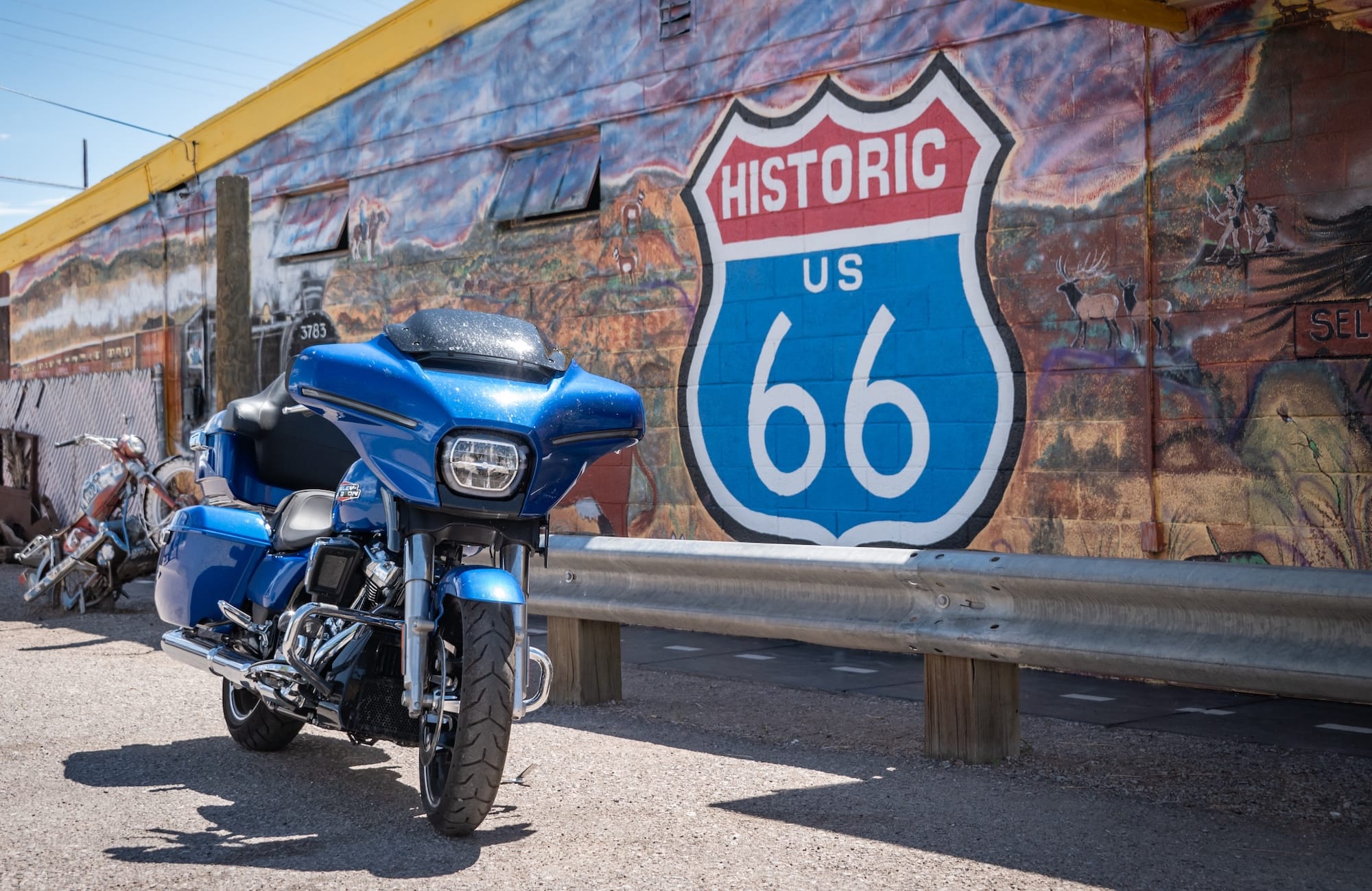
Riding a motorcycle across the entire length of the Mother Road is not a simple task. Whether you’re a new rider or an experienced motorcycling veteran, you need a detailed plan of where you’ll sleep and eat, which attractions you’ll see, and where you’ll take a break from the saddle.
To help you get your tires rolling, we’ve compiled this comprehensive guide to riding a motorcycle through Route 66. Here, you’ll find route descriptions, hotel recommendations, lists of the most fascinating attractions along the ride, and much more.
General Info
No other motorcycle road in the U.S. is as legendary as Route 66. Every year, it attracts hordes of riders and other motorists to experience the ultimate American road trip.
Route 66 was commissioned in 1926. In addition to creating new stretches of highway, it linked together existing roads that were paved to accommodate cross-country-traveling masses. The Mother Road lasted 59 years before being decommissioned in 1985. You can read a more detailed historical overview of Route 66 here.
The road’s glory days may have been numbered, but they sure were glorious. Route 66 functioned as both a lifeline to migrants escaping the Dust Bowl and a highway taking joyriders to places with unforeseen ease. The endless (or so it seemed at the time) flow of traffic gave birth to many now classic aspects of American culture, such as +unusual roadside attractions and the ubiquitous diner.
Route 66 etched itself in American popular culture in ways probably no one expected from a single road. It has been the star of books, TV shows, and movies alike.
The continued popularity of the road led to a revitalization movement, and many vintage stores and other tourist traps along Route 66 have been renovated to serve modern visitors. Yet, they invariably hold on to the style of the past.
If you intend to ride Route 66, you can start your planning process with our Classic Roads article about the Mother Road for a general overview. The road is divided into three sections—Illinois, the Middle, and the End sections. Our accommodation recommendations for each section are below:
- Illinois Route 66 Hotel Roundup
- The Middle of Route 66 Hotel Roundups
- The End of Route 66 Hotel Roundup
For a first-person view of what you can expect from your trip, read the three-part article series of the RoadRUNNER crew’s Route 66 adventure. Of course, the whole experience was too broad to cover even in three stories, so check out RoadRUNNER’s favorite attractions on the Mother Road. We also have a YouTube video series to complement the articles, and the Motorcycles & Coffee (with Florian) Episode 3 also takes place during this trip.
We will now take a more detailed look at the segment of Route 66 in each of the eight states it passes through. Keep reading to find out where you should stop on your adventure!
Illinois
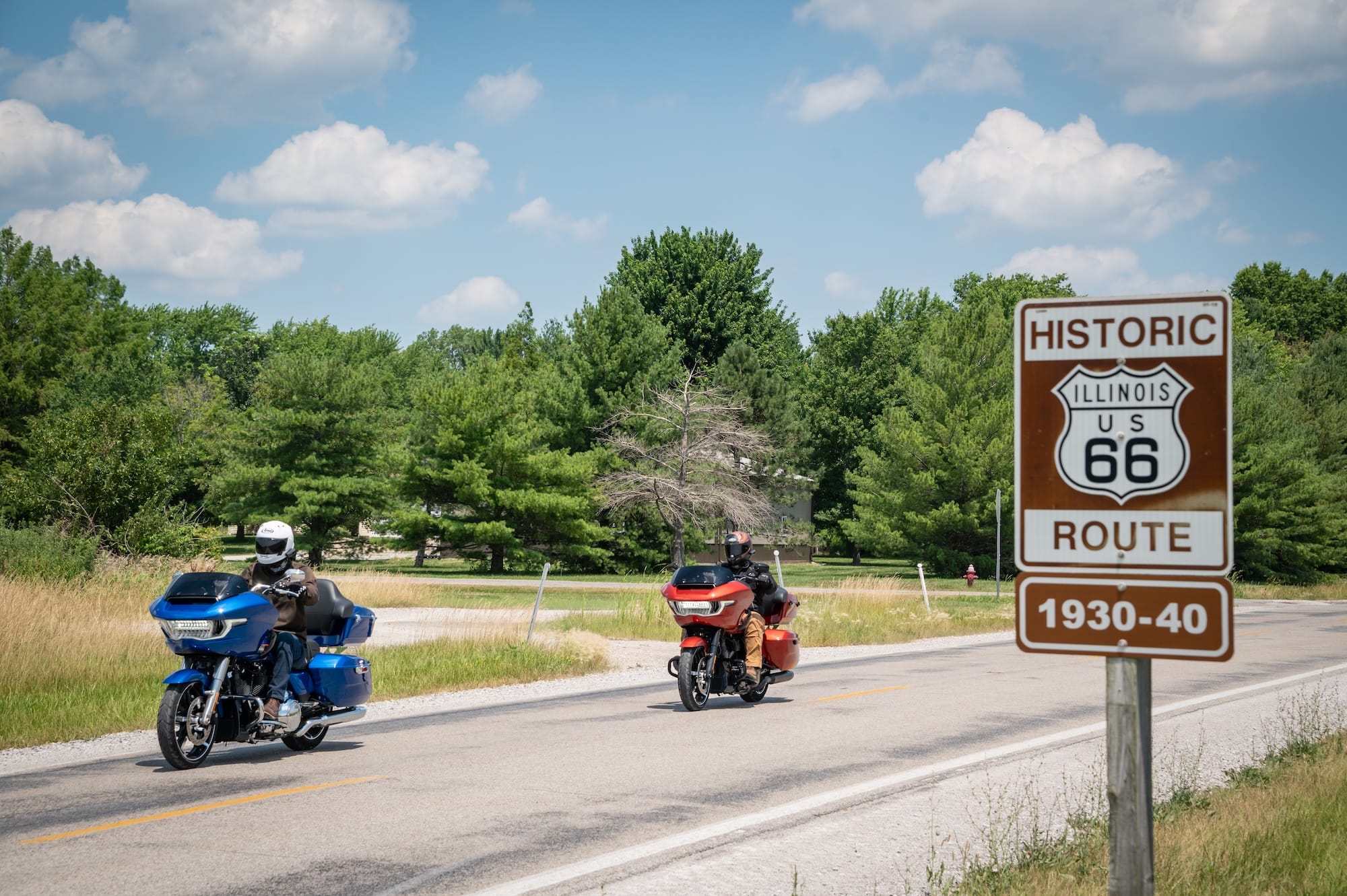
Illinois is typically considered the state where the Mother Road begins (although you absolutely can ride it the other way too). From the hubbub of a major metropolis to rural fields and welcoming small towns, the Illinois Route 66 section is characterized by plenty of nostalgia for the road’s better days.
Your wheels start rolling in Chicago, at the famous Begin Route 66 sign. Before you get on the road, however, tradition demands that you fill up at Lou Mitchell’s, a legendary eatery that was already stuffing riders and motorists before Route 66 even existed. For more tips on what to do in the Windy City and its outskirts, check out our Chicago destination article.
Rumbling down Route 66 from Chicago, you’ll arrive in Pontiac (named for the famous Native American warchief and not for the car brand, no matter how fitting that would be). This town is something of Route 66 central, with the Illinois Route 66 Hall of Fame and the Pontiac-Oakland Automobile Museum transporting you back to the ‘50s. Remember to also snap a photo by the huge Route 66 shield mural. For more info on Pontiac, click here.
Lincoln, IL, was the first town in the U.S. named after Abraham Lincoln, well before his presidency. His legacy is celebrated at the world’s largest covered wagon—the Railsplitter—with a statue of Honest Abe sitting in the driver’s seat. Lincoln also boasts Route 66 history with the Mill Museum, one of the few original Route 66 buildings remaining in the U.S. Read more about Lincoln’s presidential and Route 66 history in our Lincoln destination article.
Of course, there’s more to Illinois than these towns. Plan your stops with the help of your lists about the 8 most interesting attractions in Illinois and where the RoadRUNNER crew stopped on our Route 66 trip. There’s some overlap, but hey—a good stop is a good stop.
Missouri
Pushing into Missouri, Route 66 offers more than 300 miles of undulating Ozarks foothills and gorgeous countryside scenery. This party of the ride is also filled with fascinating history and some of the most iconic (and outrageous) roadside stops of the entire trip.
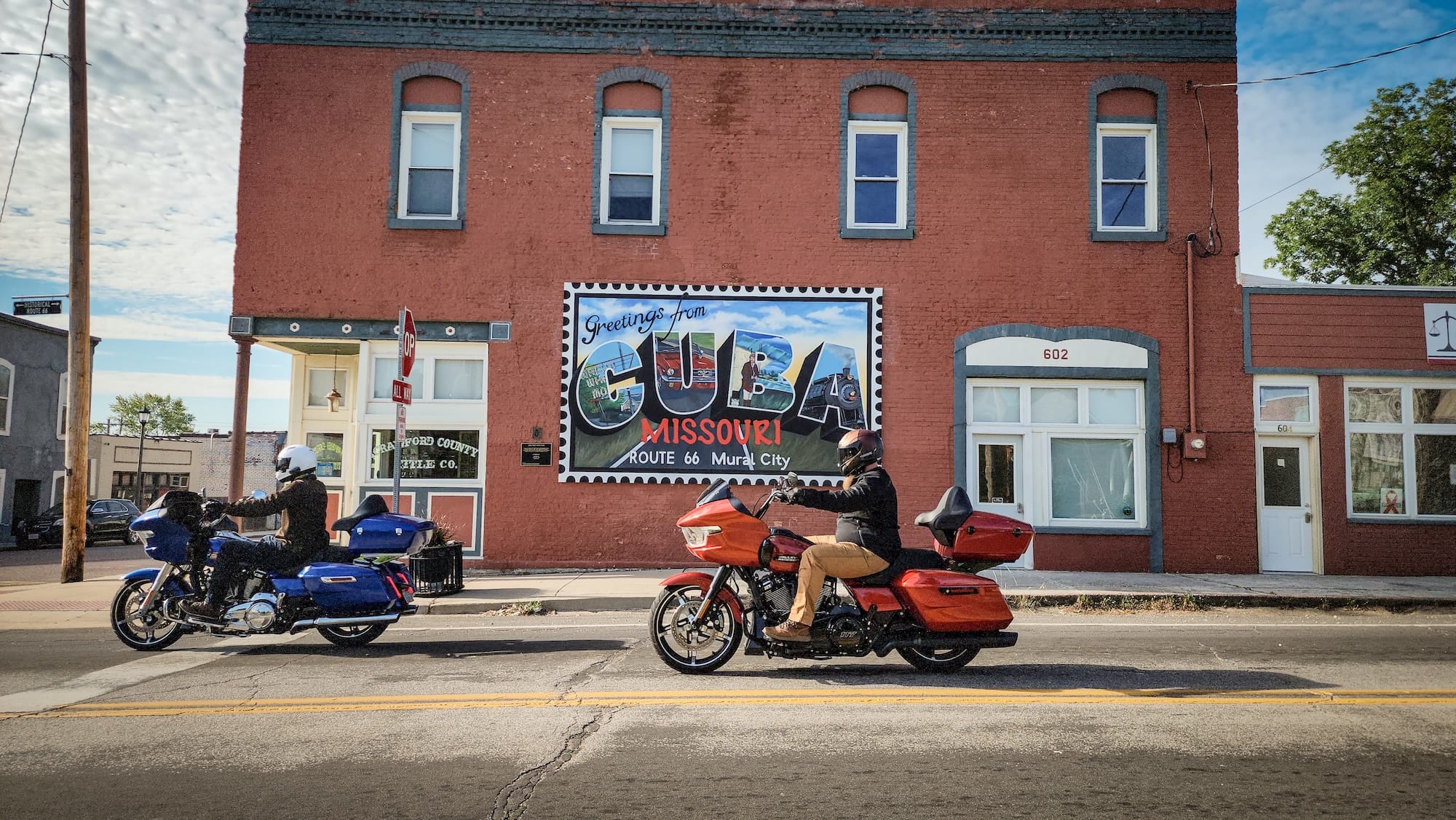
The first major stop in the state is Cuba, also dubbed Missouri’s Mural City. Since 2001, 15 large murals have been painted on the city’s walls, depicting the breadth of its history, from Native American life to Route 66 and beyond. The area around Cuba also has many museums and stunning caves. Find out everything you can see in our Cuba destination article.
One thing in Cuba that deserves a special mention is the Wagon Wheel Motel. This motel has operated continuously for almost 90 years. Although it offers perfectly modernized comforts, its cottages’ stone walls and wooden floors, alongside the still-functional real neon sign, are all from Route 66’s glory days. Read our review of the Wagon Wheel Motel.
Between Cuba and Springfield lies Uranus, one man’s tribute to peculiar roadside attractions and juvenile toilet humor. This strip mall converted into a tourist attraction features gift stores, a sideshow museum, mini golf, and more, all delivered with a heaping helping of butt-related jokes. Don’t take the place seriously and embrace the potty gags—plus, the fudge they pack at the gift store is quite tasty. Learn more about Uranus, MO.
Springfield, MO, is famed as the birthplace of Route 66. One of the two masterminds behind the road, John Woodruff, was a local resident, and the Mother Road received the 66 designation in this city on April 30, 1926. Springfield celebrates its heritage annually with the Birthplace of Route 66 festival, and the city brims with other options to explore both local and Route 66 history. Find out more in our Springfield destination article.
The last stop before you leave Missouri is Joplin, a town famous for being a hiding place for Bonnie and Clyde’s gang in the ‘30s. You can see their preserved hideout at Bonnie and Clyde’s Joplin Garage Apartment. On the Route 66 front, Joplin features murals and an excellent drive-in theater. Check out what else you can find in our Joplin destination article.
Kansas
The Kansas section of Route 66 is extremely short, covering only 13 miles. Yet, those miles feature a lot of things to see—especially if you’re a fan of a certain car-related animated movie.
Galena is the largest town you’ll pass along the Kansas segment, and it has been a major traffic stop both for railroads and Route 66. The town commemorates this past in various ways, from a large (under construction at the time of writing) drive-through Route 66 shield to various murals and preserved ghost signs. You can also find many other curious attractions, such as the boots of a burned-down, homemade Muffler Man-type statue. Learn more in our Galena destination article.
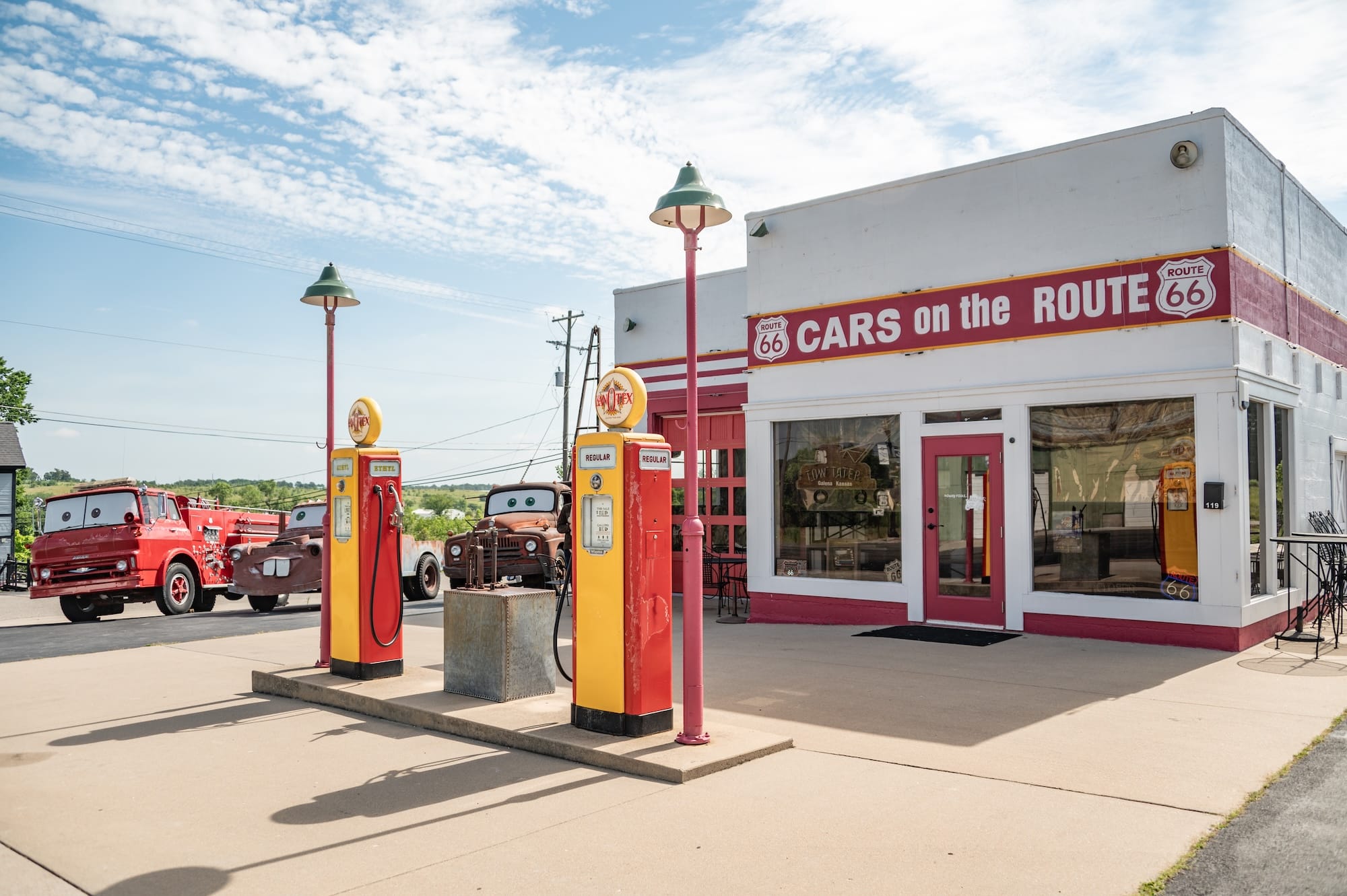
But the most renowned landmark in Galena is the Cars on the Route gift shop. This former Kan-O-Tex service station houses an old truck, which served as the inspiration for the character Mater in Pixar’s Cars. The gift shop has embraced the movie, and many other automobiles refurbished to resemble the film’s characters now sit around Galena. Even a generation born way after the Mother Road’s decommissioning got introduced to its charms by the smash hit Pixar movie. Find out more about Cars and its real-life Route 66 inspirations here.
Oklahoma
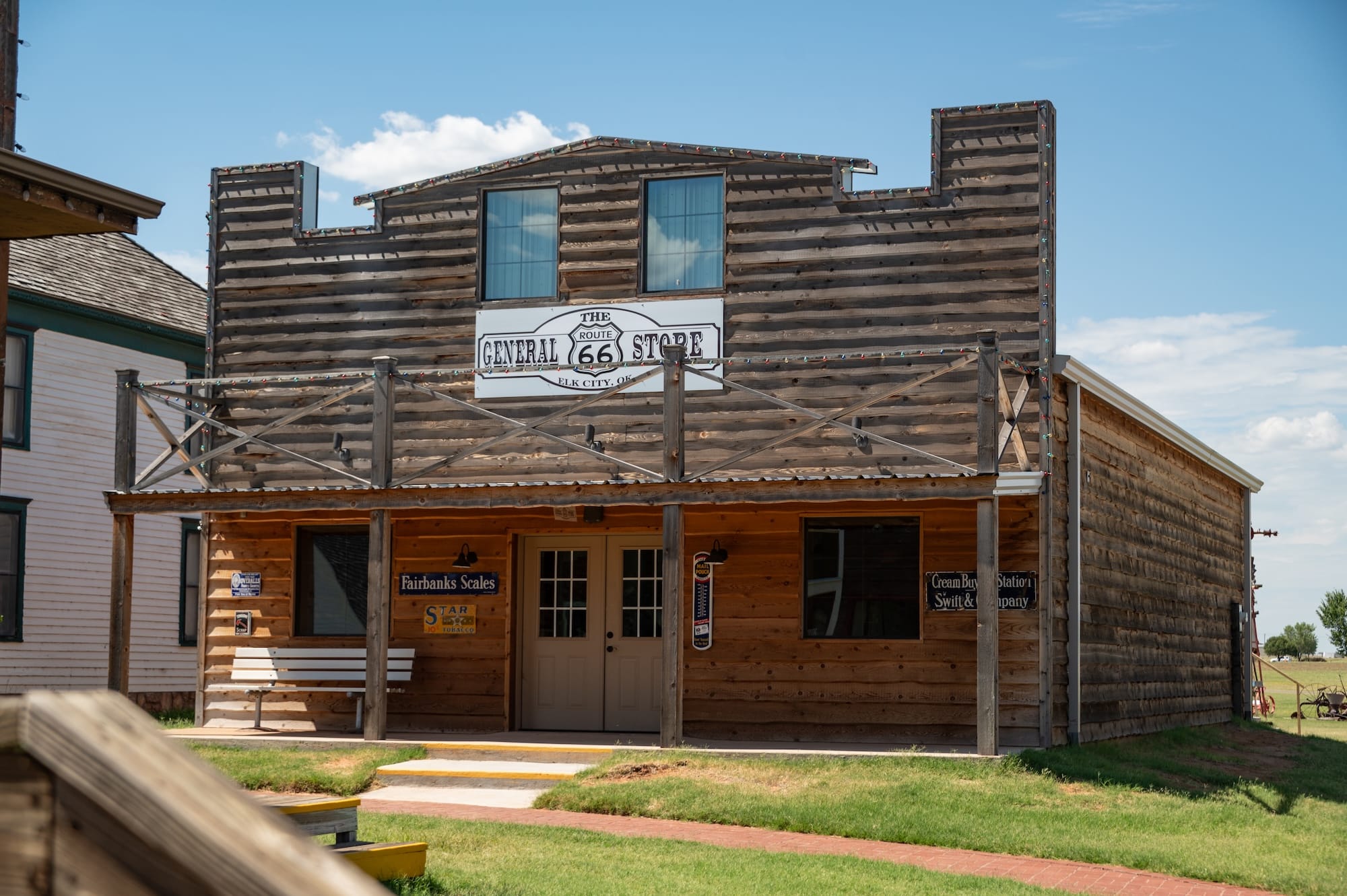
Oklahoma’s 376 miles offer one of the most memorable segments of Route 66. Motoring diagonally across the state, you’ll plow through far-reaching prairie, long sweepers, and the state’s unique red-clay landscapes. Dotting the vastness are towns and cities full of exciting things to see and friendly folks.
The most remarkable sight in Vinita is the Will Rogers Archway, a unique service station built in 1957 that arches over I-44, just as it spanned Route 66 back in the day. It used to house the world’s largest McDonald’s restaurant. You will certainly not see another structure like it anywhere else. See what else you can find here in our Vinita destination article.
Marine life awaits in Catoosa in the form of the town’s famous Blue Whale. Originally one man’s bizarre anniversary present to his wife, this grinning fiberglass cartoon whale became a local legend, and the community has lovingly restored it. You should also stop by the D.W. Correll Museum that houses a collection of vintage cars in homage to Route 66. Explore Catoosa in more detail here.
The city of Tulsa is intricately linked with Route 66 history as the hometown of Cyrus Avery, the Father of Route 66. His legacy is commemorated at the Cyrus Avery Centennial Plaza, a must-stop for all motorcyclists on the Mother Road. Besides that, Tulsa offers a wide variety of cultural activities and a vibrant restaurant scene. Don’t miss the Route 66 Road Fest centennial celebration if you happen to be in town in June 2026! For more info on Tulsa, check out the Tulsa destination article.
The tiny town of Arcadia is known for a barn—but it’s not just any barn. The Arcadia Round Barn, constructed in 1898 and now housing a museum, is a rare example of a historical circular barn building. In addition, you should stop at Pops, a modern service station and restaurant featuring a dizzying variety of sodas. Find out more about Arcadia.
Texas
Huge as the state is, the Texas section of Route 66 is among the shorter ones. The Mother Road cuts across the Lone Star State’s northern panhandle over 186 miles of more or less straight road. That’s not to say the ride is boring, though, as the vastness of the Texan plain is nothing short of breathtaking. Everything is bigger here, and that counts for the scenery, too.
Soon after crossing the state line, you’ll roll into Shamrock—a little piece of Ireland in Texas. That’s quite literal, as Shamrock houses a piece of the real Blarney Stone (which had to be transported out of Ireland under armed guard). The town is also home to the Conoco Tower Station and U-Drop Inn, a legendary art deco service station that was built in 1936. For more information on Shamrock, read our destination article.
Across the road from the Conoco Station is the Western Motel. It offers a top-notch Route 66 motel experience—perhaps not fancy, but comfortable and clean. Apart from the historical gas station that lights up at night in original neon, the star of the show is the rider-friendly service. Read our review of Western Motel.
Amarillo is the largest city on the Texas Route 66 stretch. The Yellow Rose of Texas boasts a lot of Mother Road history for you to peruse, from the Texas Route 66 Visitor Center to the Route 66 Historic District which follows the road’s historical alignment. Outside the city is the Cadillac Ranch, where you can stop to (legally) spray tag a bunch of old automobiles sticking out of the ground. That’s far from everything you’ll find in Amarillo, so check out our detailed destination guide.
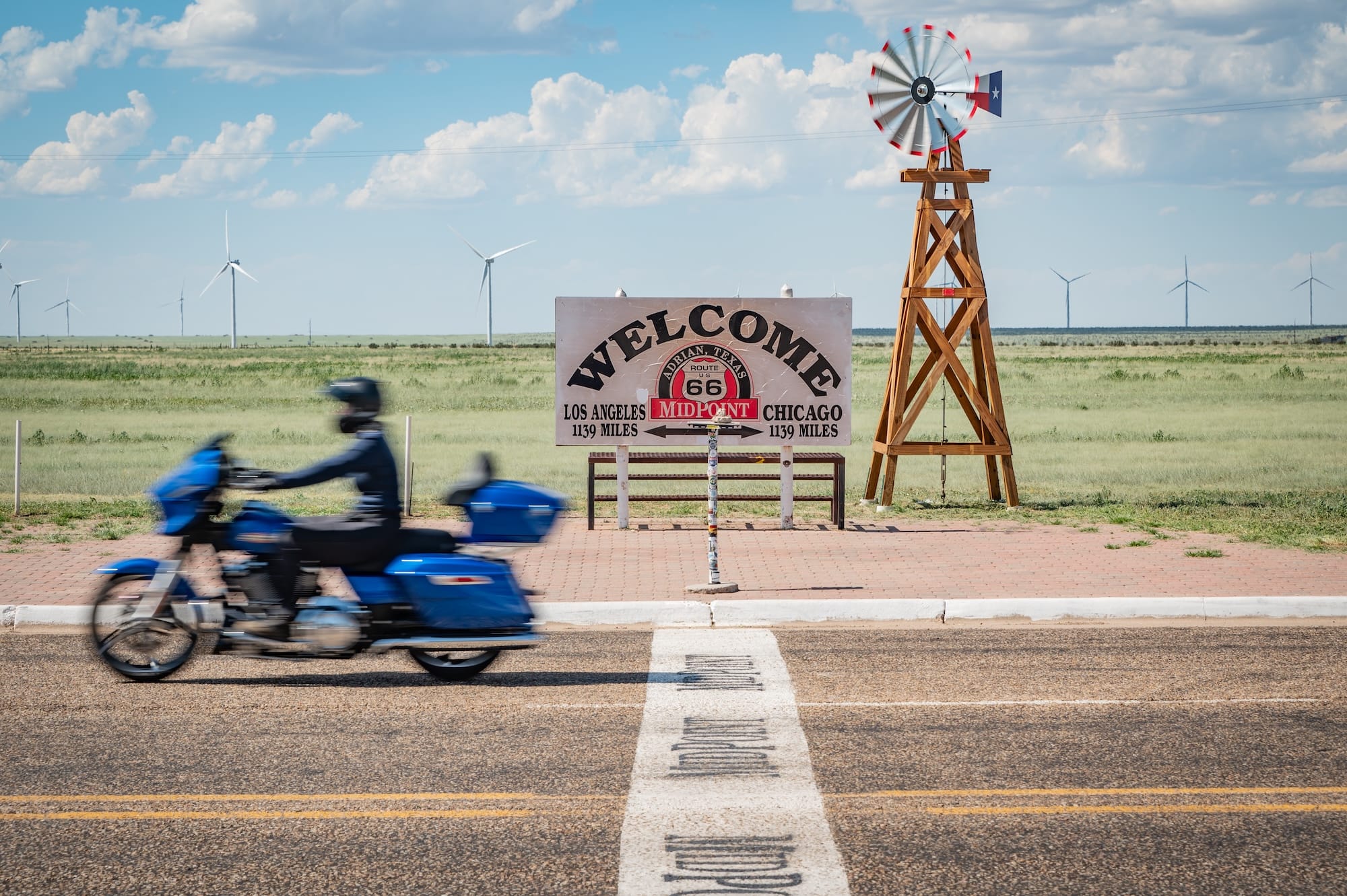
The small town of Adrian marks the halfway point of your Route 66 journey. As your motorcycle crosses the line painted on the road, there are 1,139 miles both ahead and behind you. Celebrate this milestone at the Midpoint Cafe and gawk at its vintage automobile collection while you’re at it. For more info on Adrian, click here.
New Mexico
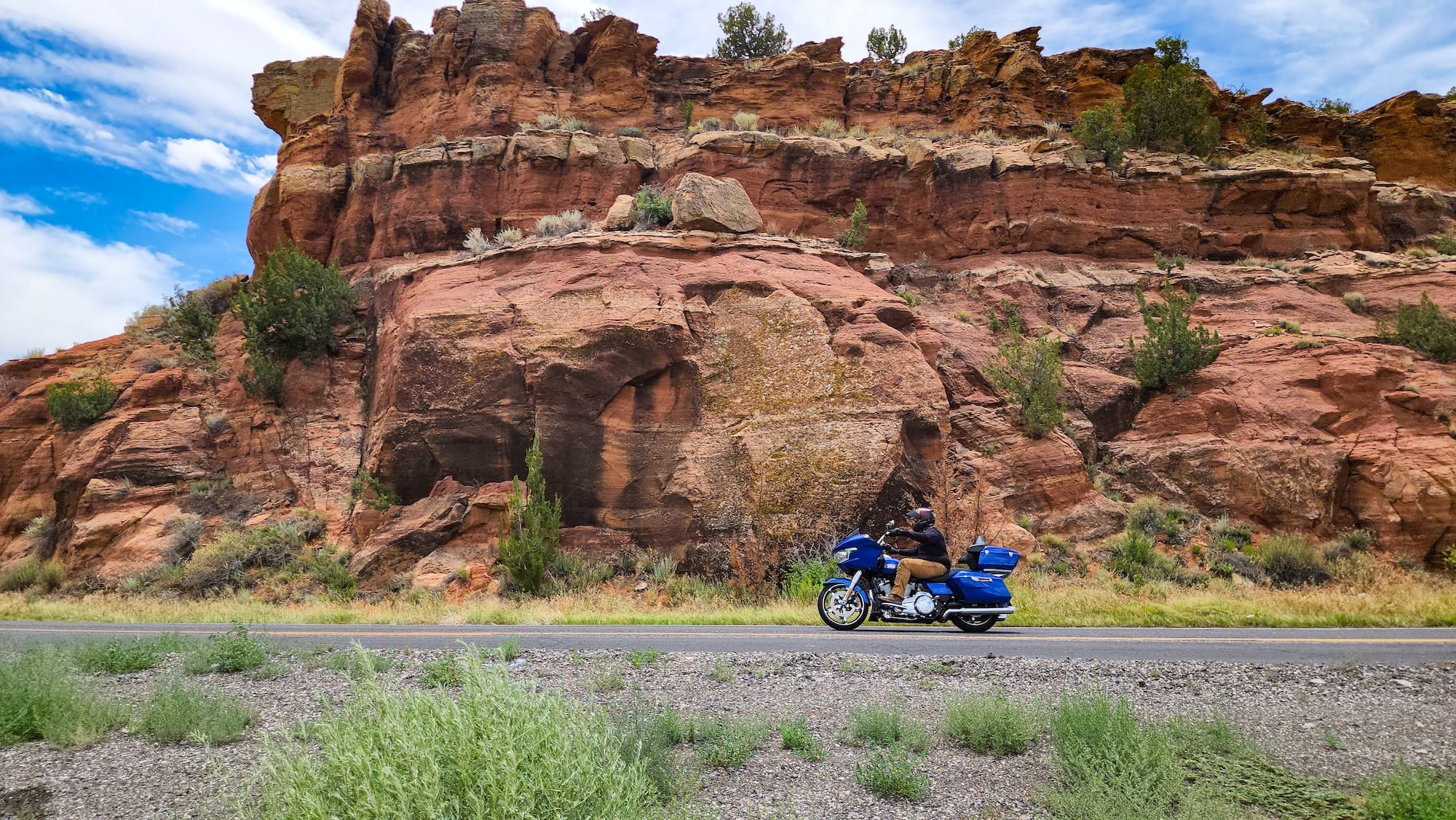
With 487 miles, New Mexico has the most Route 66 in the country. That’s a good thing, too, because the Land of Enchantment brings with it expansive skies with majestic clouds on the horizon, red desert and cliffs, and a uniquely rugged beauty. You could ride through New Mexico in one go and be thrilled over every mile—but then you’d miss all the great stops on the way.
Already in Texas, you’ll start seeing signs exhorting you to make it to “Tucumcari Tonite.” If you had to pick one town in the U.S. to embody the Mother Road, this might be it. From the nearly 100 murals to the Route 66 Monument and old gas station, Tucumcari lives and breathes Route 66. And that’s without mentioning the fun museums and local shops. Find out everything about Tucumcari here.
The Blue Swallow Motel in Tucumcari opened its doors to Route 66 travelers in 1939 and hasn’t changed much since (although it has received all the necessary modern conveniences). The original neon sign and vintage decoration of the rooms takes you right back to the time when the Main Street of America was at its busiest. Yet, the best part might be the other guests, who congregate in the central yard to share stories from the road in the evenings. Read our Blue Swallow Motel review.
Santa Fe is no longer on Route 66, as the road was routed away from the city in 1938 for a straighter route through New Mexico. You should pop over, though, as Santa Fe is chock-full of things to see and do. Historical buildings and museums compete for your attention with countless art galleries—and then there are all the surrounding ADV trails. For a closer look, read our Santa Fe destination article.
If you do make a detour to Santa Fe, make sure to sleep at El Rey Court. Opened in 1936, this hotel didn’t get to stay on Route 66 for long, but it has stayed in operation to this day. And it’s no wonder, as its historical atmosphere and beautiful Southwestern decor, alongside plentiful amenities, make your stay unforgettable. Read our El Rey Court review.
Gallup is commonly known as the Gateway to Native America due to its location at the crossroads between the Navajo Nation and Zuni Pueblo. Museums in town highlight the area’s colorful Native American history, and small shops sell local handmade jewelry, pottery, and other handicrafts. You’ll also find murals and old (mostly defunct) neon signs that speak to Gallup’s Route 66 past. Learn more in our Gallup destination article.
Motorcyclists looking for lodging in Gallup can’t do better than El Rancho Hotel. This historical establishment was once the go-to hotel for Hollywood stars shooting Westerns in the area, and the rooms carry names of those who stayed here (John Wayne, Katharine Hepburn, Humphrey Bogart...). You’ll also get to enjoy stylish rustic decor and fantastic food. Read our review of El Rancho Hotel.
Arizona
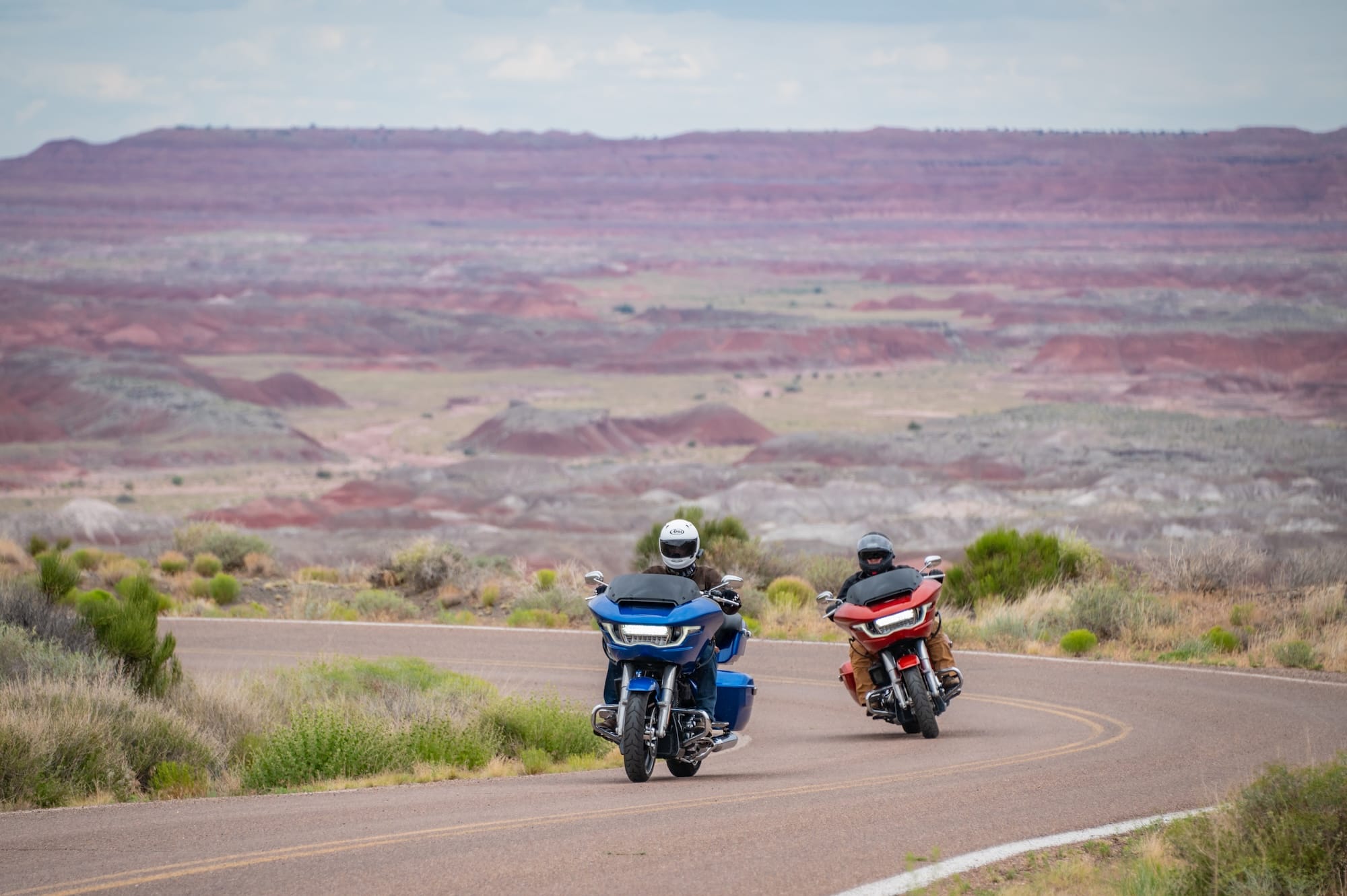
Arizona’s 385 miles bring with them a variety of incredible, if arid, vistas. From the ancient trees of the Petrified Forest National Park to high desert, red sand, and the craggy Black Mountains, the state will stun you at every turn. Add in all the unusual stops and attractions along the way, and you have one of the most distinctive segments of Route 66
Once known as a “town too tough for churches,” Holbrook has cleaned up its act and is a welcoming small town. You can explore its wild history at the Navajo County Historical Museum and the Bucket of Blood St, where you’ll find the remains of the titular saloon. Holbrook is also in the middle of the Painted Desert, so outdoor activities abound. Learn more in our Holbrook travel guide.
Riders overnighting in Holbrook can’t miss a stay at the Wigwam Hotel. Once part of a nationwide chain of novelty hotels, only two of the establishments remain. Here, you’ll sleep in a huge concrete tipi (not a wigwam like the name would imply), with all the modern amenities. You can also admire classic cars in the yard. Find out more about the stay in our Wigwam Hotel review.
Winslow showcases the history of transportation in Arizona, from Native American paths to railroads and Route 66. The town’s legacy is also etched in music in Eagles’ “Take It Easy.” At the famous corner in the Standin’ on the Corner Park, you’ll find a bronze statue of a musician commemorating the song. Discover more about Winslow here.
Flagstaff is a motorcycling outdoors enthusiast’s dream. Grand Canyon, Antelope Canyon, the Horseshoe Bend of the Colorado River… All are within easy access. Flagstaff also houses many old buildings harkening back to Route 66’s past, including old stores and gas stations. Find out everything Flagstaff has to offer here.
If there’s one town you can thank for Route 66 having been preserved as well as it is, that’s Seligman. Local barber Angel Delgadillo kickstarted the Historic Route 66 Association of Arizona, which became the template for Route 66 organizations all over the country. His barbershop and ice cream parlor still stand in the city, and Seligman’s general ambience makes you feel like it’s still 1957. Read more in our Seligman destination guide.
Among Seligman’s old Route 66 buildings is the Historic Route 66 Motel. Built in the ‘60s as Navajo Motel, it offers well-appointed, large rooms with appropriately vintage (that doesn’t mean old and busted) furniture and decor. The motel embodies the Mother Road atmosphere of Seligman. Read our Historic Route 66 Motel review to learn more.
Oatman, sitting in the middle of Arizona’s Black Mountains, is supposed to be a ghost town, but it sure bustles with life. Tourists—whether on Route 66 or not—flock here to soak in Oatman’s Wild West feel and admire the ex-mining town’s old buildings. Yet, the stars of the show are the wild, docile burros that wander unimpeded on Oatman’s street. Learn where the burros came from in our Oatman destination article.
Sitgreaves Pass is the high point of Oatman Highway, a notorious twisting road over the Black Mountains. In the early years of Route 66, it was so dangerous for the era’s automobiles to traverse that people making their way west would hire locals to drive their cars over the mountains. Cresting Sitgreaves Pass on a modern motorcycle is still a challenge, but the views are a fantastic reward. Learn more in our Sitgreaves Pass guide.
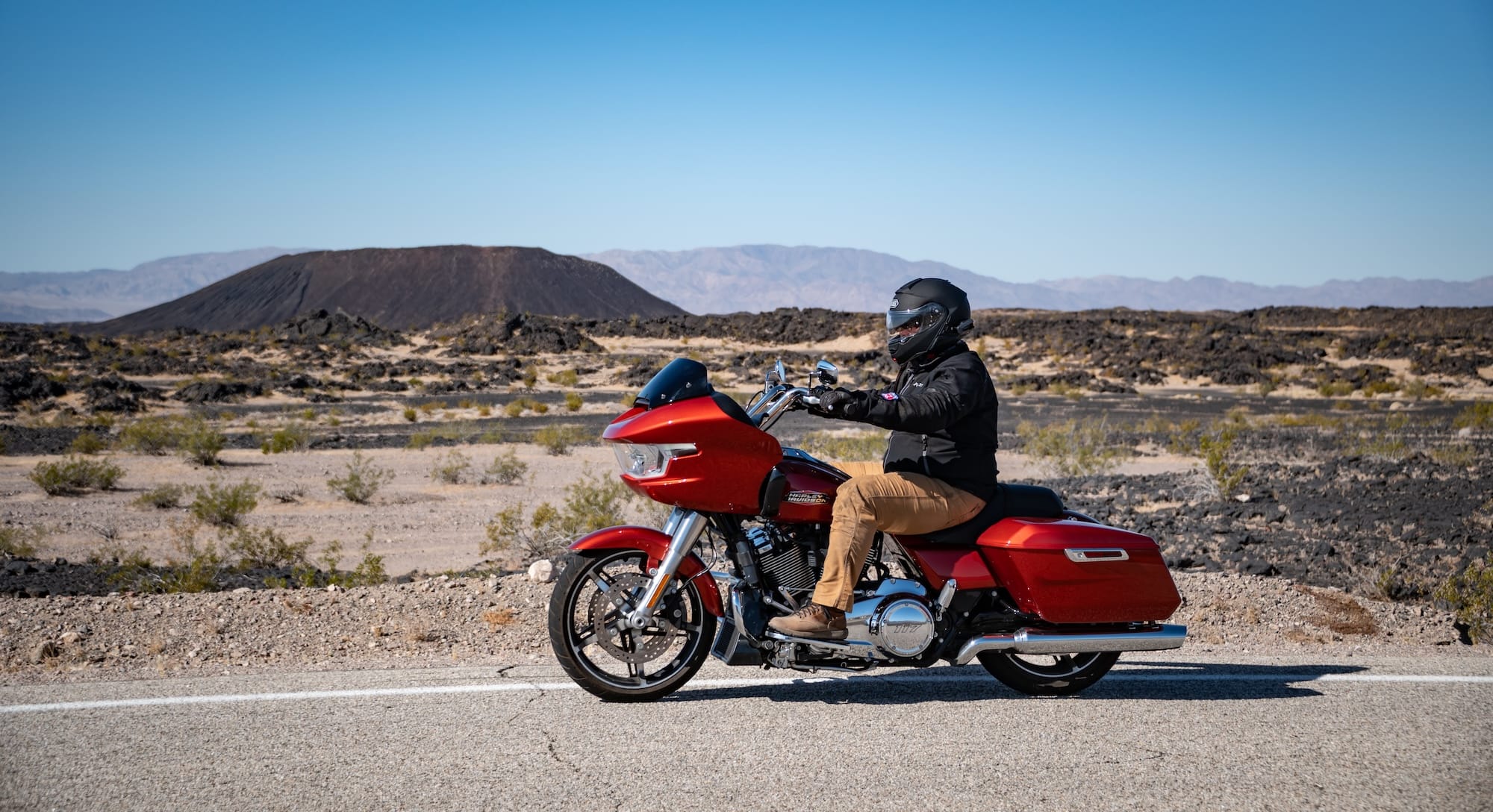
California
California marks the home stretch of your Route 66 adventure. Its 316 miles take you from the desert of the Mohave Valley to rolling hills, urban sprawl, and, eventually, the shores of the Pacific Ocean. Yet, the miles between the Arizona-California border and the sea still offer many great stops.
Needles act as a gateway to the Golden State. The town is deeply embedded in Route 66 history, with old hotels and gas stations lining its street. You’ll also find Carty’s Camp, a derelict campground that featured in the 1956 film rendition of The Grapes of Wrath. There are many natural wonders around Needles, too, such as the Amboy Crater and Topock Gorge. Explore Needles in more detail in our travel guide.
Barstow has been an important transportation hub since before Route 66 existed, thanks to its long history of mining activity. You can explore Barstow’s story at the Mojave River Valley Museum. The town celebrates its heritage with eccentric attractions, such as the Cars of Barstow—a bunch of historical vehicles hoisted on top of high poles. Read more in our Barstow destination article.
Santa Monica is the last stop on your westward Route 66 journey. The ending point of the long road is on the legendary Santa Monica Pier, where an official sign provides one final photo opportunity. You should spend some time in the city, though, to lounge on the beaches and explore the many art museums. Find out more in our Santa Monica destination guide.