The California Dream
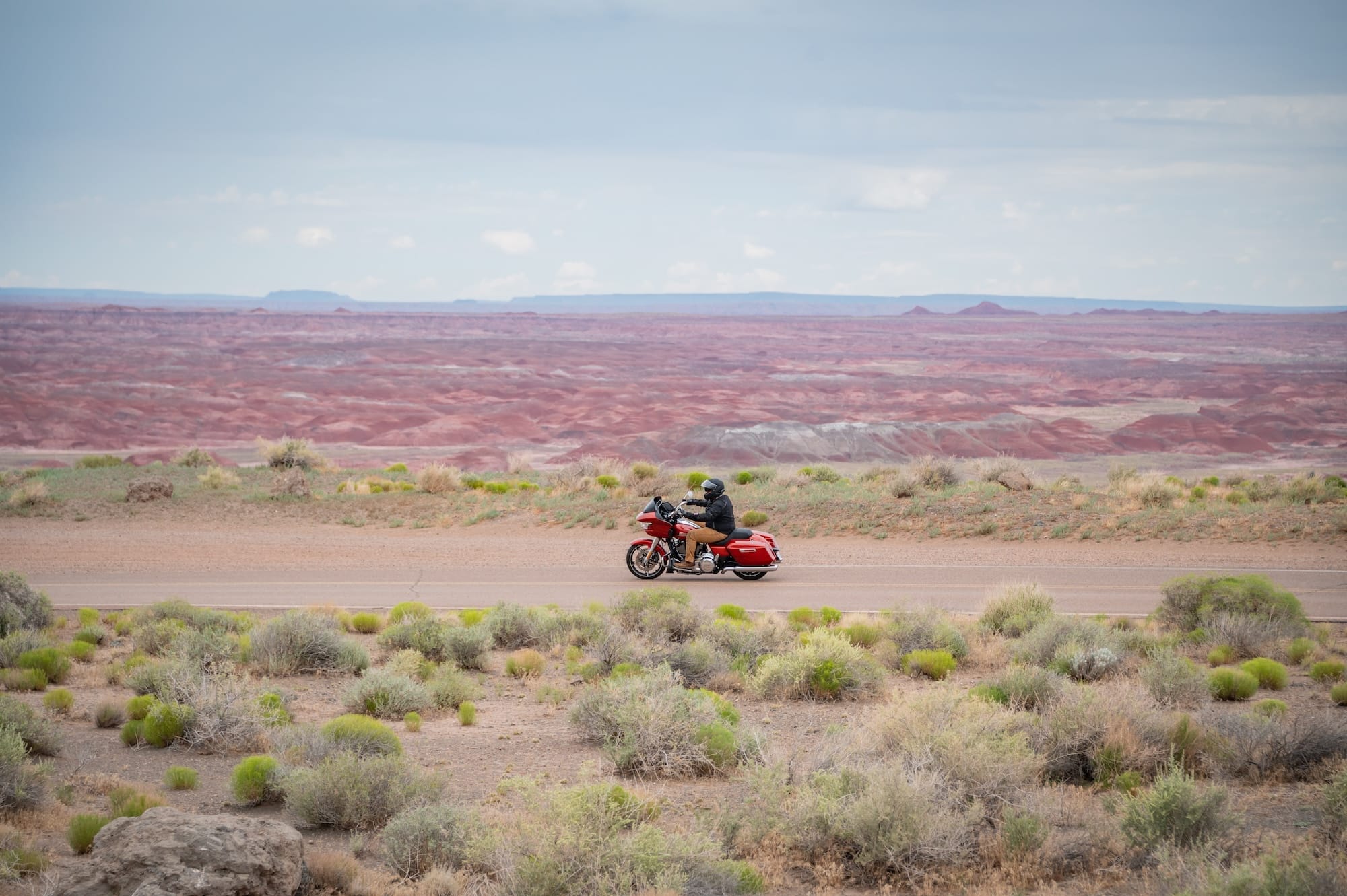
If you spend enough time riding Route 66, you start to feel the ghosts tug at your sleeves. Not in a spooky way, but in the gentle, persistent way history taps you on the shoulder. Out west, dreams aren’t just born; they migrate. And for decades, they all seemed to funnel through one battered ribbon of pavement stretching from Chicago to Los Angeles.
In its earliest years, Route 66 wasn’t about nostalgia or neon or retro diners. It was survival. During the Dust Bowl and the Great Depression, families packed everything they owned, beds, tools, pots, kids, maybe a stubborn farm dog, and pointed their overloaded cars toward the horizon. California shimmered in their minds like a long, slow inhale: steady work, fertile soil, a softer place to land. The California Dream wasn’t some glossy postcard fantasy. It was a lifeline, and Route 66 was the artery carrying people toward a future they prayed would be kinder than the one they left behind.
Riding the same road today, it’s impossible not to picture those caravans of weary migrants rolling west under a blistering sun. You can almost hear the creak of suspension springs with every bump. The towns that dot the route, many now quiet, or hanging on by the good graces of travelers, once pulsed with purpose. Gas stations, motor courts, cafés, mechanics working late into the night… they weren’t roadside “quirks” then. They were salvation for families inching toward a better life.
By the 1950s and ’60s, the road shrugged off some of its hardship and slipped into its rebellious years. The California Dream morphed into something lighter, something louder. Suddenly Route 66 was convertibles, chrome, and family vacations. Riders cracked throttles instead of worries. Teenagers loaded up the car just to chase a sunset. The road, once a conduit for desperation, became a symbol of freedom.