Motorcycling Guide to Colorado

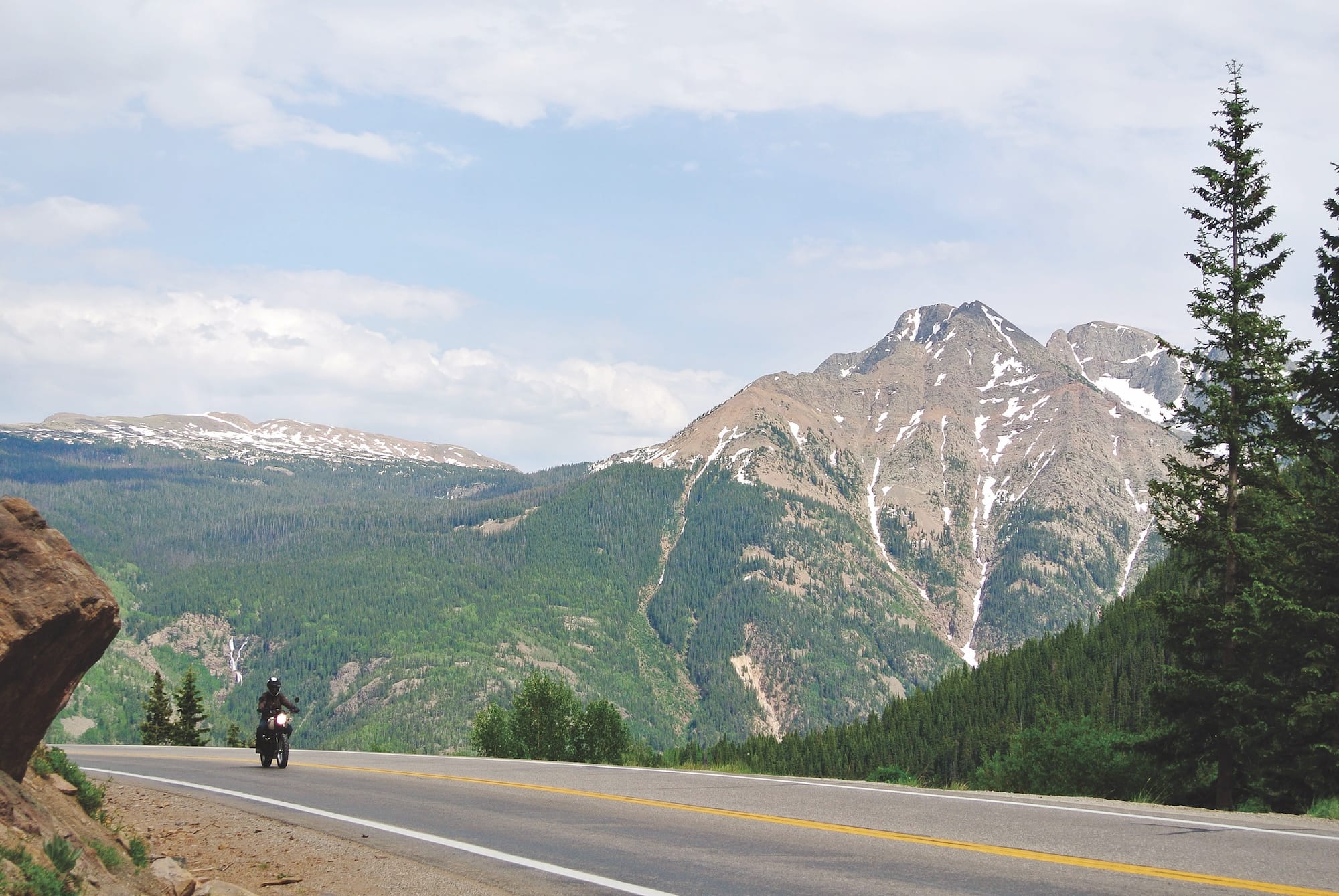
The mountains of Colorado boast some of the highest paved and unpaved roads you’ll find in the country. Each mile brings with it one breathtaking panorama after another as you meander along the curvy roads.
But it’s not all mountains. Colorado’s terrain makes for an incredibly varied motorcycle playground, where you can go from welcoming cities to dense spruce forests, high-elevation plateaus, and peaceful riversides within a couple of hours.
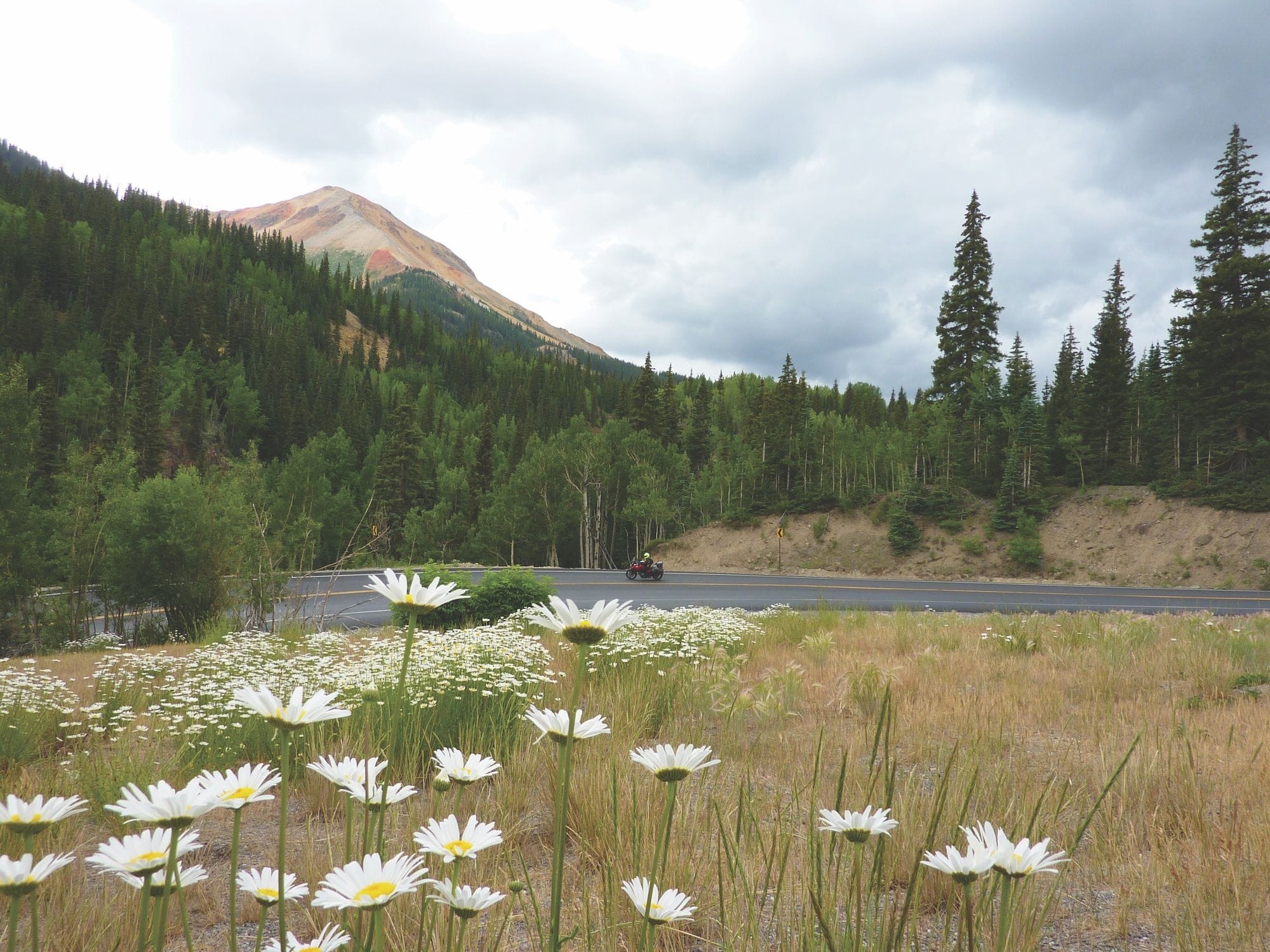
In this article, you’ll learn everything you need to know about motorcycling in Colorado. I’ll also highlight some of the best routes in the state to get your wheels spinning.
Geography of Colorado
The mountains tend to steal the spotlight in Colorado, but the state in fact has a very diverse geography. In addition to the alpine peaks, Colorado has high-altitude plateaus, rugged canyons, green mountain valleys, and dune-covered deserts. Heck, despite its reputation, about half of Colorado is made up of (more or less) flat plains.
Colorado’s landscapes are typically divided into five regions. Moving from east to west, they include the High Plains, the Front Range, the Rocky Mountains, the Intermontane Basins, and the Colorado Plateau.
The High Plains, part of America’s Great Plains, cover Colorado’s eastern third, from the Nebraska/Kansas borders to the Front Range. Varying in altitude from 3,000 to 7,000 feet, the semi-arid High Plains consist of flat or lightly rolling shortgrass prairie. The roads are straight and distances long, with expansive ranching and agricultural fields between them.
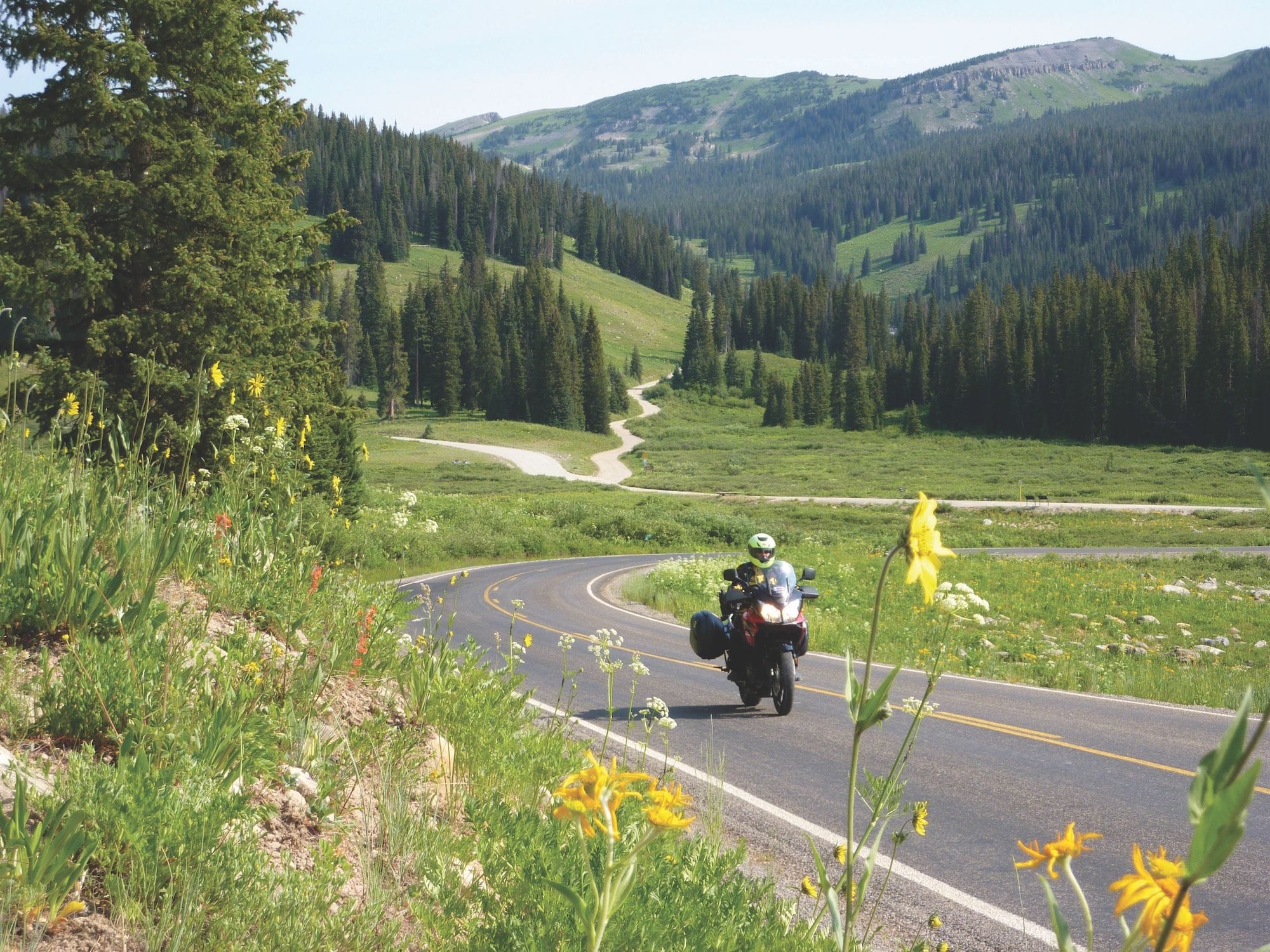
Eventually the ground begins to undulate more as you arrive at the Front Range. The foothills bordering the eastern slopes of the Rockies house more than 80% of Colorado’s population, forming an urban corridor on the side of the mountains. Although traffic here can be high, the cities and towns along the Front Range make for fantastic jumping-off points into the mountains.
And speaking of the Rocky Mountains, they’re probably what you’ve come to Colorado for. The spine of the state, running north-south down the middle, has more than 550 peaks above 10,000 feet, with the highest being Mount Elbert at 14,400 feet.
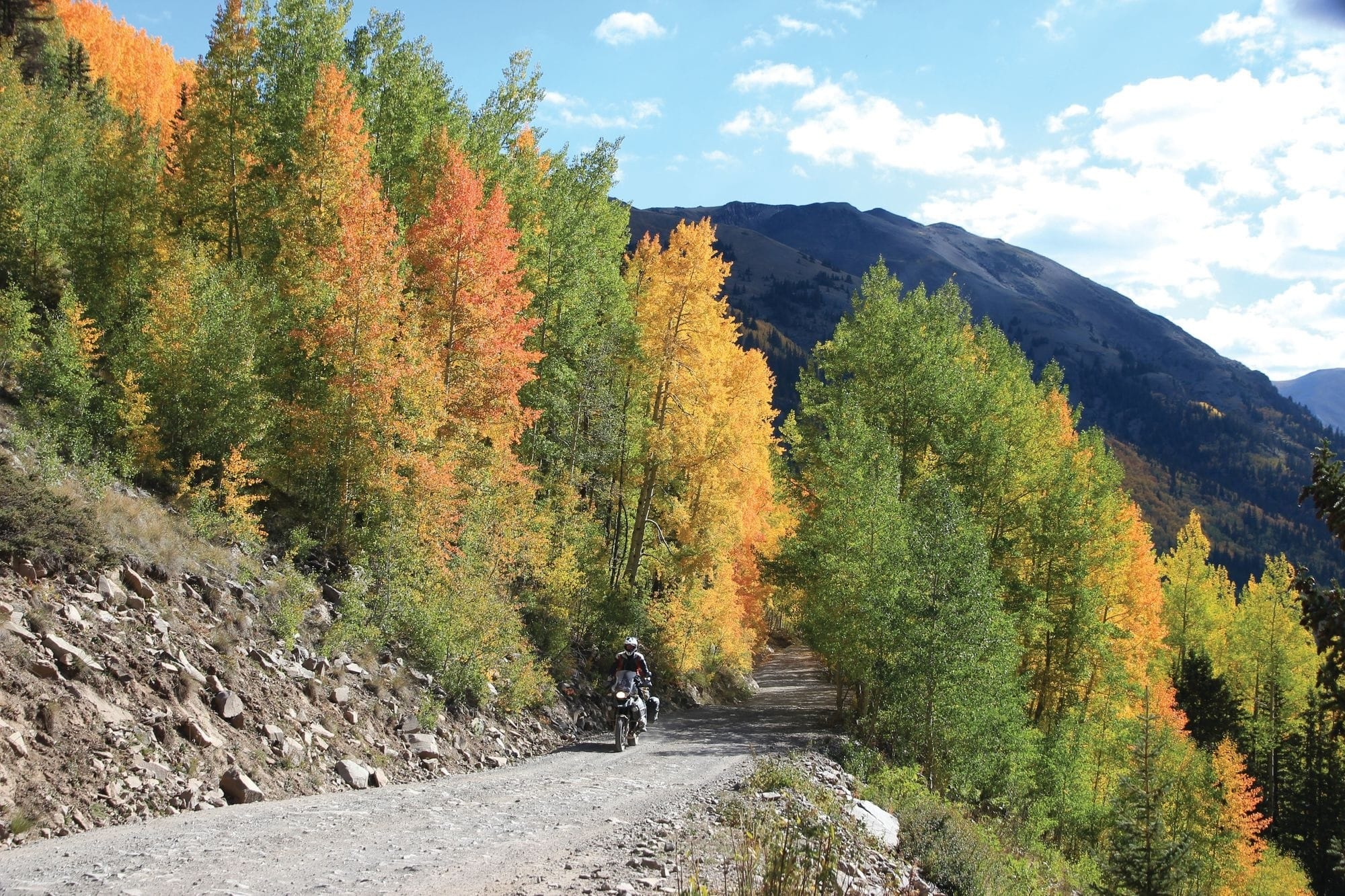
Around the snowcapped mountains lie dense conifer forests and gorgeous glacial valleys with small lakes. The twisty roads through the White River, Grand Mesa, Uncompahgre, and Gunnison national forests that cover the mountains make Colorado one of the most popular motorcycling destinations in the country.
Between the Rockies’ mountain ranges lie the four Intermontane Basins of North, Middle, and South Park and the San Luis Valley. Although called “parks,” they’re flat high-altitude plains with little more than low grass and shrubs (which does make them good ranching land). These areas were once the floors of inland seas that the ancient waters eroded into featureless expanses. On the eastern edge of the San Luis Valley, though, is Great Sand Dunes National Park with its famous towering sand piles.
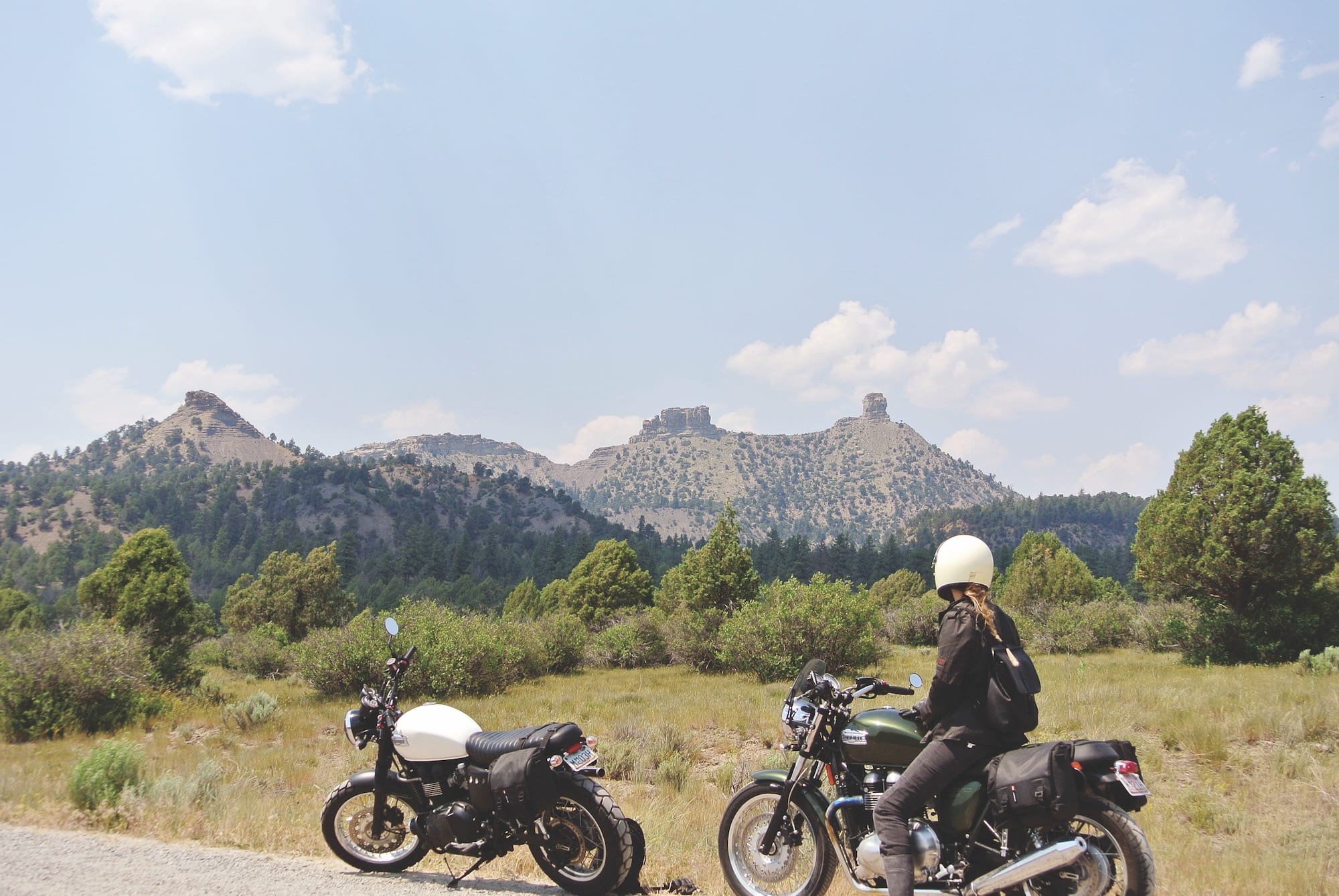
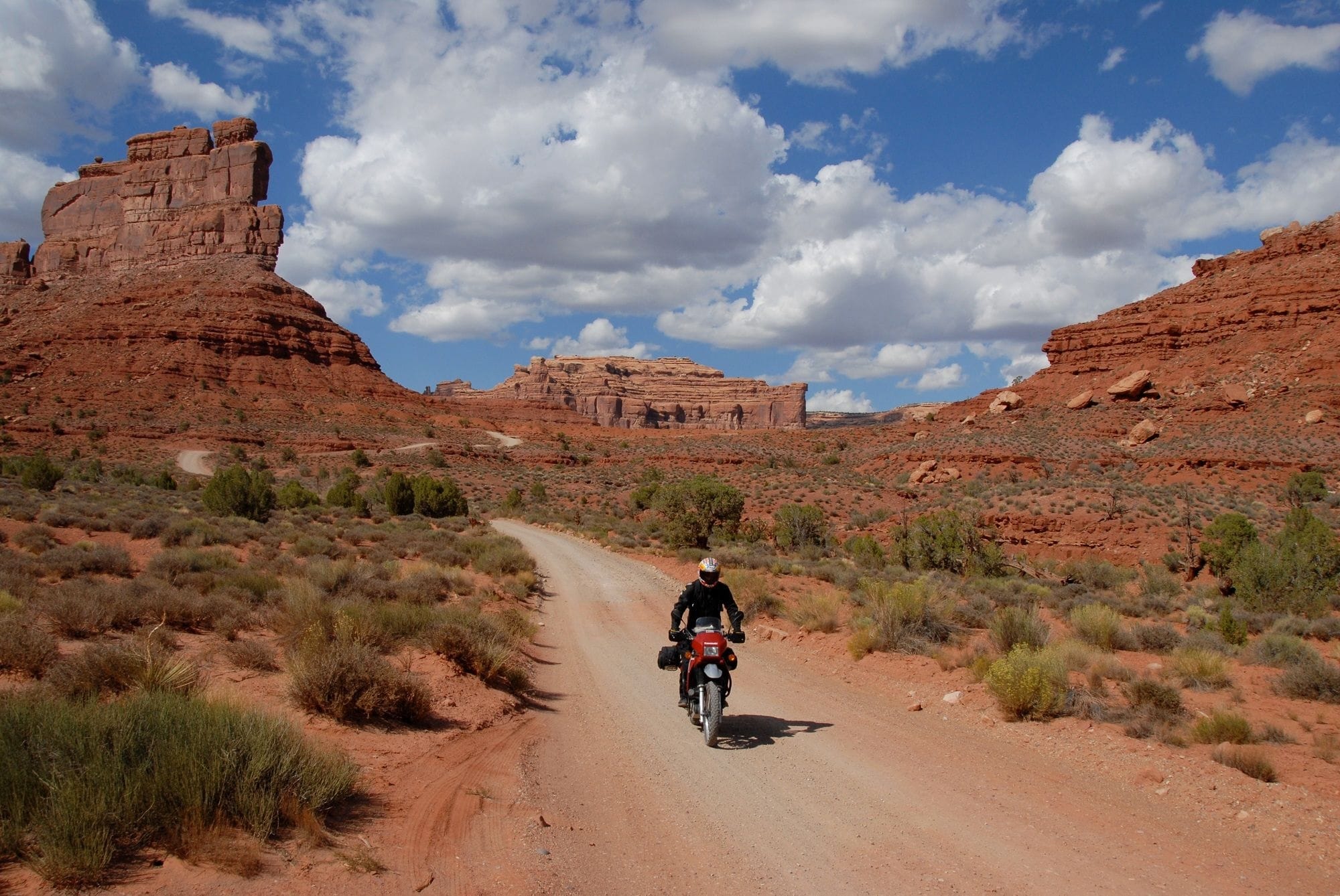
As you descend the western slopes of the Rocky Mountains, you’ll arrive on the Colorado Plateau. Covering the western and southwestern parts of the state, this rugged desert landscape features a multitude of striking canyons and mesas. One-of-a-kind rock formations and fossil beds dot the land, continuing into Utah’s canyon country. As you zigzag from canyon to canyon, you’ll really start to understand why so many riders fall in love with Colorado.
Top Routes and Destinations in Colorado
The difficulty of choosing where to ride is real in Colorado. Behind every hill and curve, there’s one world-class riding destination after another waiting for your wheels.
The best-known road in Colorado is like the Million Dollar Highway. Despite its mere 12-mile length, this section of the San Juan Skyway packs each yard with fantastic hairpins and million-dollar views. It’s no wonder this road regularly finds its way onto those “roads you shouldn’t miss” lists—including ours.
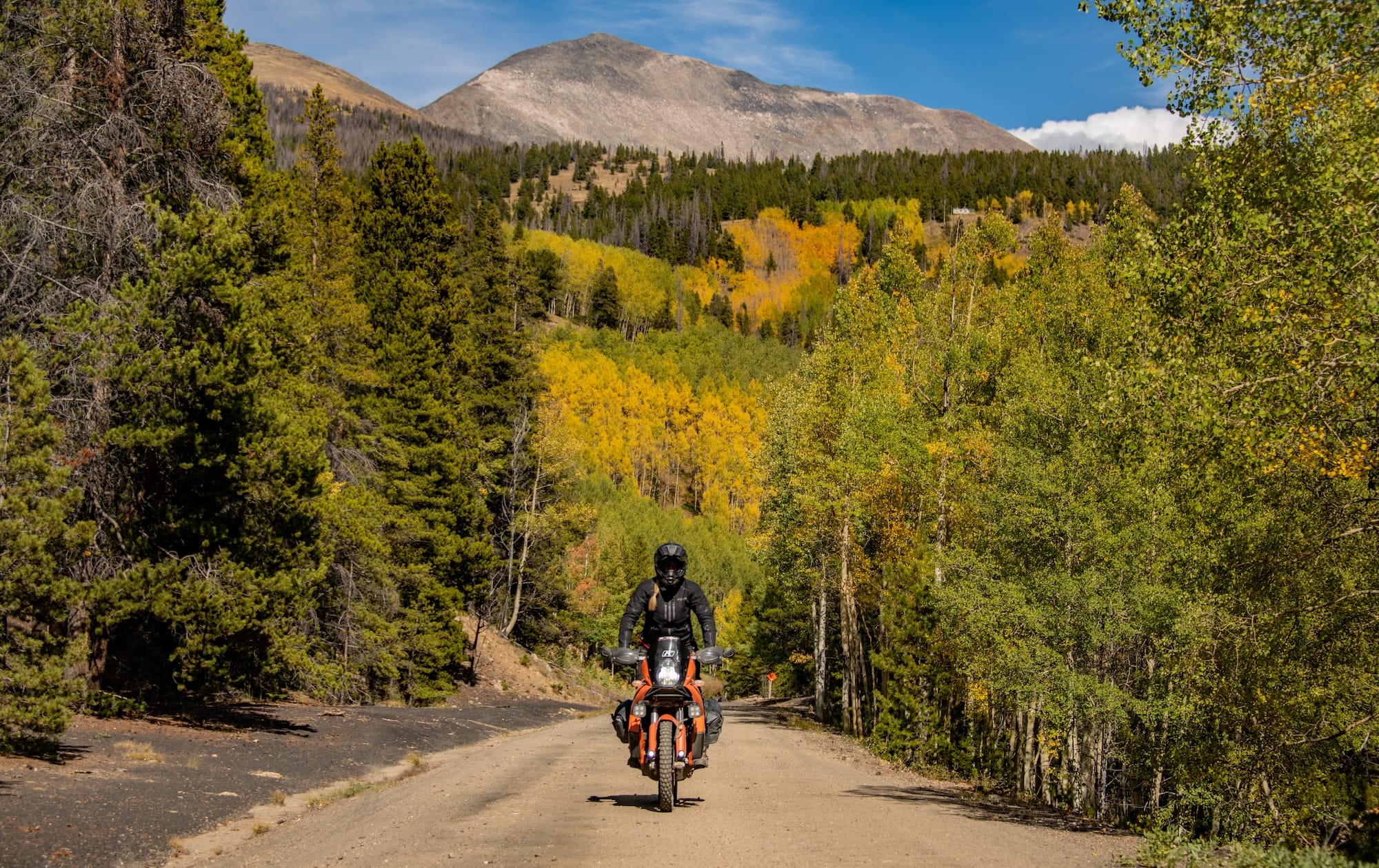
Having ridden the Million Dollar Highway, you may as well continue onto the aforementioned San Juan Skyway. This 235-mile-long asphalt loop snakes its way through the San Juan Mountains. For seeing as much of Colorado’s mountainous beauty over one ride, you can’t beat this road.
Getting high in Colorado is really easy, as you only have to take the Trail Ridge Road. The highest continuous paved road in America, the Trail Ridge Road, is rideable on any motorcycle that can handle 7% grades. From the highest spot at 12,000 feet opens a majestic panorama of ancient cliffs of volcanic rock. Read more in our Trail Ridge Road Classic Roads highlight.
Independence Pass is another unforgettable paved mountain pass experience. Climbing to 12,095 feet, it’s a smidgen lower than the Trail Ridge Road, but does that make any practical difference? Not at all. The curves are intoxicating, and the views are as breathtaking as the high-altitude air.
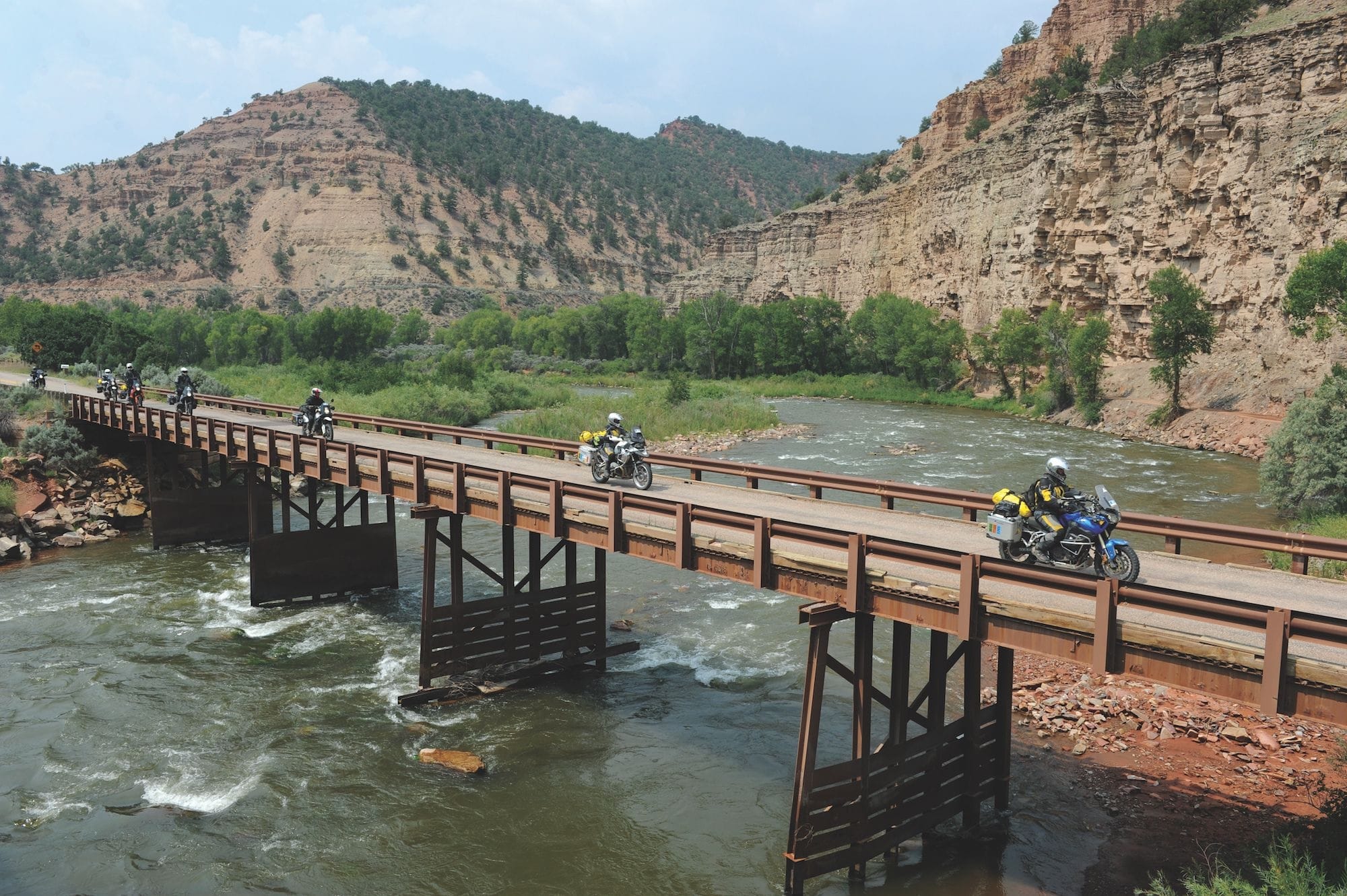
The Unaweep Tabeguache Scenic Byway showcases the canyonscapes of the western Colorado Plateau. On top of natural majesty, this road puts you in the midst of the region’s history as you carve past fossils, Native petroglyphs, and old mining structures. If you’d like to know more about the road, check out our Unaweep Tabeguache Scenic Byway article.
As I mentioned earlier, the cities of the Front Range make for top-notch base camps for your Colorado motorcycle adventures. Perhaps none of them is better than Denver, ranked among the best cities for motorcycling in the U.S. due to its access to mountain passes. You can draw travel inspiration from our list of 6 best paved rides near Denver. You shouldn’t ignore your time off the saddle, either, so take a look at all the fun things to do around the city.
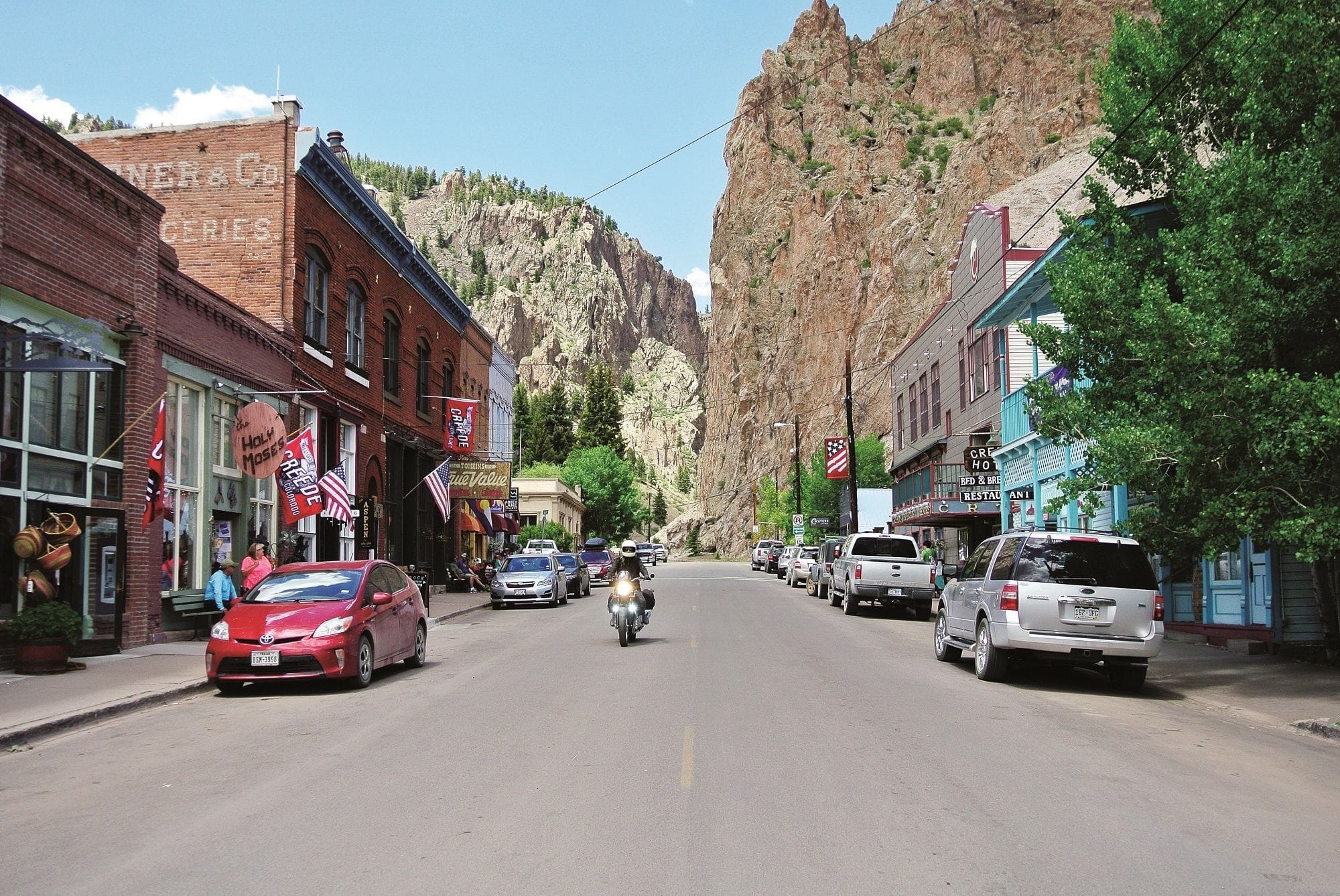
But there are good riding towns and cities elsewhere, too. Grand Junction on the Colorado Plateau puts you within a stone's throw of the country’s best canyon carving. The Unaweep Tabeguache Scenic Byway’s start point, for instance, is just a couple miles out of town. For a shorter ride, you can do something like our Grand Junction City Escape route.
The former silver mining town of Telluride is today best known as a winter sports destination, but it’s also a great campsite for motorcyclists looking to explore the Colorado Plateau. If you visit in the summer, you can continue the fun times after the ride with Telluride’s packed festival schedule. Our Telluride City Escape loop works as an excellent starting point for planning a tour out of the town.
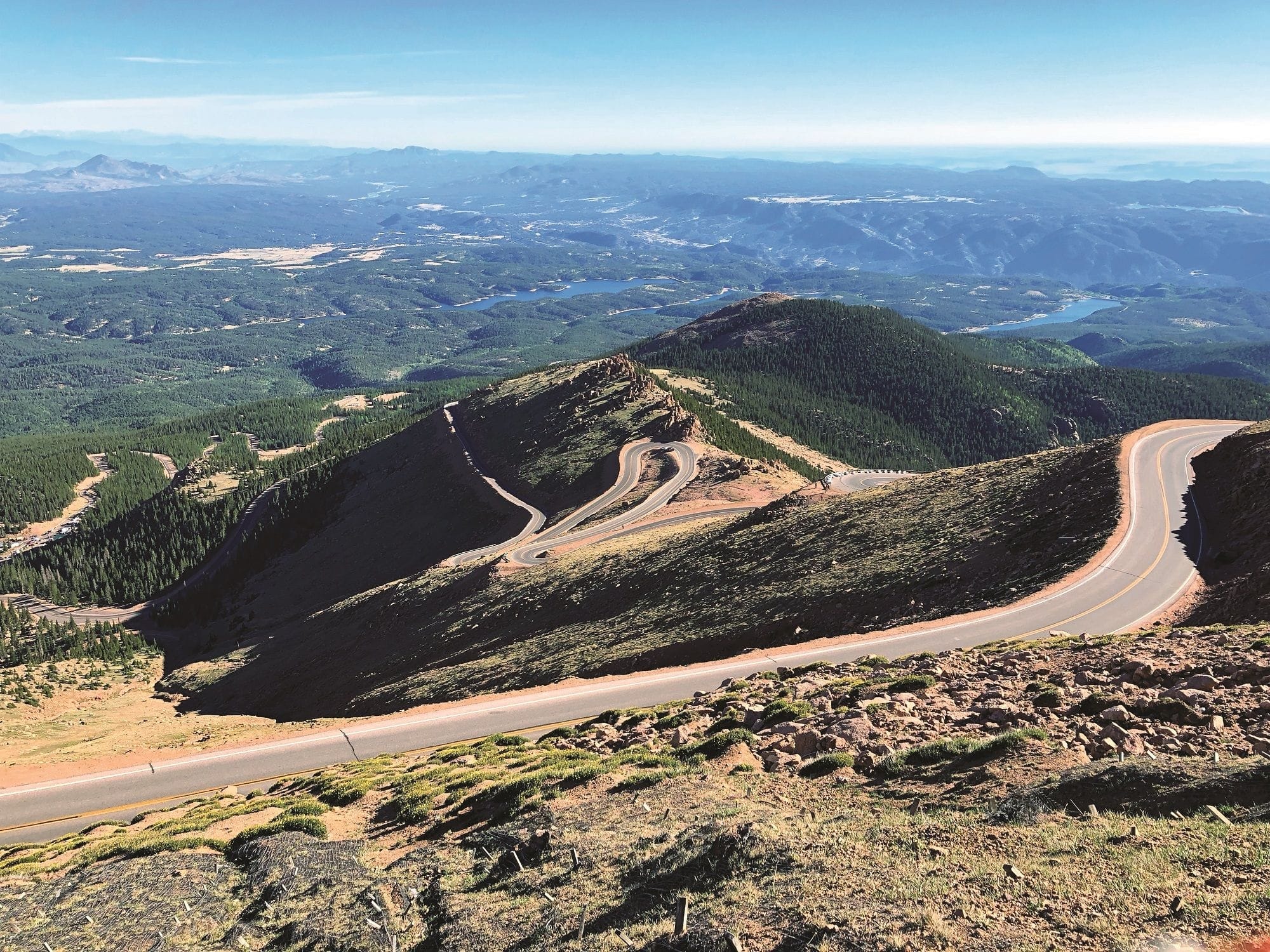
Colorado also has some of the highest individual peaks in America that are accessible to motorcycles. Mount Evans and the famous Pikes Peak both surpass 14,000 feet and have roads that take you (almost) to the top.
Other noteworthy locations include the aforementioned Great Sand Dunes National Park, which is one of the most otherworldly destinations in the U.S. And if you happen to be on the road in the fall, head to Aspen, one of the prime locations for fall foliage.
ADV Motorcycle Routes in Colorado
Colorado’s mountains are chock-full of mountain trails and passes to delight any rider. Most of the high passes are unpaved, with the Imogene, Ophir, and Engineer passes being particularly popular. Our “The Pinnacle” and “A Himalayan in the Rockies” routes include many such passes and help you create your own route.
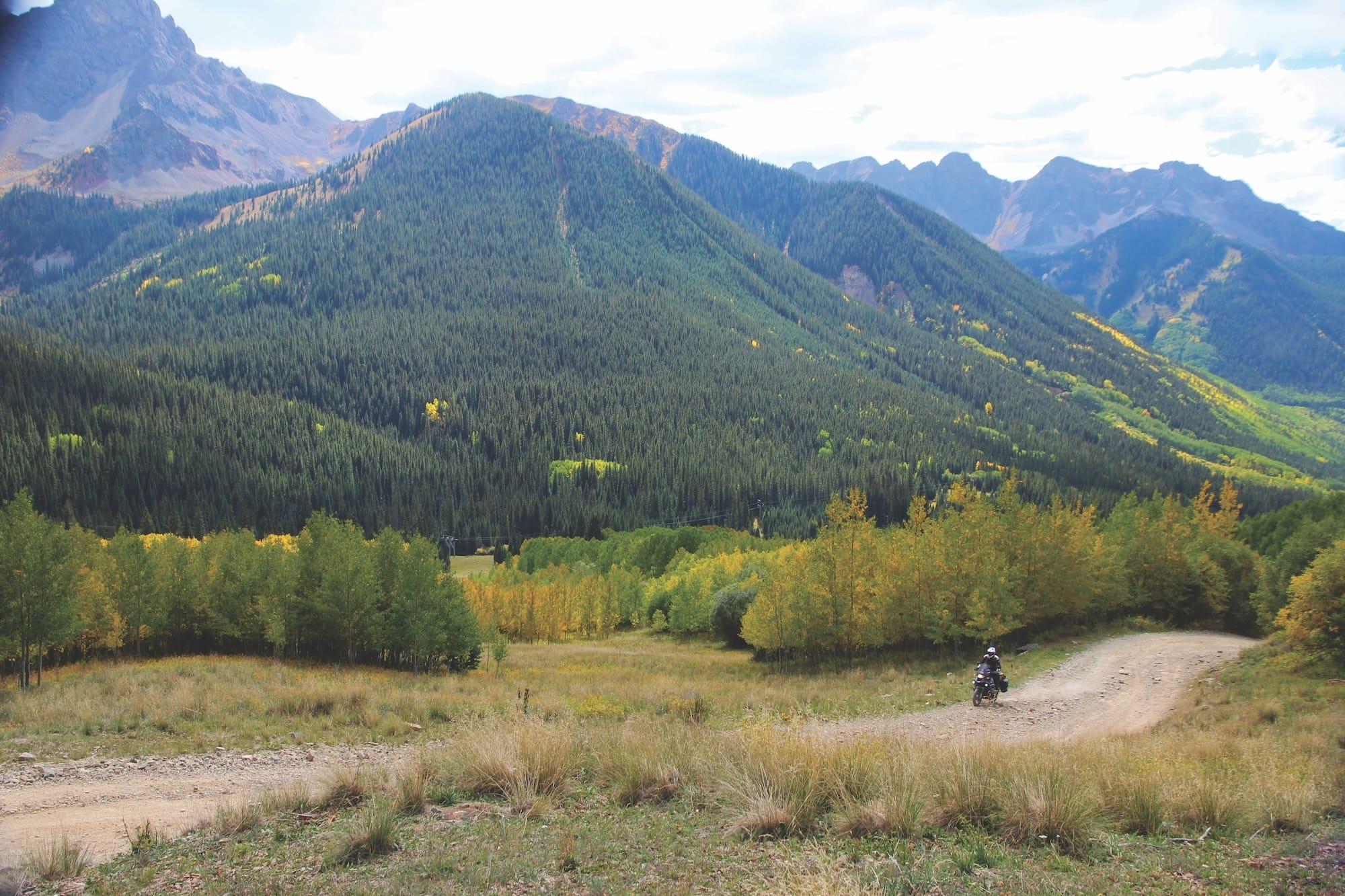
Another popular dual sport route is the Colorado BDR. This 745-mile adventure route traverses Colorado from south to north, allowing you to see most of the state’s best sights.
Tips for Motorcycling in Colorado
The best window to ride in Colorado is from June to September. In the summer, the mountain roads are open (barring some freaky weather) and the weather is at its most stable and tolerable for riding. Snow may force roads to close earlier or later in the year, while extreme summer temperatures in the state’s lower areas can make riding unfeasible.
In Colorado, altitude sickness can be your worst enemy on the high mountain passes. Above 10,000 feet, you may fall victim to this ailment if you ascend too quickly. Take breaks, eat, and stay hydrated. If you start experiencing unexplainable nausea, fatigue, headache, and slow reaction times, descend to a lower elevation—you can’t tough out altitude sickness.
Just like you, your motorcycle can suffer at high altitudes. Engine performance may decrease noticeably the higher you go due to thinner air. Ride more deliberately and don’t be surprised if you don’t get the oomph you expect out of your machine.
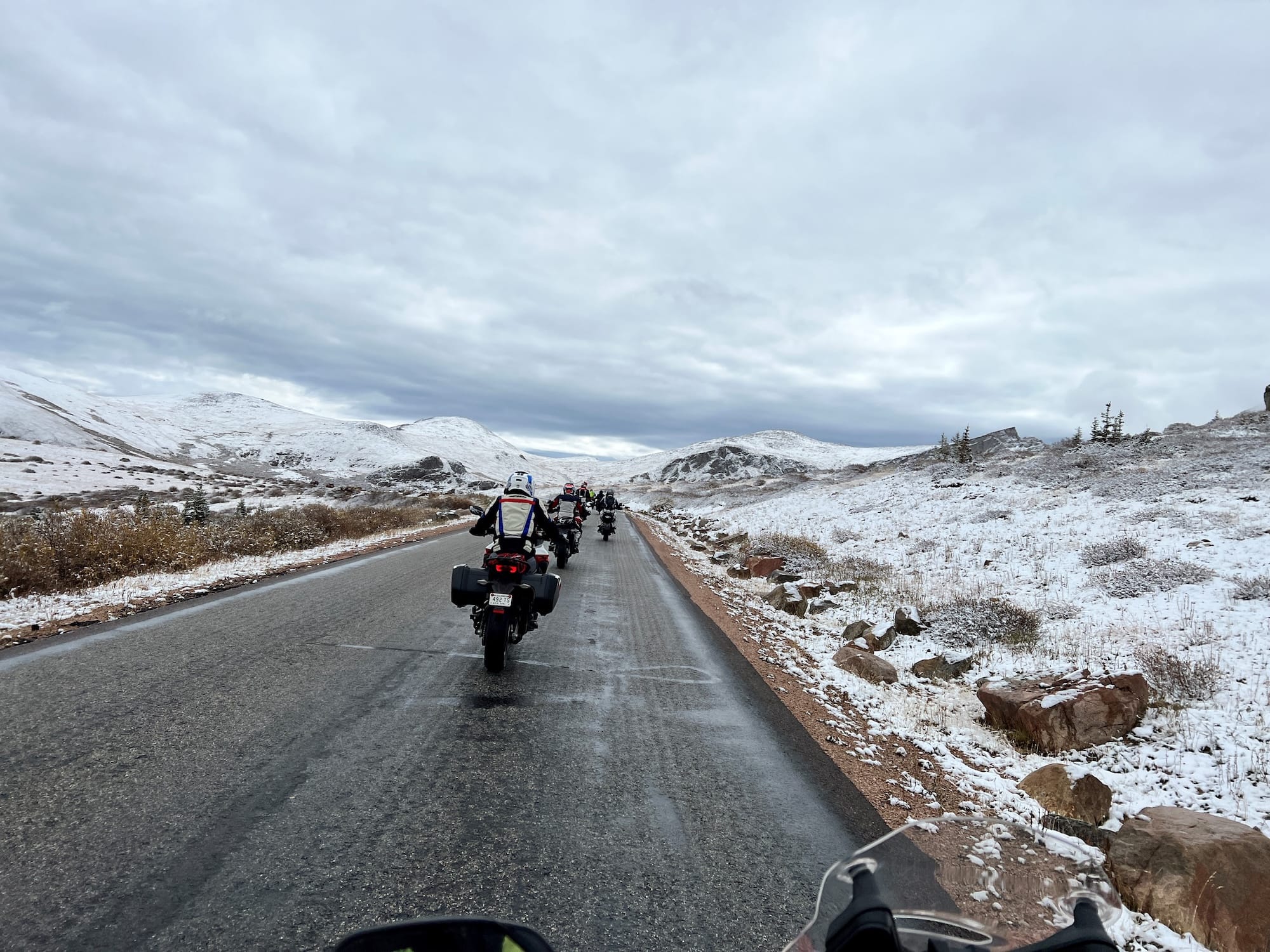
Colorado’s mountainous terrain can generate sudden storms, especially in the afternoon, that bring intense winds and massive rainfall. Huge temperature changes are also possible within a very short time period. A warm morning can turn into sleet up in the mountains, and the basins can be particularly cold, with some of the lowest temperatures recorded in Colorado.
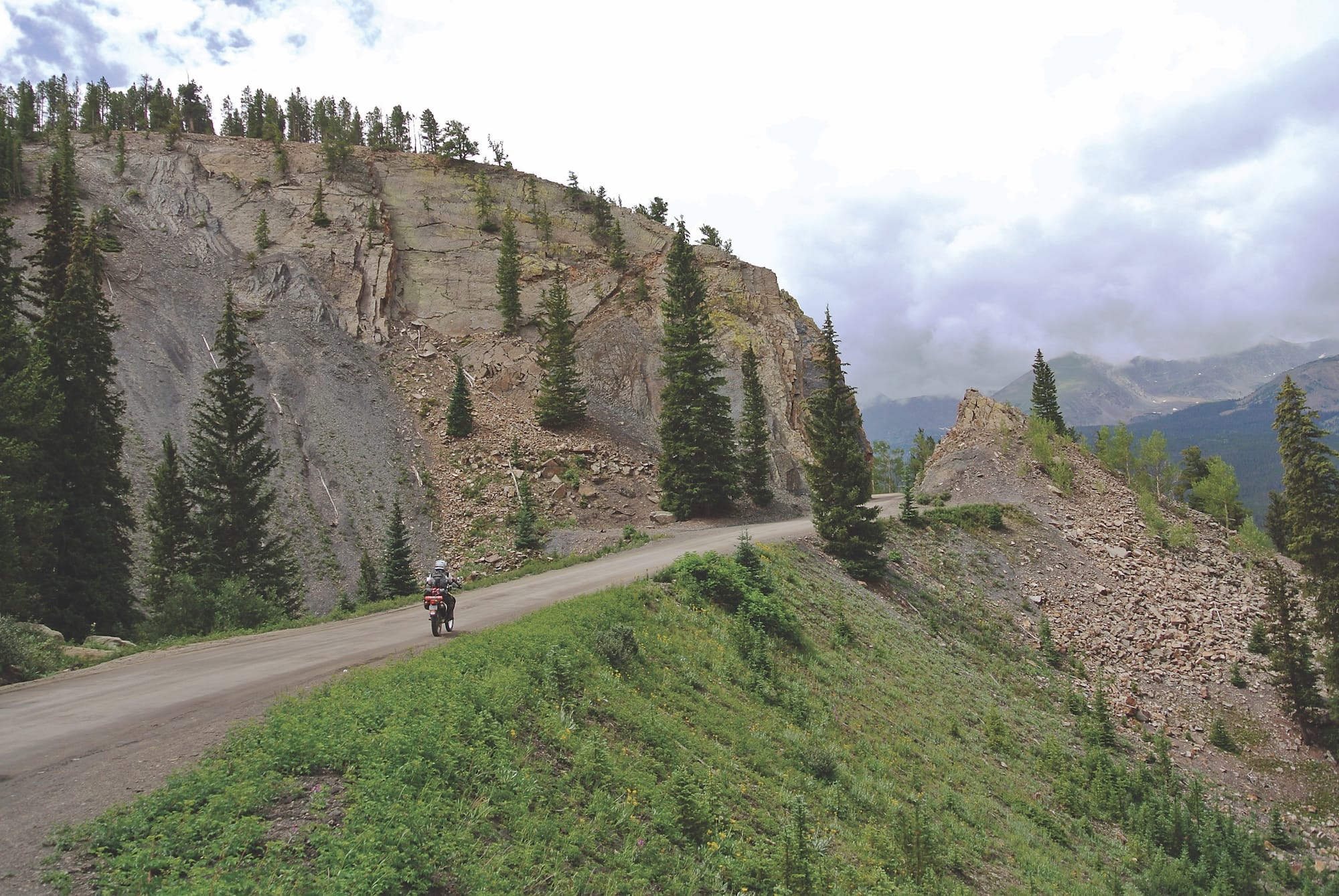
The mountain curves you’re chasing may have steep, deep dropoffs right by the road with no shoulder or guardrails. Ride carefully, pump the brakes, and don’t let the scenery distract you from the road.
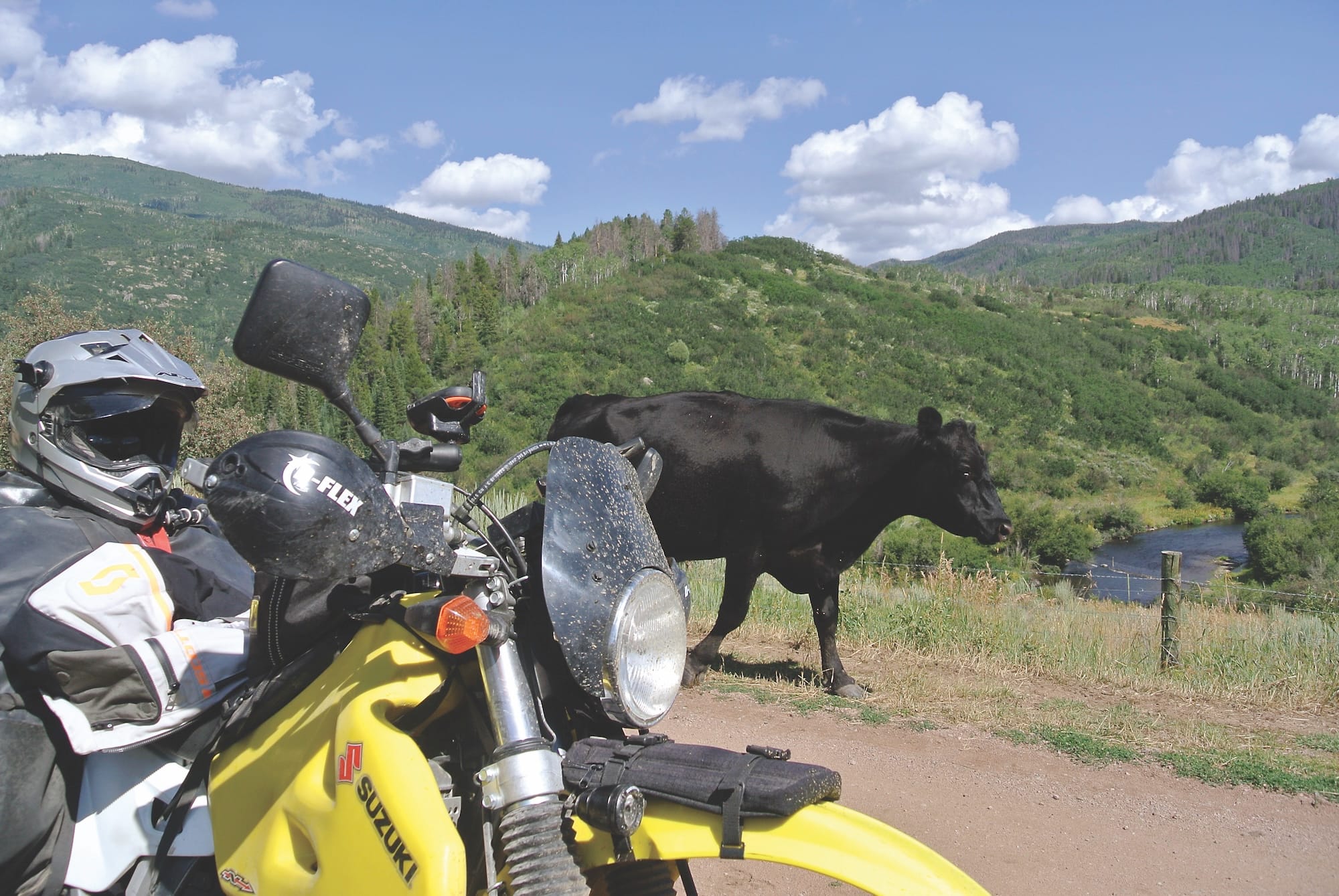
Wildlife is abundant in Colorado’s remote regions. You should expect deer, elk, and even mountain goats to appear on the road. Another hazard is tourists in RVs and rental cars, who can be distracted by the sights and take corners wide. Always assume the approaching car has not seen you.
By Colorado law, riders over 18 are not required to wear helmets, but they must have some form of eye protection. Goggles do little to protect your skull, though, so be responsible and lid up.
Two bikes may share a lane in Colorado. Lane filtering has been legal since 2024, with the following conditions:
- The motorcycle must pass other vehicles on the left.
- Other vehicles must be stopped and traveling in the same direction as the bike.
- The motorcycle must not exceed 15 mph.
- When others start to move, the motorcycle must reenter the regular traffic flow.
Popular Colorado motorcycle events include:
- Colorado Motorcycle Expo (winter)
- IFRD Ride Colorado (spring)
- Top O’ the Rockies Rally (summer)
- Realities Ride & Rally (fall)
- Four Corners Motorcycle Rally (fall)
Off-Bike Activities in Colorado
Outdoor activities are unsurprisingly the king in Colorado, with its stunning scenery making for an ideal backdrop for hiking, swimming, rock climbing, or simply sitting still and appreciating the environment. In the cities, however, you’ll find every modern comfort if you need a break from the dusty roads.
Some of Colorado’s most popular tourist attractions include:
- Rocky Mountain National Park
- Pikes Peak
- Great Sand Dunes National Park
- Black Canyon of the Gunnison
- Maroon Bells
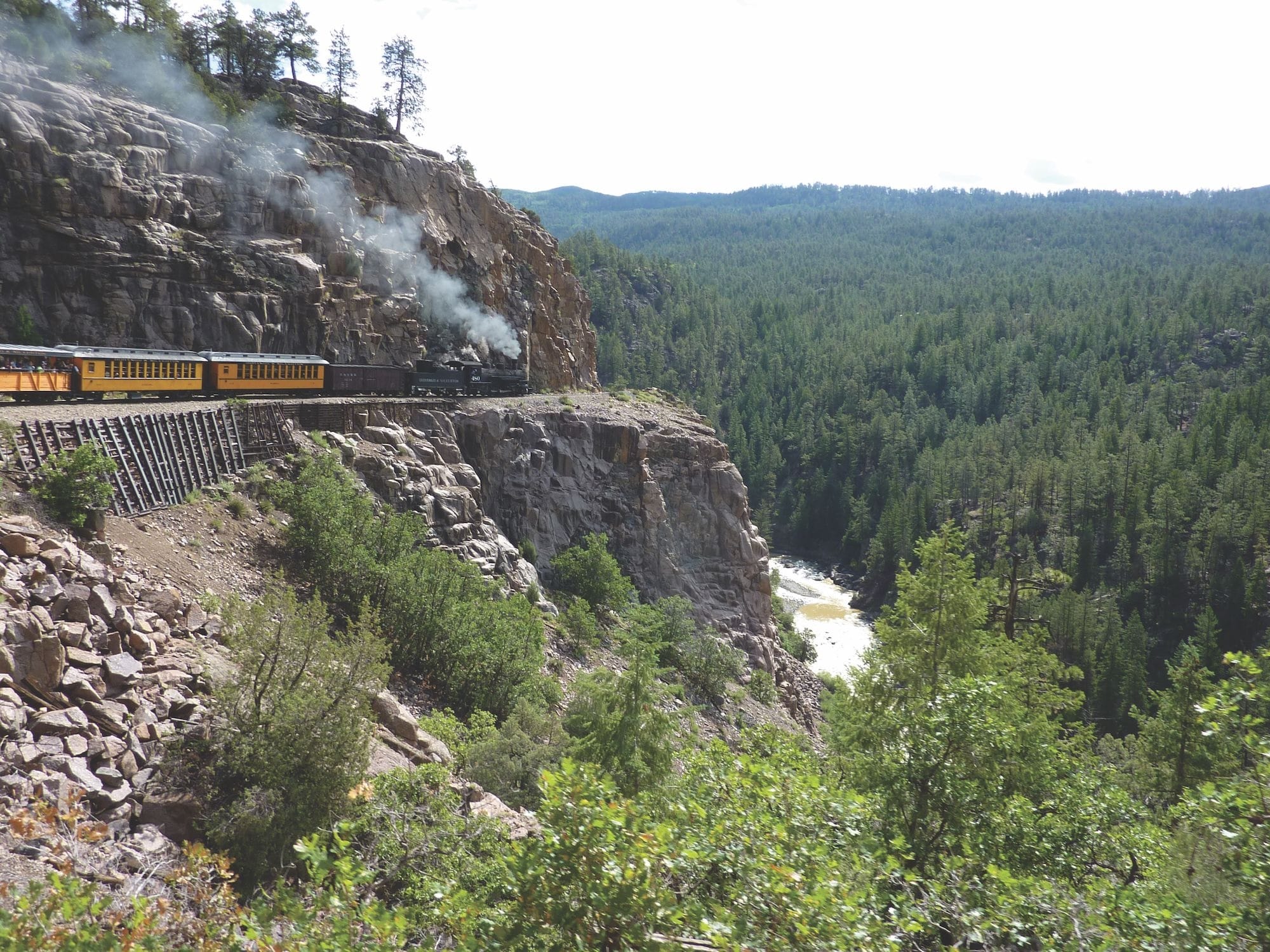
- Durango and Silverton Narrow Gauge Railway
- Red Rocks Park
- Denver Art Museum
- Seven Falls
- Telluride Historic District
- Glenwood Hot Springs
- Colorado National Monument
- Buffalo Bill Museum and Gravesite
- Cave of the Winds