Alaska: Exploring the Kenai Peninsula


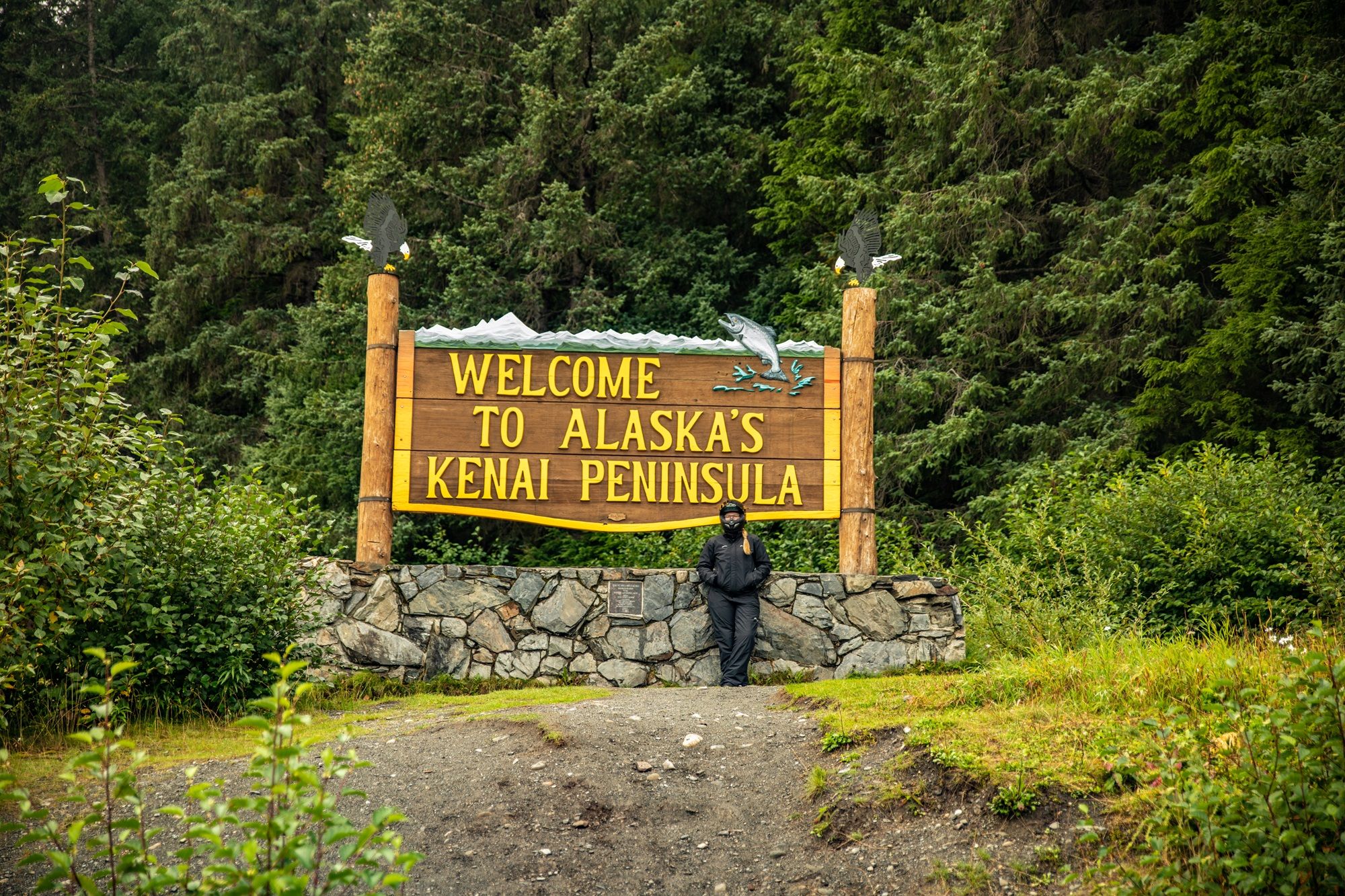
Alaska is a bucket-list type of place and, motorcycle or not, it’s been on ours for many years. The Last Frontier is filled with nearly endless gorgeous mountain ranges, giant creeping glaciers, deep picturesque bays, and wildlife that can’t be found in the lower 48 states. It’s been dubbed the last wilderness in the U.S., and it’s a particularly seismically active area where many of the mountains are still growing. Late August brings cool weather and very long days with ample time to explore. The sun doesn’t set until nearly 10 p.m. and the average temperature is in the low 60s.
Our first day was short, only around 130 miles on a route that brought us back to Anchorage. We wanted to do something quintessentially Alaskan, so we made our way to Whittier to pick wild berries in the woods. To get to Whittier, we had to pass through the Whittier Tunnel, a one-lane tunnel that alternates between train and automobile use with rotating direction every half hour or so. Once in Whittier, we had it on good authority that after a short, extremely muddy hike we could find what we were looking for. We found lots of berries that we knew (blueberries) but also found many that were new to us (salmon berries, watermelon berries, and juneberries).

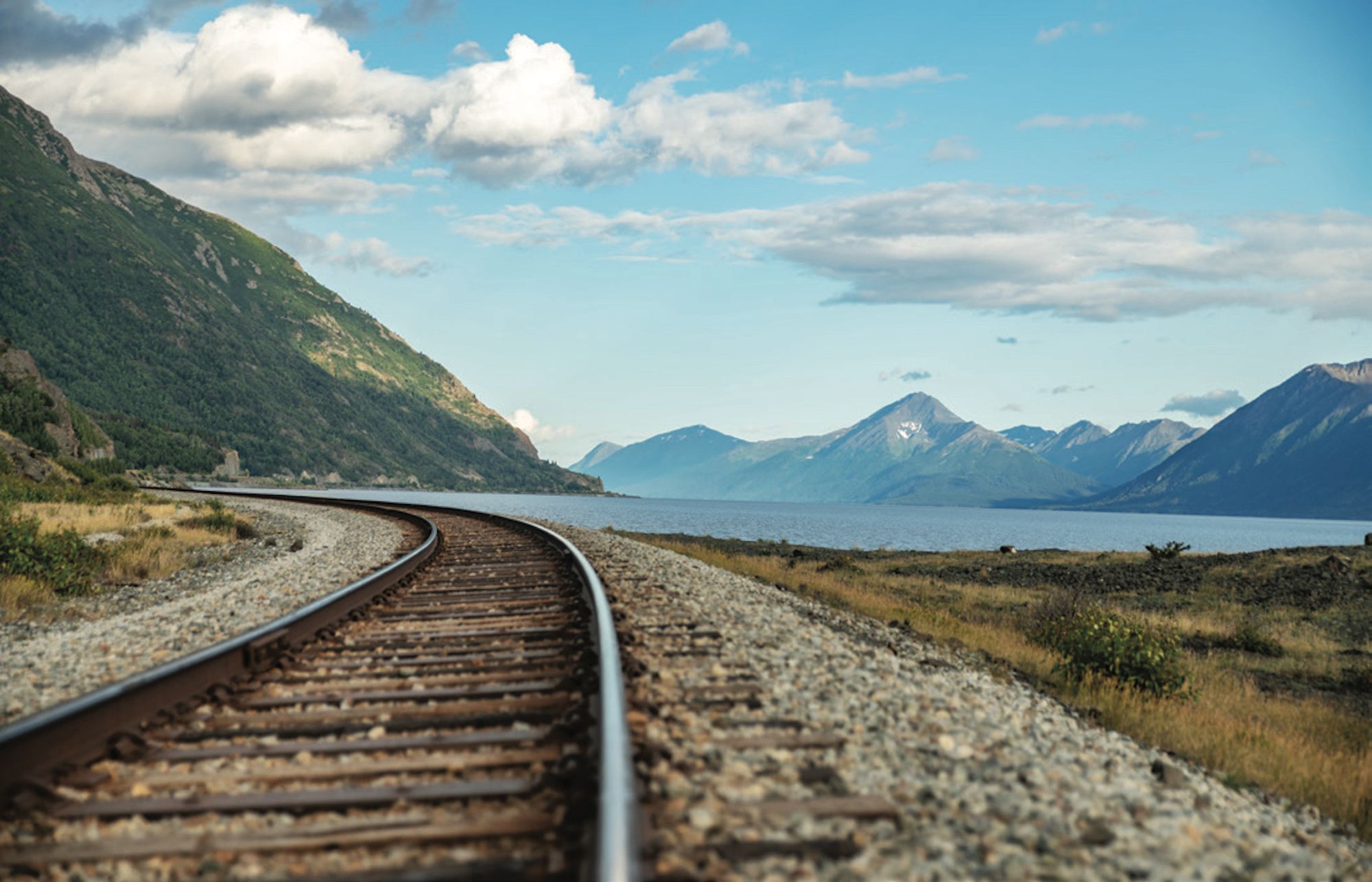
In addition to the berries, there are hiking trails that lead down to the water’s edge and idyllic views of the Inside Passage Inlet. In the distance, we noticed our first glacial sighting, Billings Glacier. Once we’d filled a bag with wild berries, we returned to the bikes and headed back to Anchorage. SR 1, which runs alongside the Turnagain Arm, is a truly epic ride. The mountains lining the valley jut into the sky and have patches of snow on them year round. The view of this rugged, glacier-sculpted landscape is absolutely captivating.

Into the Mist
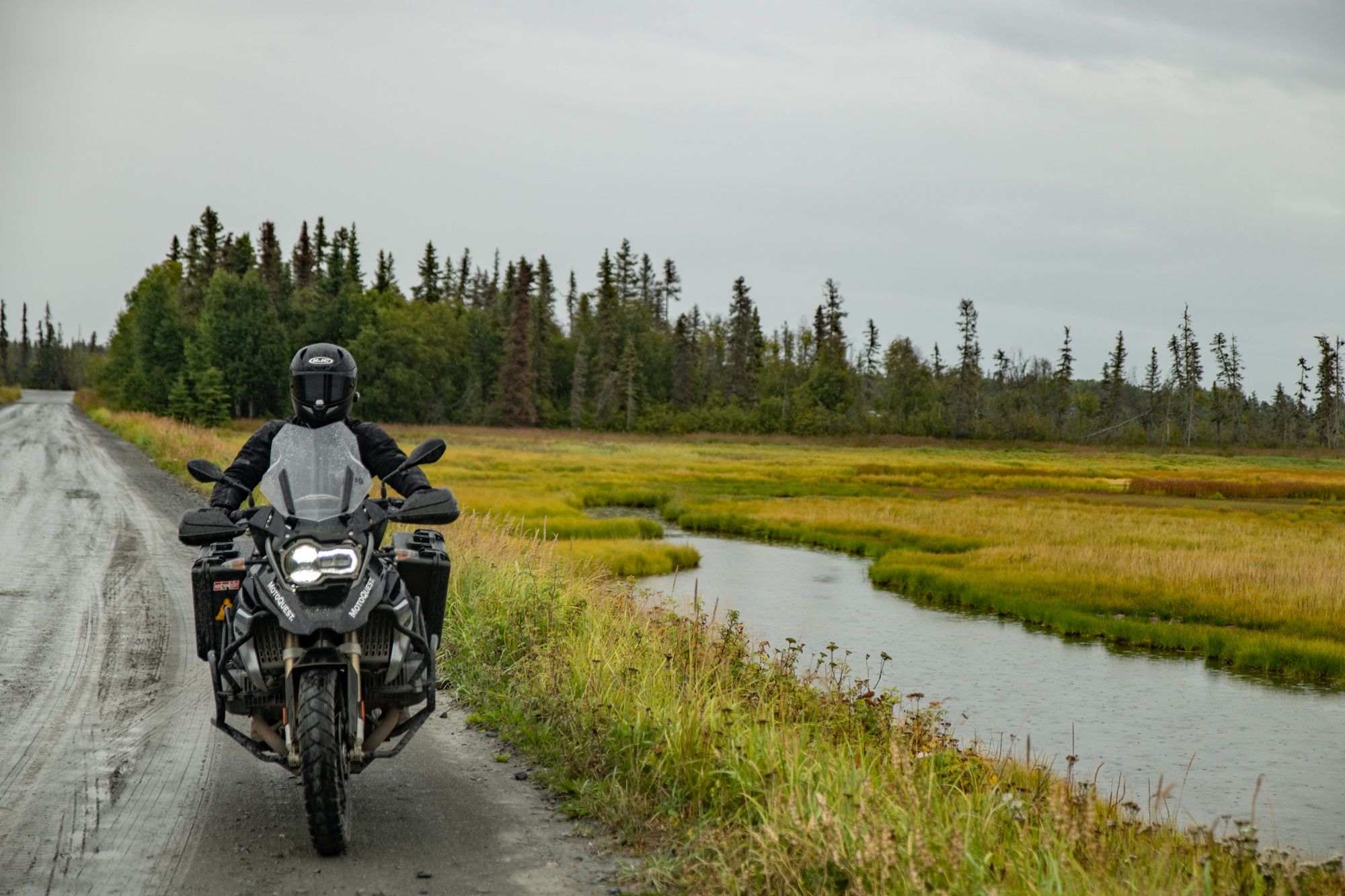
With 220 miles ahead of us, we got on the road early, riding into the misty rain. We were back on SR 1 that eventually turns into Sterling Hwy as we made our way south toward Kenai. We weren’t complaining about riding this scenic highway again, though, despite the frigid temperatures and relentless rain. The mountains we’d seen yesterday were now obscured by gray, low-hanging clouds, which gave the area a feel straight out of a fantasy novel.

As we traveled, the temperature dropped and we cycled between the “warm” and “cook” settings on the BMW’s heated grips, which are capable of bringing our palms to a nice medium-rare. We stumbled into the small town of Hope where we were lucky enough to find an excellent cappuccino made at a food trailer called Grounds for Hope. One thing we’d quickly realized about Alaska in general is that they know their coffee. This makes perfect sense as they experience some bitterly cold winters.
Motorcycles & Gear
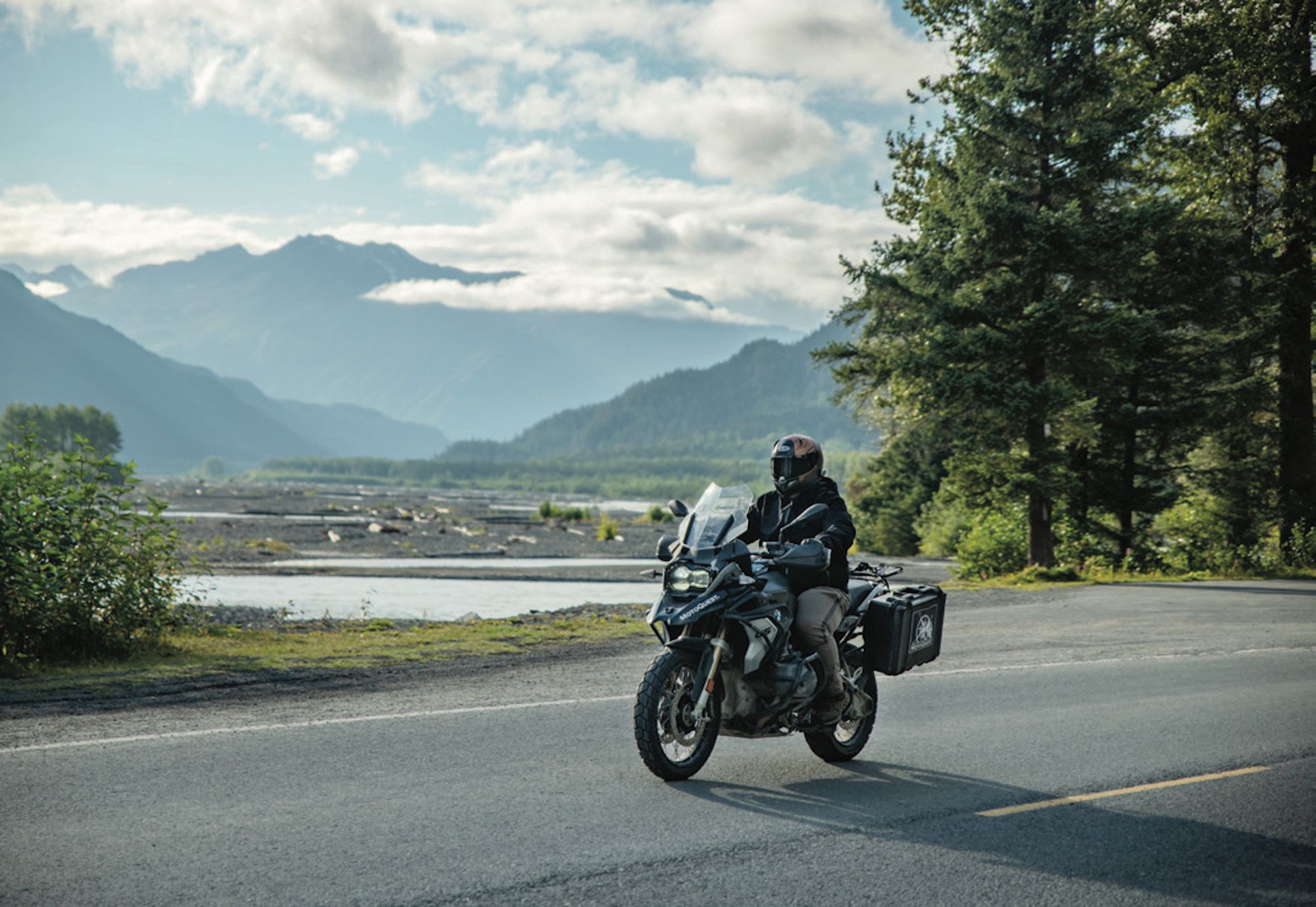
2020 BMW R1250 GS
Helmets: HJC RPHA11 Pro
Jackets & Pants: Klim Marrakesh
Boots: Gaerne Balanced Oiled
Gloves: Klim Marrakesh
Communication: Sena SF4
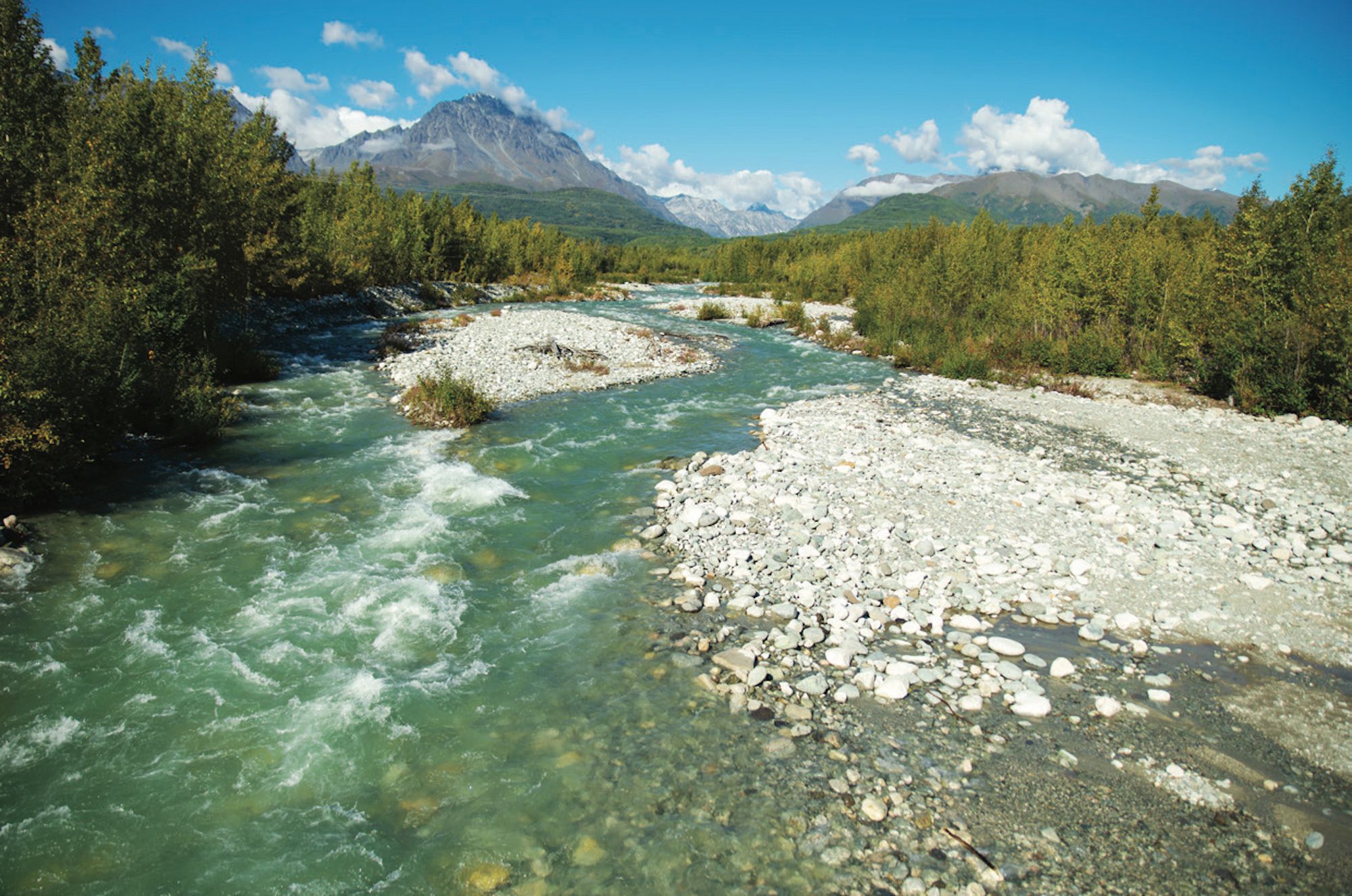
After another hour or so of drizzle, we rode out from under the clouds and began to dry a bit. With the second wind provided by the improved weather and our strong coffee, we pushed on to the town of Soldotna. Once we settled in at the Angler’s Inn, we decided to go for a short walk along the Kenai River. The river is known for its beautiful turquoise blue water and people come from all over to fish on its banks. As we walked, we stopped to watch a group of fishermen fight to keep angry Chinook salmon on the line. We wished we had fishing gear with us, too.

To the Homer Spit
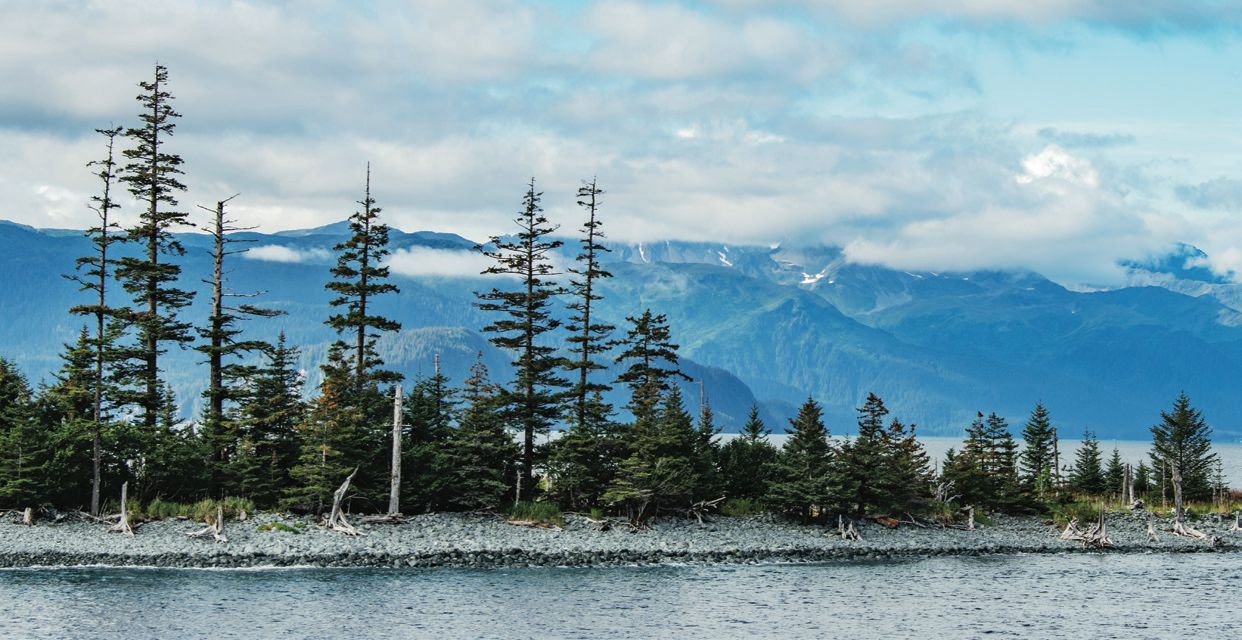
SR 1 continues to snake along the western coast of the Kenai Peninsula for another 170 miles. After riding through the rain along the coastal highway most of the day again, we arrived at the Homer Spit, a narrow strip of land that juts into the beautiful Kachemak Bay. The sun had finally broken through the clouds just as we rode into Homer and had revealed the stunning mountain range across the bay. The weather was perfect, so we parked the bikes and spent some time browsing in the seasonal shops that populate the spit, selling various handmade knives and keepsakes. Marisa found a coffee and ice cream shop and we ordered one of her favorites, an affogato. The sunshine had warmed us, so we found a place to sit on the black rocky beach and enjoy our cold coffee treat while we watched the fishing boats come and go.
All the food in Alaska is spectacular but the fresh seafood is particularly good, especially in Homer. Halibut and cod are common on menus up and down the Alaskan coastline, along with king crab and Alaskan oysters. The oysters were high on our list to try. They are plump and juicy with a clean and refreshing taste that only the coldest waters of the ocean can induce. If you truly want to understand a place and its people, you must first eat like a local—that is, according to what the land (or sea) provides.
The White House Inn has an outdoor hot tub that overlooks the Kachemak Bay and the distant snowcapped mountain range. We nursed a local brew as we soaked in the hot tub and watched the sun set. The property is a perfect place to watch the tide roll in and out. The tides in the Kachemak Bay are some of the largest in the world and the shallow slope means low tide reveals hundreds of feet of rocky coastline. We couldn’t have had a better coastal Alaskan evening if we tried.
Cruising in Seward
From Homer, we backtracked up SR 1 as it’s the only route to and from the small town. Our destination was Seward, just over 200 miles away. We’d stocked up on local reindeer jerky and made our way to Skilak Lake, where we had a lunch of dried meat and enjoyed the view and the feeling of being alone in the quiet wilderness. On the way to the lake, the roads had turned to gravel, which was a welcome alternative to the highways we’d been riding.
Seward is a port town located on the remote eastern edge of the Kenai Peninsula and the head of Resurrection Bay. The next two nights we would be staying in a village of yurts in the middle of the woods near Seward and the famous Exit Glacier.
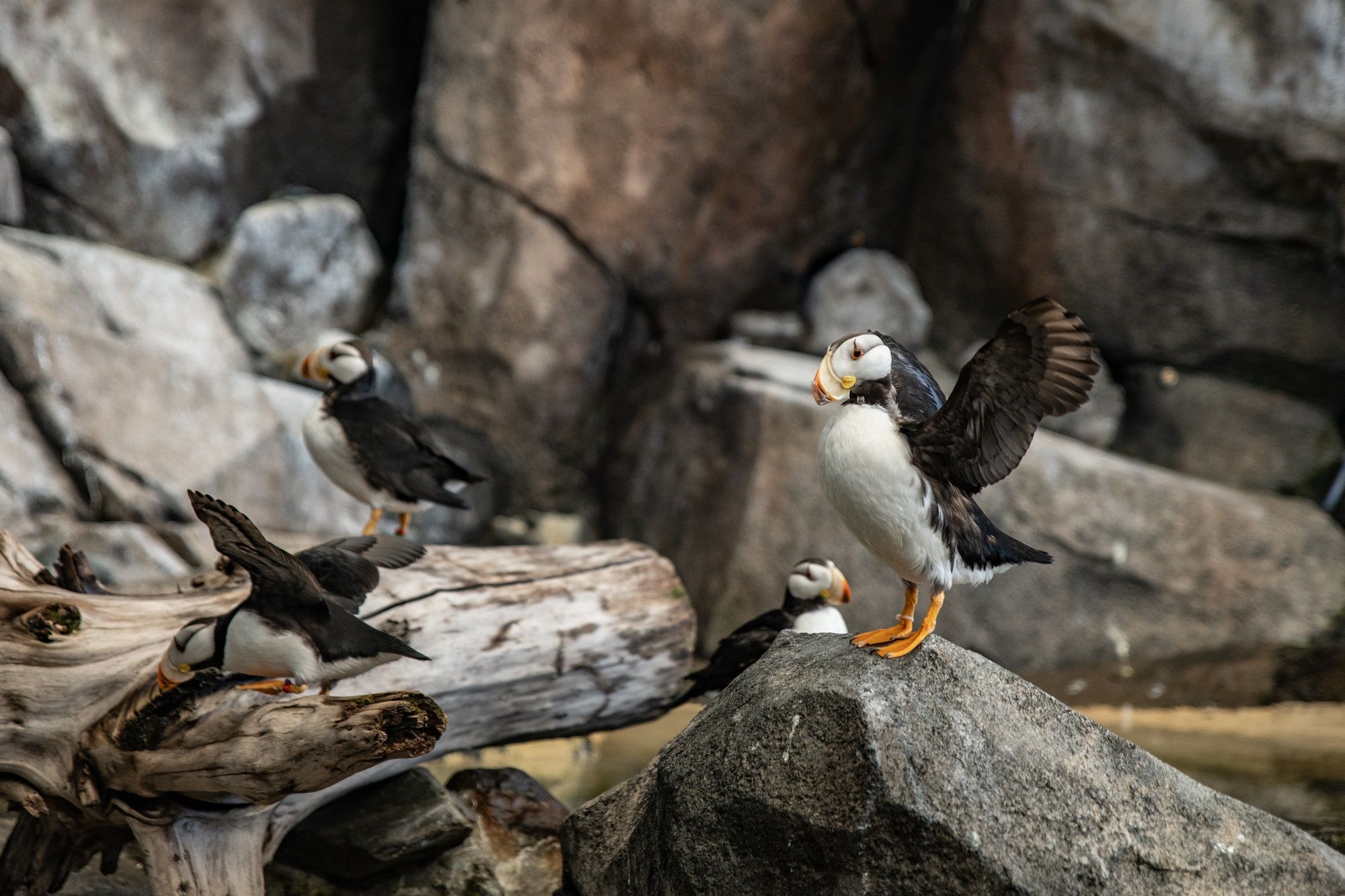
We were excited to wake to perfect weather the following day and made our way into downtown Seward, where we had scheduled a wildlife cruise in Resurrection Bay. We arrived early and had time to visit the Alaska SeaLife Center, a nonprofit facility that’s primarily dedicated to marine research and education but also conducts marine mammal rescue and rehabilitation. The facility hosts a plethora of local wildlife, including puffins and sea lions that you can see up close!
When you think about coastal Alaska, you’re probably picturing Resurrection Bay in your mind. It is a large fjord surrounded by tall mountains and glaciers. Every direction you look in this area consists of postcard-worthy vistas. The tour of Resurrection Bay was spectacular—we spotted all manner of wildlife ranging from humpback whales to sea otters and puffins. There are also many natural rock formations to see if the wildlife is shy, such as giant spires of rock that protrude out of the nearly 1,000-foot-deep bay. Glaciers can be seen across the water and giant chunks of ice that had broken off were carving their way toward the water. The cruise was an excellent way to get a different perspective of Alaska, one we wouldn’t have been able to experience from the seat of a motorbike.
A Grand Exit
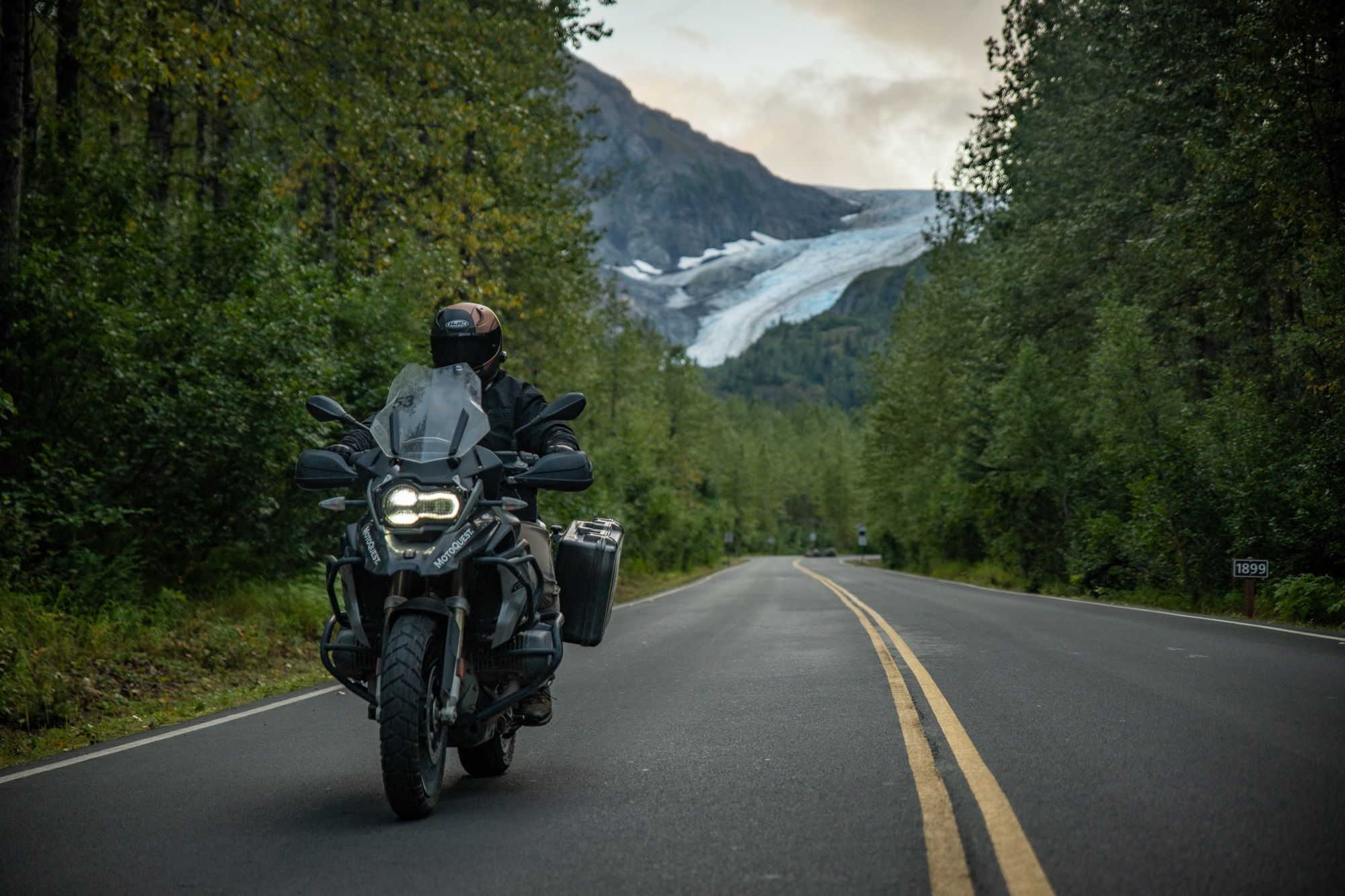
A few miles outside of Seward, we made our way toward Exit Glacier, one of the most accessible valley glaciers in Alaska. It loomed in the distance as we approached via the twisty pavement that snakes along the valley floor. As we got closer, we started to notice signs on the side of the road with years printed on them, a visible indicator of glacial recession. At first the signs were spaced far apart, but as we got closer to the glacier we noticed them becoming more and more frequent.
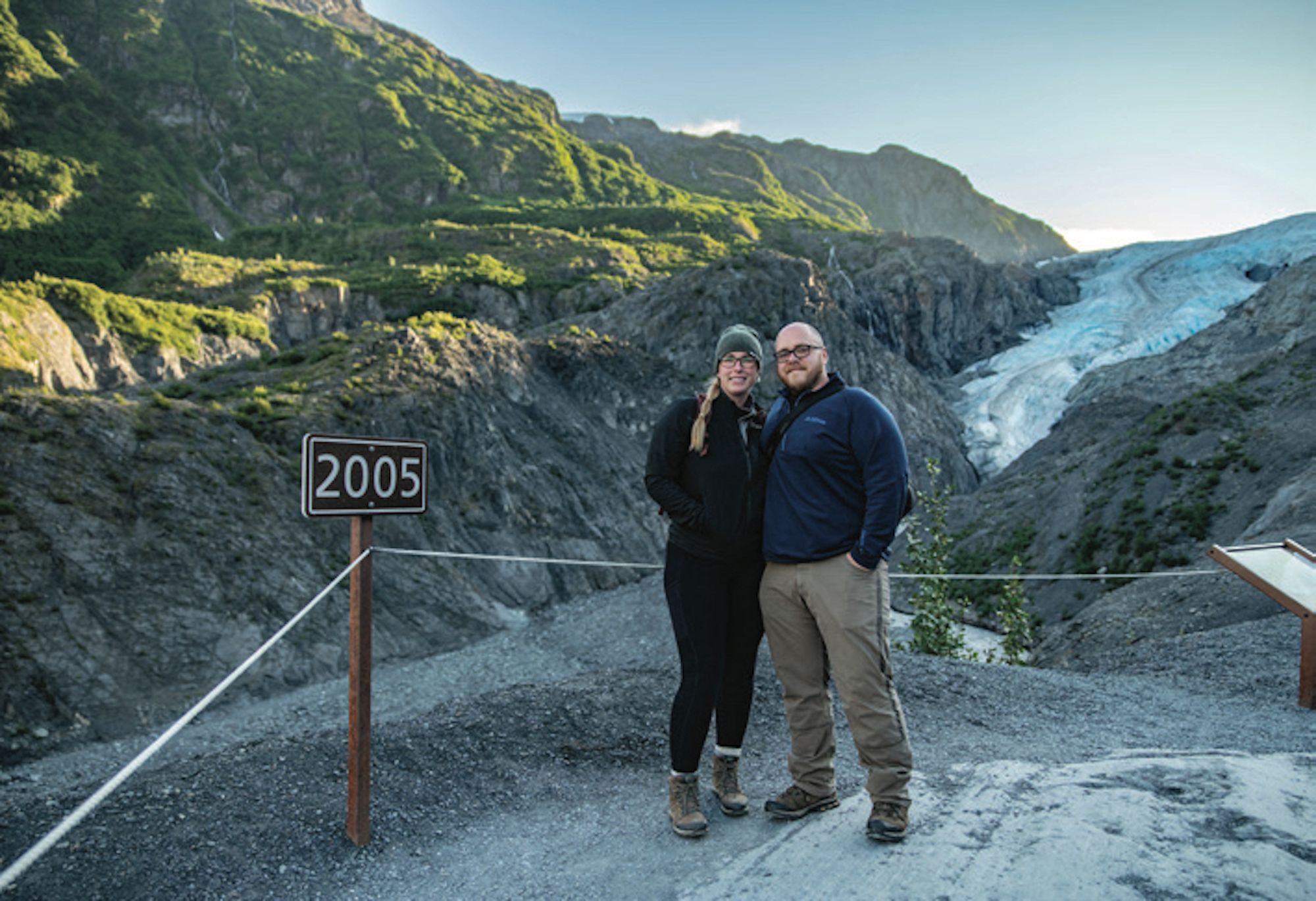
After a short hike, we reached the 2005 sign. We stood at the base of the glacier, shocked at how much it had receded in less than two decades. It takes 10 years to form one foot of glacial ice, but hundreds of feet have melted in the span of a few years. It was hard to not feel a sense of angst. The planet is changing drastically, and Alaska is one of the places where you notice it the most.
Fireweed
After a breakfast of Belgian-style crepes, we had a short ride back to Anchorage on the scenic Seward Hwy, which we were well-acquainted with at this point. When planning riding trips in Alaska, you’ll notice that there’s often only one way to get somewhere, unlike in the continental U.S. You go where the rugged landscape lets you. Luckily, you’ll be riding in Alaska, so even though you’ll be doubling back, there’s still plenty to look at. While making this final trek along SR 1, we spotted a group of beluga whales near none other than Beluga Point. They surfaced long enough for us to catch a glimpse, but not long enough to snap a photo. This moment will have to remain in the album of our minds. Once back in Anchorage, we stopped at a grocery store and got supplies to make our own rendition of reindeer chili.
From Anchorage, we set off toward Talkeetna, a small town on the Susitna River. On the way north we rode over Hatcher Pass, an absolutely breathtaking gravel road that traverses the Talkeetna Mountains and connects the towns of Willow and Palmer. The pass is a popular destination for paragliders and the day’s perfect weather meant these daredevils were eager to take to the skies. We stopped for a few minutes to admire the picturesque view and to watch the gliders leap from the mountain peaks and soar on updrafts created by the dramatic topography.
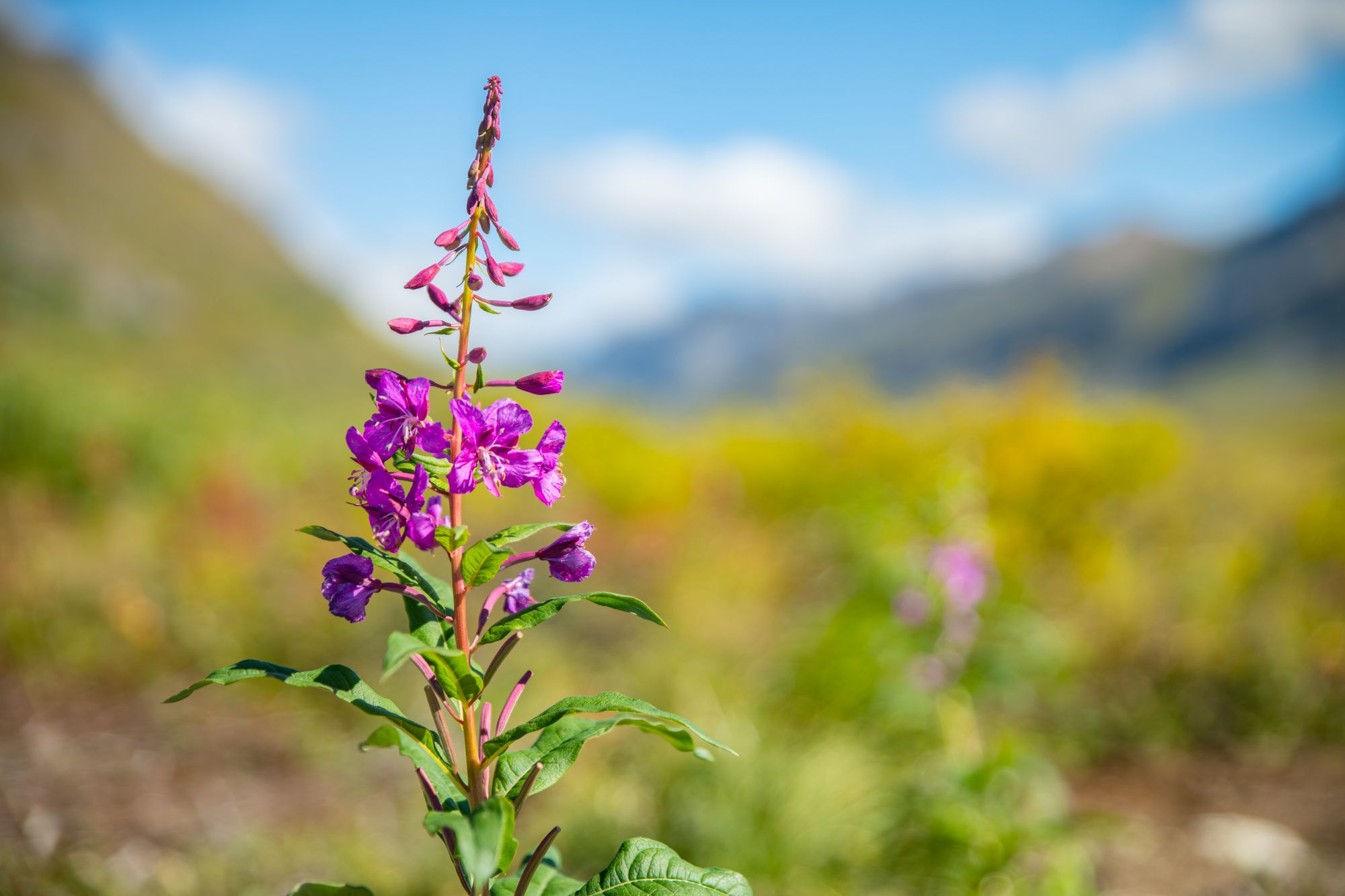
Along the side of the road in Alaska grows a familiar pink flower called fireweed. It’s the Alaskan flower of summer. Fireweed blooms over several months, with the lower flowers starting near spring and moving upward as the season progresses. Locals say, “summer is over when the fireweed blooms reach the tip.” It’s a robust plant that’s often the first to grow in devastated areas, such as those right after a wildfire, which is how it gets its name. Advice from fireweed: “Live a colorful life. Put your roots down. Spread seeds with care. Blanket the earth with beauty. Cover lots of ground. Have a sweet nature. Show up when needed.” We could all stand to learn a lot from the plant.
Once in Talkeetna, we found a small ice cream shop called Shirley’s Northern Lights Gourmet Ice Cream that was selling fireweed ice cream with a sweet and herbal flavor to it. After our brightly colored sweet treat, we made our way to Talkeetna Riverfront Park and watched the sun as it set beside the mighty snow-covered Denali, some 90 miles in the distance. It was the perfect end to an amazing day exploring Alaska.
High Points in the Mountains
Though this trip had started with less than ideal weather, it ended on a very high note. We made our way south from Talkeetna, back across Hatcher Pass and to the spectacular Glenn Hwy, as we traveled to Glacier View.
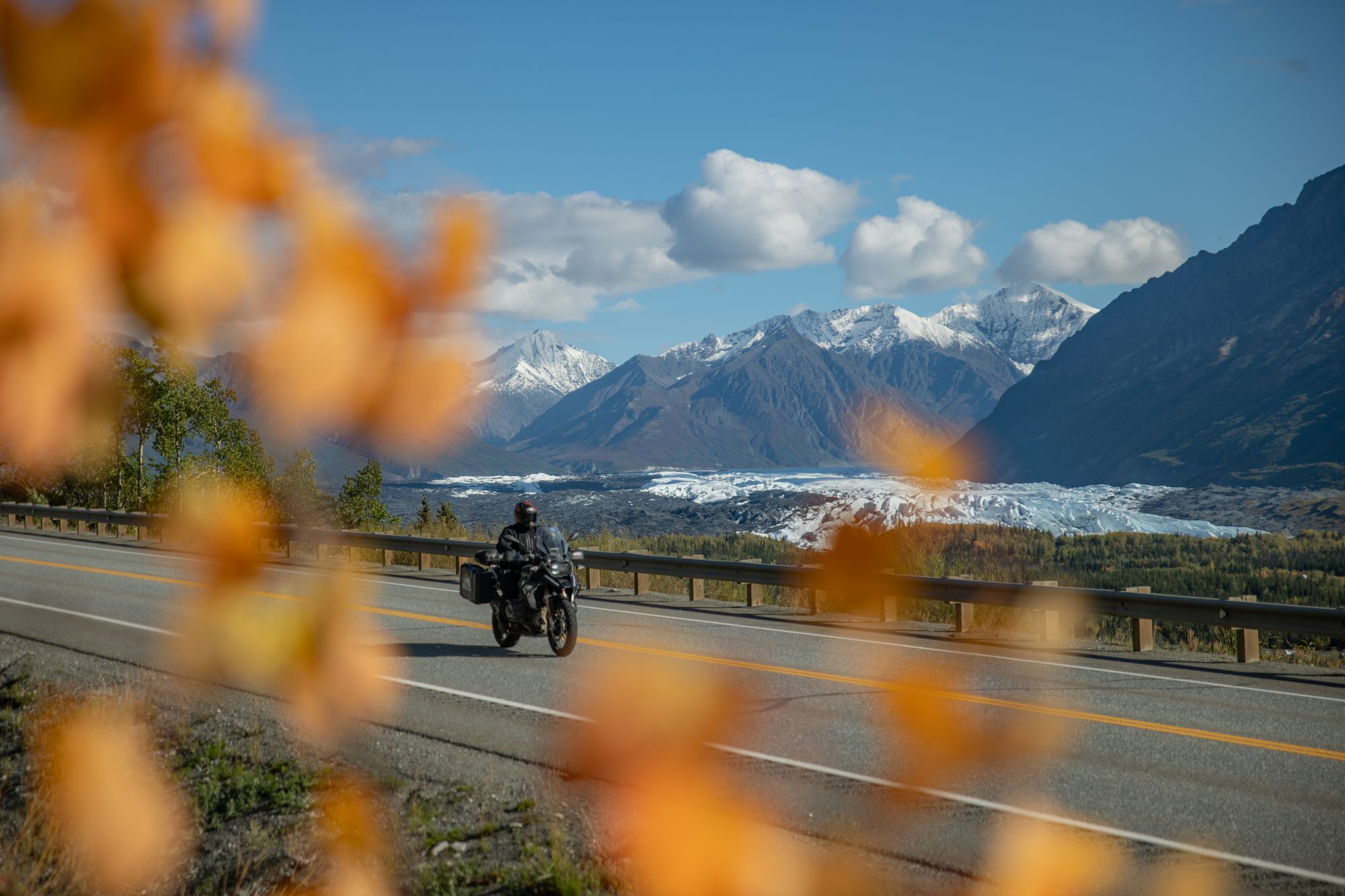
Glacier View is a small town along the Glenn Hwy that, as you may have surmised from the name, is close to Matanuska Glacier which can be seen in the valley below the scenic highway. The ride from Talkeetna was short and we arrived at the Sheep Mountain Lodge early. We dropped off our luggage and went back out to explore. We wanted to get as much riding in as possible, and this stretch of the Glenn Hwy consisted of twisty tarmac and amazing views.
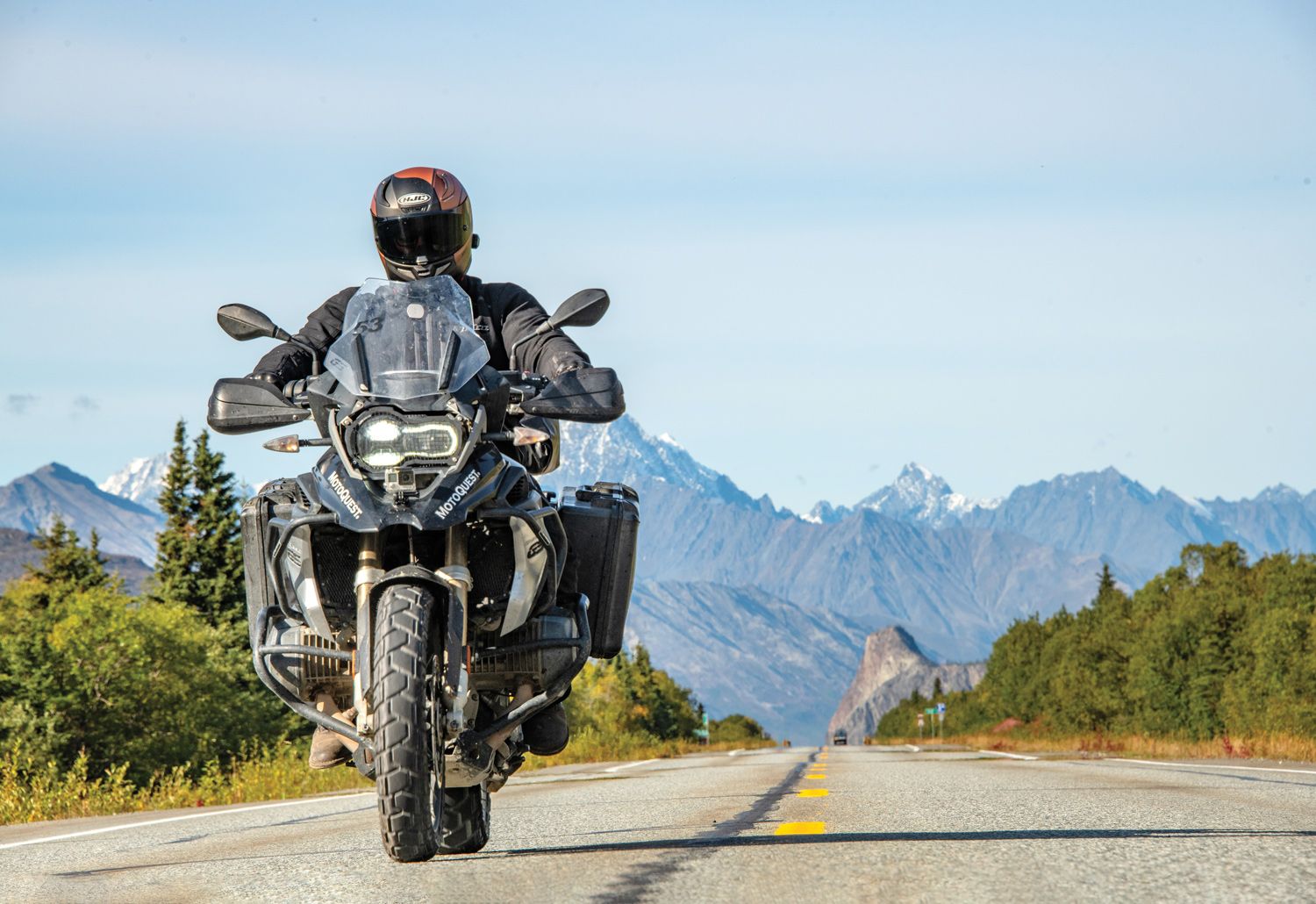
Up Close
Rather than letting the final day of the trip slip away, we’d planned a hike to the top of Flattop Mountain in Chugach State Park after returning the bikes at noon. We spent the rest of the day ascending the mountain and were rewarded with a gorgeous sunset overlooking Anchorage and the mountain range across the Cook Inlet. We looked down on the planes flying into Anchorage and reflected on our Alaskan journey as night fell.
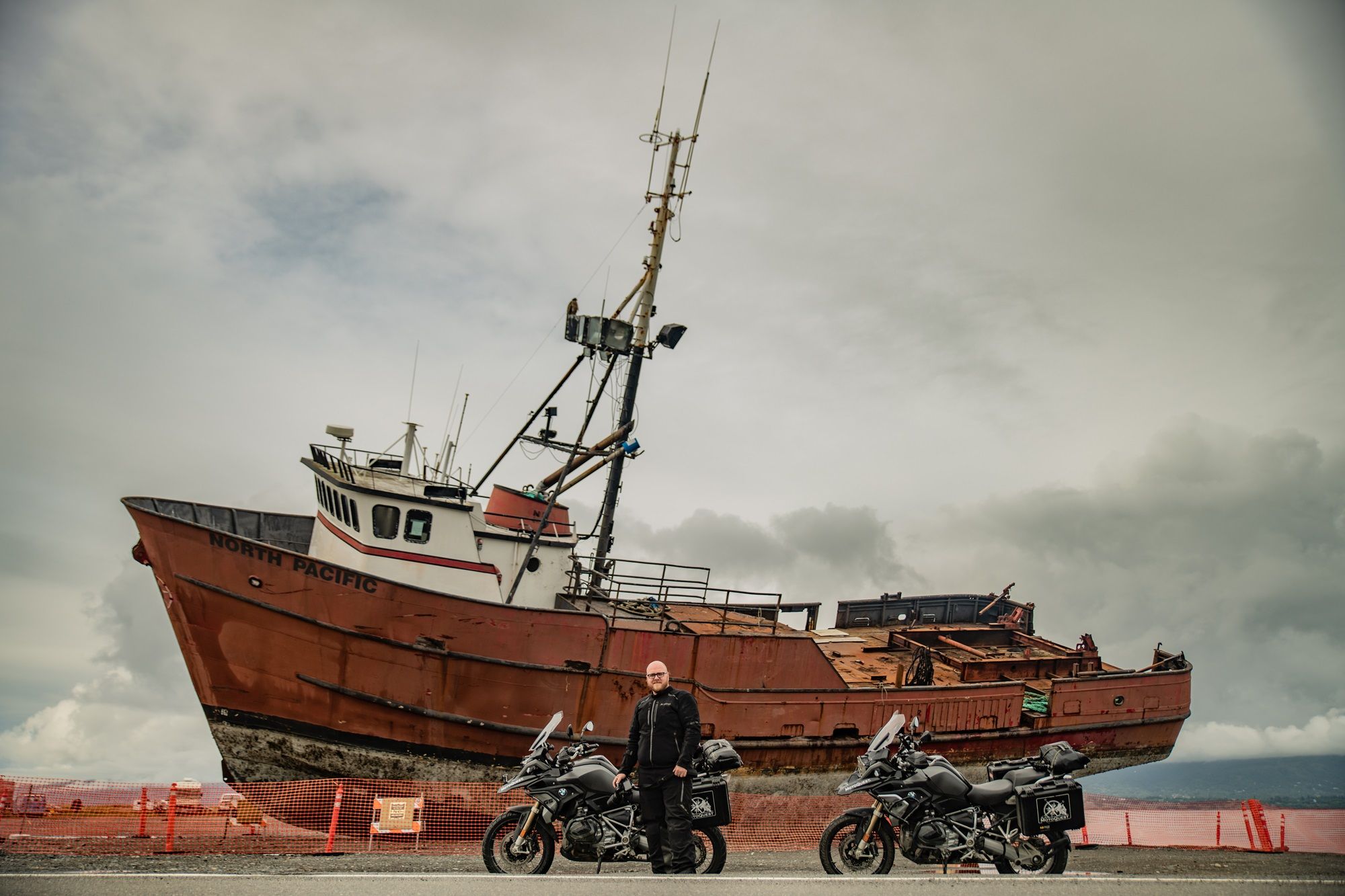
It was dark as we descended the mountain along the rocky, switchback hiking trail. Suddenly, we heard a snort from above. We instinctively looked up and our headlamps illuminated the glowing eyes and massive rack of a gigantic bull moose that was easily over 1,000 pounds. He was looking right at us, less than 20 yards away, and we quickly reverted our gaze to the trail as we began walking away as quickly but as calmly as possible. Luckily, he was bedded down and we were there before the rut that takes place in late September and early October so he didn’t decide to pursue us. That moment was without a doubt the most harrowing of the trip as moose injure more people in North America than any other animal.
A Wild Perspective
Traveling around Alaska has an undeniable effect. You can’t help but feel a greater connection to the earth, and a deeper respect for our planet. I’d imagine it’s similar to the feeling astronauts report when looking back at Earth. Being there can provoke a sense of respect and oneness with nature that you’re not going to get on your daily commute. Alaska’s designated wilderness comprises roughly 54% of the entire nation’s wilderness area so once you leave the bastions of civilization, you quickly feel like you’re at the mercy of your surroundings. Seeing grizzly bears in the distance and our close encounter with the giant moose helped to quickly cement that even though we are still on top of the food chain, the gap between our species is smaller in this part of the world.
Seeing large rivers flowing from ancient glaciers and traveling for miles on roads that would’ve been beneath the ice just a few years ago puts the finite nature of our planet and its resources squarely in perspective. Regardless of the root cause of this change, it made me think about the things we could all do to benefit our planet and humanity.
It’s hard for me to imagine that in just a few months all the beauty we’ve seen will be covered in snow and shortly after that, by nearly perpetual darkness. I’m already planning a trip back to see Alaska in the winter, alongside the Northern Lights. I wonder if BMW will release a snow track and ski for the GS any time soon?
MotoQuest
MotoQuest is a motorcycle rental and touring company based in the U.S. with rental locations across the west coast—including Anchorage. The Anchorage location is open in the summer months and they rent a variety of Suzuki and BMW motorcycles. They are experts on the area and can give plenty of recommendations for things to see, places to eat, and more.
The R 1250 GS’s were prepped and ready to go when we arrived, and it only took a few minutes to sign some paperwork and do a pre-ride check. Upon arrival back to the MotoQuest office at the end of our tour, they greeted us with cold beer and questions about how our trip was. The entire staff was extremely friendly and talkative, even though they were all busy shuffling bikes, cleaning, and getting people geared up for their adventures. If you are looking to fly into Alaska to ride motorcycles, MotoQuest will have everything you need. Find it at 4346 Spenard Rd, Anchorage, AK, (907) 272-2777.
Facts & Info
Approximately 1,500 miles
Overview
South of Anchorage and the Chugach Mountains lies the Kenai Peninsula. It extends into the Gulf of Alaska and is separated from the mainland by the Cook Inlet. The peninsula is one of the few places in Alaska that can be explored without an airplane.
Alaska contains over 220 million acres of federal land and more than 57 million acres of it is designated wilderness area. Once outside of settled areas, fuel, food, and lodging will be hard to come by. The best time to travel in Alaska will be the summer months as the days are very long and the temperatures range from 60-80 degrees during the day, but can dip into the 40s at night. May will be the driest month.
Roads and Biking
This tour will be best suited for larger comfortable adventure touring bikes as the roads are generally straight and paved and the gravel roads are well-groomed and often traveled during the summer. However, any motorcycle would be capable of traversing all the roads with an experienced rider. Traffic is not terrible but will be worse than anticipated due to the fact that there is usually only one highway between towns. During the summer, expect to happen across road crews scrambling to repair routes that have been damaged during the harsh northern winters.