Yamaha Announces New Performance-enhanced 2026 YZF-R7
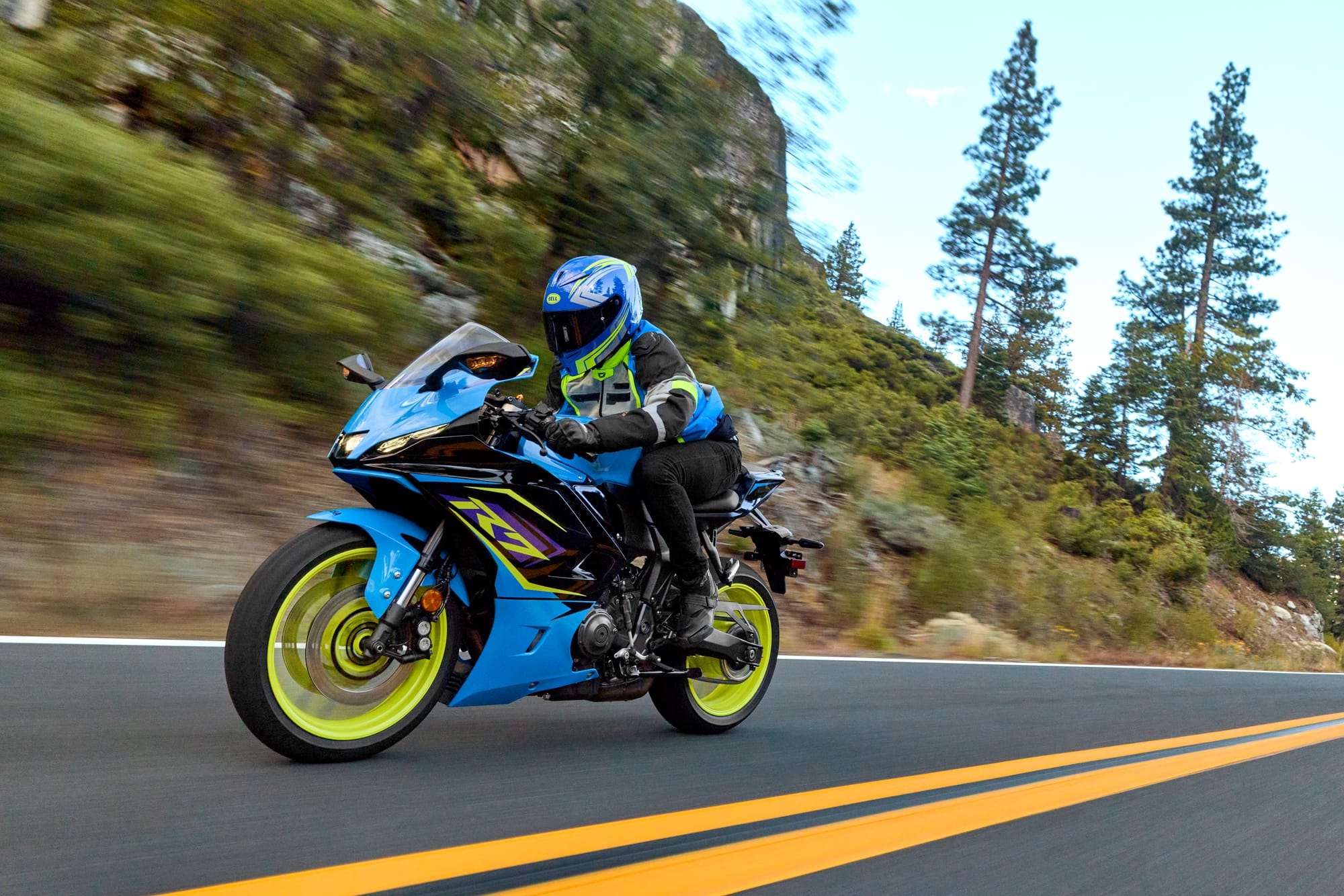
This year was big for Yamaha, as the Japanese powersports icon celebrated its 70th anniversary. To commemorate the milestone, the company unveiled an upgrade to its supersport lineup for 2026 in the form of a new YZF-R7.
This updated motorcycle introduces a slew of features aimed at improving the track machine’s performance, in addition to comfort and control. Although not a ground-up redesign, the bike comes with enough new things to offer a wholly different experience—alongside a special anniversary colorway.
The engine of the new YZF-R7 is the same one that powers its 2025 iteration. It draws its performance from a 689cc liquid-cooled DOHC CP2 cross-plane in-line twin.
Yamaha has given the 2026 YZF-R7 the same air intake duct shape and asymmetrical funnel lengths found on the MT-07. With this tweak, the company promises enhanced acceleration.
The engine is mated to a six-speed transmission that now comes with Yamaha’s third-generation up-and-down quickshifter. The system offers clutchless shifting at speeds above 9 mph, with upshifts above 2,000 rpm and downshifts above 1,600 rpm.
A completely revised tubular steel frame offers higher strength and rigidity without adding weight to the bike. The new R7 also features an updated asymmetrical swingarm. Together, the new chassis aims to provide a steady ride and good feedback from the road.
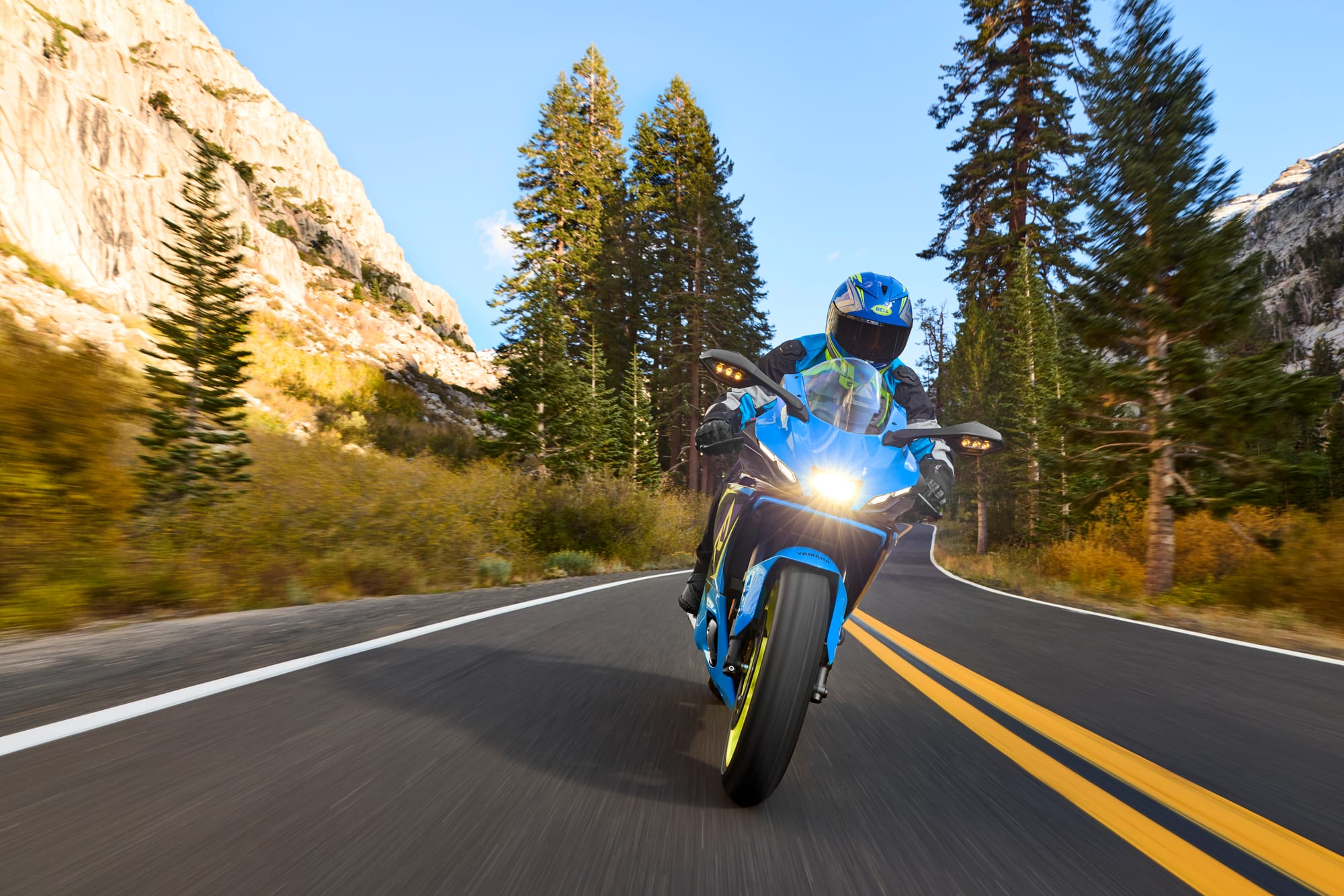
Yamaha has overhauled the R7’s electronics suite. At its heart is an advanced six-axis inertial measurement unit (IMU), which is an offspring of the unit found on the YFZ-R1. It provides input to various rider aids, including traction and slide control, wheel lift control, brake control, engine brake management, and launch control. All systems can be adjusted to rider preference.
The bike also comes with the Yamaha Chip-controlled Throttle (YCC-T) system. This ride-by-wire system detects throttle inputs with a high-accuracy sensor to instantly determine the ideal degree of throttle opening.
Yamaha has included three ride modes: Sport, Street, and Rain. They control the engine’s power characteristics and electronic intervention in ways that are familiar to any rider. In addition, the new R7 allows you to create two Custom or four Track modes tailored to your preferences.
All these electronics are adjusted through a five-inch TFT screen with various graphical themes, including a track-specific one. This new display also improves connectivity with the Y-Connect smartphone app. Full turn-by-turn navigation, meanwhile, is now available through the Garmin StreetCross app (free at the time of writing).
The 2026 R7 boasts an all-new styling, with aggressively aerodynamic shapes flowing from the front fairing to the contoured side fairings. New aerodynamic fairings increase down forces to keep the bike on the road, and the turn signals are now integrated to the rearview mirrors. The riding position has been revised with a higher handlebar position and lower seat (32.7 inches) to improve rider mobility and comfort.
New 10-spoke aluminum SpinForged wheels offer weight savings (although the total weight of the bike has increased three pounds to 417 pounds). However, the lighter wheels promise to improve suspension operation and responsiveness in corners.
The 2026 Yamaha YZF-R7 comes in Team Yamaha Blue, Raven Black, or Breaker Cyan/Raven for $9,399. Yamaha fans can pitch in for the limited 70th Anniversary Edition, which features a unique red/white/black paint scheme for $9,699. The motorcycle will be available from February 2026.
The rest of the Yamaha’s R-series models carry over from the previous model year unchanged. The R1M will retail for $27,899, the R1 for $19,199, the R9 for $12,499, and the YZF-R3 for $5,499. All are available in 70th-anniversary colors for an added cost.