2026 Big ADV Motorcycle Comparison

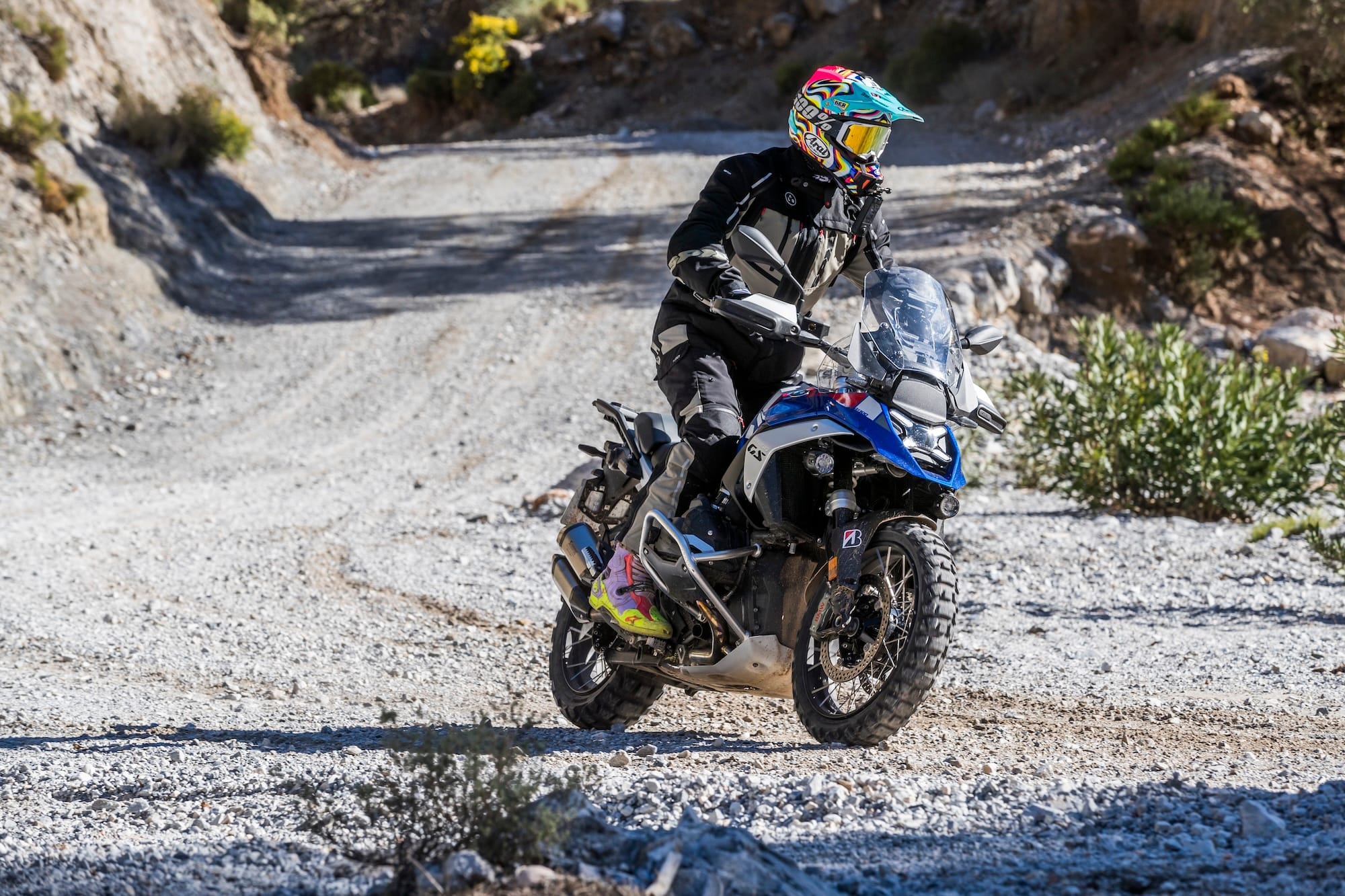
Back in 1980, when the BMW R 80 G/S kicked off the big adventure bike segment, machines like today’s test contenders would have been unimaginable. A displacement that once defined the “Big GS” now lives in the mid-size class or is marketed as entry-level. Meanwhile, big dual sport machines have largely dethroned the classic touring bike.
Thanks to modern engineering and tire technology, you can now ride a heavy ADV bike hard enough to embarrass sportbike riders on a twisty road. Afterward, you can still peel off onto a dirt track or head into the desert with luggage and a passenger.
If you doubt that, go watch some BMW GS Trophy footage, or Juan Pedrero running the Africa Eco Race on a basically stock Harley-Davidson Pan America.
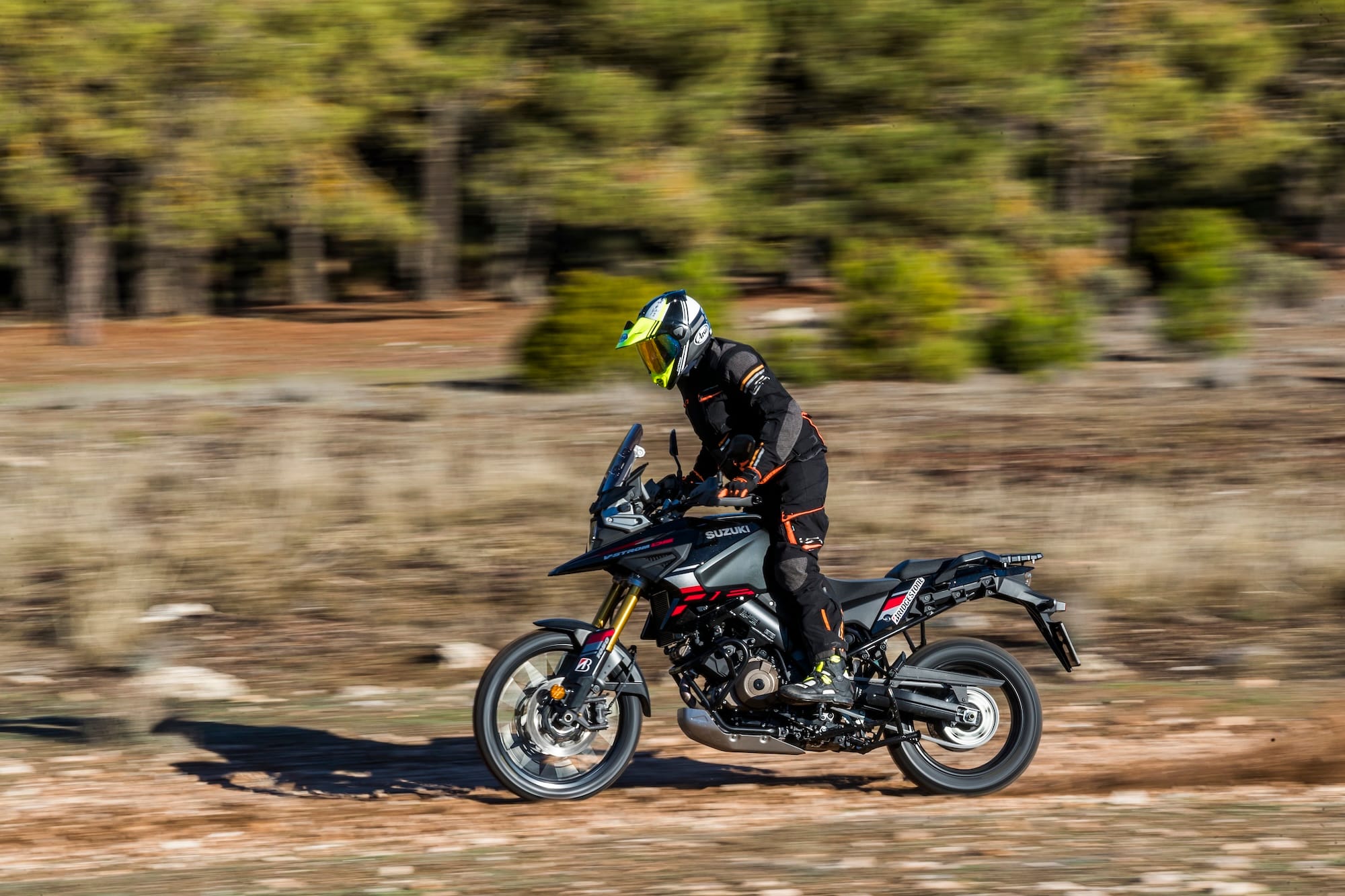
Large dual sports offer the broadest use range and perform exceptionally well almost anywhere. If you have the budget, skills, fitness, and strength, these studded superbikes can take you deep into the bush and onto the single tracks.
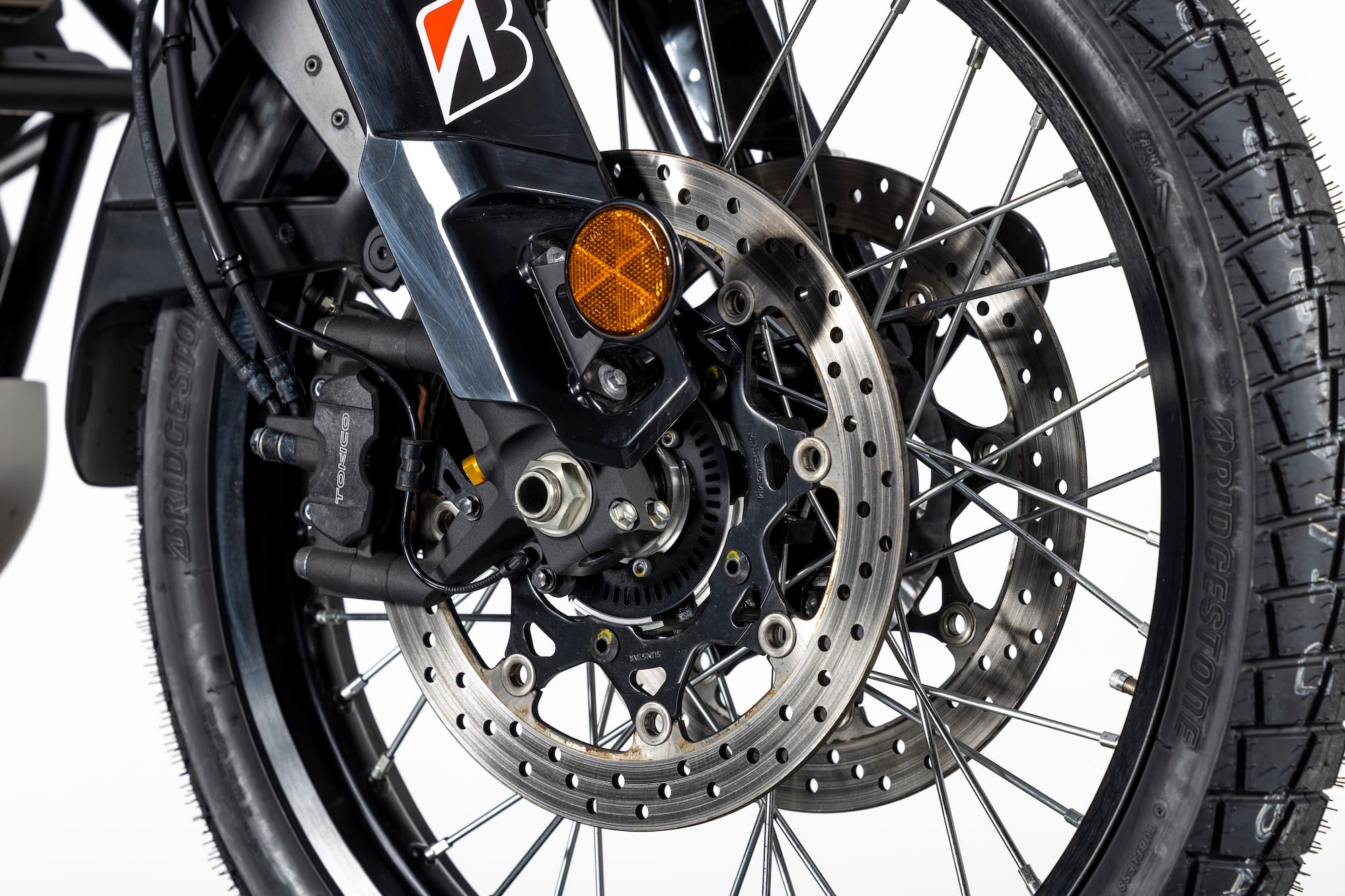
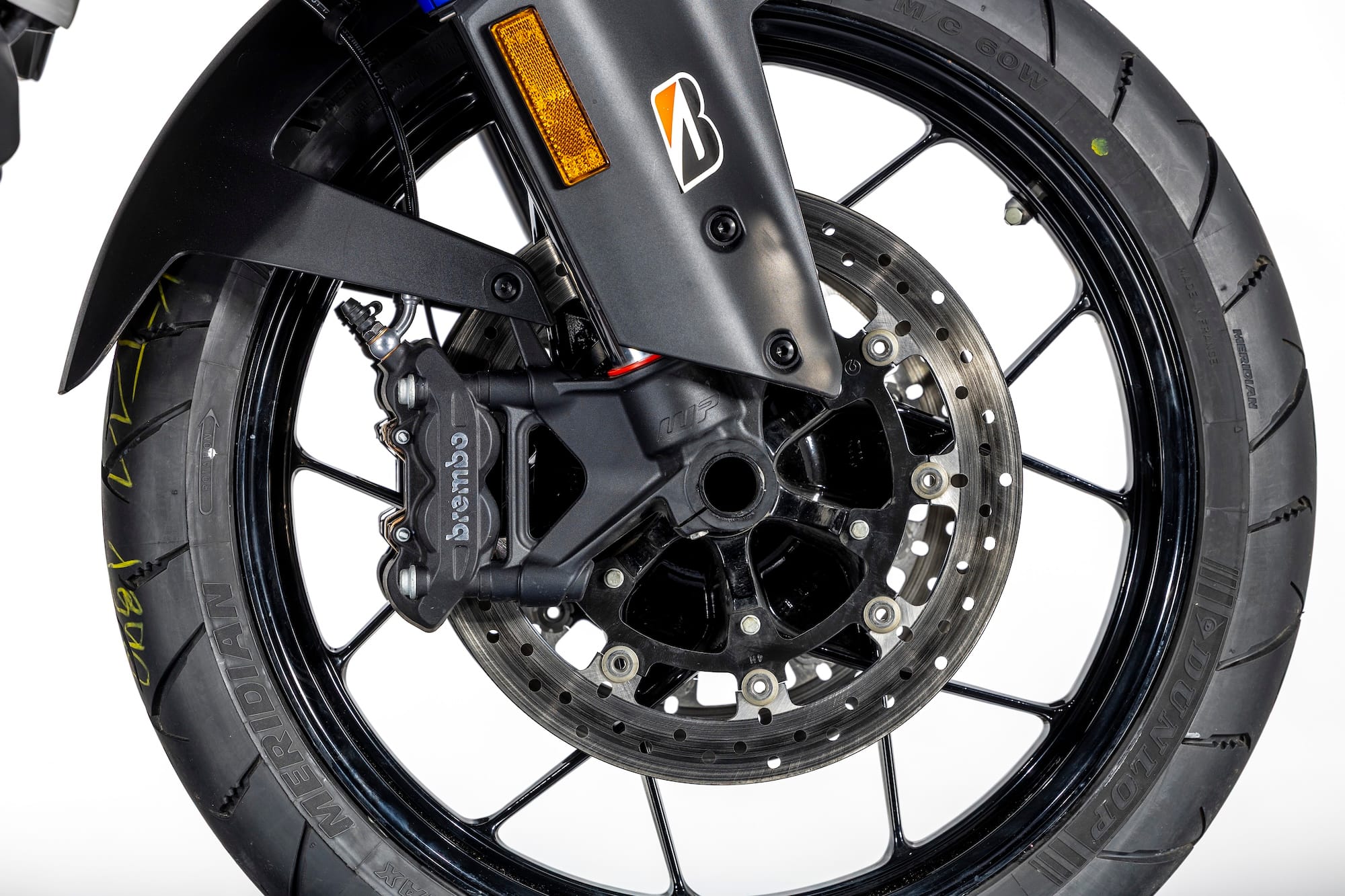
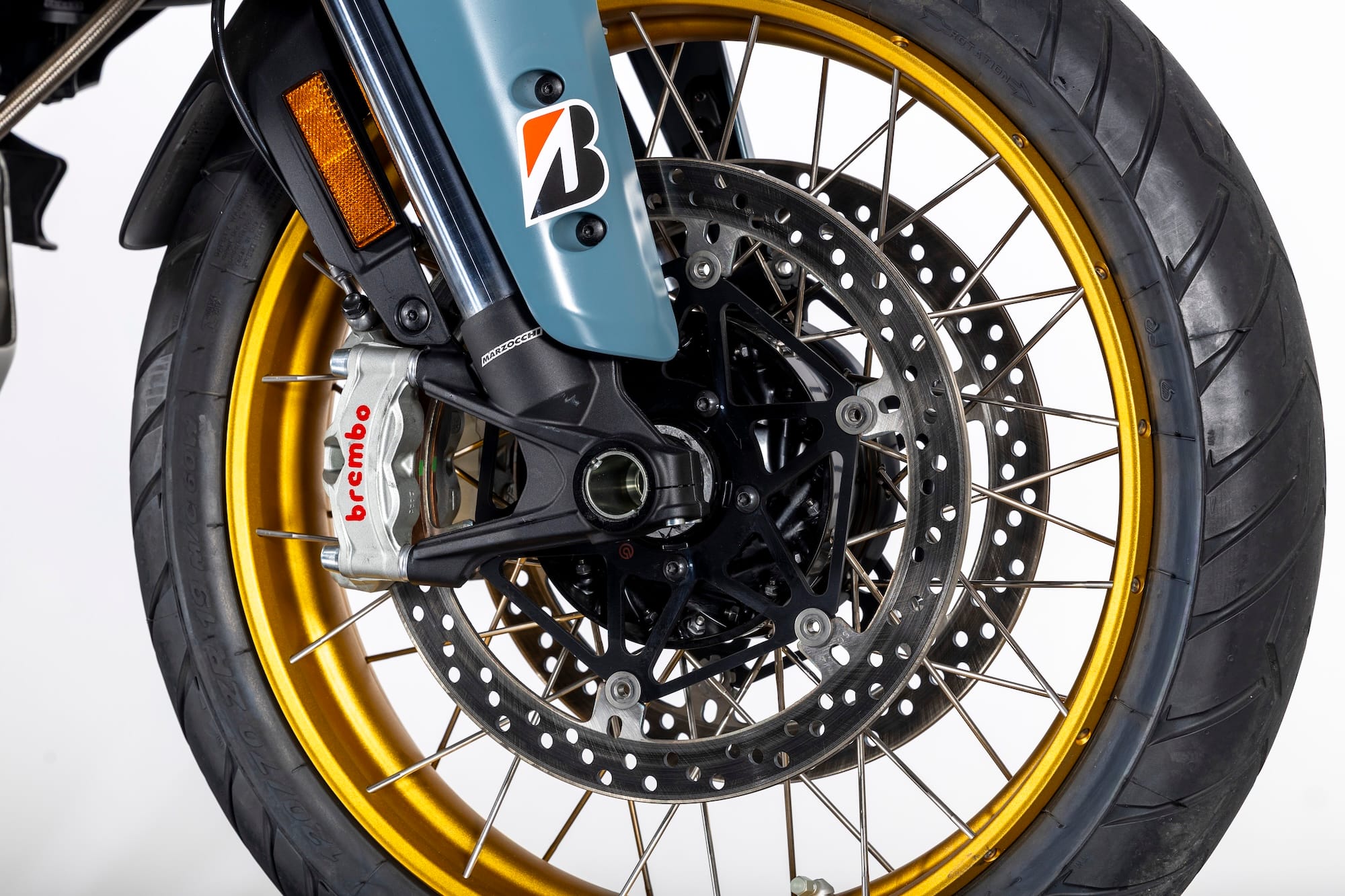
In everyday life, though, most owners care about one thing above all: how well the bike works for travel and touring. That is where this comparison puts its main focus. All the test bikes were fitted with the Bridgestone Battlax Adventure AT 41 tire for the road test, while the Bridgestone Adventure Cross AX41 tires were mounted for the off-road portion of the shootout.
Engines: Character First, Specs Second
In terms of powertrains, this comparison brings together very different concepts. There’s the two‑cylinder boxer of the BMW R 1300 GS; the in-line twin of the Honda Africa Twin; the transverse V‑twins of the KTM 1390, Harley-Davidson Pan America, and Suzuki V‑Strom; the in-line three of the MV Agusta; and the V4 of the Ducati Multistrada.
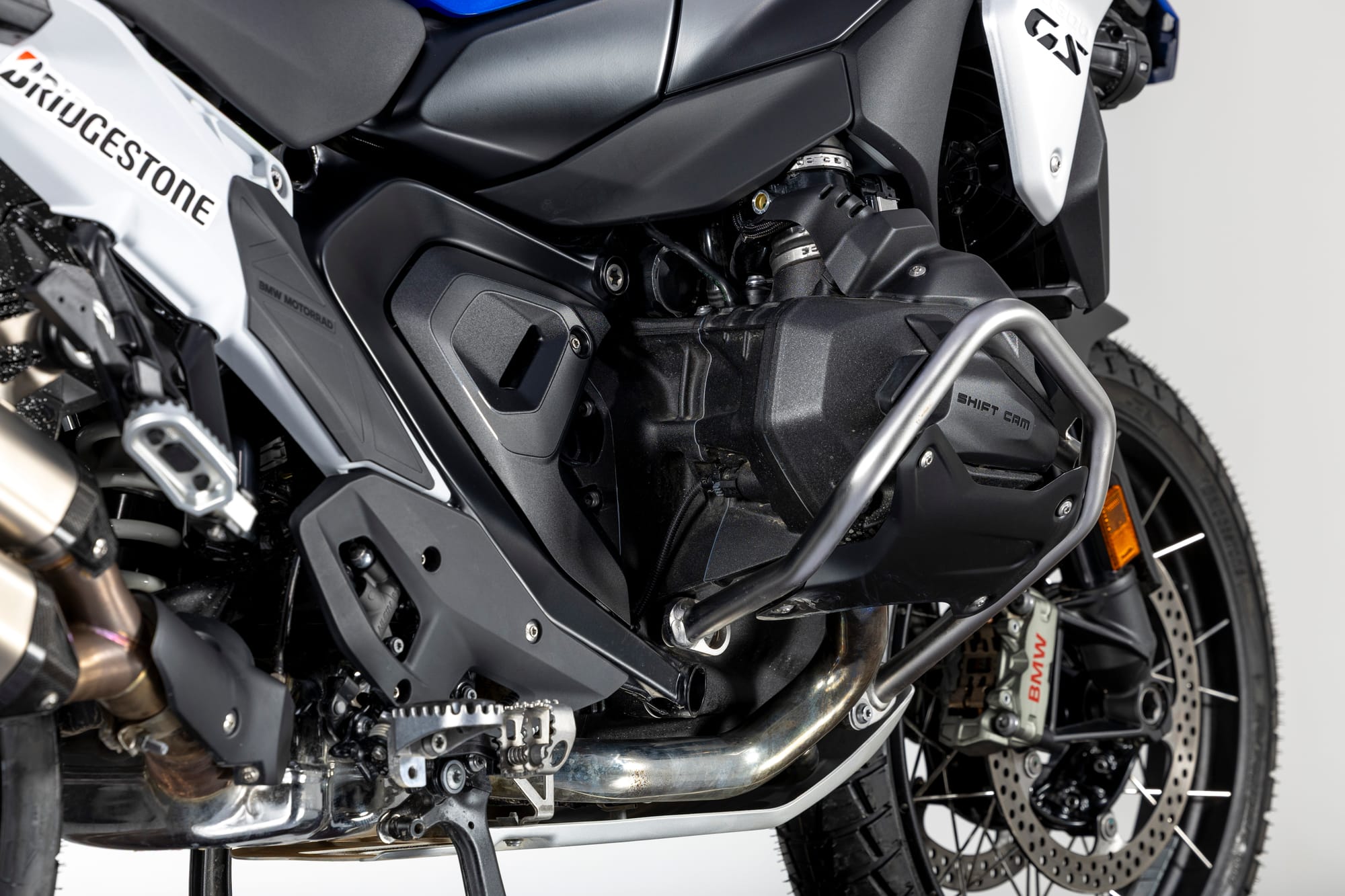
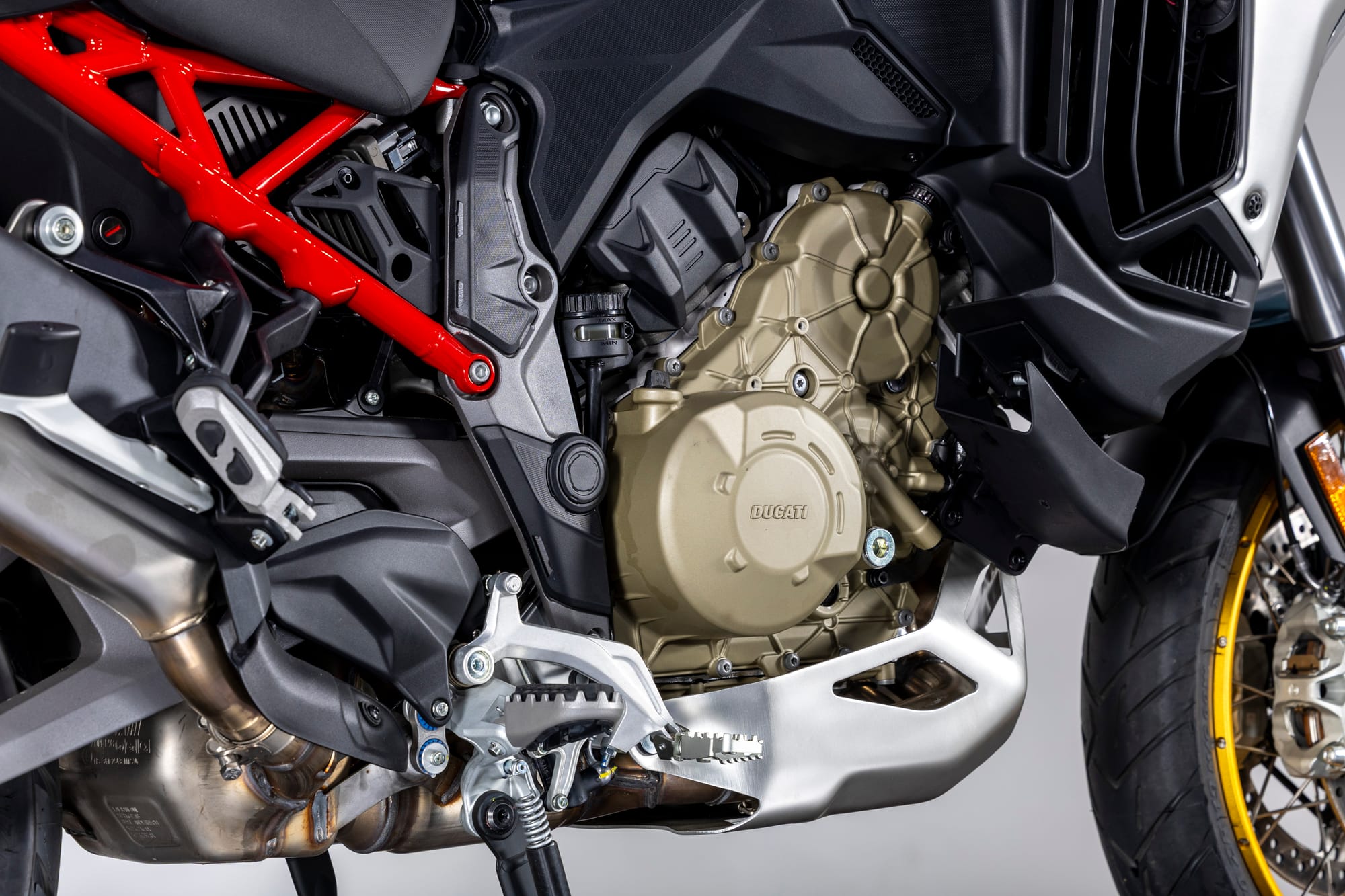
BMW R 1300 GS & Ducati Multistrada V4 Rally
Some more affordable small- and mid-size dual sports rely on similar parallel‑twin layouts for cost reasons—and feel more alike as a result. However, the premium ADV bikes are heavily defined by their engine characters, with power and torque available in abundance.
On paper, the KTM 1390 Super Adventure S Evo leads the pack with 173 hp at 9,500 rpm, followed closely by the Ducati Multistrada V4 Rally with 170 hp at 10,750 rpm. In terms of torque, the KTM is also at the top with 107 lb-ft at 8,000 rpm, thanks to its Camshift system. Ducati skips variable valve timing (VVT) on the Multistrada V4 and still delivers 91 lb-ft at 9,000 rpm.
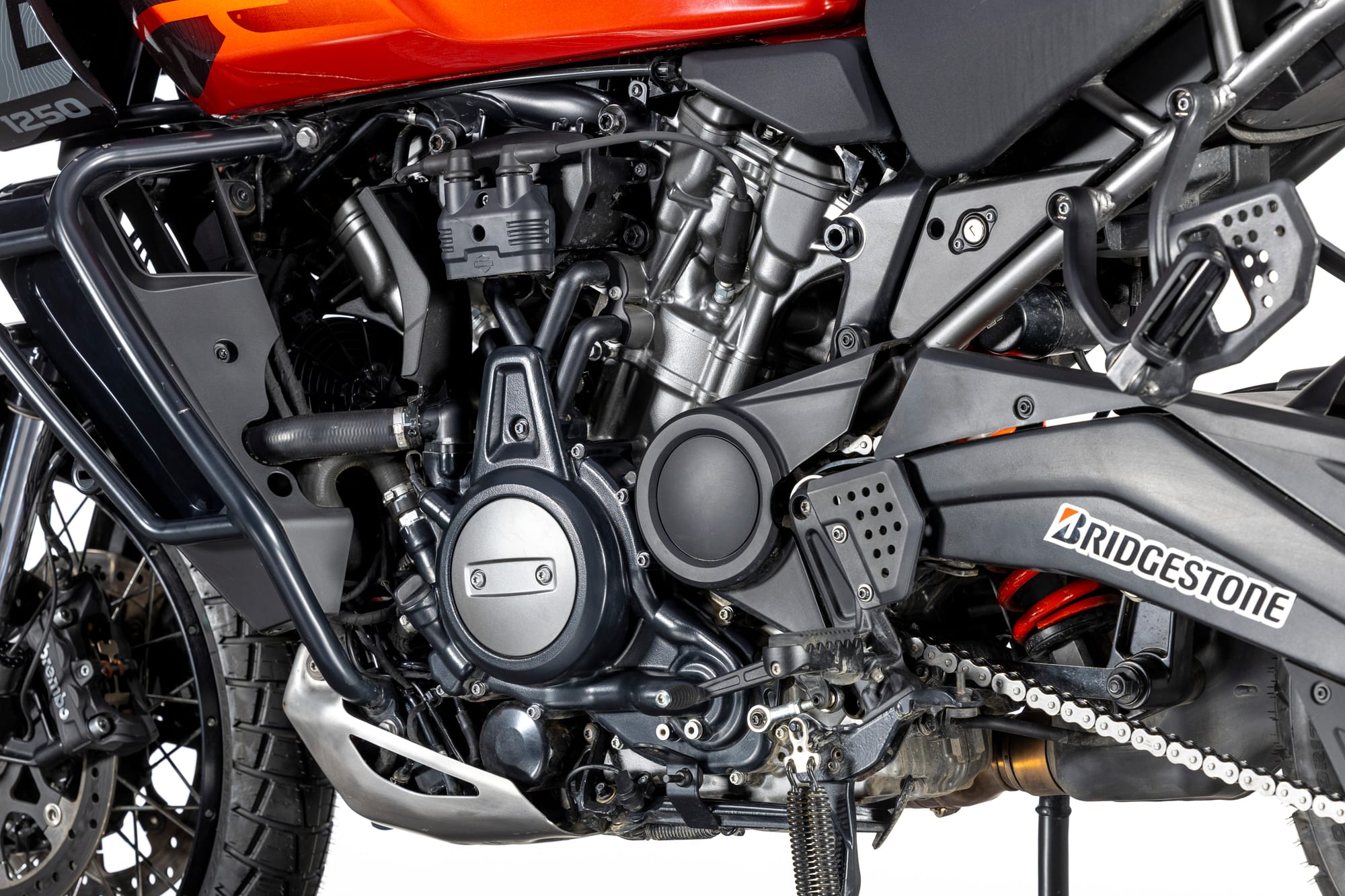
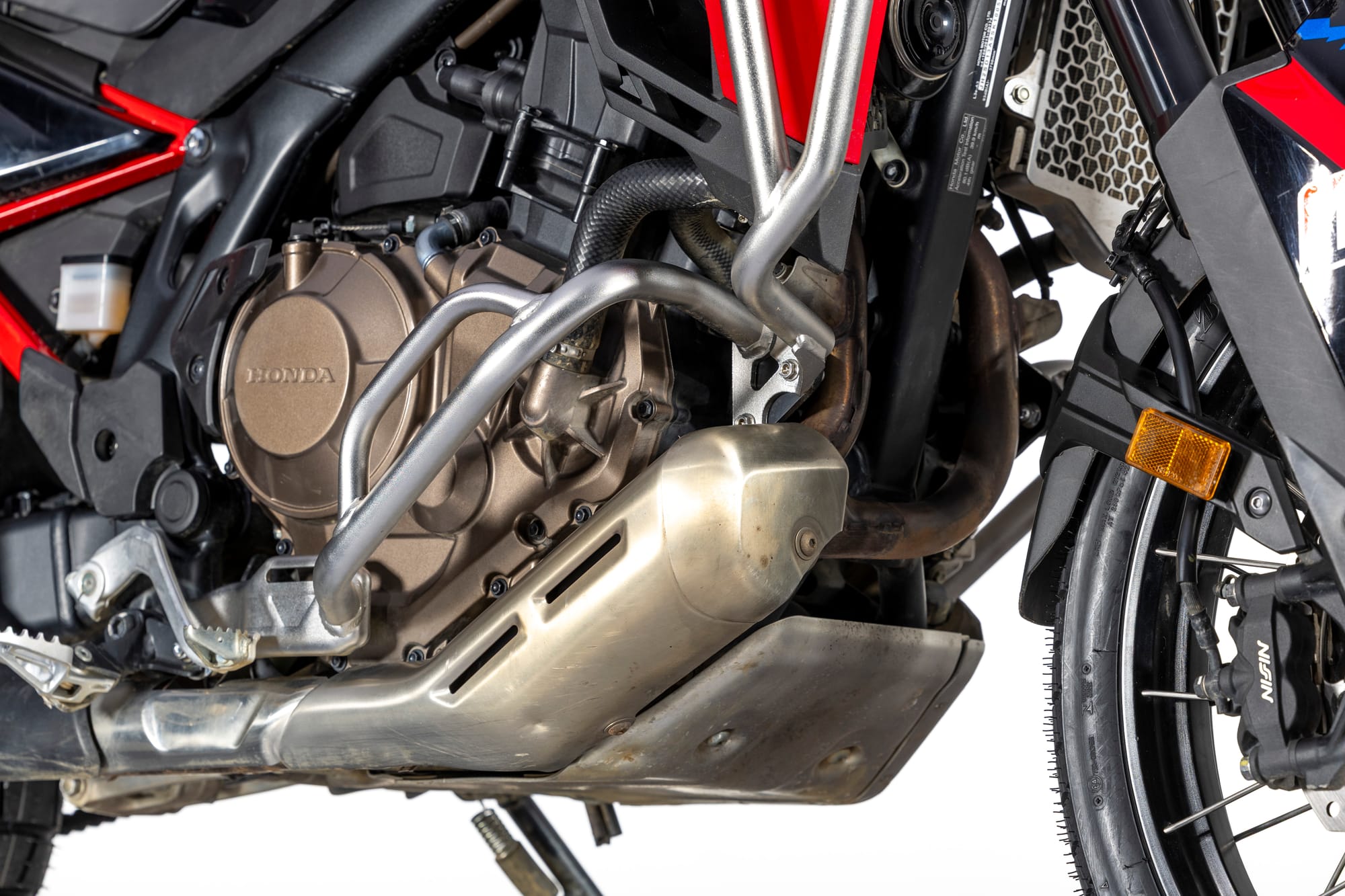
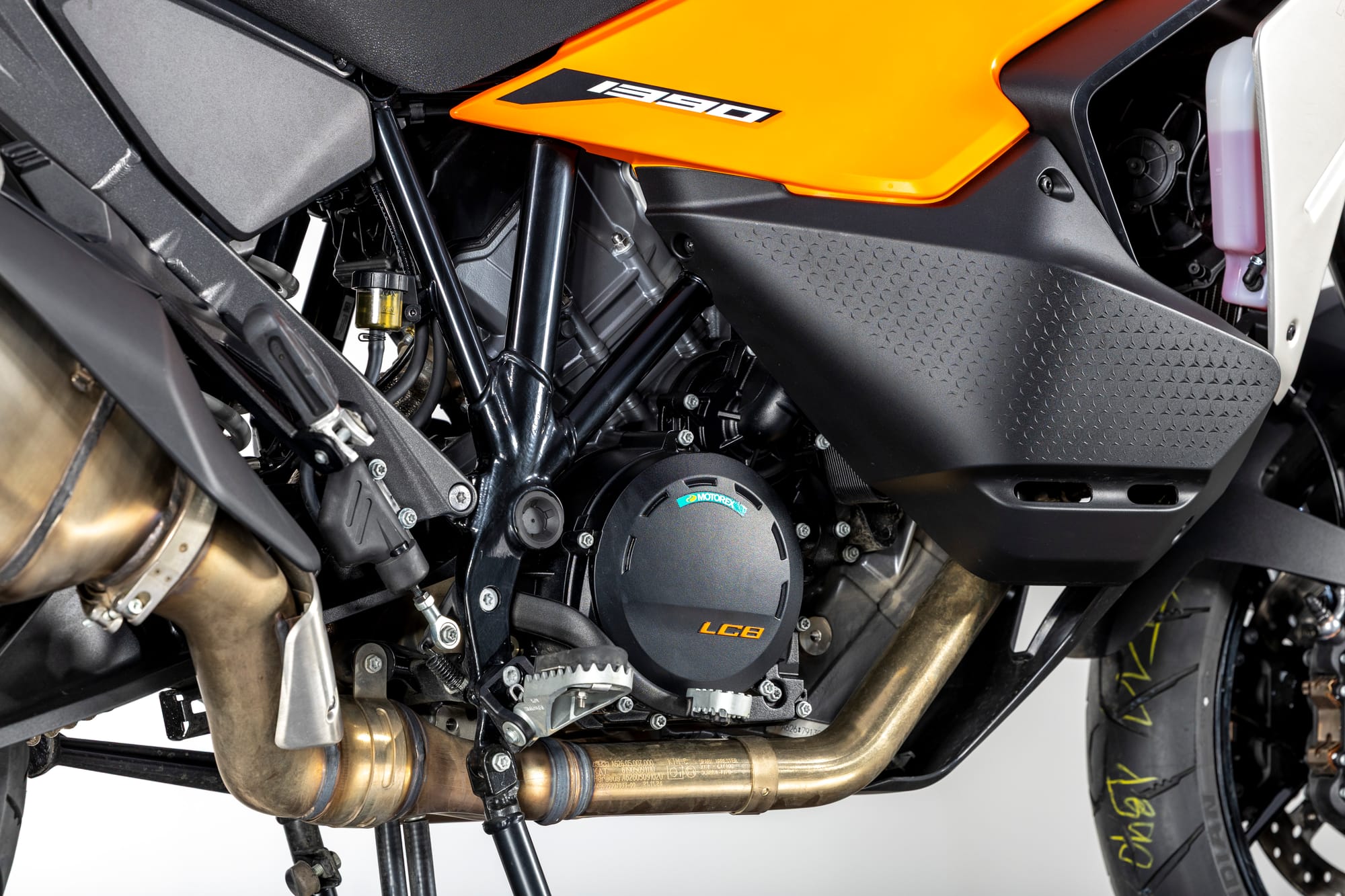
Harley-Davidson Pan America 1250 Special, Honda CRF 1100L Africa Twin & KTM 1390 Super Adventure S Evo
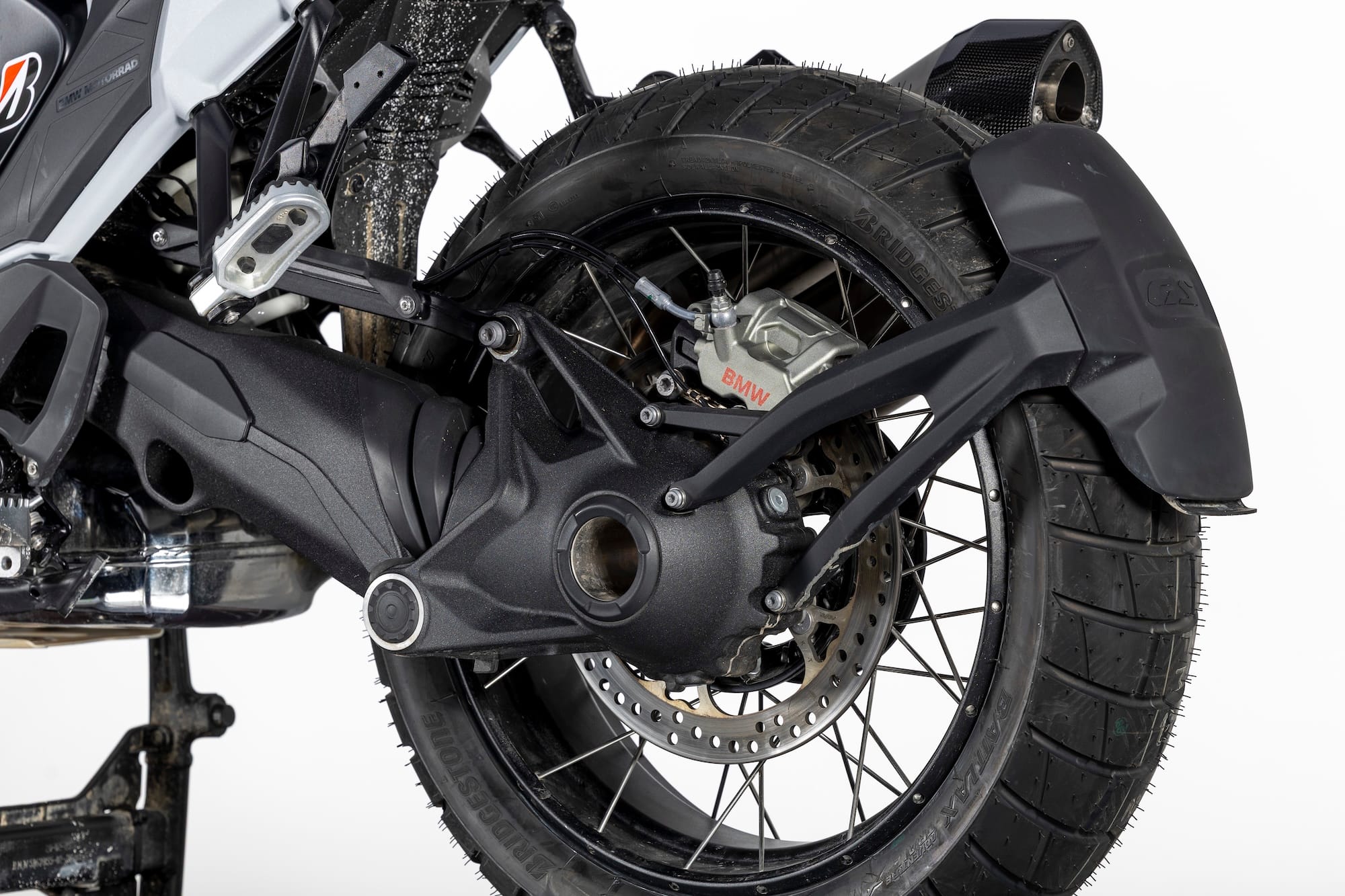
Yet, the boxer engine of the BMW R 1300 GS has become the benchmark for smoothness. This second-generation powerplant, mechanically updated in 2025 after its 2023 launch, runs noticeably quieter now. It produces 145 hp at just 7,750 rpm and a class‑leading 110 lb-ft at only 6,500 rpm, made possible by BMW’s variable valve timing. It is also the only engine here that drives the rear wheel through a shaft; all the others use chains.
The Harley Pan America 1250’s heart is the Revolution Max V‑twin with full VVT on both intake and exhaust. With 152 hp at 8,750 rpm and 94 lb-ft at 6,750 rpm, the American powerplant sits eye‑to‑eye with its European rivals in pure output.
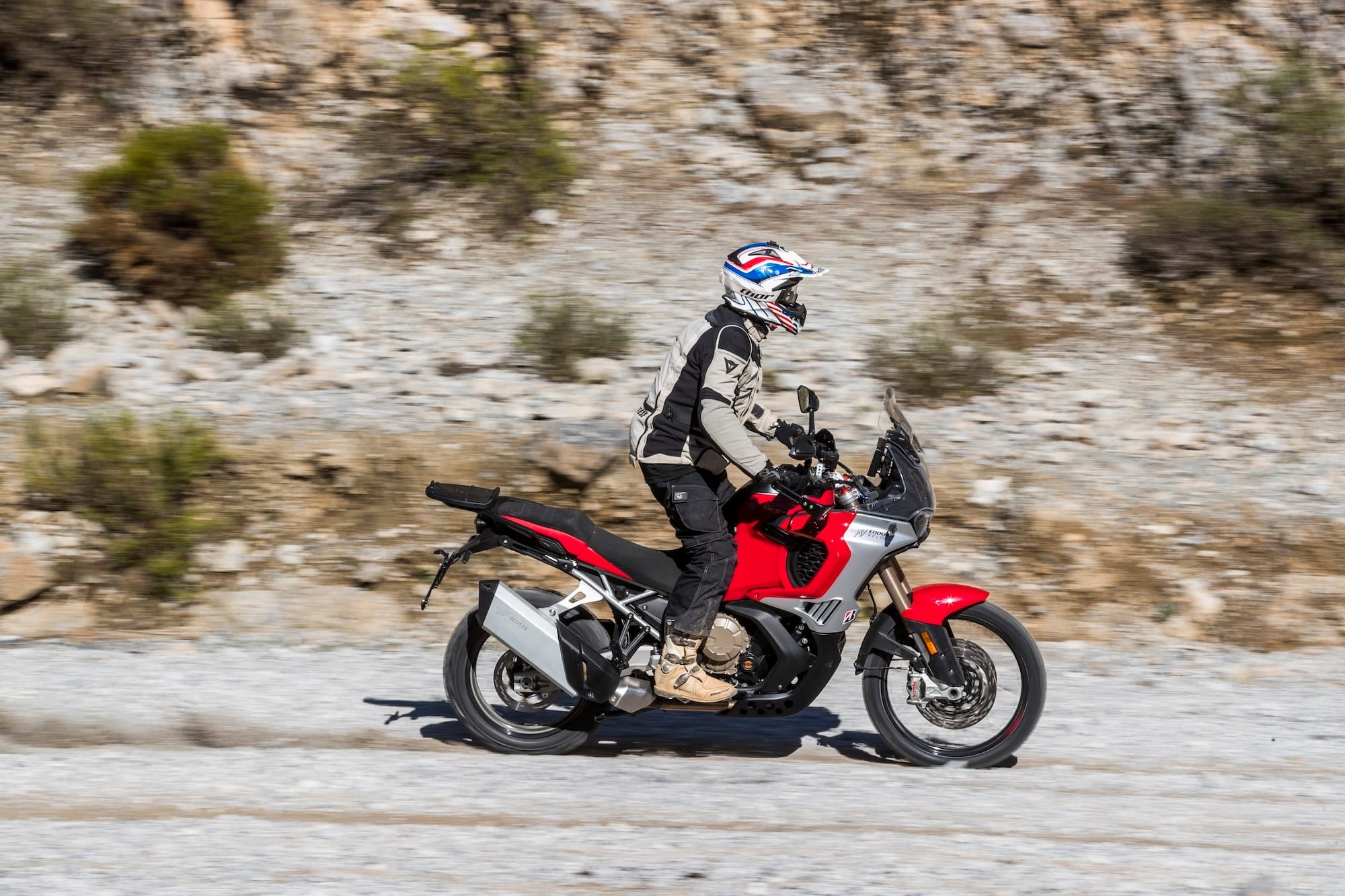
In terms of sound, the MV Agusta Enduro Veloce steals the show. Its high‑revving engine conjures up an overtone‑rich, siren-like wail reminiscent of Giacomo Agostini’s MV Agusta GP bikes from the ‘60s and ’70s. The triple produces 124 hp at 10,000 rpm and 75 lb-ft at 7,000 rpm—at the lower end of the torque table in this group but a very respectable figure for just 931cc.
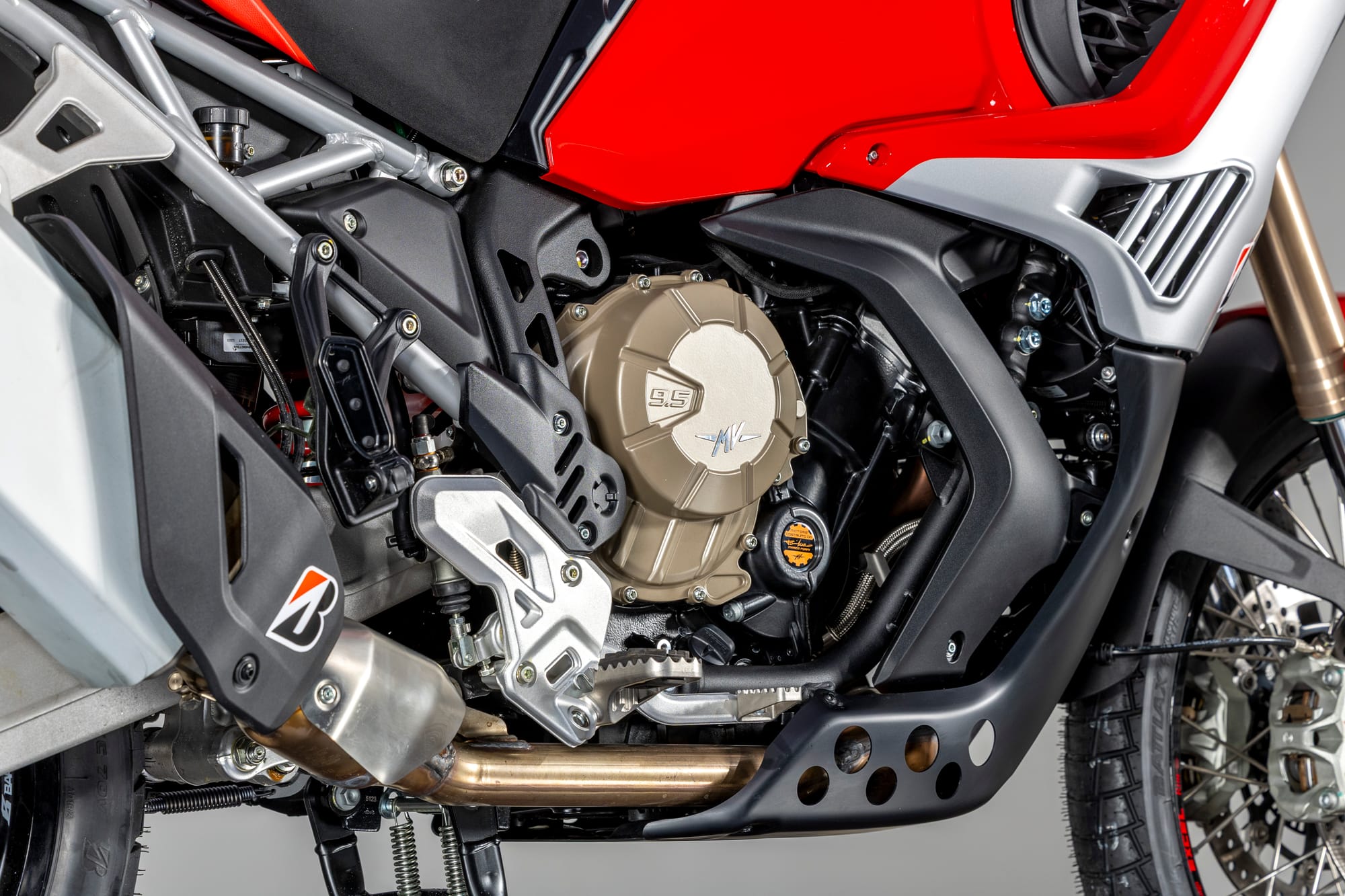
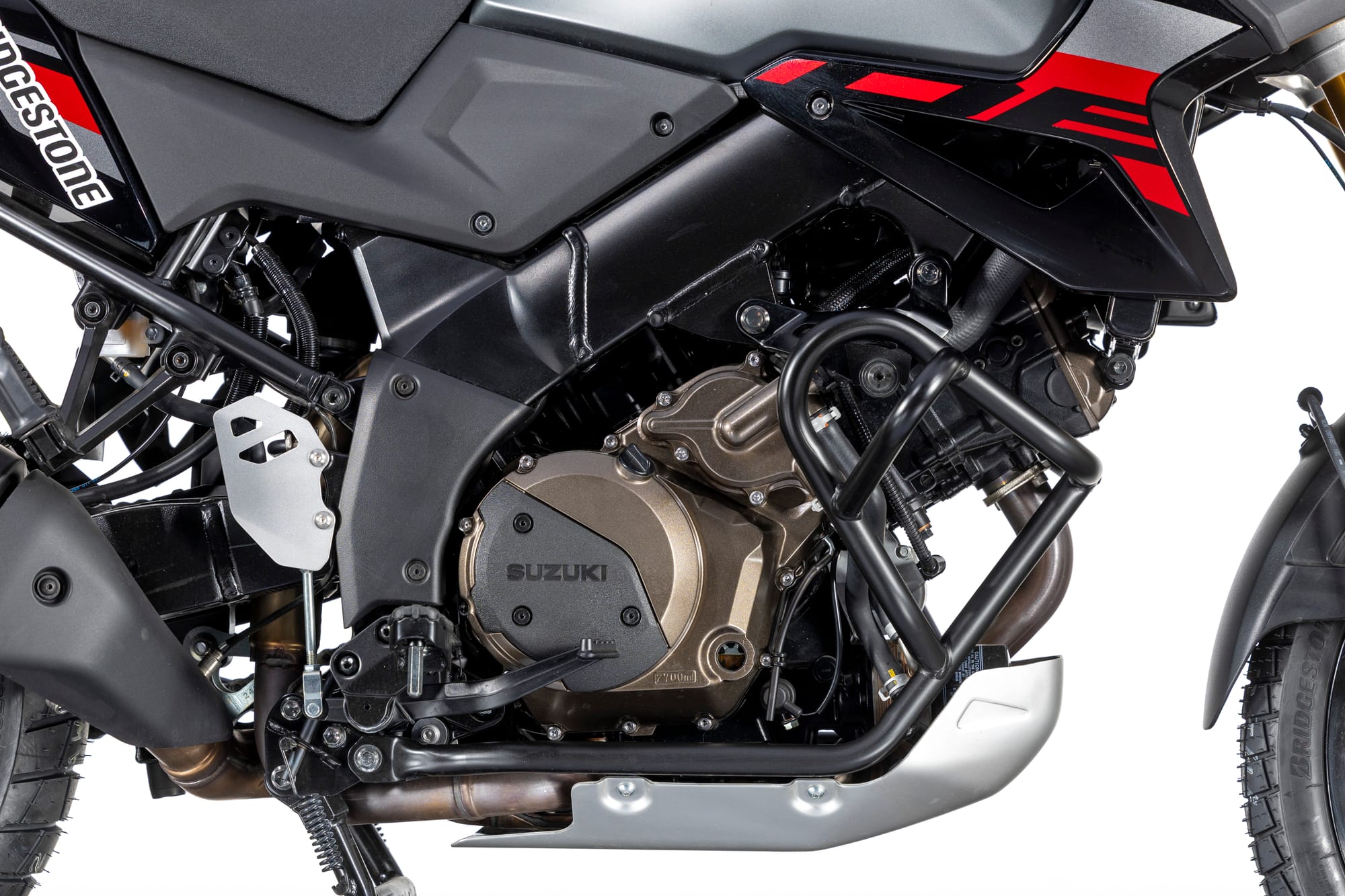
MV Agusta Enduro Veloce & Suzuki V-Strom 1050DE
Suzuki sticks with a V‑twin in the big‑bore class. The current 1037cc motor delivers 106 hp at 8,500 rpm and a very usable 74 lb-ft at 6,000 rpm.
Honda, meanwhile, deliberately keeps the 1084cc Africa Twin on the modest side: 102 hp at 7,500 rpm and 83 lb-ft at just 5,500 rpm fit the brand’s philosophy of well‑mannered, easy‑to‑use motorcycles. The switch from a 52‑degree V‑twin to a parallel‑twin has not changed the Africa Twin tribe’s core identity.
Chassis: Different Paths to the Same Goal
The bikes’ chassis solutions are just as varied as their engine concepts, even if most manufacturers still rely on steel as the base material.
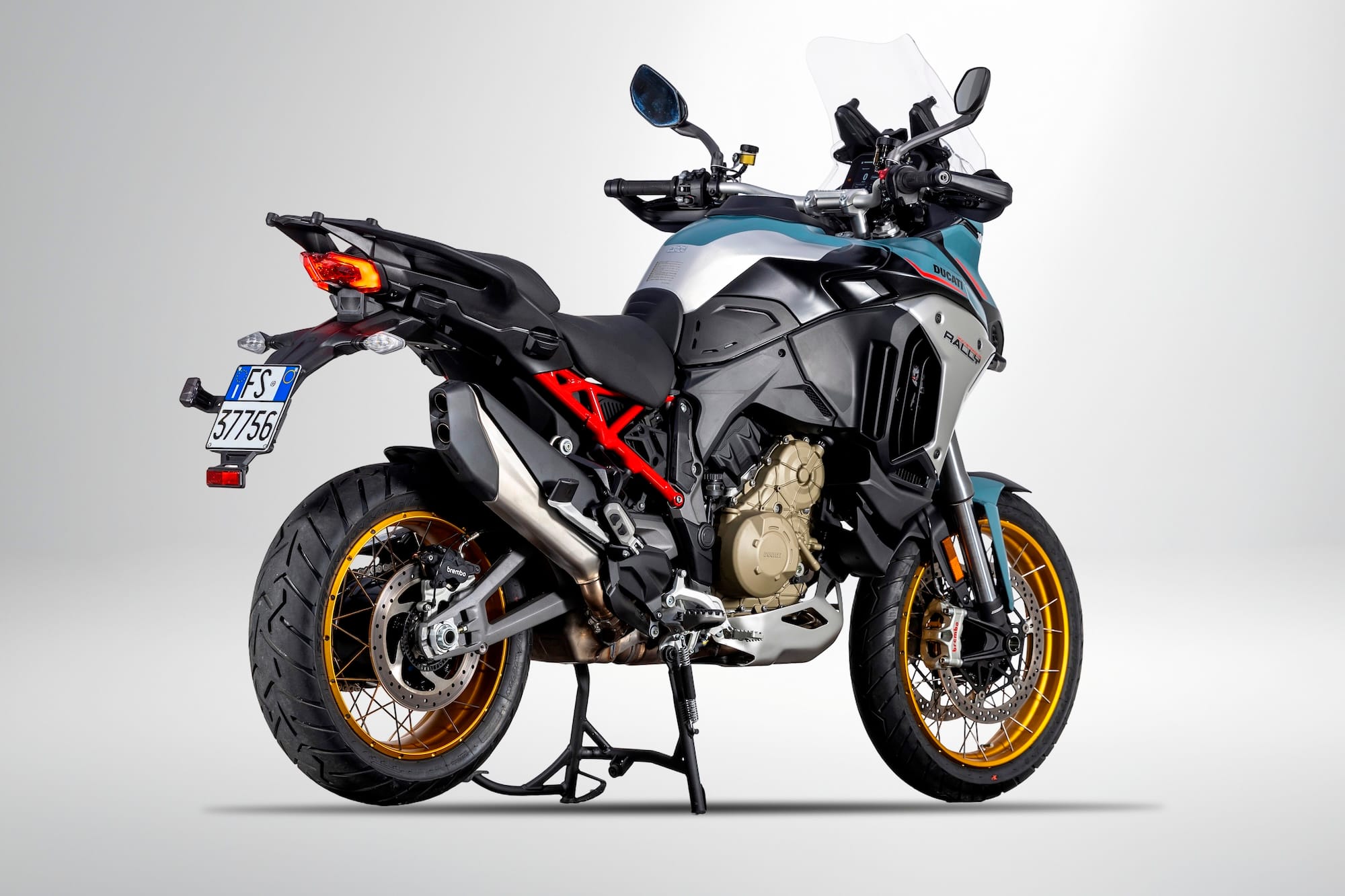
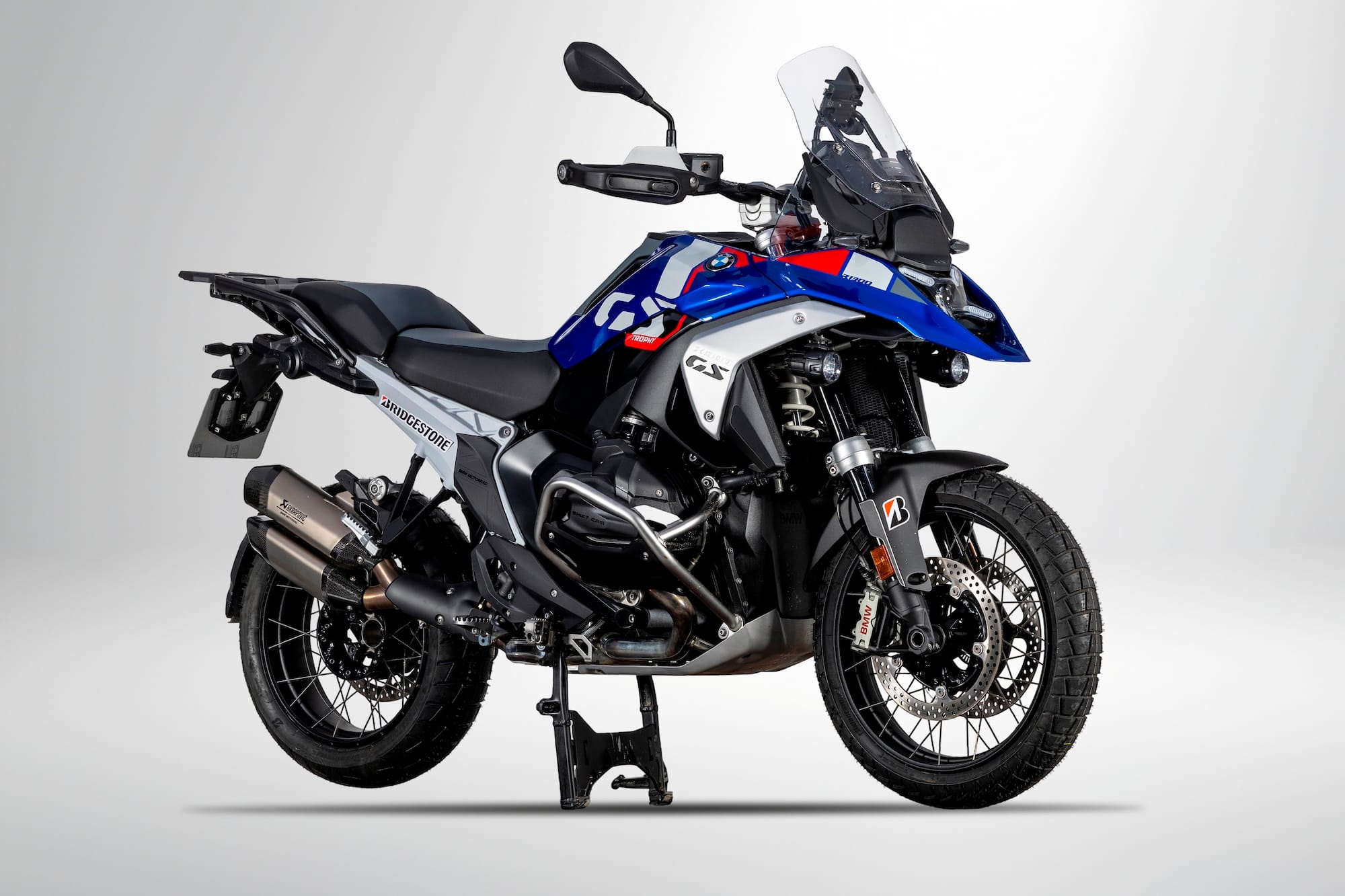
Ducati Multistrada V4 Rally & BMW R 1300 GS
Ducati goes its own way here. Since 2020, the Multistrada V4 has used an aluminum monocoque that integrates the steering head, airbox, and V4 as a stressed member. The rear subframe is still a steel trellis. The fact that this concept also works with knobby tires is demonstrated by the new DesertX, which now shares the monocoque layout despite being subjected to much higher off‑road loads.
BMW completely rethought the structure of its 1300 boxer platform. The new frame is a welded steel construction made of pressed sheet metal sections and forged parts that wrap closely around the engine like a second skin.
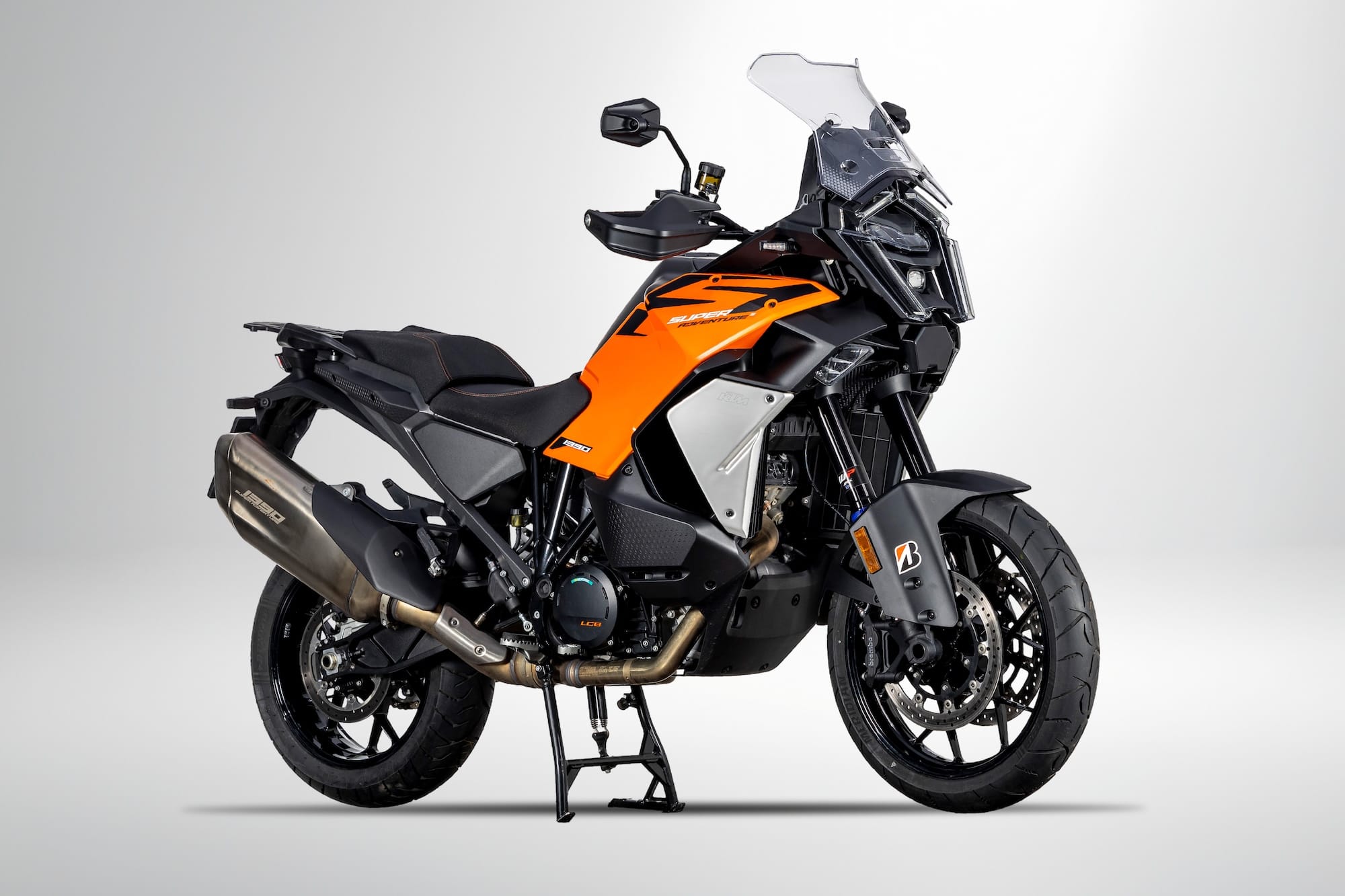
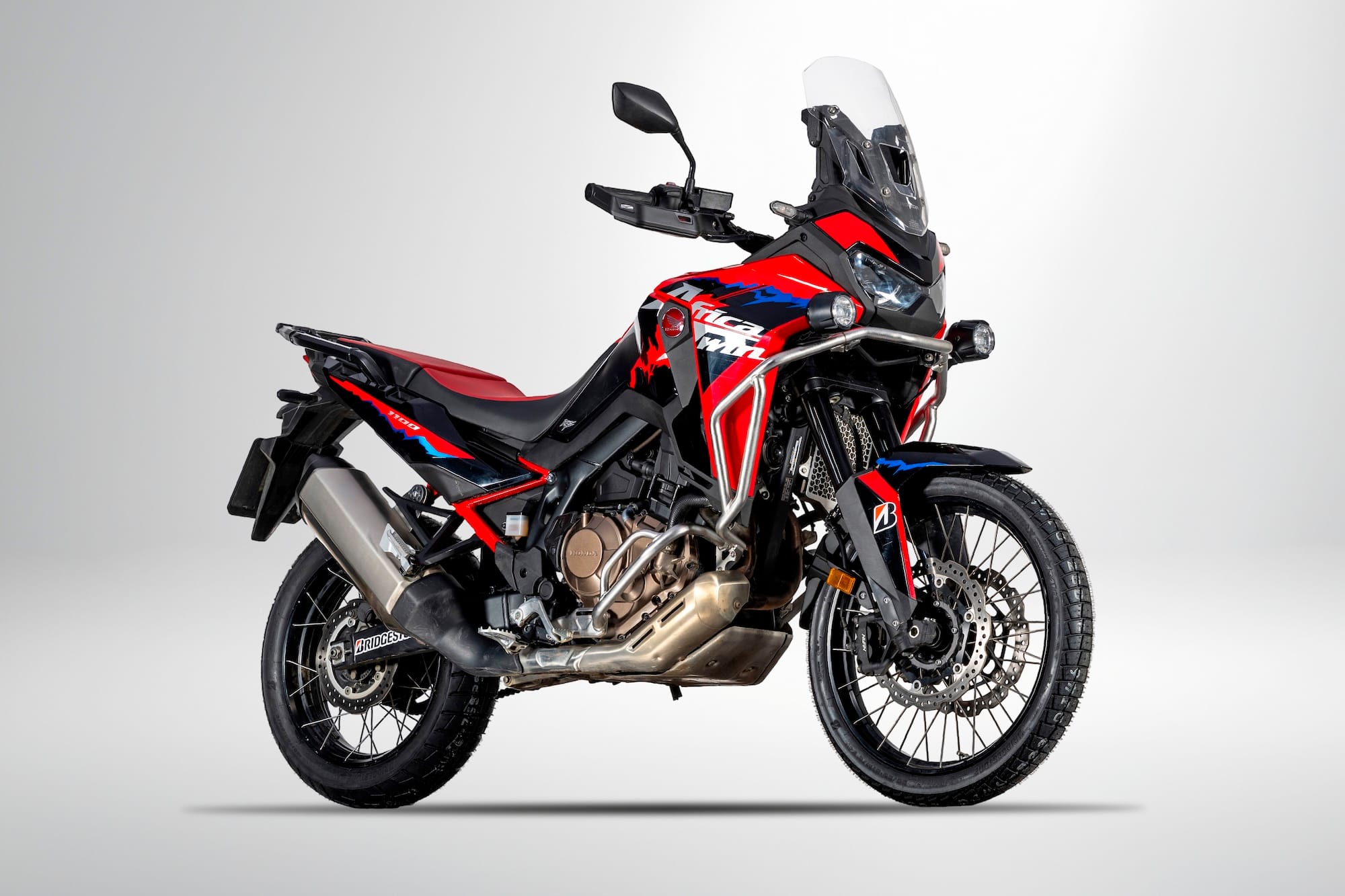
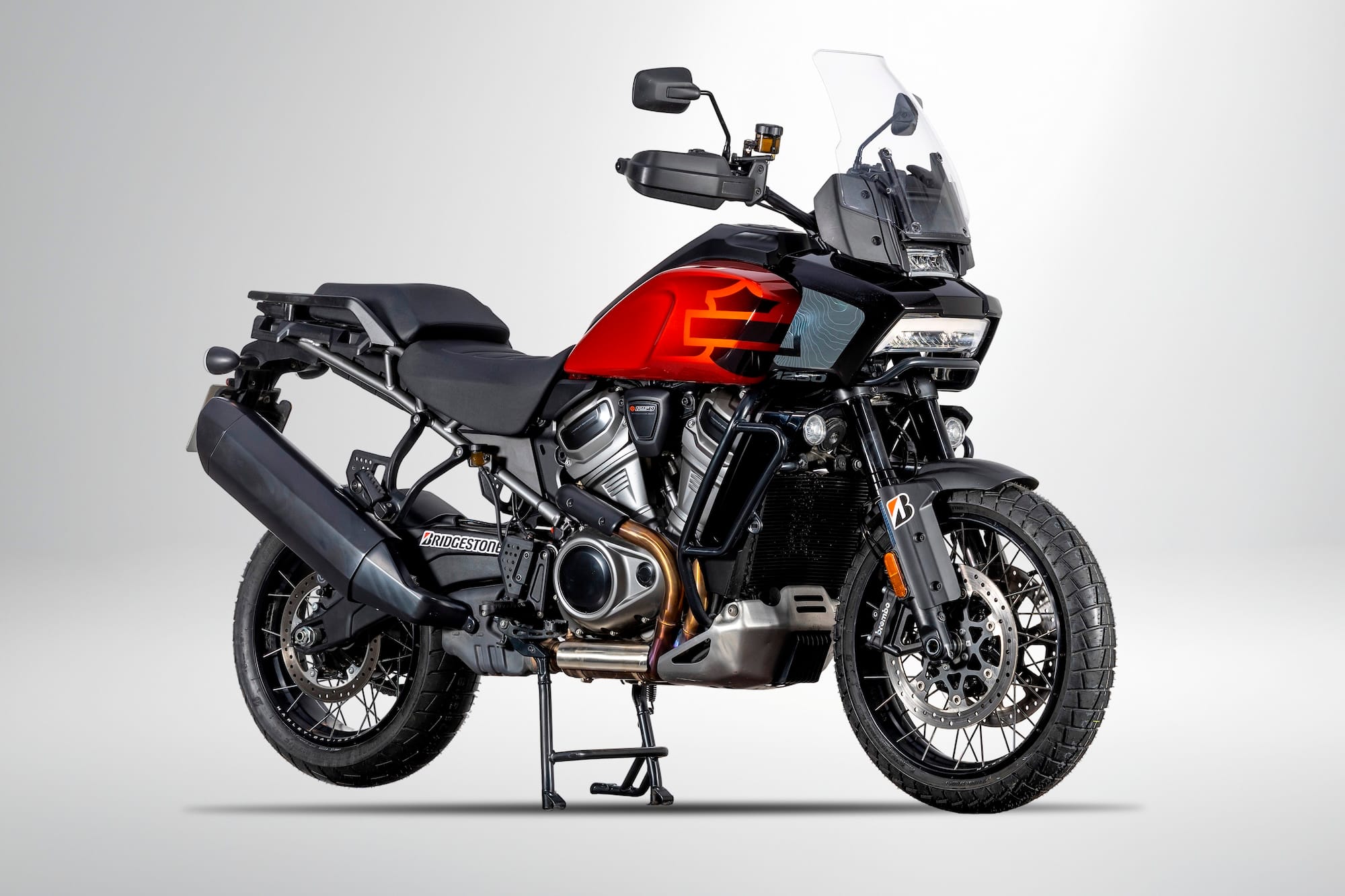
KTM 1390 Super Adventure S Evo, Honda CRF 1100L Africa Twin & Harley-Davidson Pan America 1250 Special
KTM continues with its classic steel trellis, a layout the brand has employed in almost every branch of motorsports. Harley‑Davidson, Honda, and MV Agusta combine pressed steel elements with tubular structures. Suzuki, meanwhile, is the only one here to choose an aluminum bridge frame with large, extruded profiles and a set of tubular steel lower rails that shield the engine from impacts.
Front suspension is where BMW steps furthest away from convention. The revised Evo Telelever separates steering and suspension forces with a separate shock absorber working via a longitudinal control arm.
All the others use upside‑down forks, ranging in diameter from 43mm on the Suzuki to 50mm on the Ducati. The Multistrada’s Skyhook suspension is semi‑active and electronically adjustable, as is the KTM’s; the other bikes allow full manual adjustment of preload and damping.
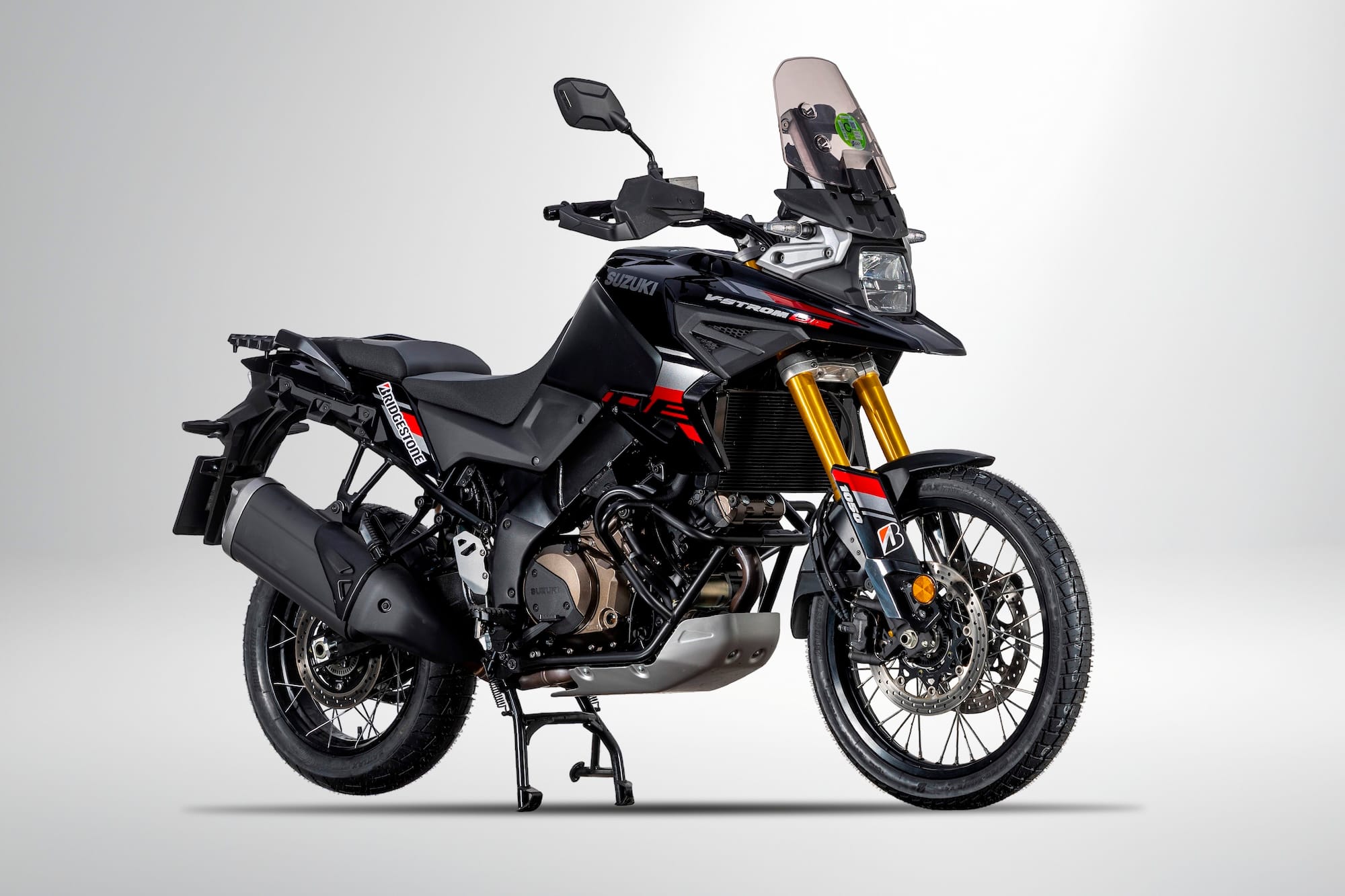
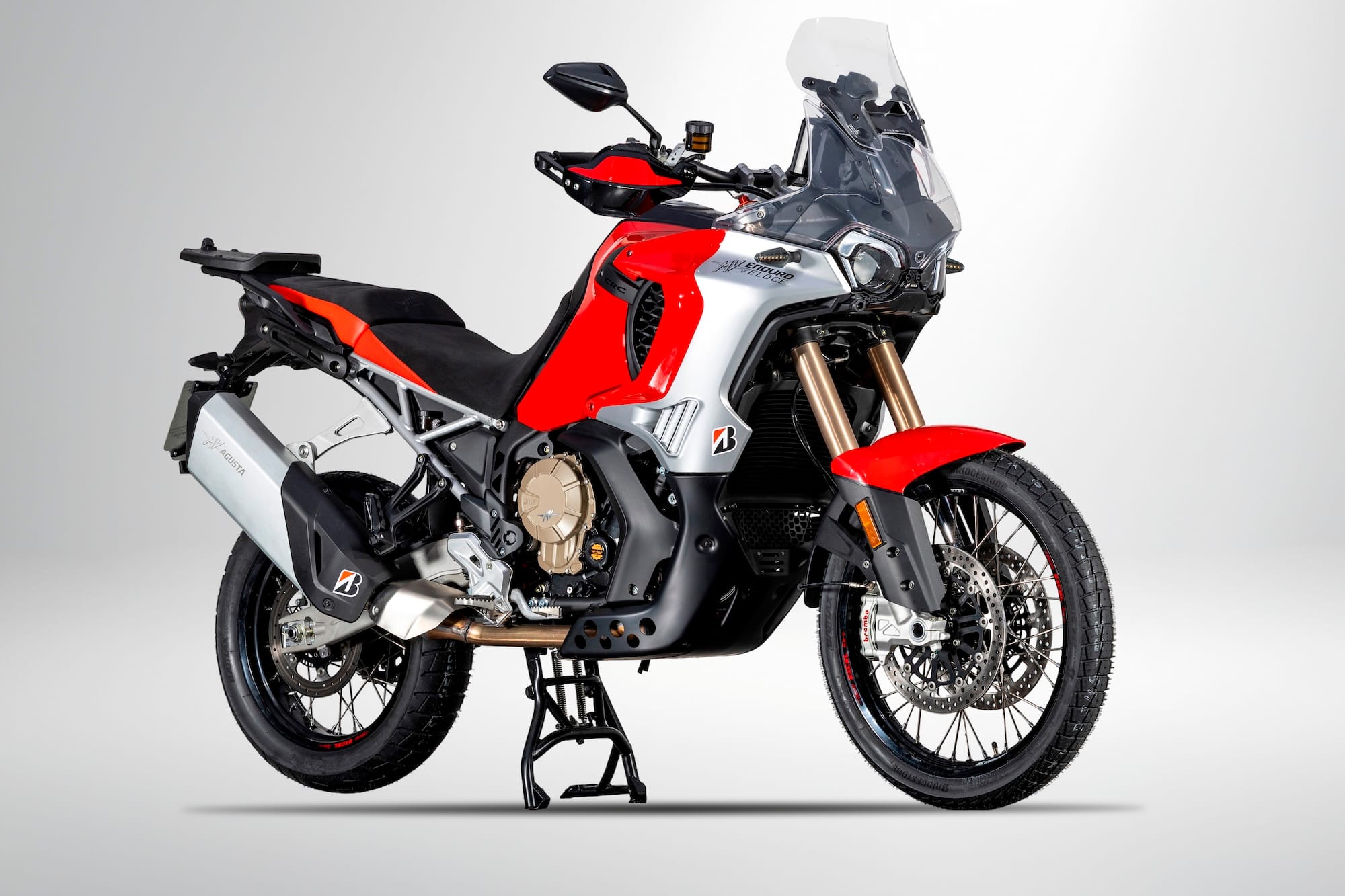
Suzuki V-Strom 1050DE & MV Agusta Enduro Veloce
Front travel spans from 6.6 inches on the Suzuki through 7.5 inches on the Harley and BMW, 7.9 inches on the Ducati, 8.2 inches on the MV Agusta, 8.6 inches on the KTM, and 9.1 inches on the Honda.
At the rear, all brands use monoshocks on aluminum double‑sided swingarms, except BMW with its signature Paralever single‑sided swingarm with an integrated shaft drive. Rear travel runs from 6.6 inches on the Suzuki to 8.7 inches on the Honda.
Comfort: Some Have More, Others Less
People buying big ADV bikes primarily plan to carry the rider, passenger, and luggage in comfort over long distances. Almost all of them can be turned into serious long‑haul machines with accessories: taller windshields, aftermarket seats, and a wide range of luggage systems. A deep dive into all those options would blow up this test, so I’ll focus on stock configurations here.
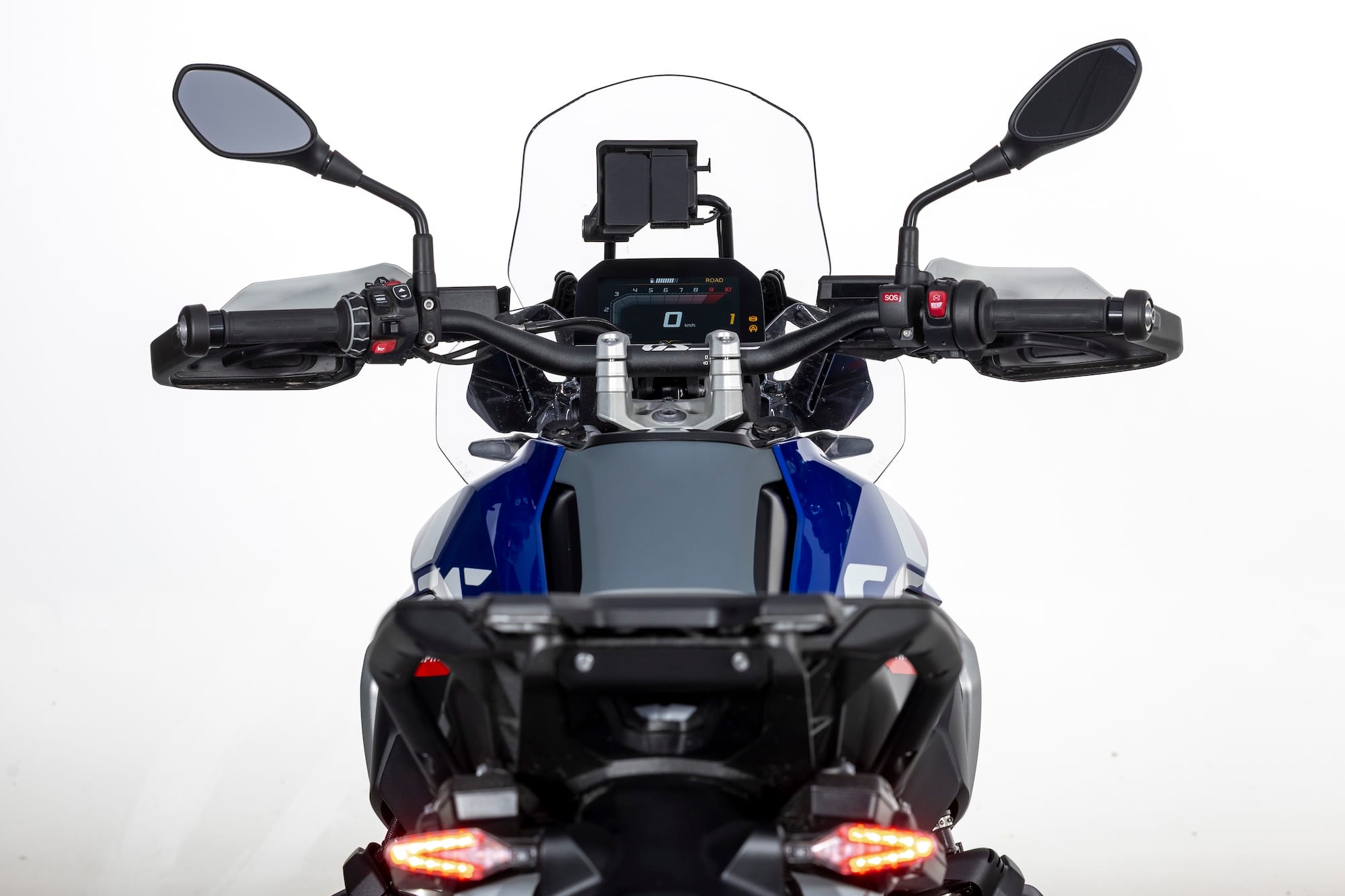
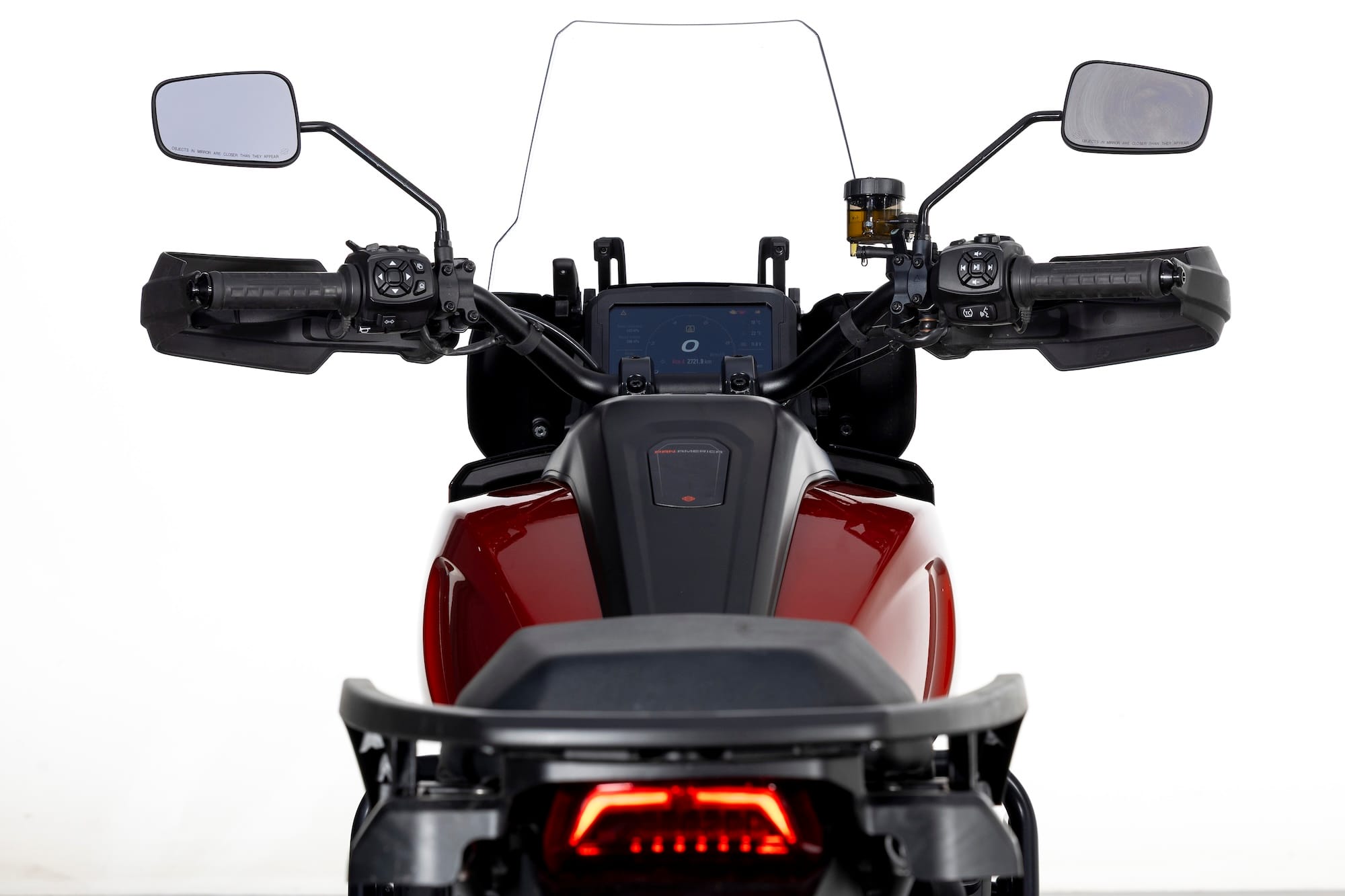
BMW R 1300 GS & Harley-Davidson Pan America 1250 Special
BMW fans were initially a bit disappointed by the comfort of the new R 1300 GS. The redesign focused on sharp handling, agility, and weight reduction. As a result, the GS is no longer the undisputed comfort champion straight off the showroom floor.
The riding position is excellent for dynamic road and off‑road use, although the tank shrouds interfere with an ideal knee grip when standing. The narrow 33.4-inch seat makes it easy to reach the ground and improves control of the 523-pound machine. Pillion comfort is adequate but not outstanding.
Wind protection is surprisingly good on the BMW, even with the small standard screen, and neither vibration nor engine heat are real issues. BMW’s optional Adaptive Vehicle Height Control can lower the bike by about 1.2 inches at a stop.
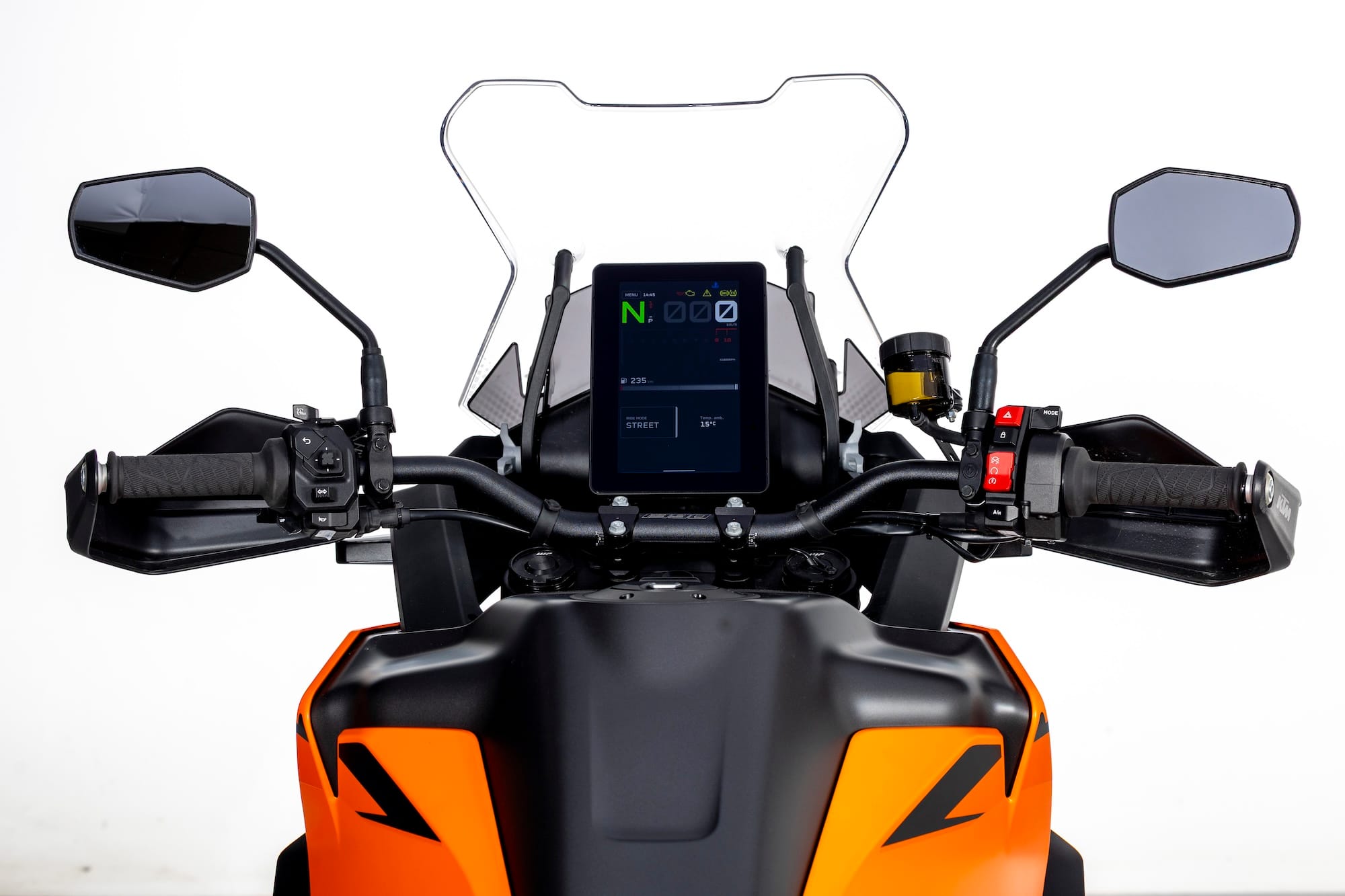
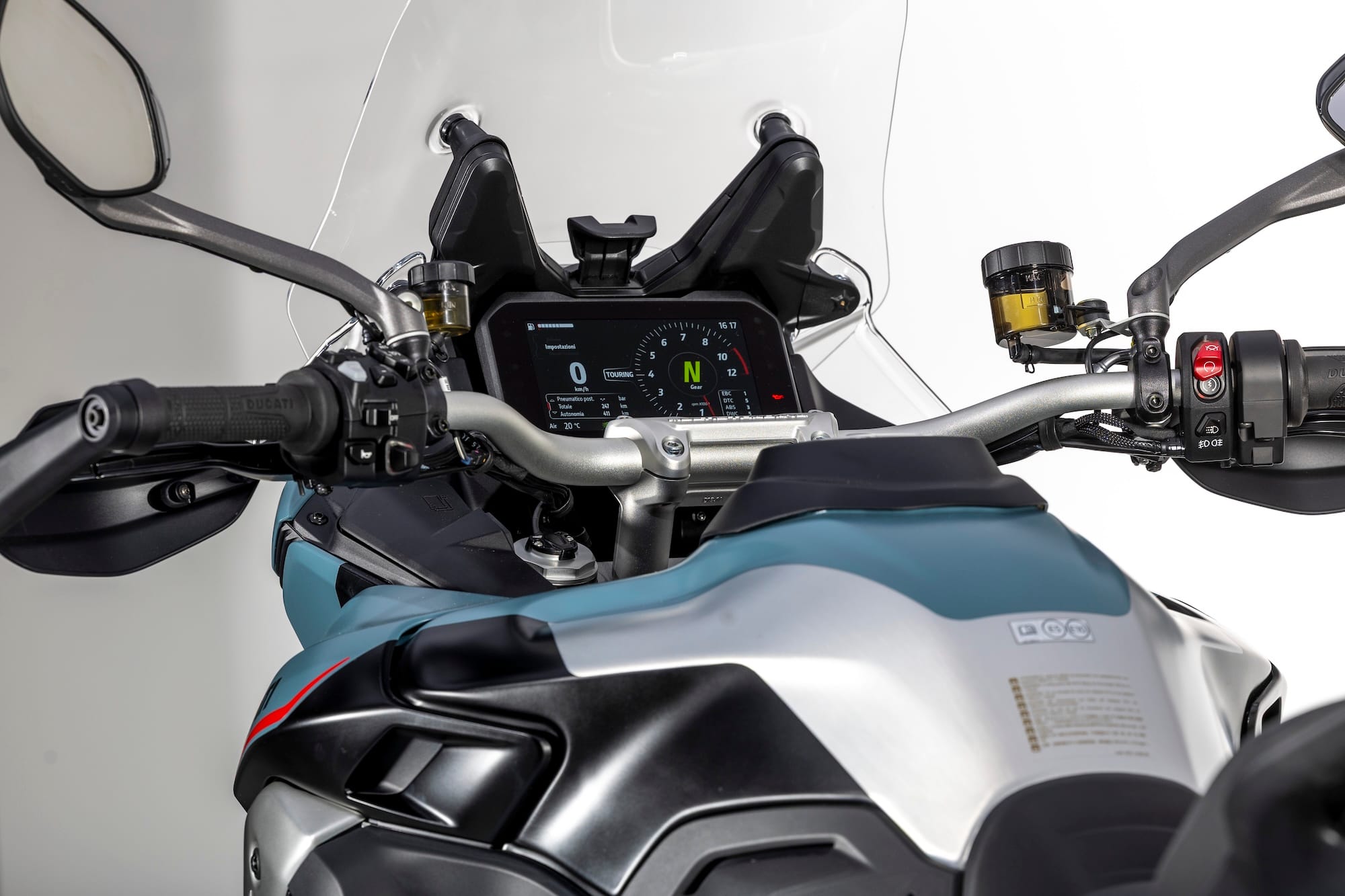
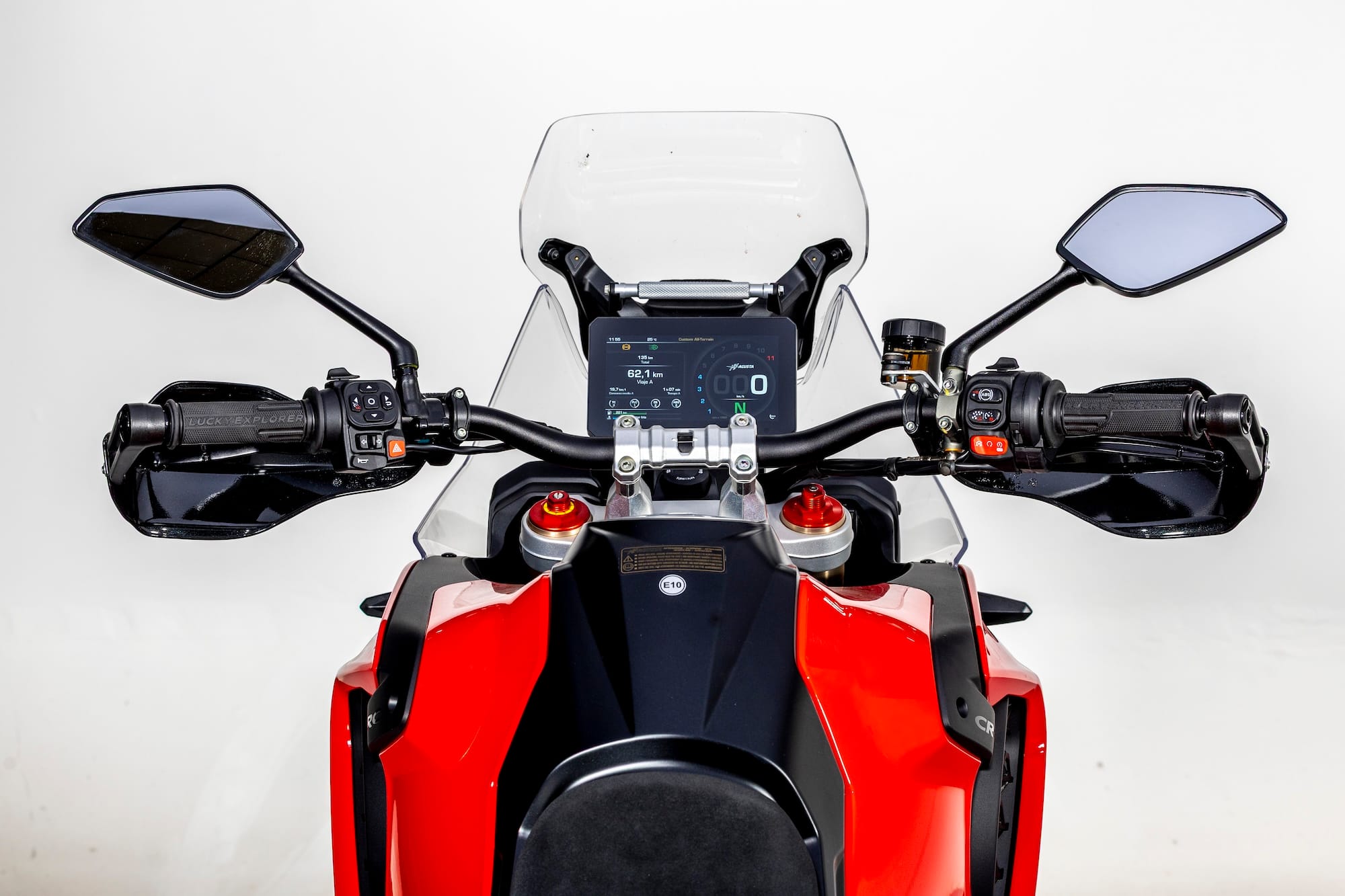
KTM 1390 Super Adventure S Evo, Ducati Multistrada V4 Rally & MV Agusta Enduro Veloce
The Ducati Multistrada V4 Rally feels a little more comfy. Its wide and soft seats let the rider and passenger settle in for serious mileage. The 7.9-gallon fuel tank spreads your knees a bit wide, but it remains acceptable even for stand‑up riding.
The Multistrada’s sheer dimensions, however, demand respect; the bike weighs around 573 pounds fully fueled and the 34.3-35-inch adjustable seat is no joke for shorter riders. Maneuvering the bike with luggage and a passenger requires experience and muscles.
But Ducati offers some help: the V4 Easy Lift system opens the hydraulics in the fork and shock to let the bike sink into its suspension, making it easier to lift off the sidestand. The Minimum Preload function lowers the rear slightly at low speeds and at a standstill. The adjustable windscreen works very well and noise and vibes are acceptable, although engine heat can be noticeable in some conditions.
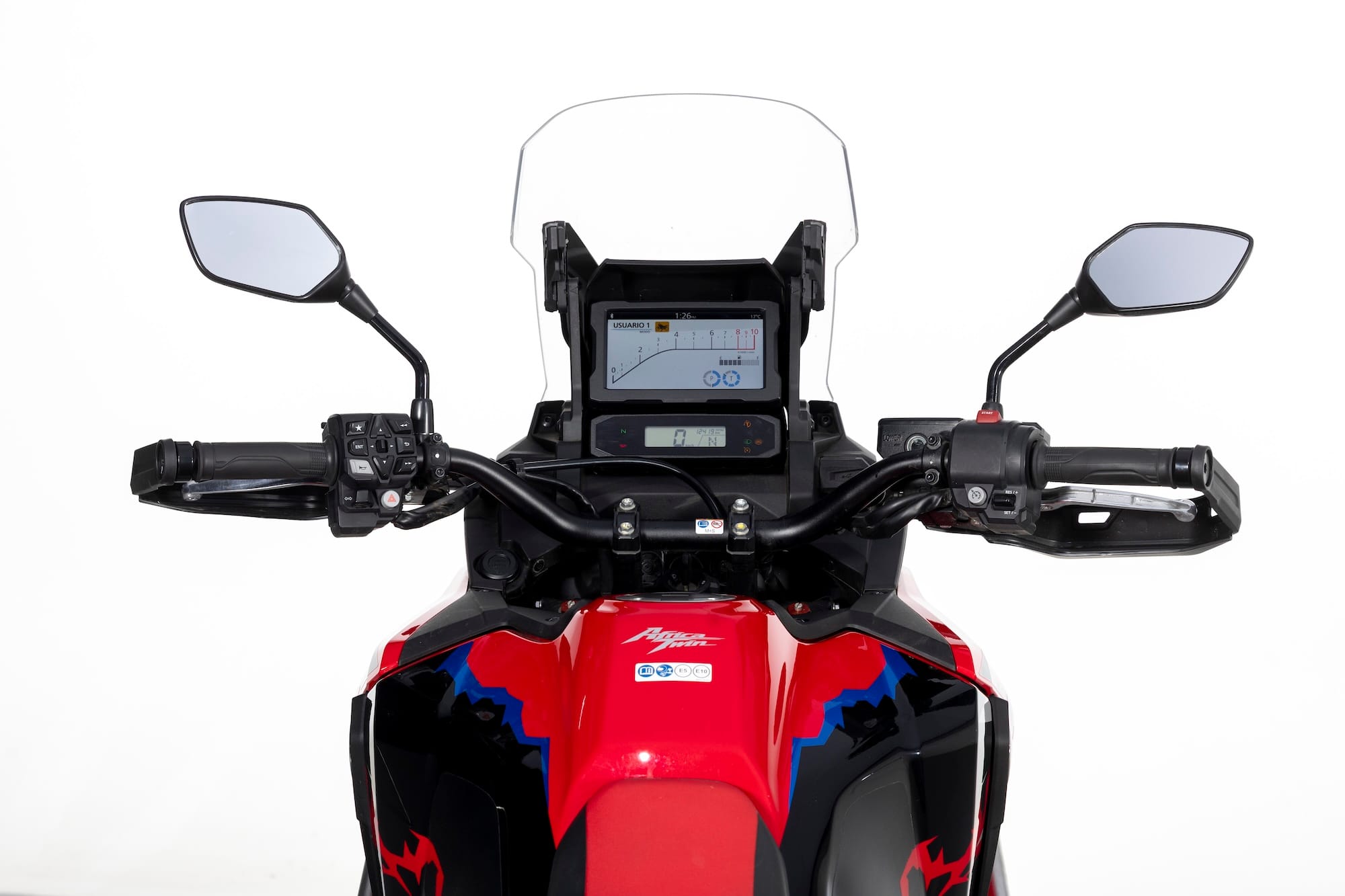
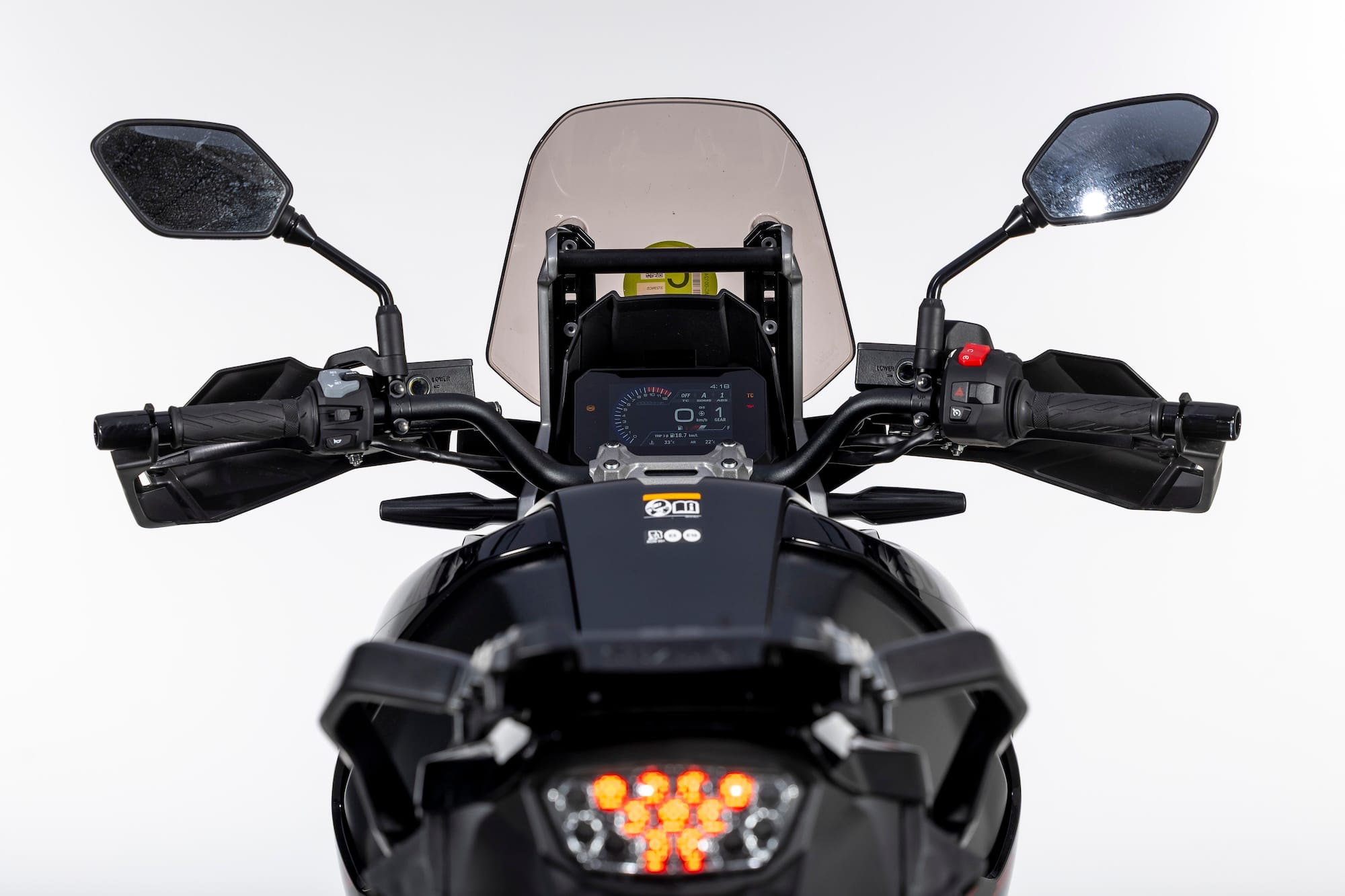
Honda CRF 1100L Africa Twin & Suzuki V-Strom 1050DE
On the Harley‑Davidson Pan America 1250, both the rider and passenger enjoy a lot of space and generously padded seats. The handlebar is set a bit far forward, but the overall ergonomics are relaxed, with low vibration and a very effective windshield. The sound from the engine, airbox, and exhaust is pleasantly subdued.
As a result, the Pan America is a genuine long‑distance bike, even two‑up. In slow traffic or in hot city conditions, the V‑twin’s heat output does become noticeable. Harley offers an optional Adaptive Ride Height system, which automatically lowers the bike by about an inch at a stop to improve footing.
The Honda CRF1100L Africa Twin, with its 21-inch front wheel, offers a balanced but clearly off-road-oriented riding position. The adjustable 33.5-34.3-inch seat keeps the knee angle comfortable even for taller riders. The wide handlebar is fairly high and close to the rider, promoting an upright posture and a smooth transition to stand‑up riding.
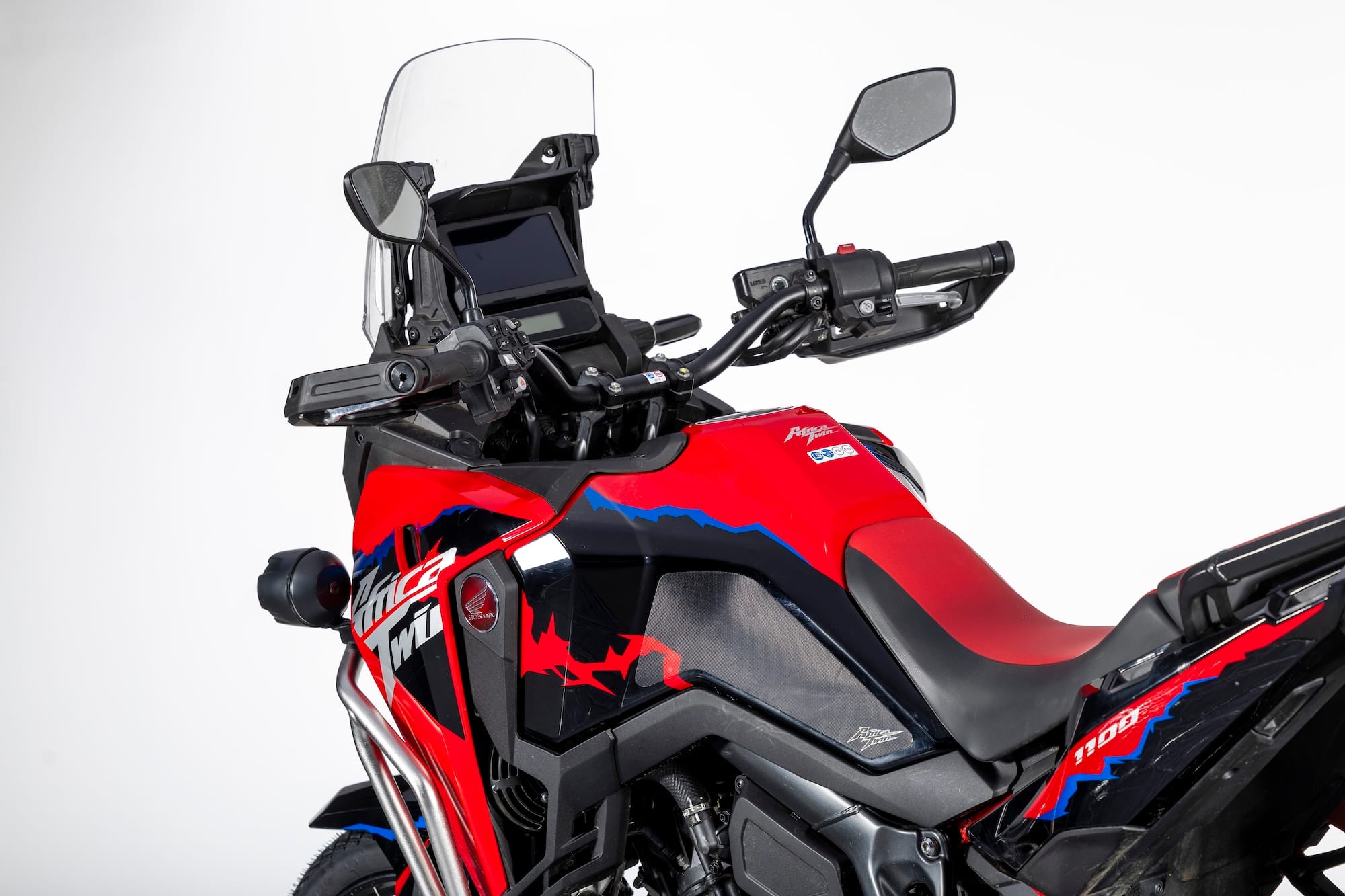
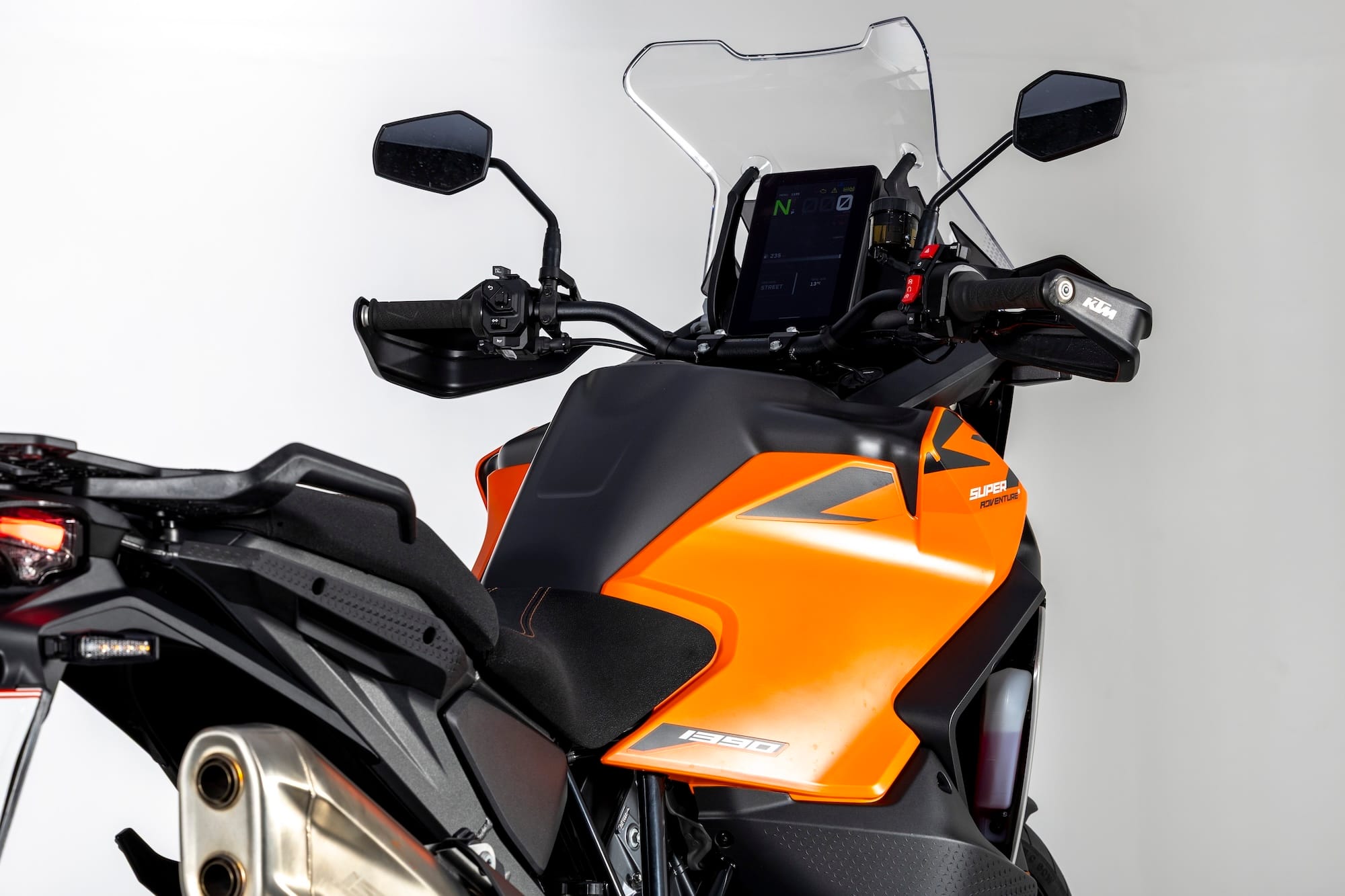
Honda CRF 1100L Africa Twin & KTM 1390 Super Adventure S Evo
Both the rider and passenger have enough space. At 510 pounds, the Africa Twin is the lightest bike here, although its center of gravity feels relatively high. Wind protection on the standard model is only average with the low stock screen, leaving your chest and helmet exposed. The parallel-twin runs smoothly, with a restrained, almost too civilized sound.
The KTM 1390 Super Adventure S Evo stays true to the “Ready to Race” slogan without neglecting comfort. Its ergonomics are clearly road‑biased but sport‑touring-flavored. The tall and wide handlebar, the two‑piece seat, and the slim waist around the tank provide lots of freedom to move. The passenger benefits from a wide, well‑padded seat.
Wind protection from the height‑adjustable screen is noticeably better than on the motorcycle’s predecessor, and the big V‑twin now runs smoother while retaining plenty of liveliness. Vibration is a non‑issue, and the reduced heat radiation is a clear win on long days.
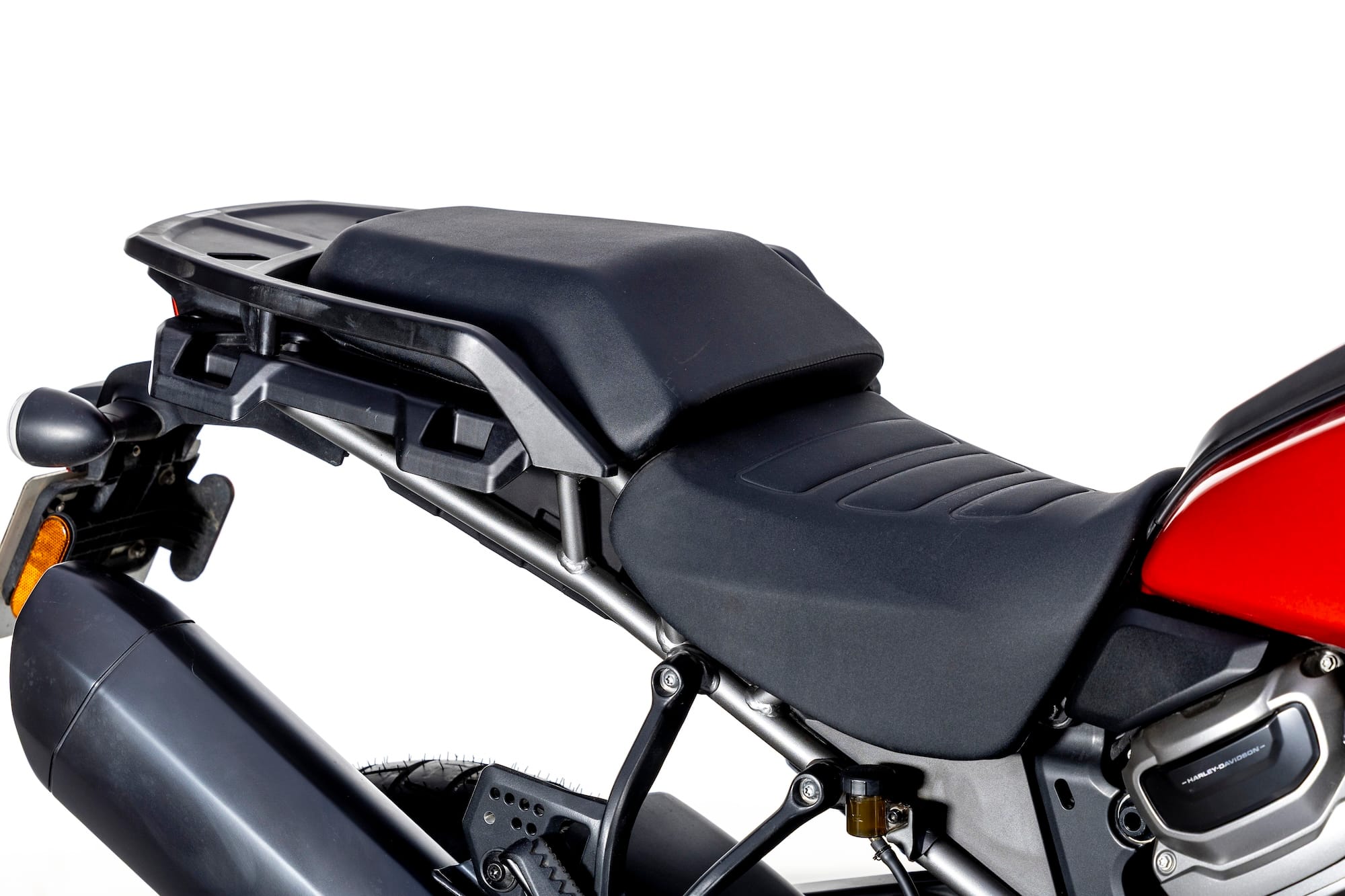
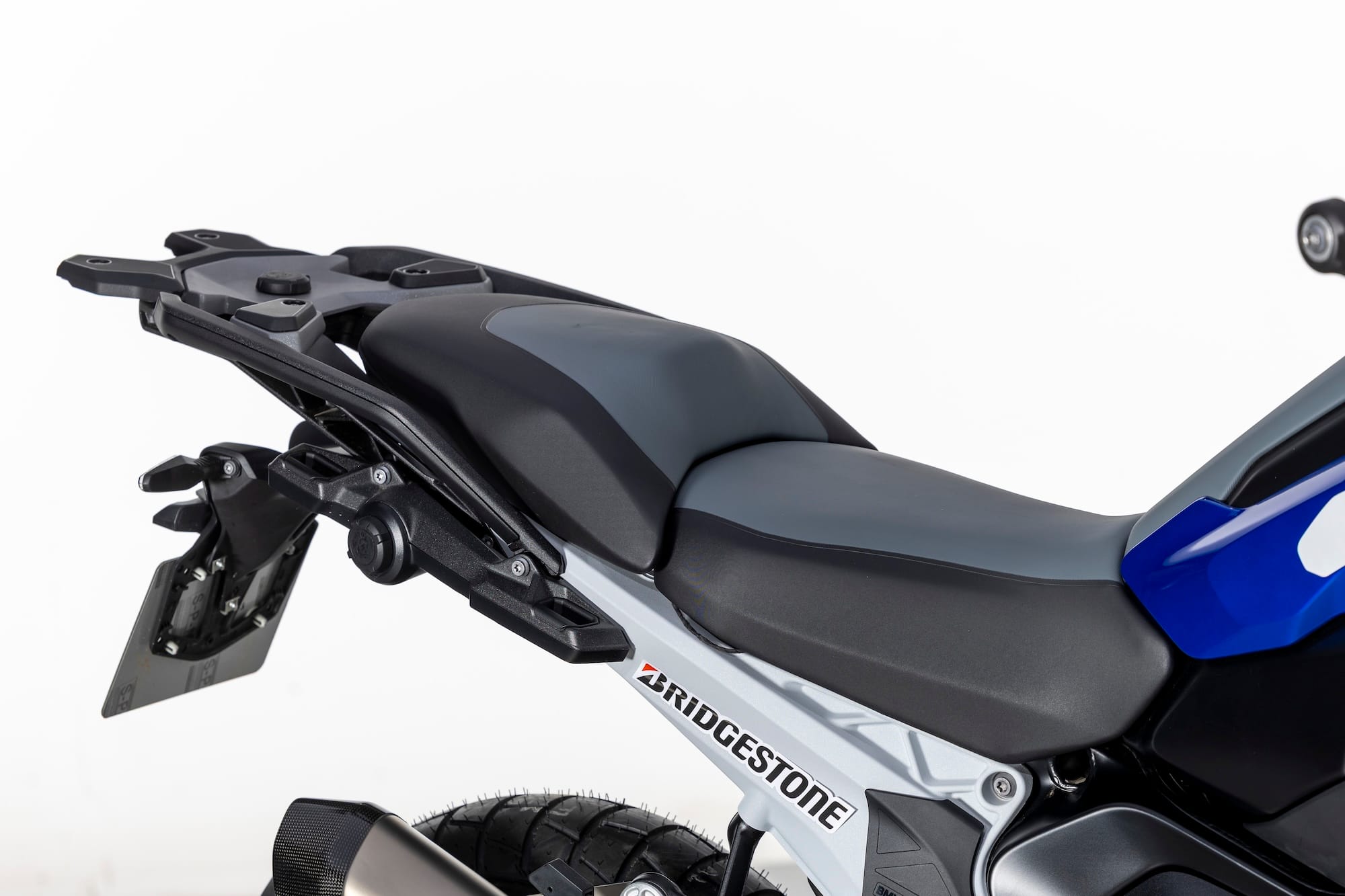
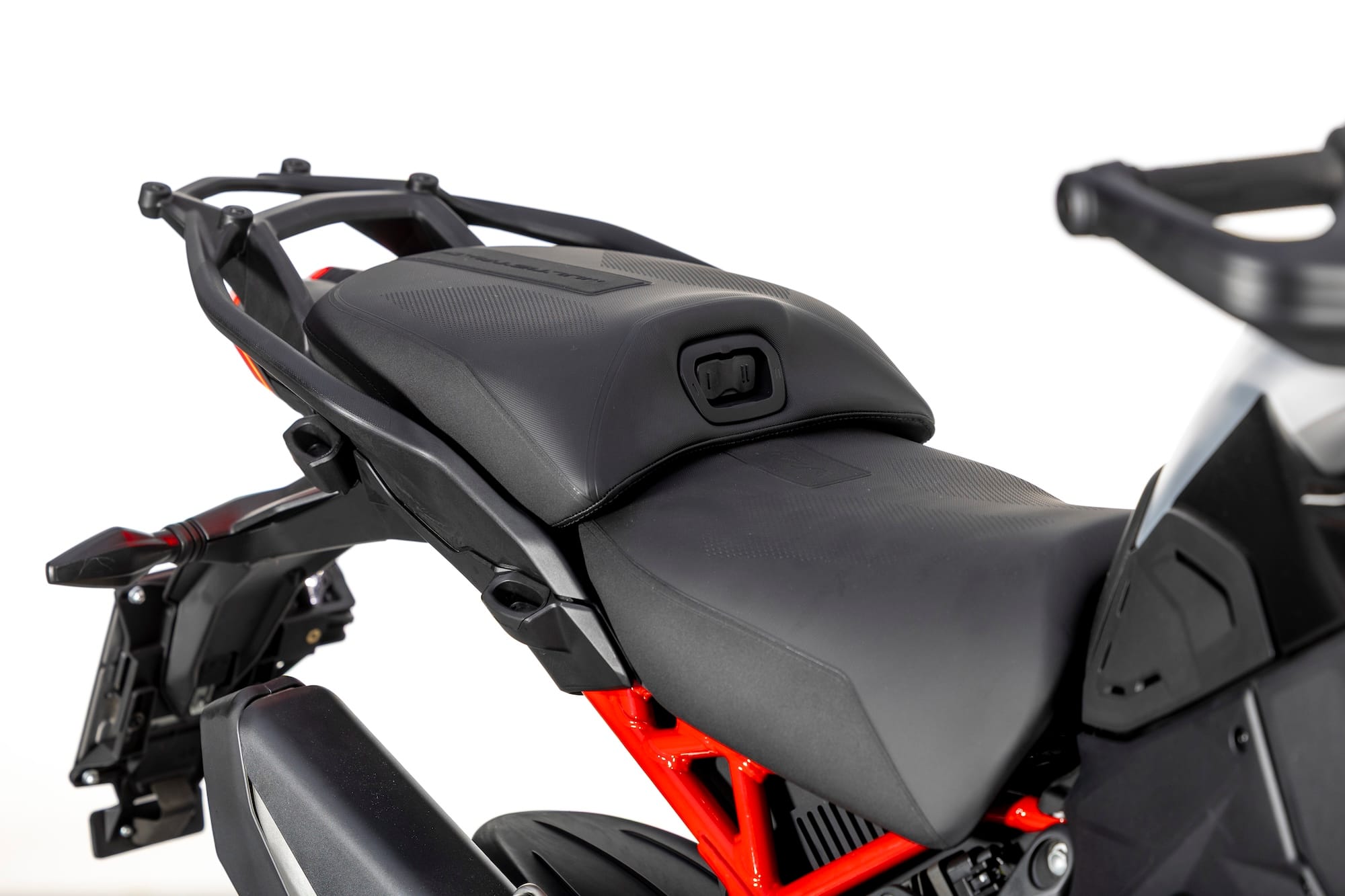
Harley-Davidson Pan America 1250 Special, BMW R 1300 GS & Ducati Multistrada V4 Rally
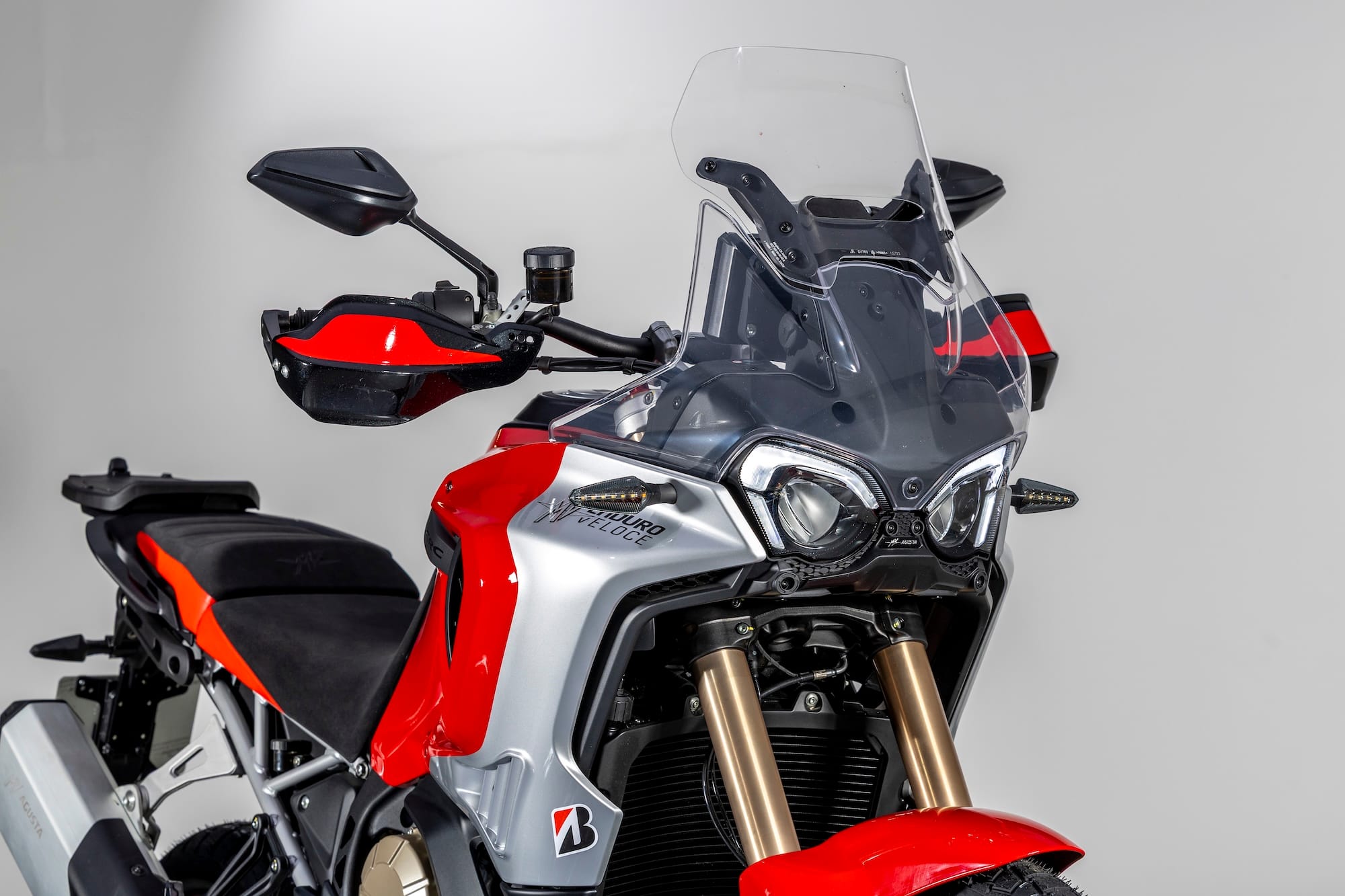
Blending supersport genes with adventure‑touring ergonomics is the MV Agusta Enduro Veloce’s modus operandi. With a 21-inch front wheel and a relatively sporty geometry, you sit fairly low “in” the bike at 33.5-34.3 inches, tucked behind a large, fixed windshield that offers excellent shelter. The in-line triple runs almost vibration‑free and dominates the experience with its intoxicating soundtrack.
On paper, it’s called “Enduro,” but in reality, the MV feels far more at home on pavement. High footpegs, a relatively low bar, and a tight knee angle are less ideal off‑road and can become tiring on very long highway days. The passenger, however, gets a decent amount of space and solid grab handles on the rear rack.
Suzuki V-Strom 1050DE & MV Agusta Enduro Veloce
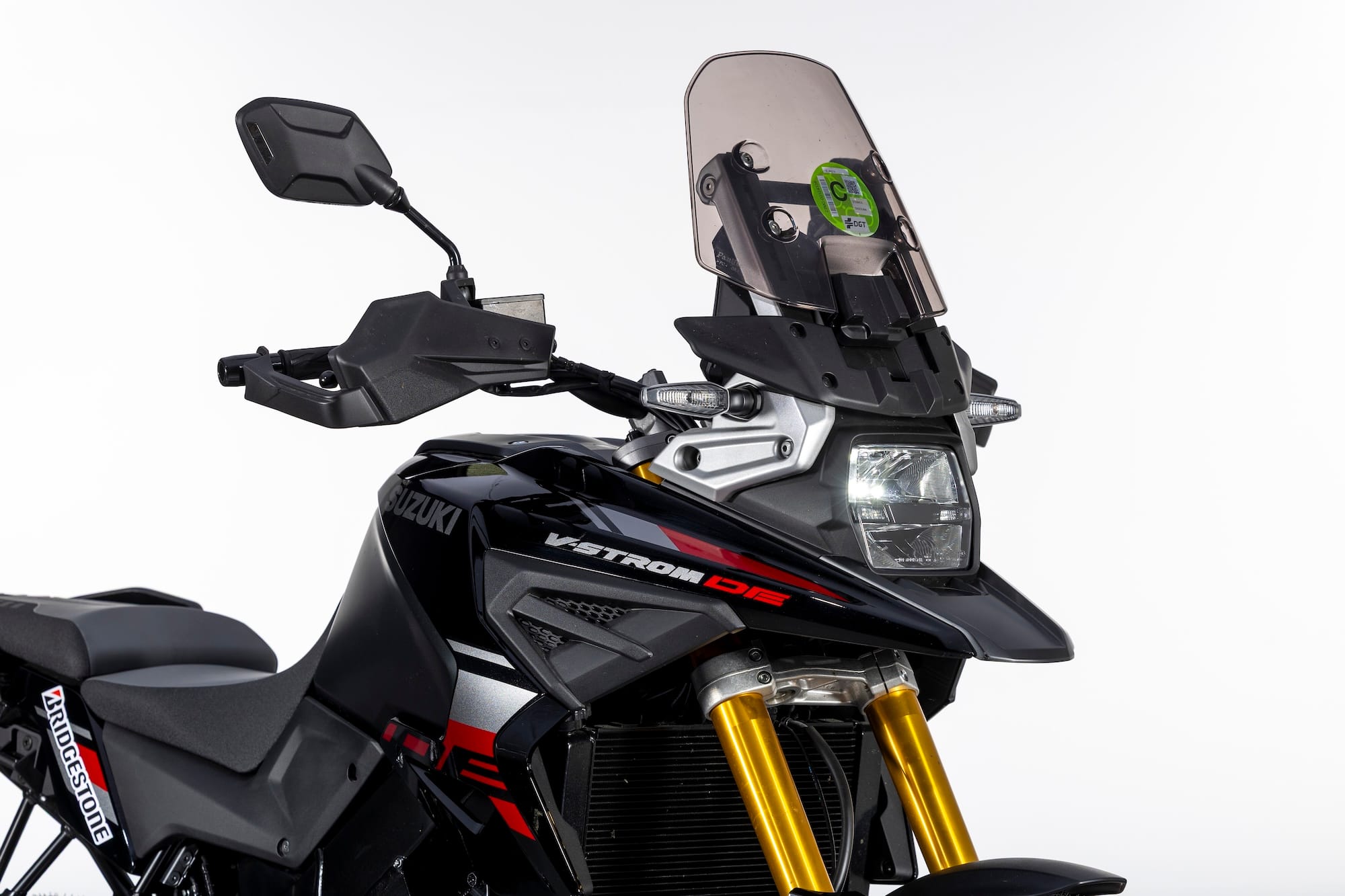
The 555-pound Suzuki V‑Strom 1050 DE nails a convincing compromise between road and off‑road ergonomics. The rider sits upright, with a relaxed knee angle and a secure knee grip on the slim tank/seat junction. The firm, non‑adjustable 34.6-inch seat is high, but its shape, combined with the handlebar and peg positions, also works very well for stand‑up riding. The pillion seat is wide and decently padded, with well‑placed pegs and grab rails.
The adjustable windshield covers your chest and shoulders effectively, although your helmet remains somewhat in the airflow. The 1037cc V‑twin delivers a pleasant, low‑frequency pulse and has earned a reputation as a long‑distance, low‑stress companion. Overall, the V‑Strom is a straightforward, tough adventure tourer with real everyday usability.
Dynamic Behavior: Road, Travel, and Dirt
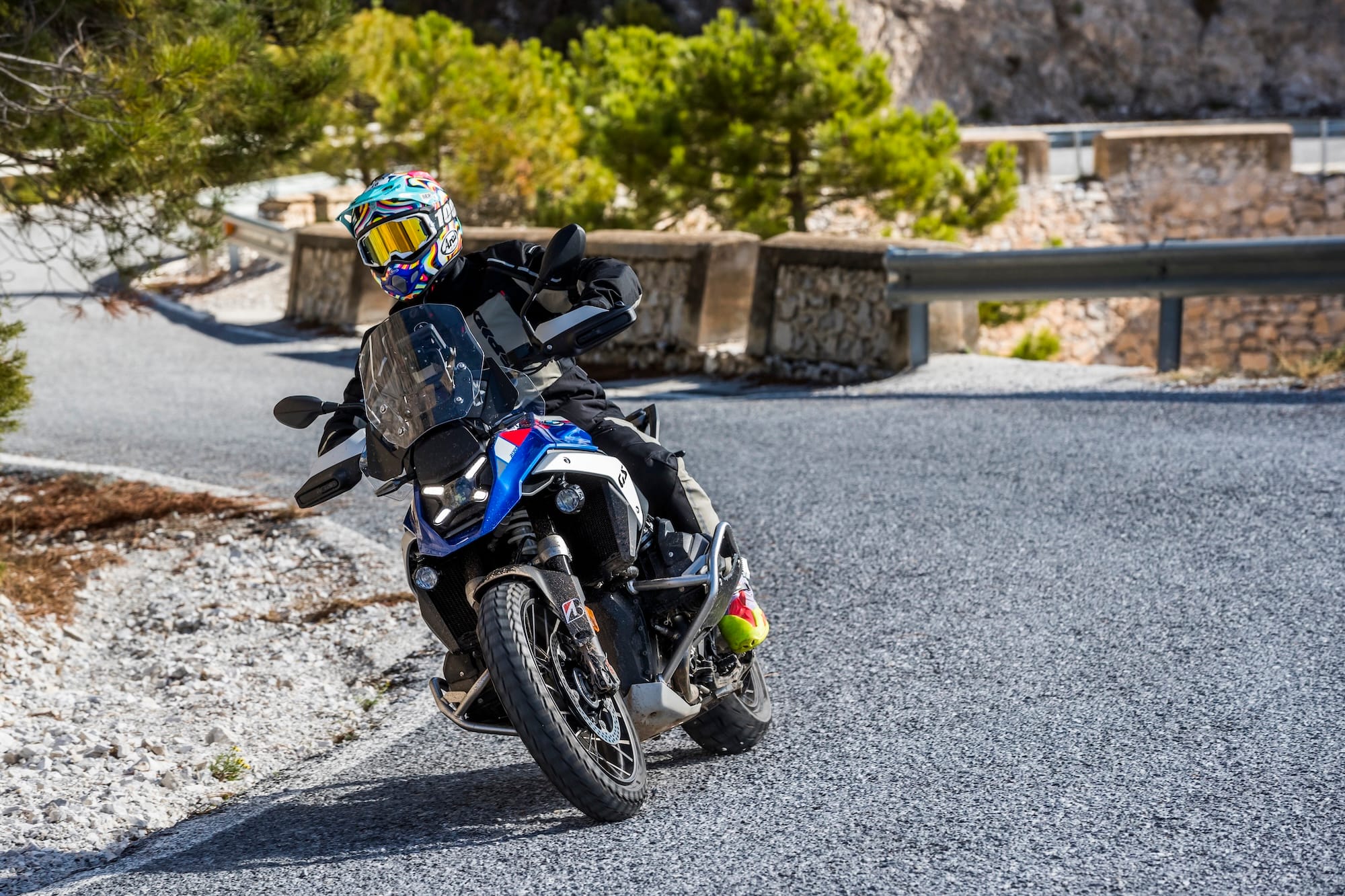
On paved backroads, the range stretches from relaxed fun tools to highly temperamental sport machines on stilts. The BMW R 1300 GS has clearly stepped up from the 1250 in precision and bandwidth.
Honda CRF 1100L Africa Twin & Harley-Davidson Pan America 1250 Special
Its new Evo Telelever front and mass‑centralized layout give it very direct responses to steering inputs, yet it still stays neutral when braking or accelerating hard and calmly ironing out bumps. Anyone who spends a lot of time on tight secondary roads will appreciate just how easily you can flick the 1300 from one corner to the next—the famous “GS flow” has never been this strong.
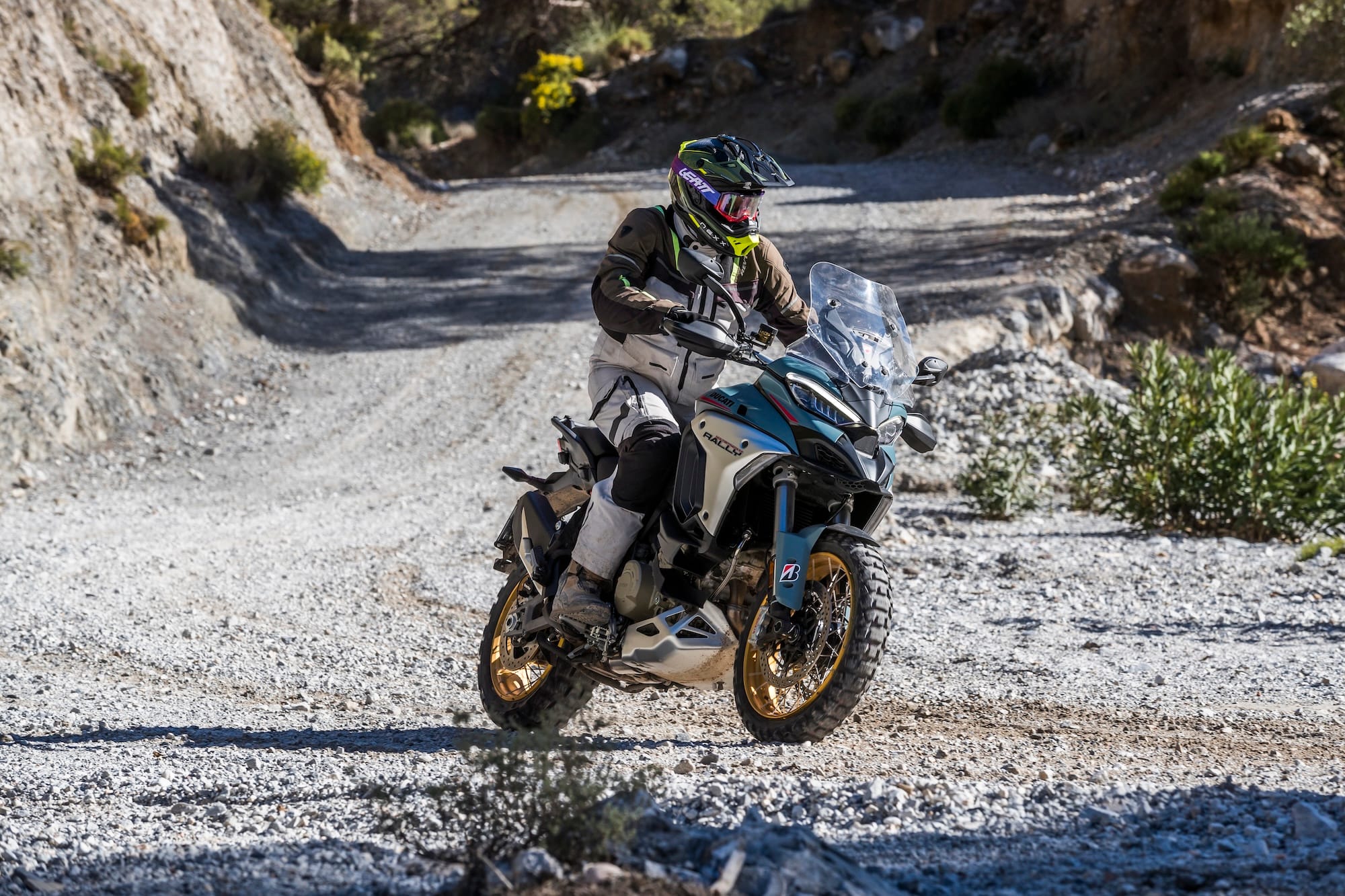
The Ducati Multistrada V4 Rally brings more adrenaline to the party. Its V4 Granturismo engine feels pleasantly full and forgiving down low, but above about 5,000 rpm, it turns into a true sport engine with a fierce charge almost up to 11,000 rpm.
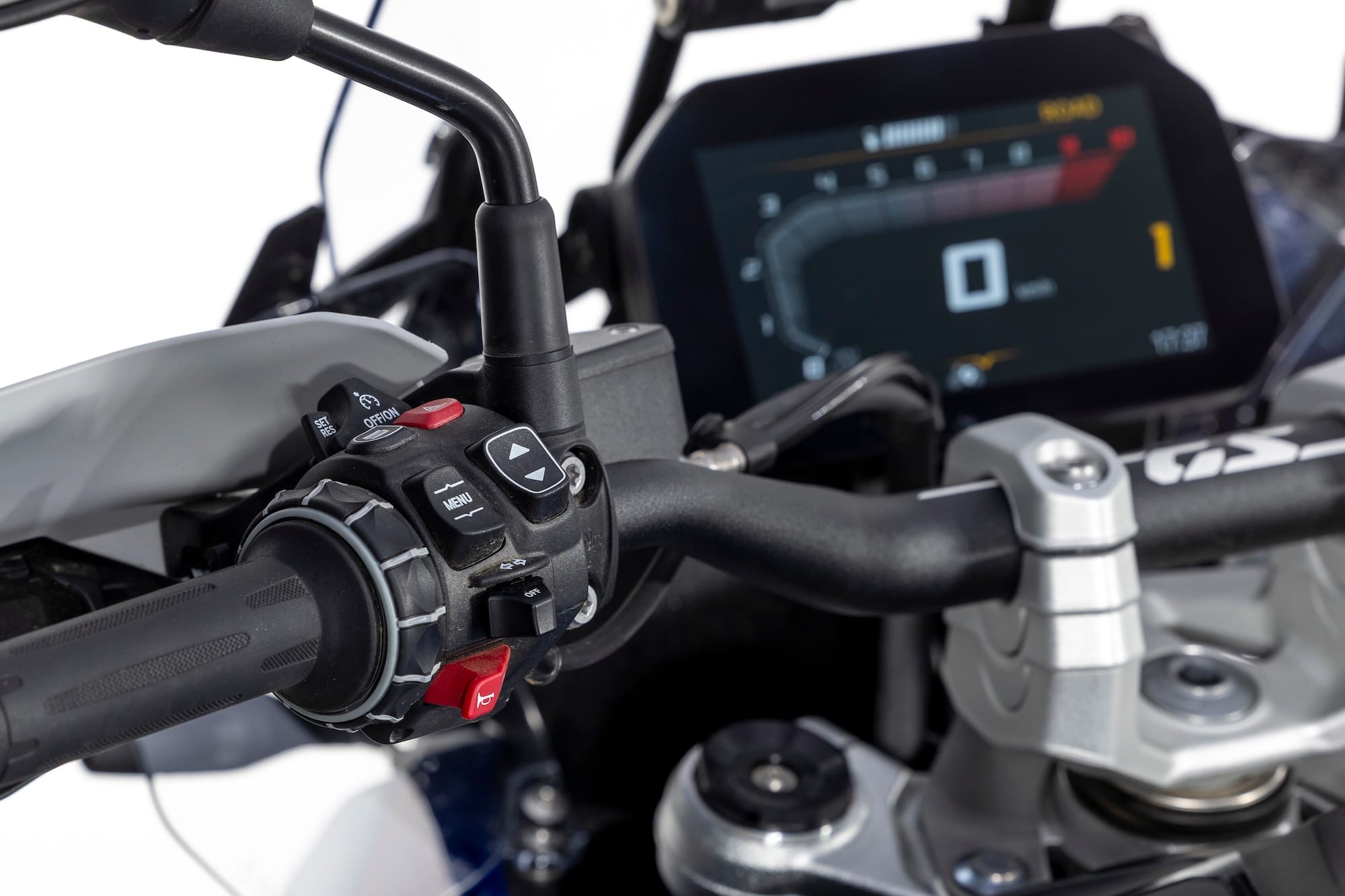
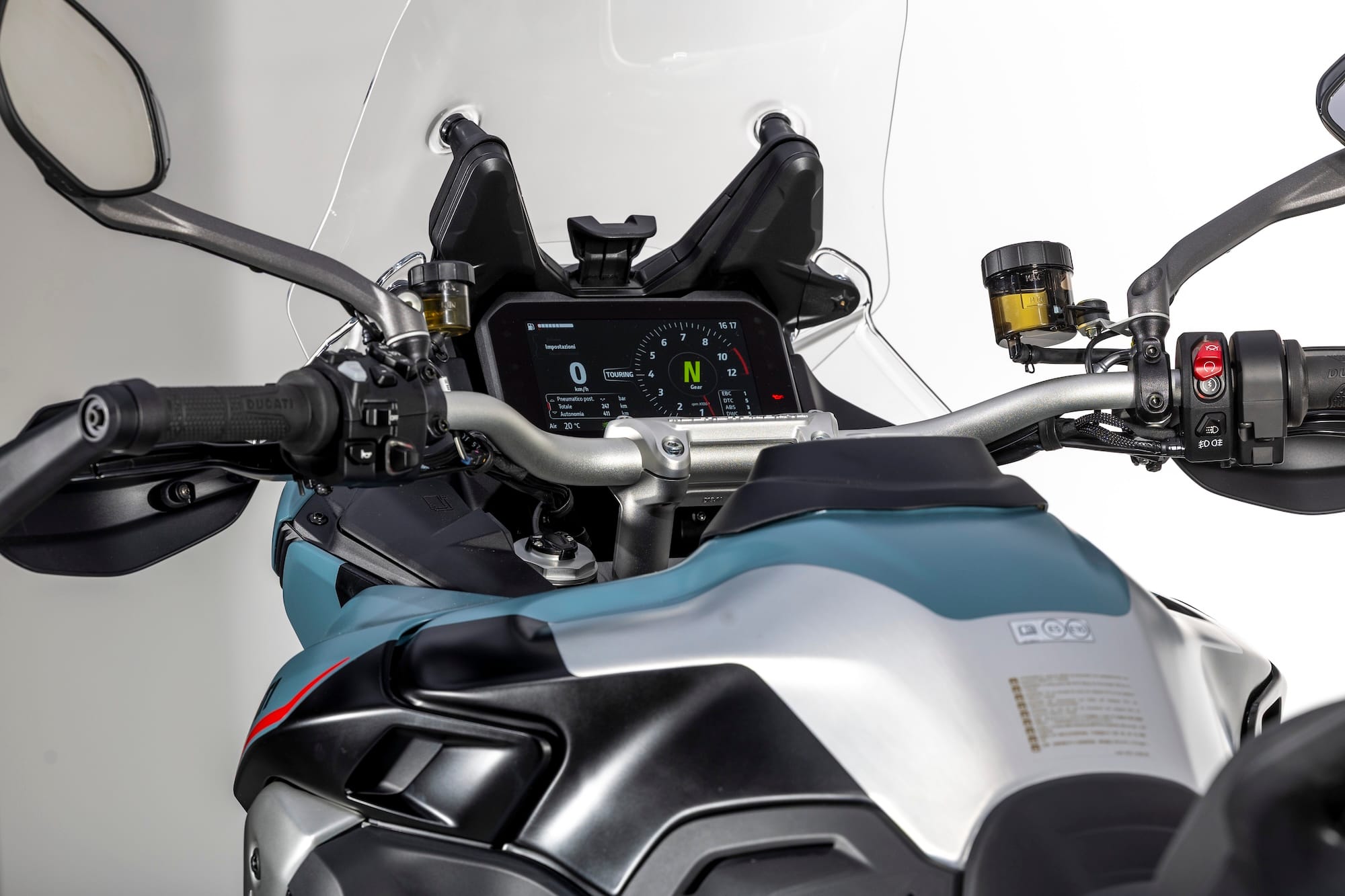
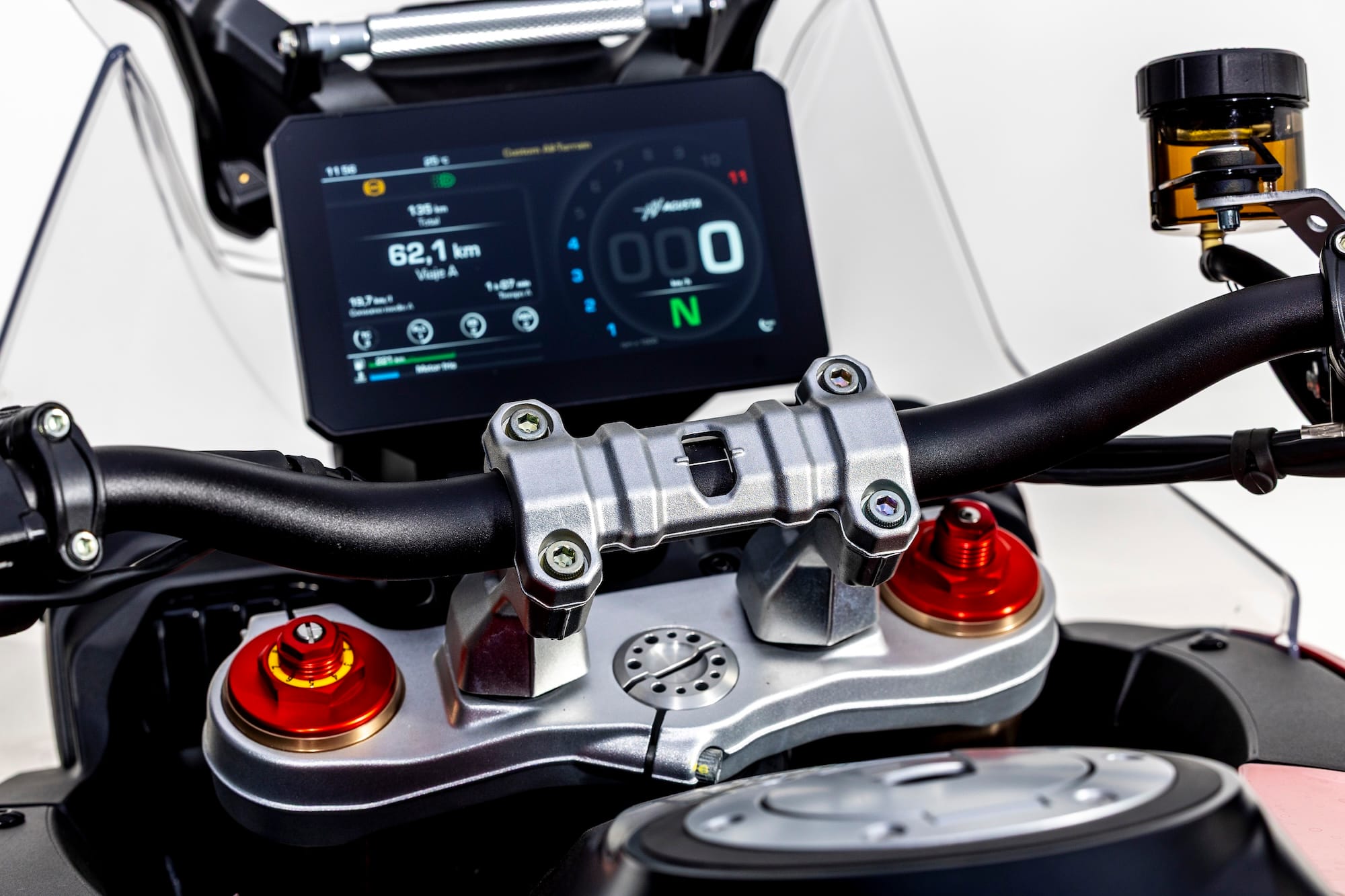
BMW R 1300 GS, Ducati Multistrada V4 Rally & MV Agusta Enduro Veloce
Combined with its well‑tuned semi‑active suspension, the Ducati handled anything from lazy high‑gear cruising to spirited corner carving on quality tarmac. In fast, flowing sweepers, the Rally feels more like a tall superbike than a traditional dual sport.
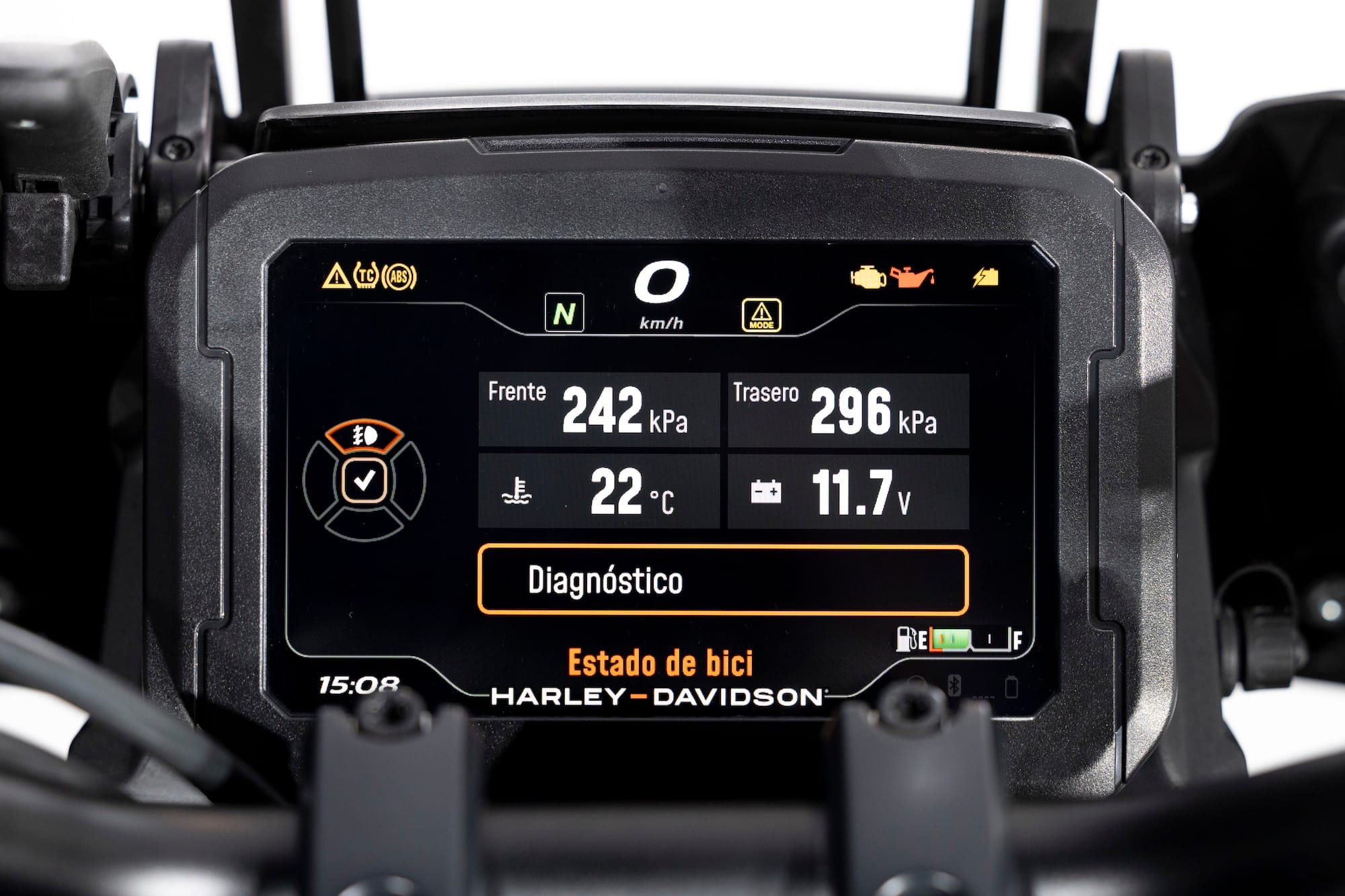
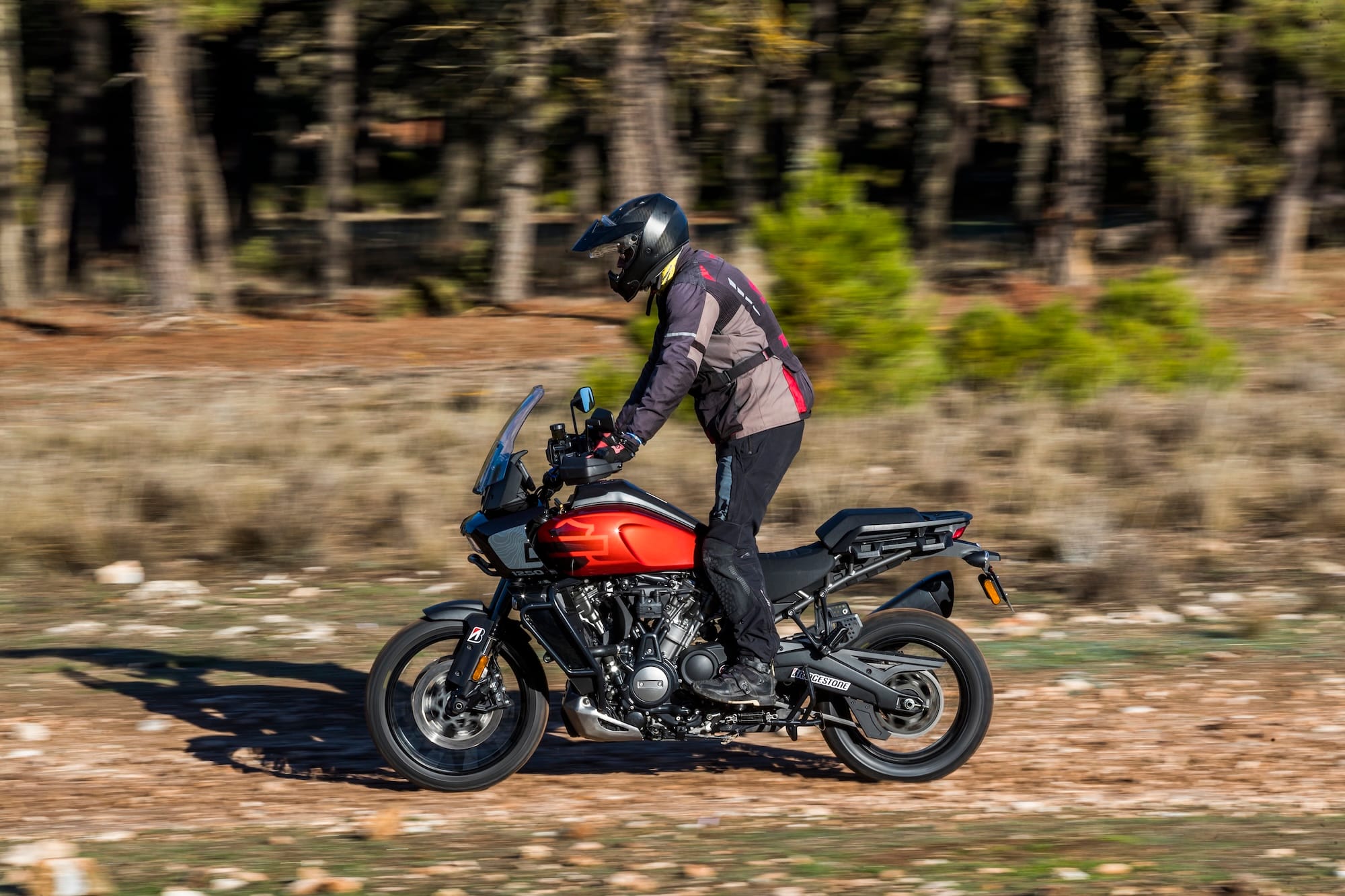
The dark horse of the group is the Pan America 1250. The Revolution Max twin pulls hard from about 2,500 rpm, and the semi‑active Showa suspension delivers a surprisingly successful blend of comfort and precision on mountain passes.
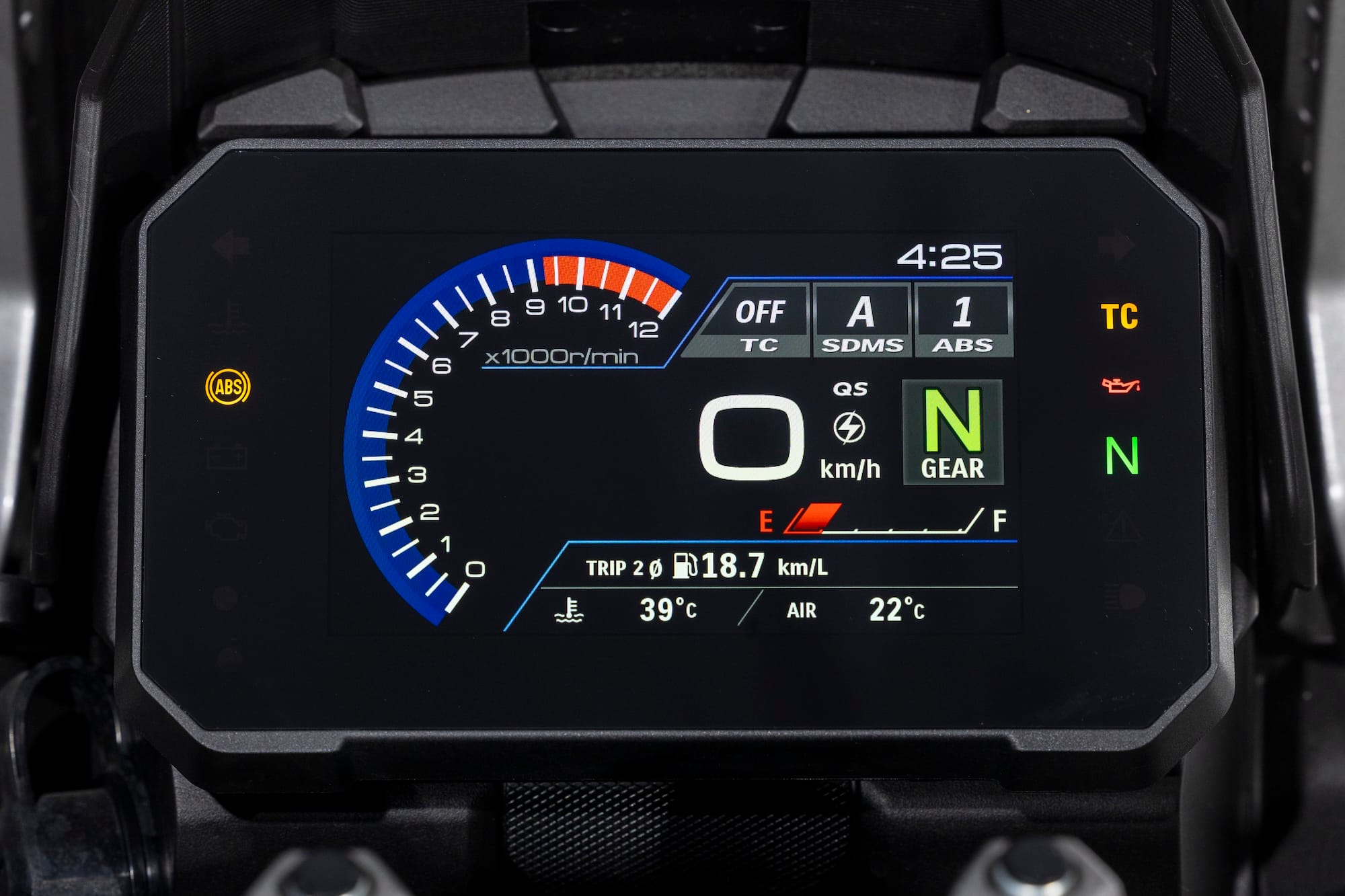
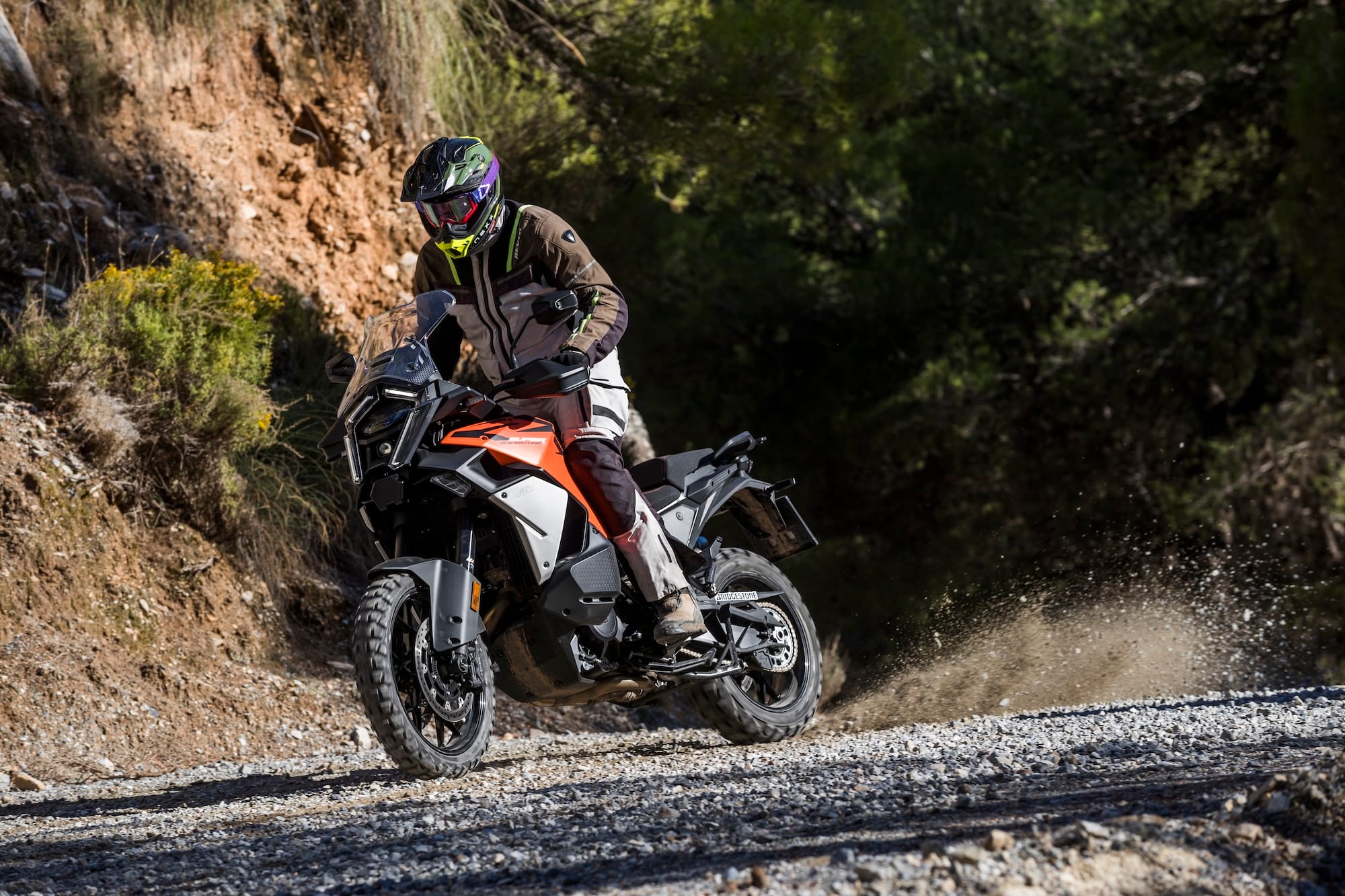
Suzuki V‑Strom 1050 DE & KTM 1390 Super Adventure S Evo
The motorcycle feels less nervous than the KTM or MV Agusta and builds a lot of confidence, especially when the road surface is bumpy or broken. You ride it more “swiftly and composed” than “on the attack”—which, on long days, is often more enjoyable.
KTM’s 1390 Super Adventure S Evo, on the other hand, is the dynamic loudspeaker in the room. Its 75‑degree V‑twin has punch everywhere in the rev range, yet remains easy to modulate at low and mid revs. The excellent WP suspension offers a huge working window from “sporty” to “loafing along.”
Harley‑Davidson Pan America 1250 & Ducati Multistrada V4 Rally
If you love late braking, early throttle application, and razor‑sharp accuracy, the KTM is likely the biggest adrenaline source in the lineup. And still, thanks to its improved wind protection and thoughtful ergonomics, the KTM remains a pleasant partner on long road days.
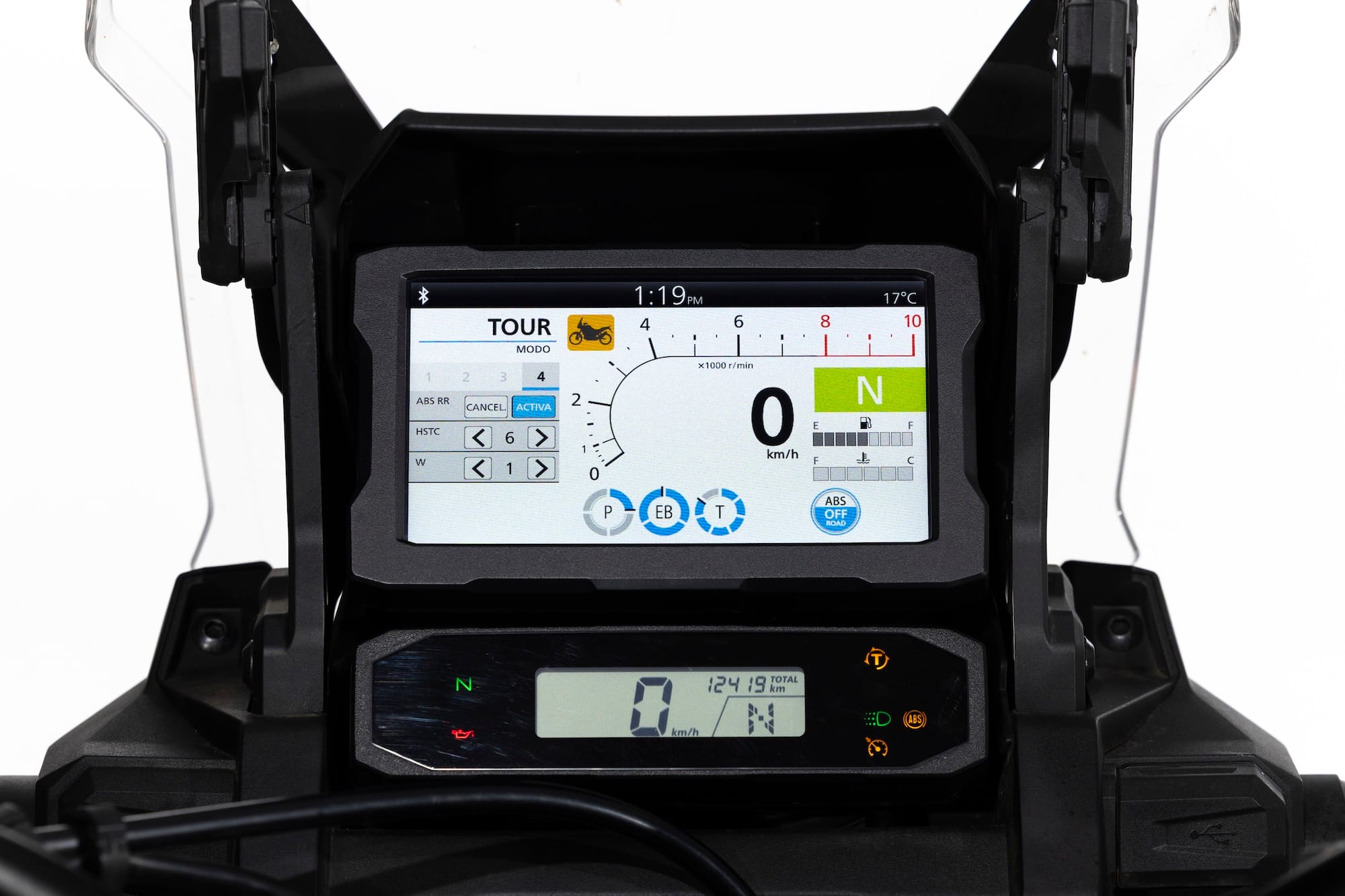
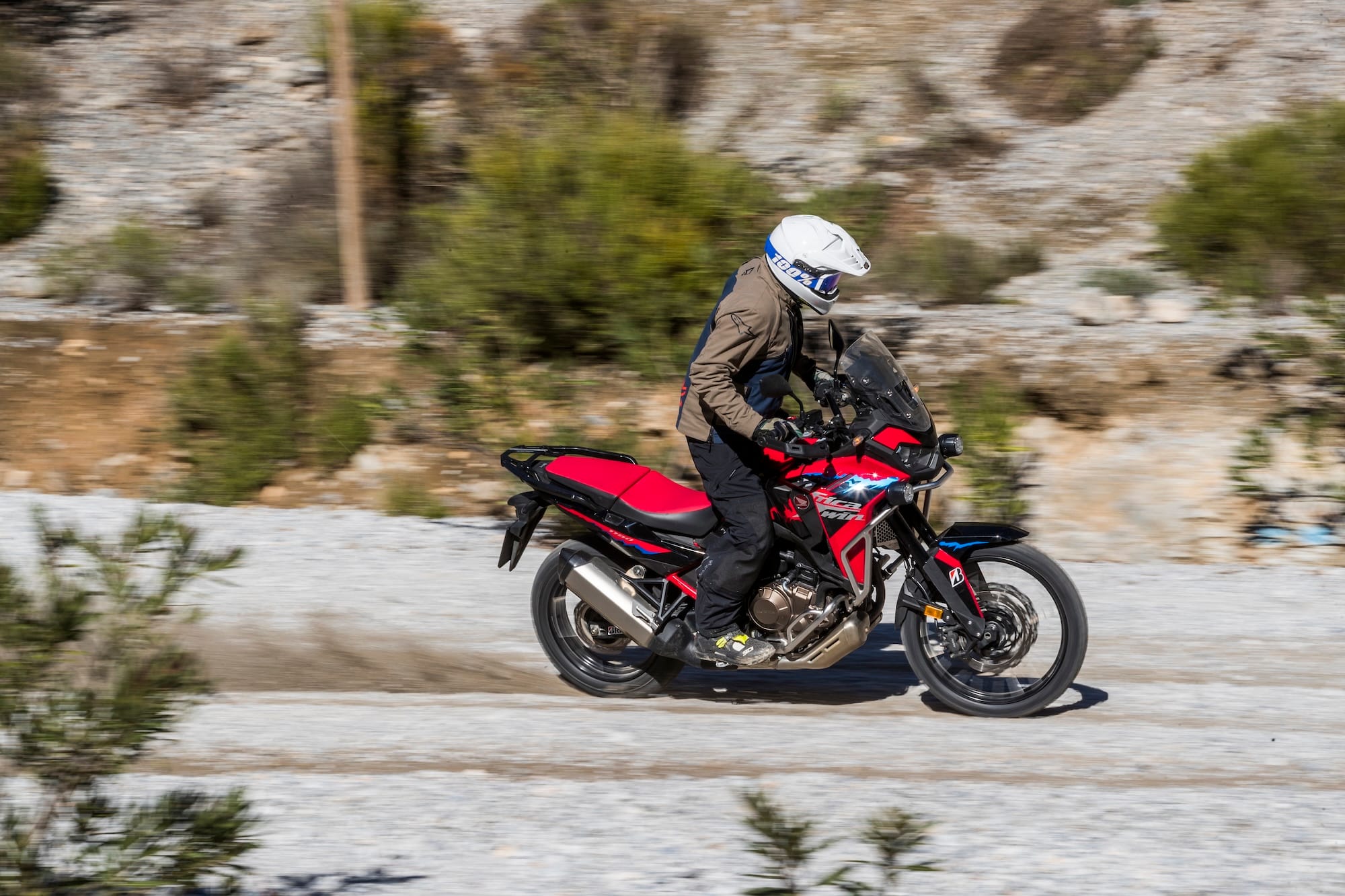
Honda chooses a different path with the Africa Twin, favoring lightness and flow over sheer force. Slim 21/18-inch wheels, a friendly chassis, and a strong midrange result in very intuitive, fluid riding on country roads. You never get the sense that you need to ride at max capacity to enjoy it. The Honda rewards clean lines and rhythm more than lap‑time heroics.
Suzuki V‑Strom 1050 DE, KTM 1390 Super Adventure S Evo & MV Agusta Enduro Veloce
The MV Agusta Enduro Veloce, turns the emotion dial to the top. Its high‑rev triple responds sharply to throttle inputs, spins almost vibration‑free far beyond 10,000 rpm, and sounds like a supersport racer that decided to go traveling. The firm suspension and 21-inch front wheel are tuned so that the MV slices through corners precisely and stays composed despite its ADV styling. If you love a rowdy sound, revs, and sporty posture, the Enduro Veloce provides one of the most intense backroad experiences in the test.
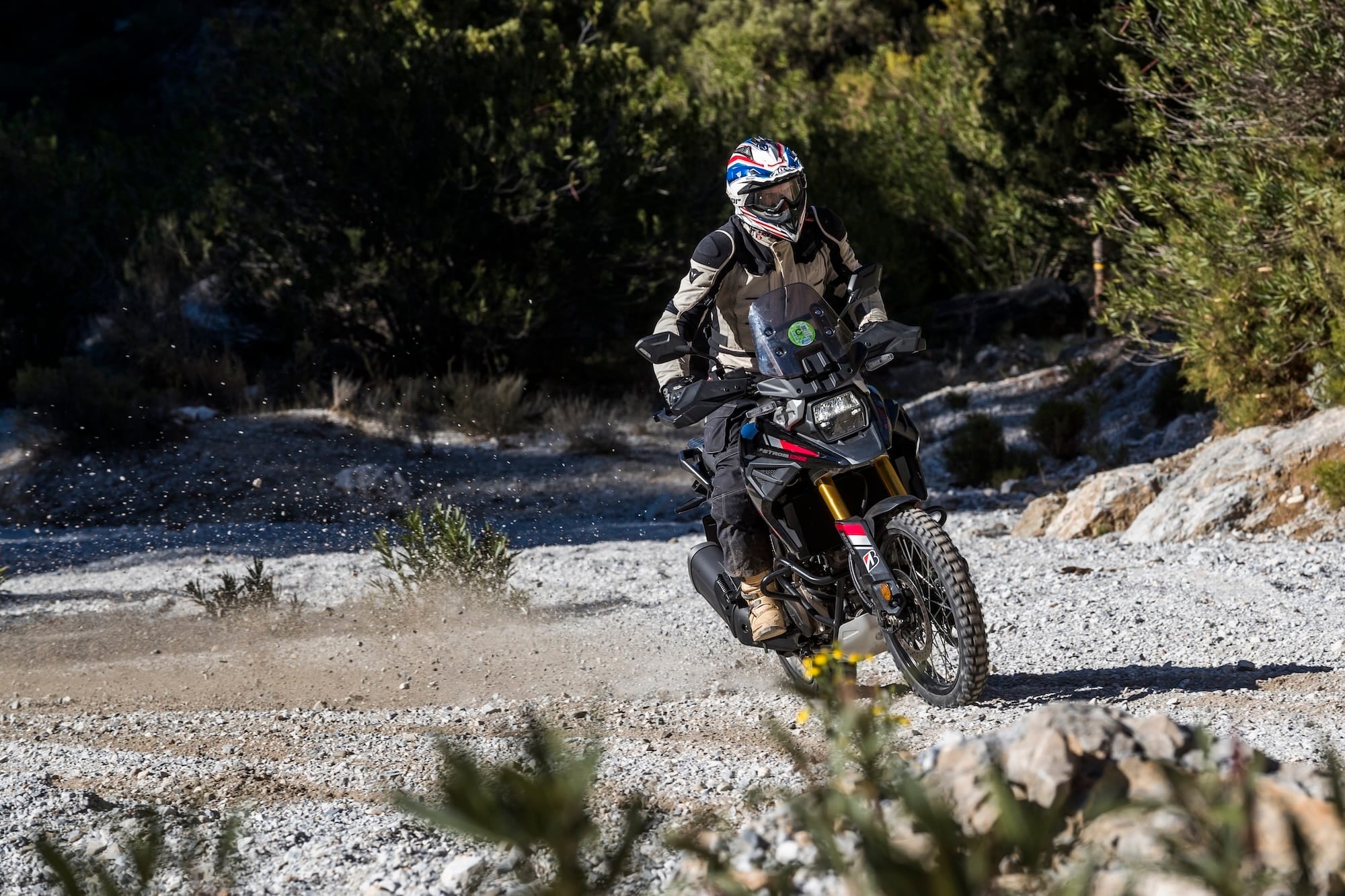
Finally, the Suzuki V‑Strom 1050 DE plays the honest and unpretentious card. Its V‑twin delivers strong midrange, while the aluminum chassis and manually adjustable suspension generate a very predictable, stable ride. On your local loop, it can be a lot of fun without the razor edge of a Ducati or KTM—and because it never feels demanding, it’s easy to ride briskly without getting tired.
BMW R 1300 GS & Honda CRF1100L Africa Twin
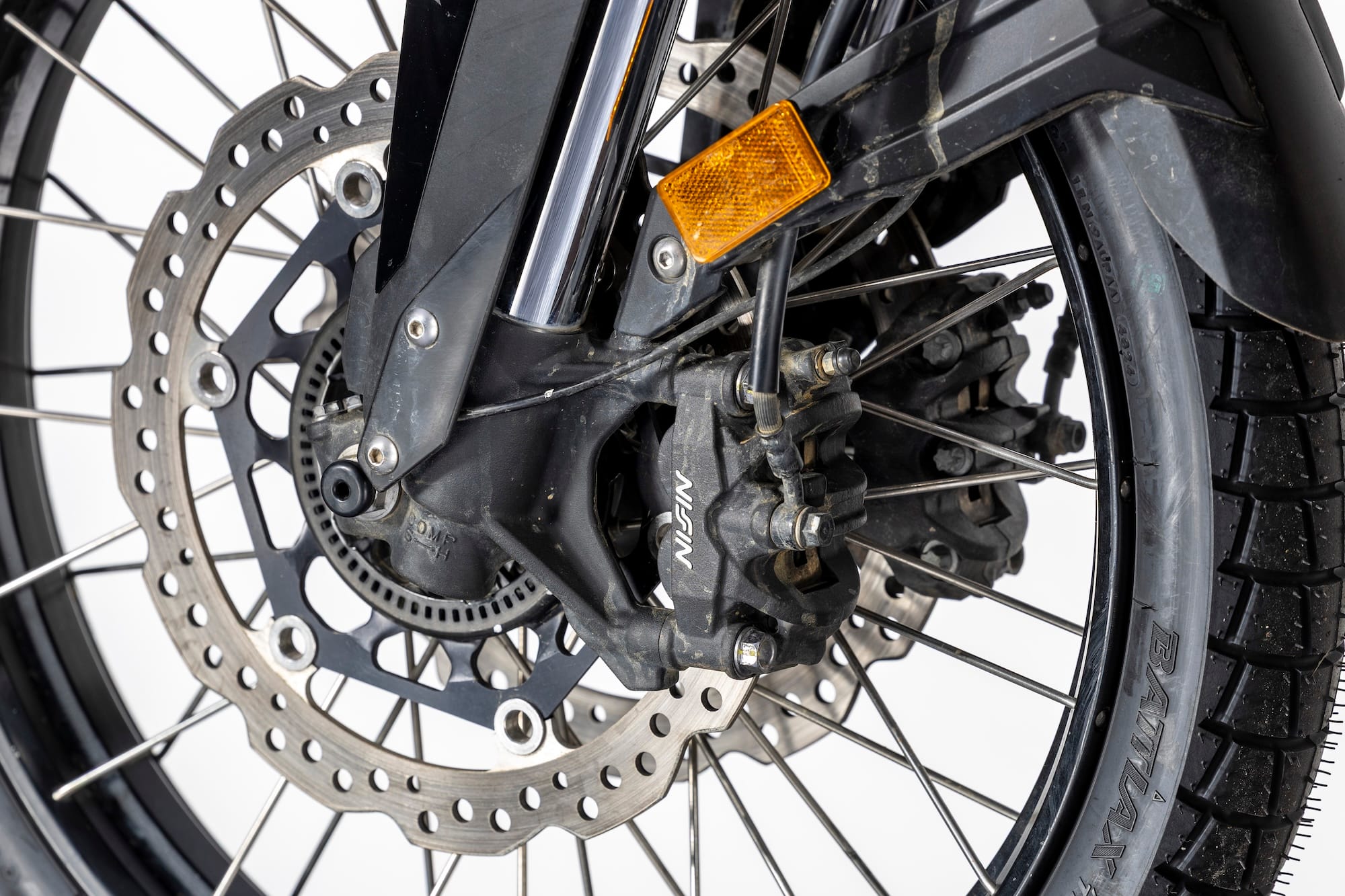
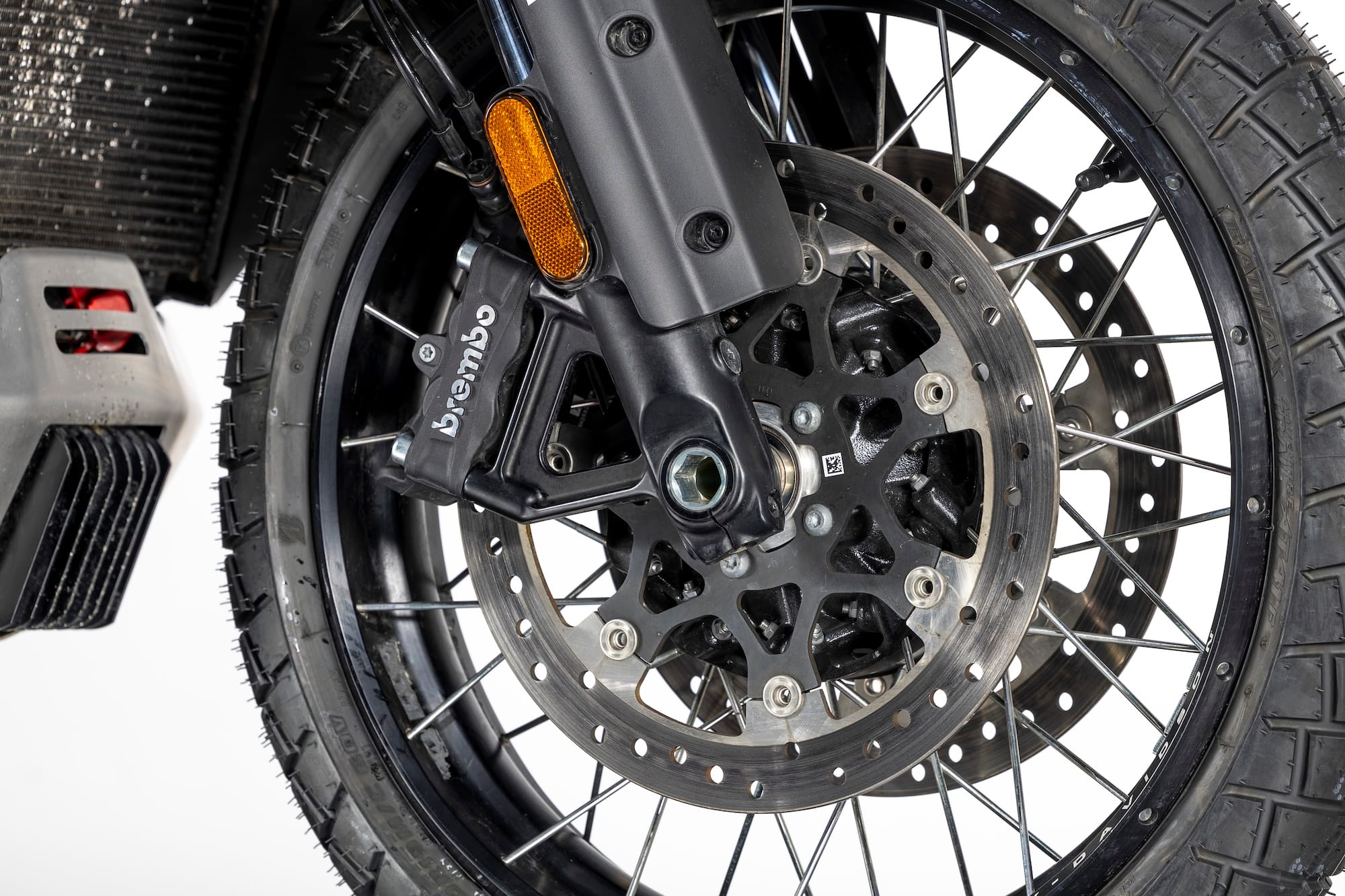
One more word about brakes: all seven bikes operate at a very high level here. In terms of sheer stopping power and modulation, none of them have anything to be ashamed of. The differences lie more in feel and ABS tuning than in pure stopping power.
Off‑Road: Dirt Lovers and Street Machines
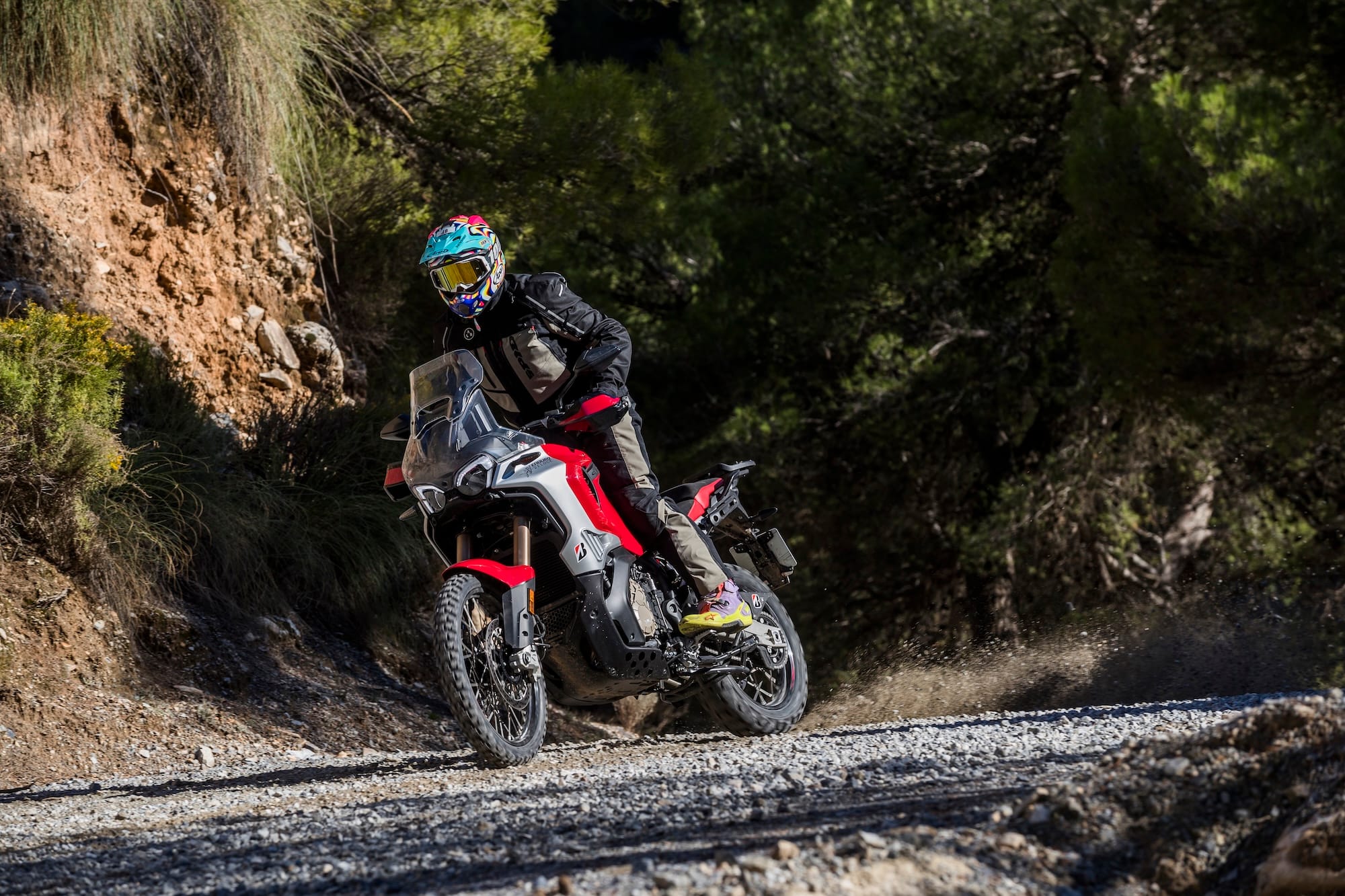
Off the tarmac, the Honda Africa Twin feels the most natural. Its relatively low weight, generous ground clearance, and long suspension travel, make it a prime choice for riders who really want to use dirt roads and trails. The engine delivers torque exactly where you need it on loose surfaces, and the chassis geometry supports controlled riding over ruts, rocks, and ledges.
Suzuki V‑Strom 1050 DE, MV Agusta Enduro Veloce & KTM 1390 Super Adventure S Evo
The KTM brings serious off‑road potential as well. Its generous suspension travel and ground clearance allow for much more than graded gravel roads, and with the right off‑road mode dialed in, you can hustle the KTM at a good pace in the dirt. Its weight and power, however, require skill and judgment. You have plenty of rally‑style performance in there, but it’s not for everyone.
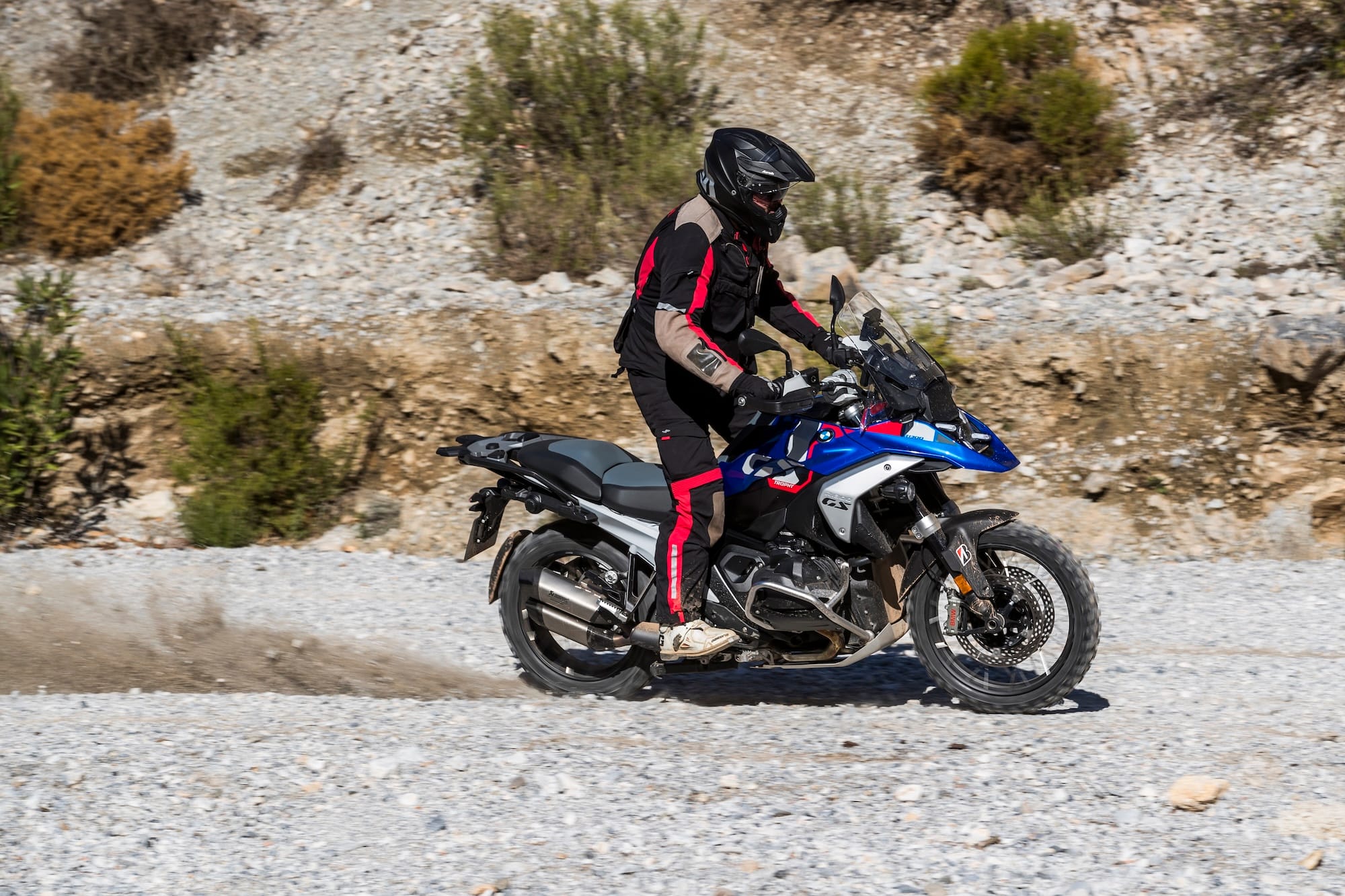
BMW’s R 1300 GS benefits off‑road from its precise Telelever front end and balanced chassis. The suspension offers decent reserves, and the bike remains easily under control on loose ground. Its high curb weight is surprisingly well disguised. The GS feels very composed on gravel roads and easy trails, and the accurate engine response makes it a joy to drift and steer on the throttle.
Ducati Multistrada V4 Rally & Honda CRF1100L Africa Twin
There’s also a practical bonus. Those wide boxer cylinders, seen by some as a packaging compromise, actually help off‑road. With crash bars fitted, the GS can’t tip over fully in the dirt. None of the other test bikes were as easy to pick up again as the BMW boxer.
The Multistrada V4 Rally is far more delicate in this respect. A simple tip‑over can get expensive quickly, as multiple body panels are likely to grind over rocks. This motorcycle is better viewed as a globetrotter. In the right ride mode, with tuned suspension and appropriate tires, it can go to surprising places, but its mass and high center of gravity keep it firmly in the “touring with light off‑roading” category.
Something similar applies to the Pan America. On gravel roads and forest trails, it displays a new (and for a Harley) remarkable level of sporting ability. Tight, technical sections, however, require a lot of concentration and restraint.
Harley‑Davidson Pan America 1250 & BMW R 1300 GS
The same is true for the Suzuki V‑Strom 1050 DE. It feels happy on fire roads and long gravel routes, with enough toughness to handle rougher patches. However, limited suspension travel and heavy weight set its boundaries when things get truly difficult.
MV Agusta’s Enduro Veloce is very open about its priorities: street first, dirt later. With dedicated tires and at moderate speeds, it will go almost anywhere you’re sensible enough to point it. In terms of ergonomics and engine behavior, though, it is clearly optimized for pavement.
Final Verdict
BMW R 1300 GS
The R 1300 GS is for the all‑rounder who wants one bike to do everything: commuting, backroad blasting, long‑distance touring, and the occasional—or even serious—dirt road riding. It’s the most balanced tool in the test. The BMW has less character than some of its rivals, but it’s difficult to beat if you value overall competence over drama.
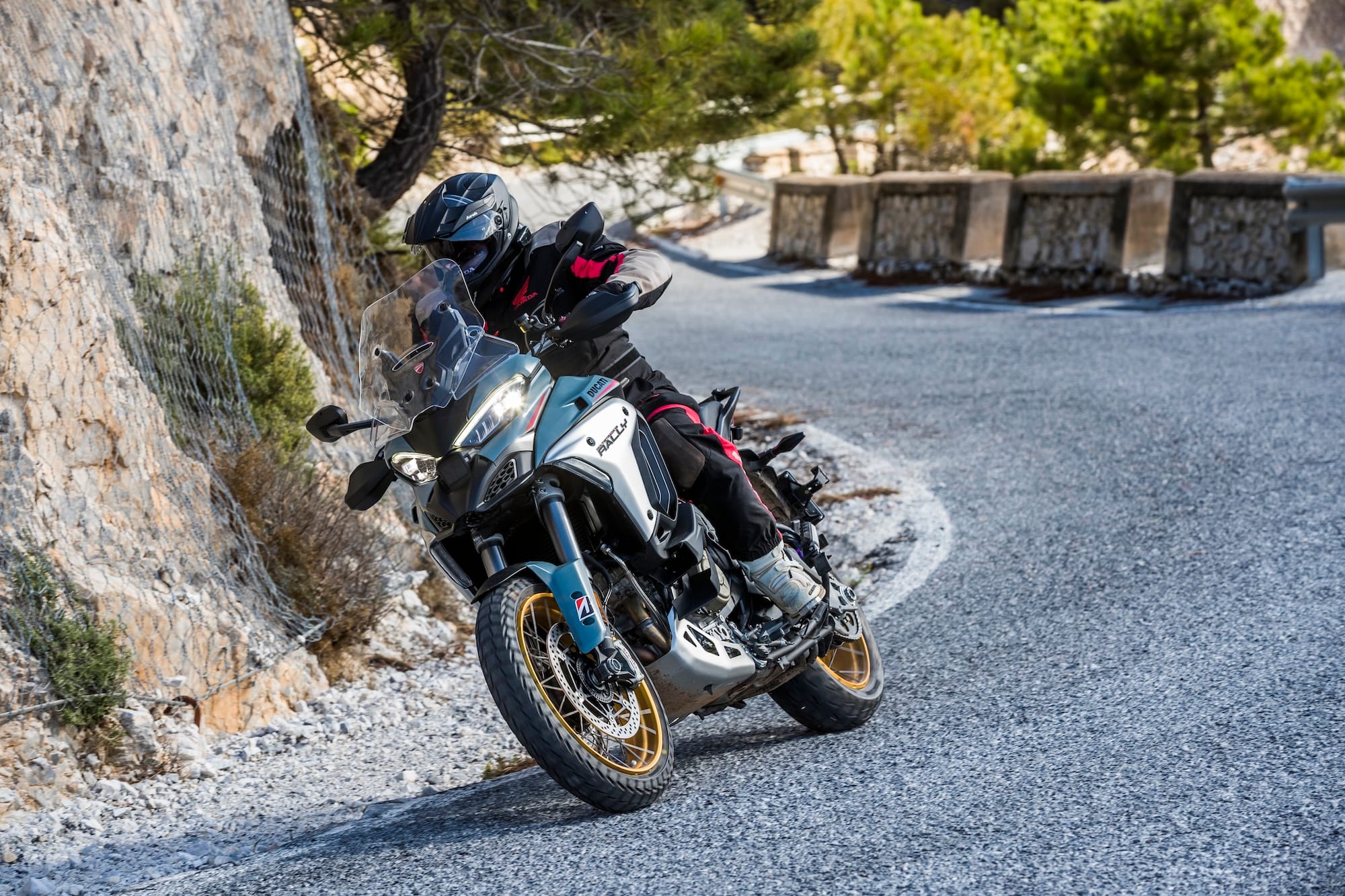
Ducati Multistrada V4 Rally
The Ducati likes to spend 90% of its time on pavement. It delivers superbike punch, long‑haul comfort, and some off‑pavement capability. If your “adventure” means rocketing across states or continents, this is your Italian missile.
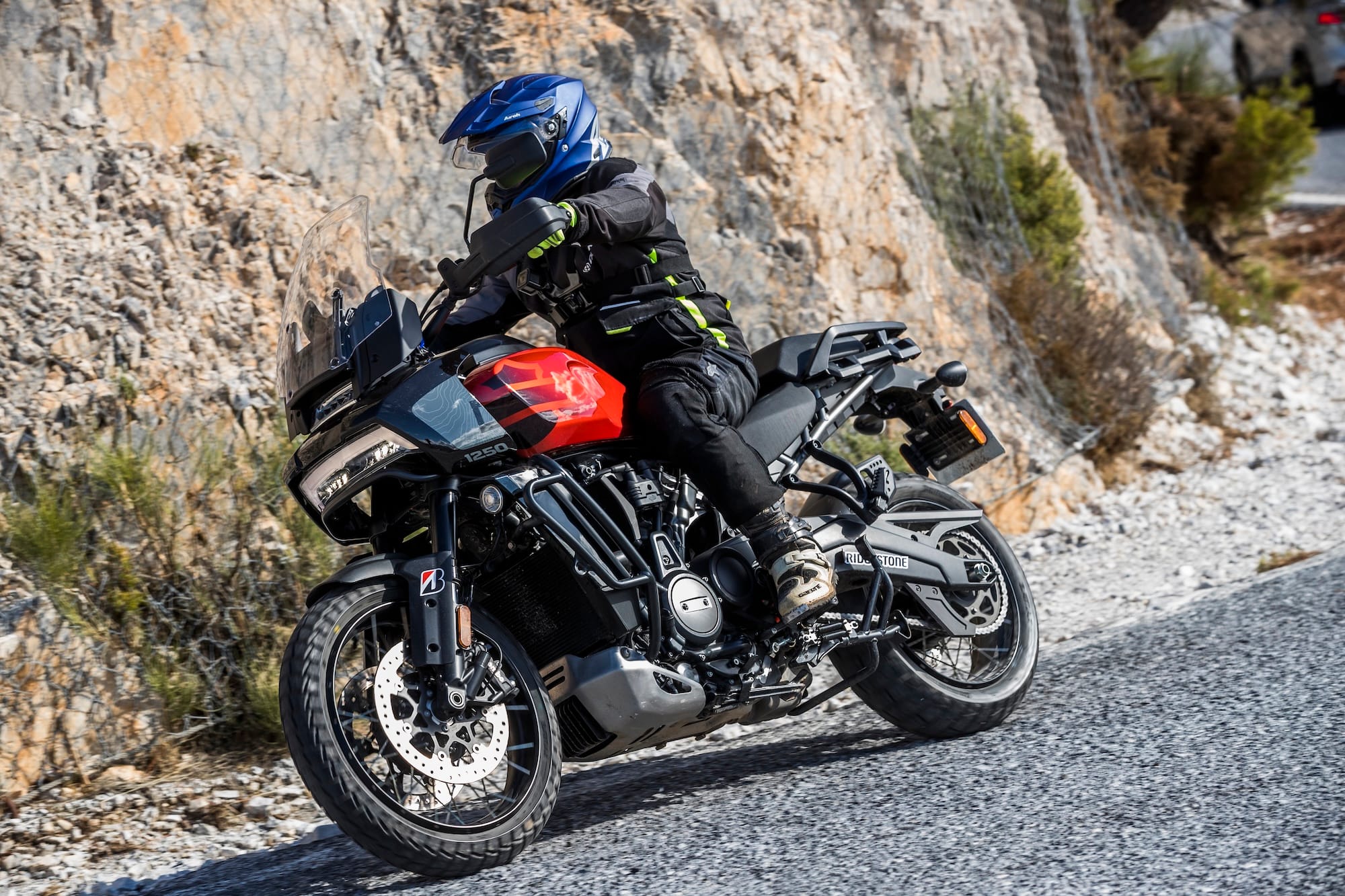
Harley‑Davidson Pan America 1250
If you love the Harley badge but want real ADV performance, not just styling, the Pan America is your pick. It’s a surprisingly capable all‑rounder: relaxed, comfortable, and stable on the highway, yet happy to slide on gravel when you’re in the mood (and have the skills to tame it).
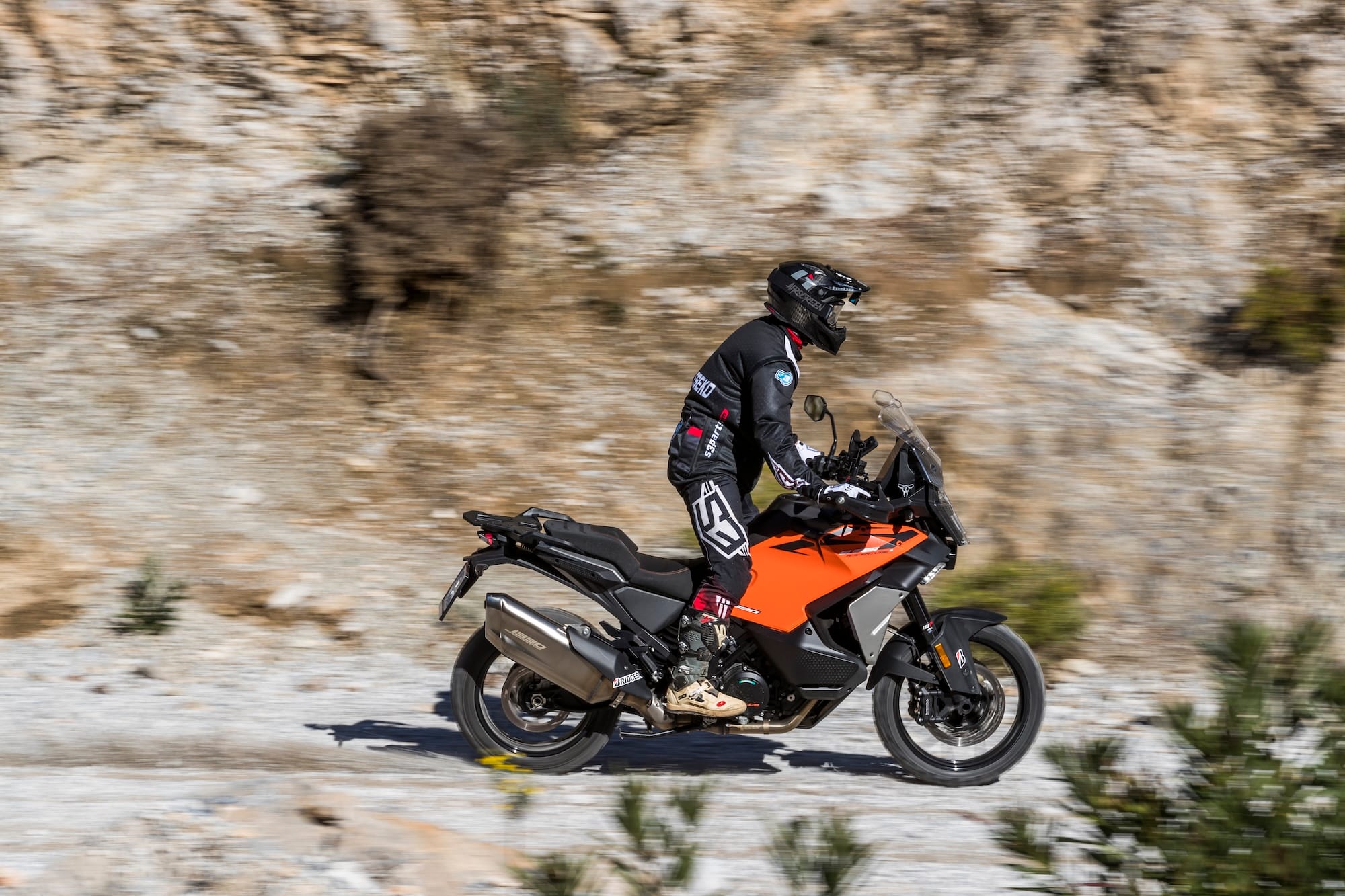
KTM 1390 Super Adventure S Evo
The 1390 Super Adventure S Evo will carry you over long distances and the occasional dirt stretch. Think of it as a tall sportbike with luggage and electronics that lets you get away with murder. If you’re a performance junkie who rides hard and fast, this one will put the biggest grin on your face.
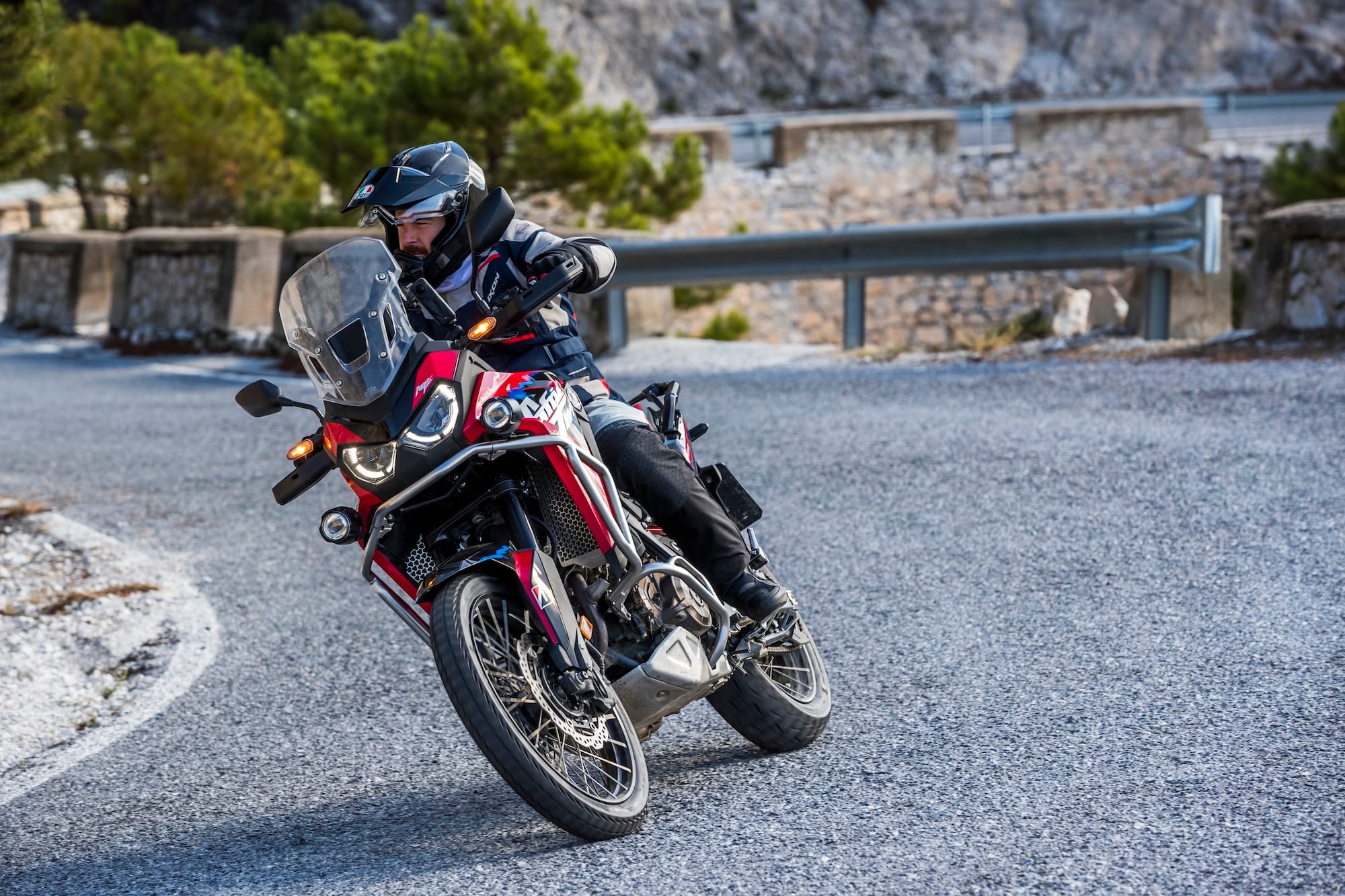
Honda CRF1100L Africa Twin
Riders who really use dirt roads and unpaved passes instead of just talking about them but still need a competent road bike will have exactly that in the Africa Twin. It might have less power, but it boasts more ease of use. This Honda is ideal if you value control, predictability, and off‑road manners over bragging rights.
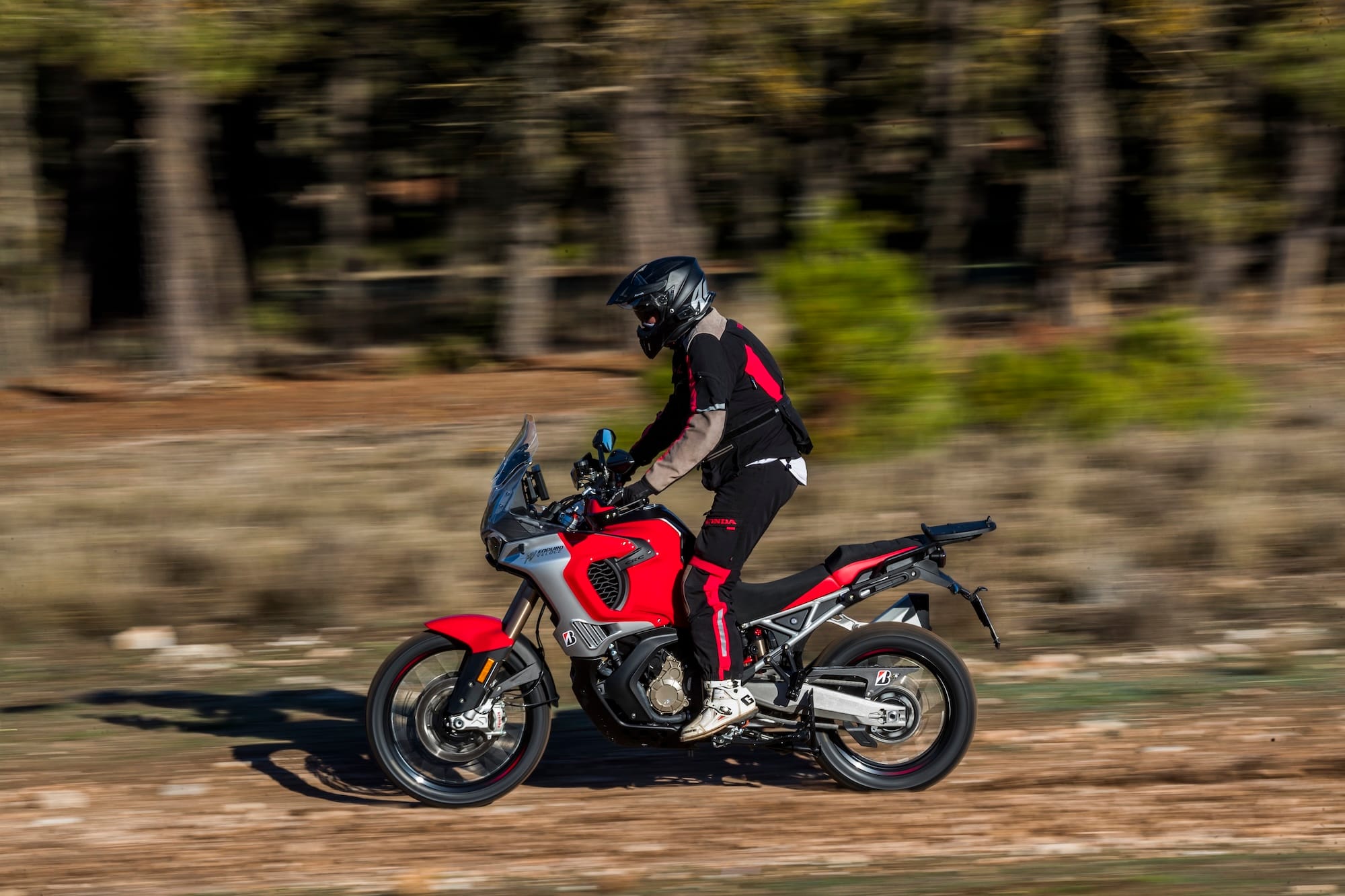
MV Agusta Enduro Veloce
The MV Agusta brings to the table track‑bike feels with an ADV silhouette. This motorcycle trades some comfort and dirt capability for sound and feel. It’s the high‑heels sportbike of the group—spectacular on a twisty road but too pretty (and pricey) to throw down a rocky trail.
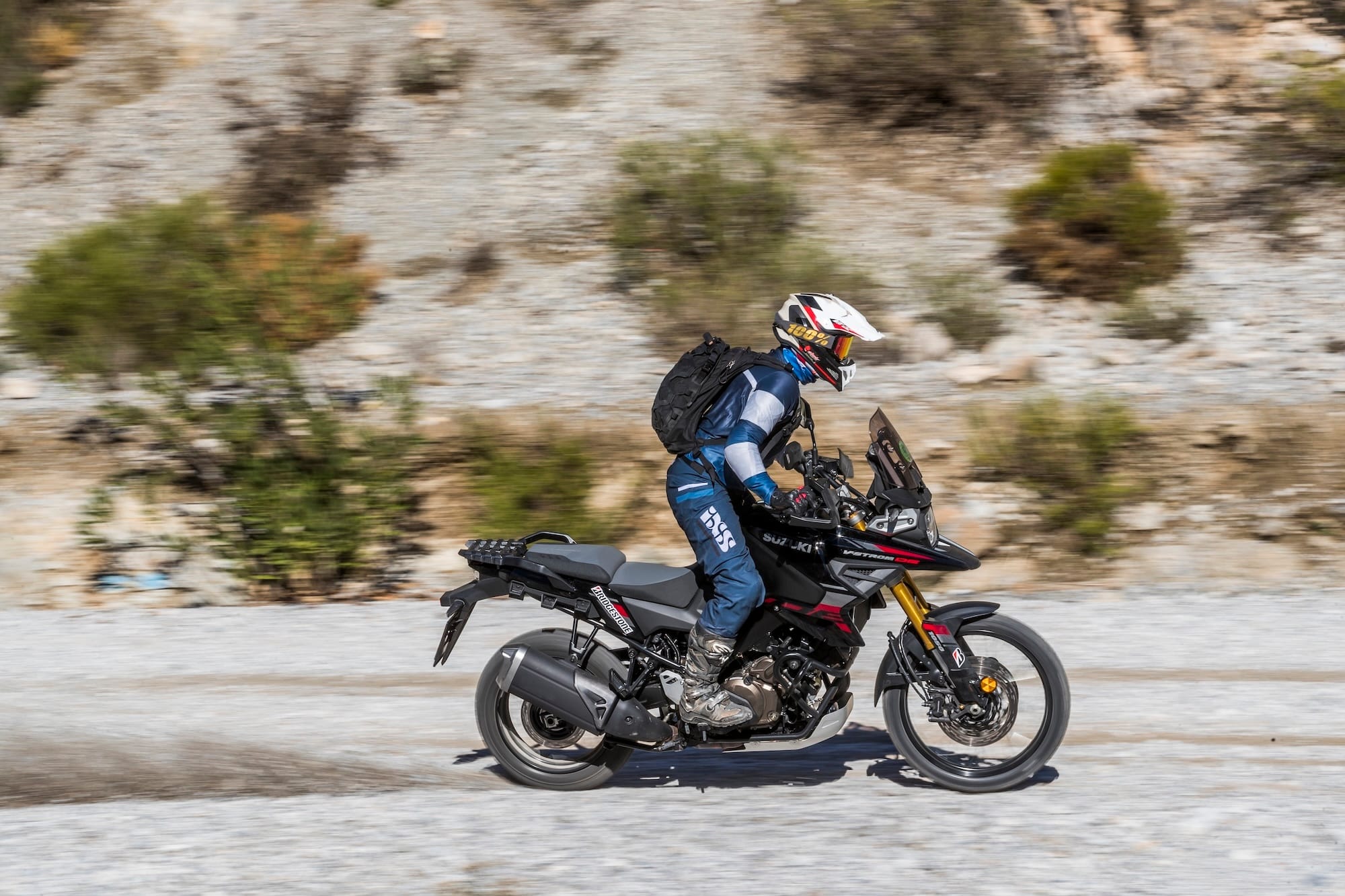
Suzuki V‑Strom 1050 DE
The V-Strom 1050 DE is for the pragmatic rider who wants a tough, honest adventure tourer with real everyday usability and a fair price. What the Suzuki lacks in flash, it more than makes up for in function. It’s great on backroads and gravel, easy to live with, and unlikely to go out of fashion when the next electronics trend hits.
Technical Specs
BMW R 1300 GS
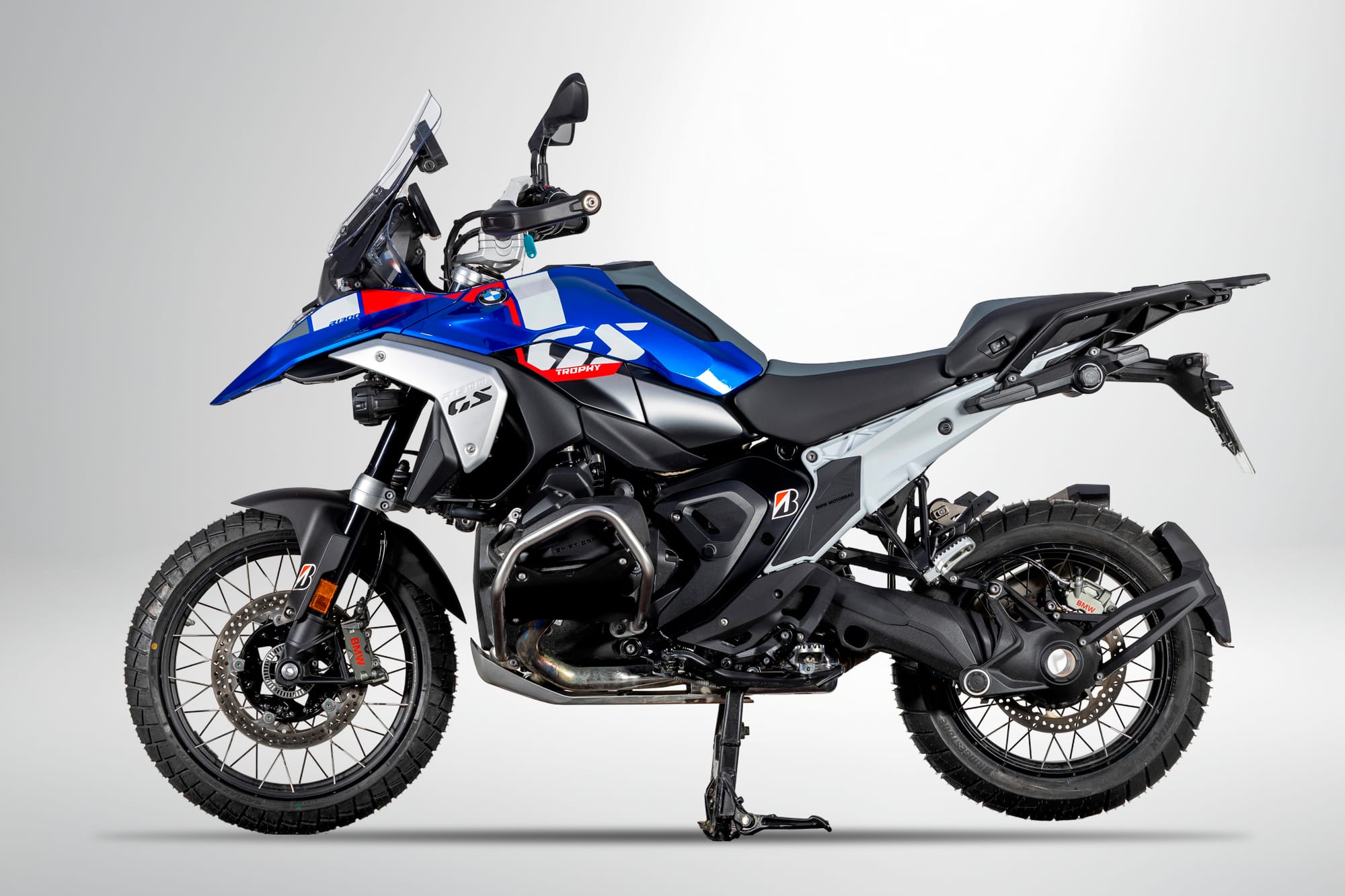
Distributor: BMW Motorrad North America
MSRP: $20,395
Engine: air/liquid-cooled, 4-stroke, boxer twin, BMW ShiftCam
Displacement: 1300ccPower: 145hp @7,750rpm; 110lb-ft @6,500rpm
Transmission: 6-speed, Cardan shaft drive
Rake/Trail: 26.2°/4.4in
Weight (Wet): 523lbs
Seat Height: 33.4in
Fuel Capacity: 5gal
Color: Racing Red, Option 719, Triple Black, GS Trophy
Ducati Multistrada V4 Rally
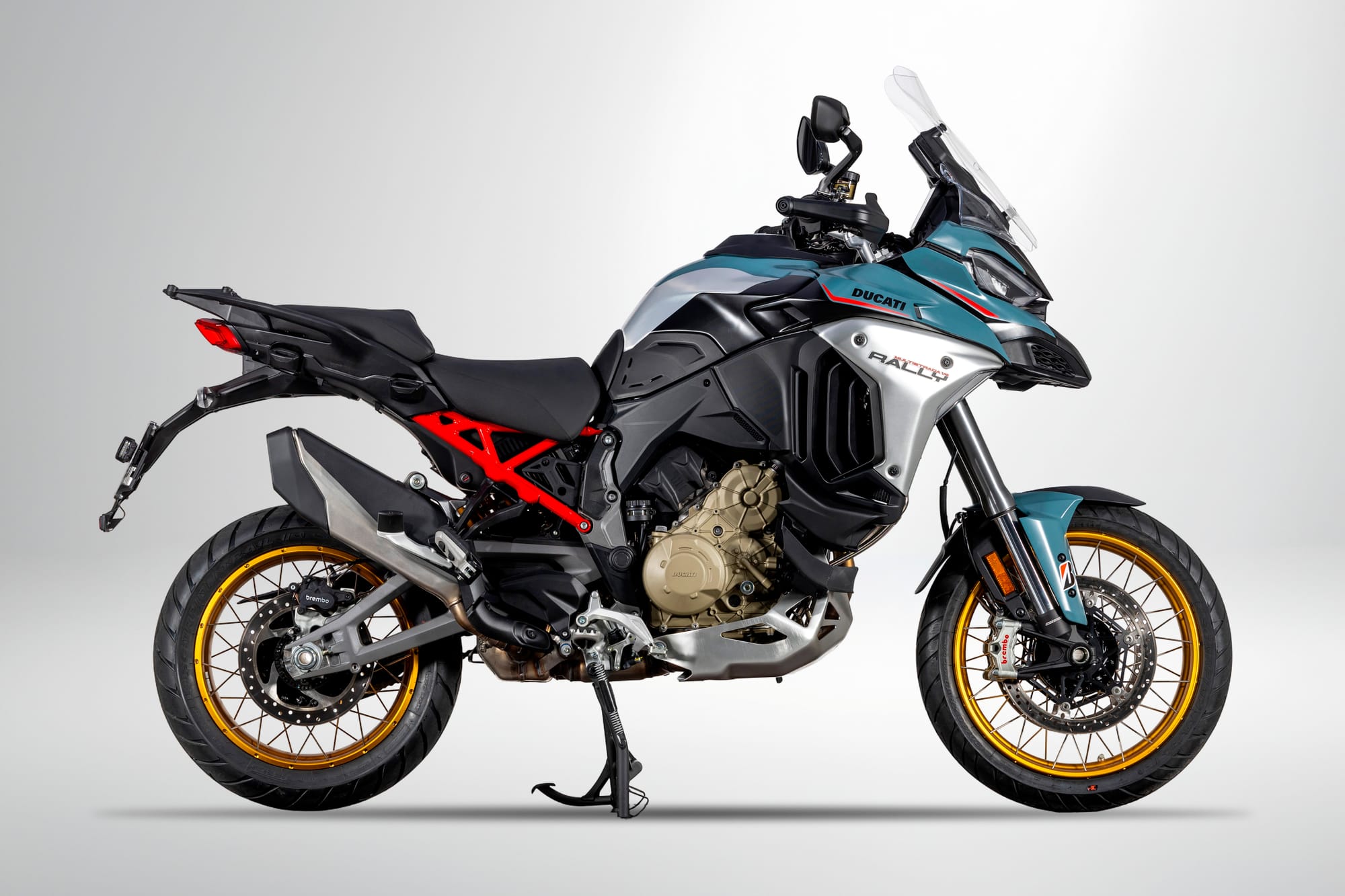
Distributor: Ducati North America
MSRP: $32,495
Engine: V4 Granturismo, 4-valve, liquid-cooled, DOHC
Displacement: 1158ccPower: 170hp @10,750rpm; 91lb-ft @9,000rpm
Transmission: 6-speed, bidirectional quickshifter, chain final drive
Rake/Trail: 24.7°/4.1in
Weight (Wet): 577lbs
Seat Height: 34.3-35in
Fuel Capacity: 7.9gal
Color: Ducati Red, Jade Green
Harley-Davidson Pan America 1250 Special
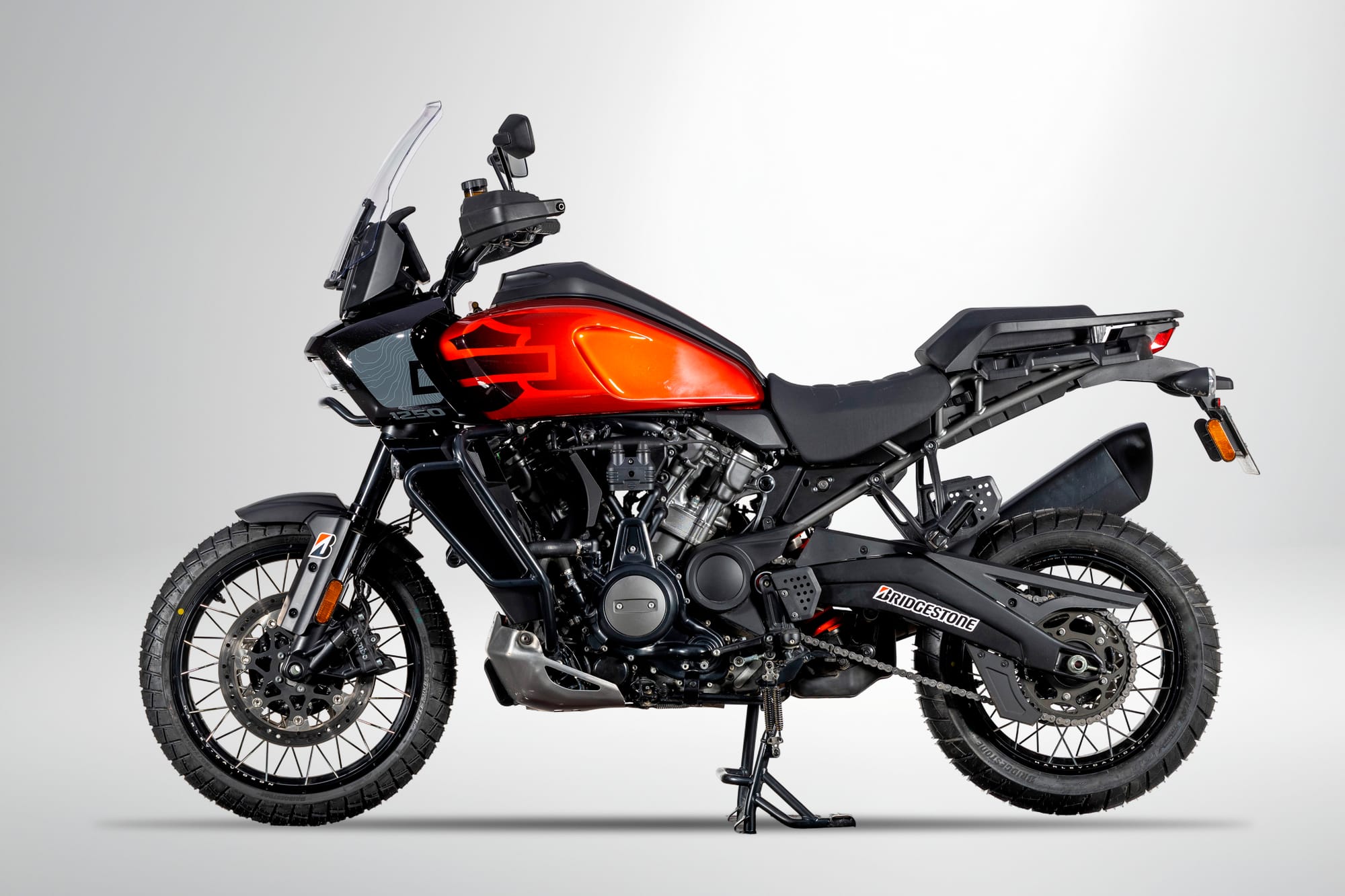
Distributor: Harley-Davidson
MSRP: $19,999
Engine: Revolution Max 1249, liquid-cooled, VVT, DOHC
Displacement: 76.4cu in (1250cc)
Power: 150hp @8,750rpm; 94lb-ft @6,750
Transmission: 6-speed, chain final drive
Rake/Trail: 25°/4.3in
Weight (Wet): 569lbs
Seat Height: 31.1-32in
Fuel Capacity: 5.6gal
Color: Dark Billiard Gray, Vivid Black, Blood Orange
Honda CRF 1100L Africa Twin
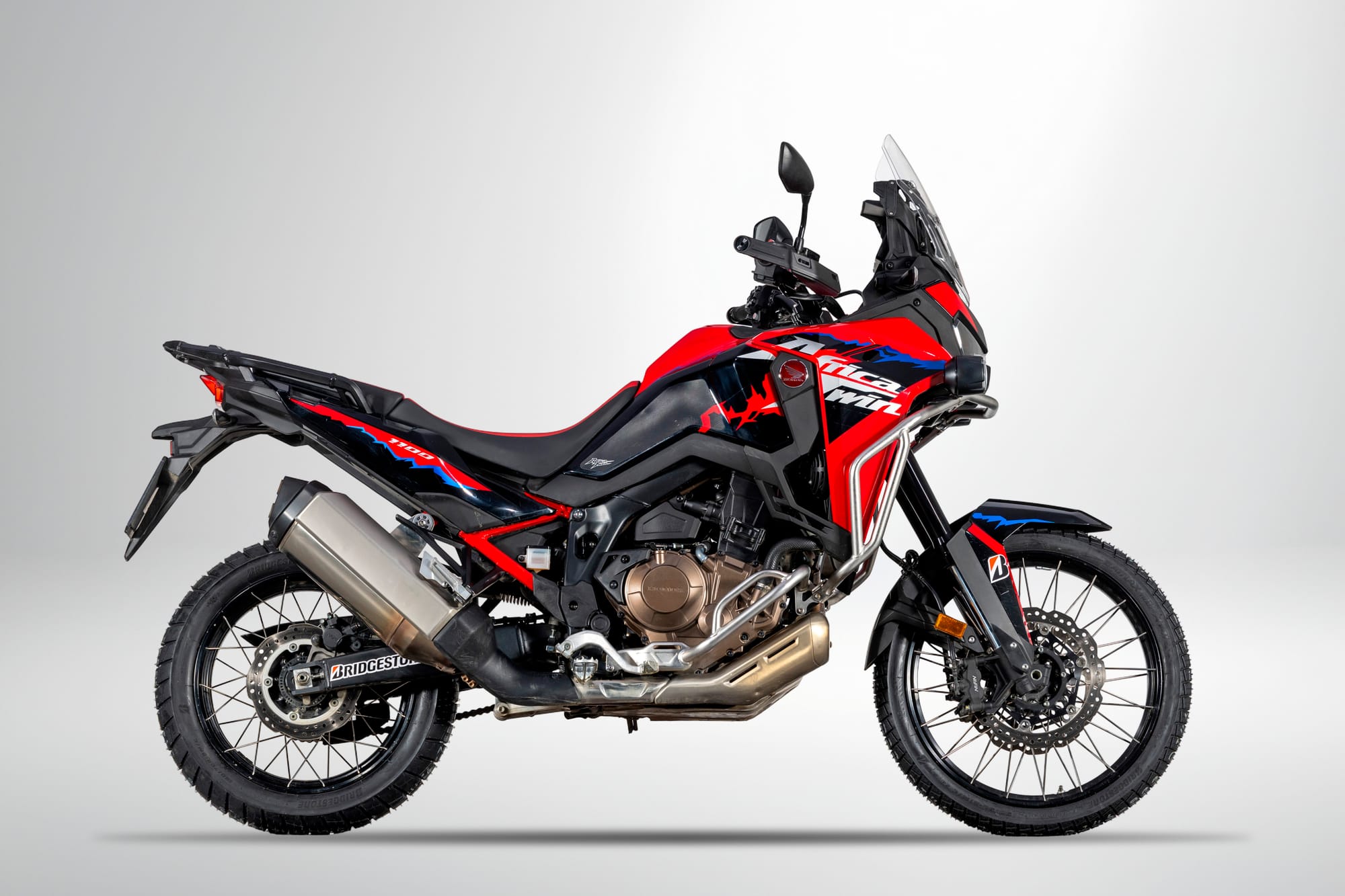
Distributor: Honda Powersports
MSRP: $15,199
Engine: liquid-cooled, parallel-twin, 4-stroke, 4-valve
Displacement: 1084cc
Power: 102hp @7,500rpm; 83lb-ft @5,500rpm
Transmission: 6-speed, chain final drive
Rake/Trail: 27.5°/4.5in
Weight (Wet): 510lbs
Seat Height: 33.5-34.3in
Fuel Capacity: 5gal
Color: Matte Black Metallic, Pearl White
KTM 1390 Super Adventure S Evo
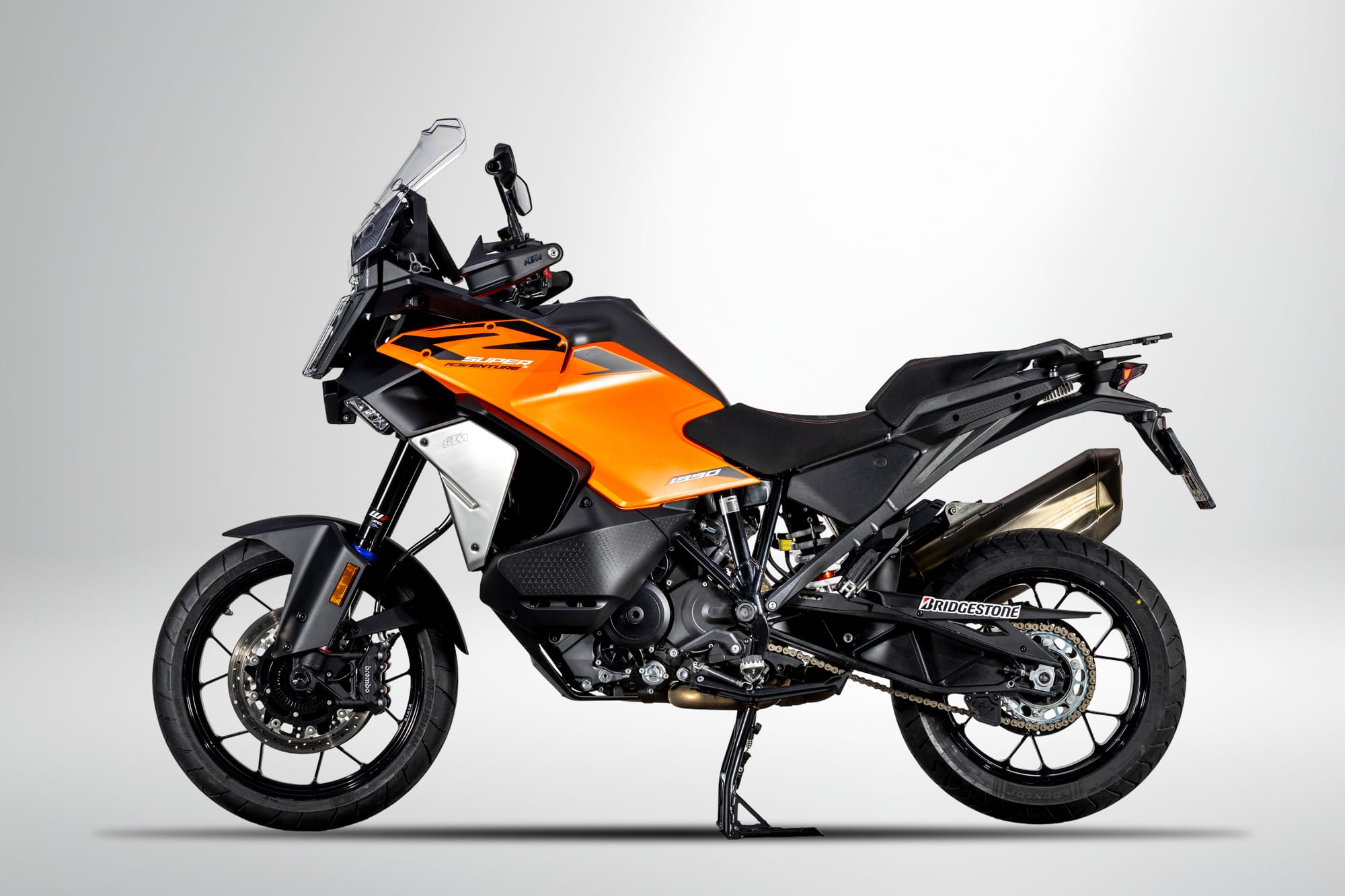
Distributor: KTM
MSRP: $22,699
Engine: liquid-cooled, 2-cylinder, 4-stroke
Displacement: 1350cc
Power: 173hp @9,500rpm; 107lb-ft @8,000rpm
Transmission: 6-speed, chain final drive
Rake/Trail: 24.7°/4.3in
Weight (Dry): 500lbs
Seat Height: 33.3-34.1
Fuel Capacity: 6gal
Color: black-orange, black-white
MV Agusta Enduro Veloce
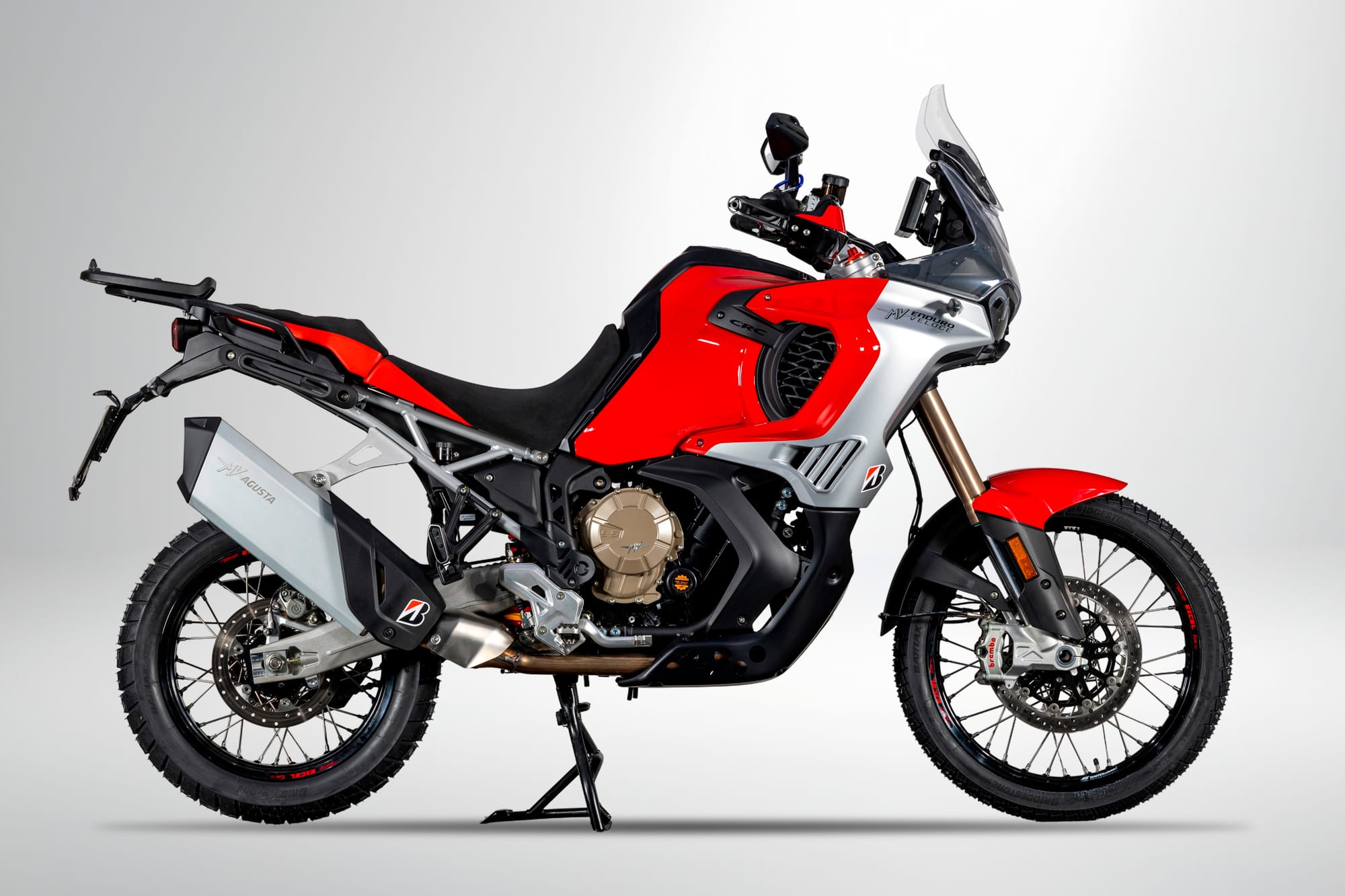
Distributor: MV Agusta
MSRP: $15,998
Engine: liquid-cooled, 4-stroke, 12-valve, DOHC
Displacement: 931ccPower: 124hp @10,000rpm; 75.2lb-ft @7,000rpm
Transmission: 6-speed, constant mesh, wet multidisc clutch, bidirectional quickshifter, chain final drive
Rake/Trail: 27°/4.6in
Weight (Dry): 528lbs
Seat Height: 33.4-34.2in
Fuel Capacity: 5.2gal
Fuel Consumption: 41mpg (claimed)
Color: Pearl White/Nordic Blue, Intense Black/Anthracite Gray, Red/Silver
Suzuki V-Strom 1050DE
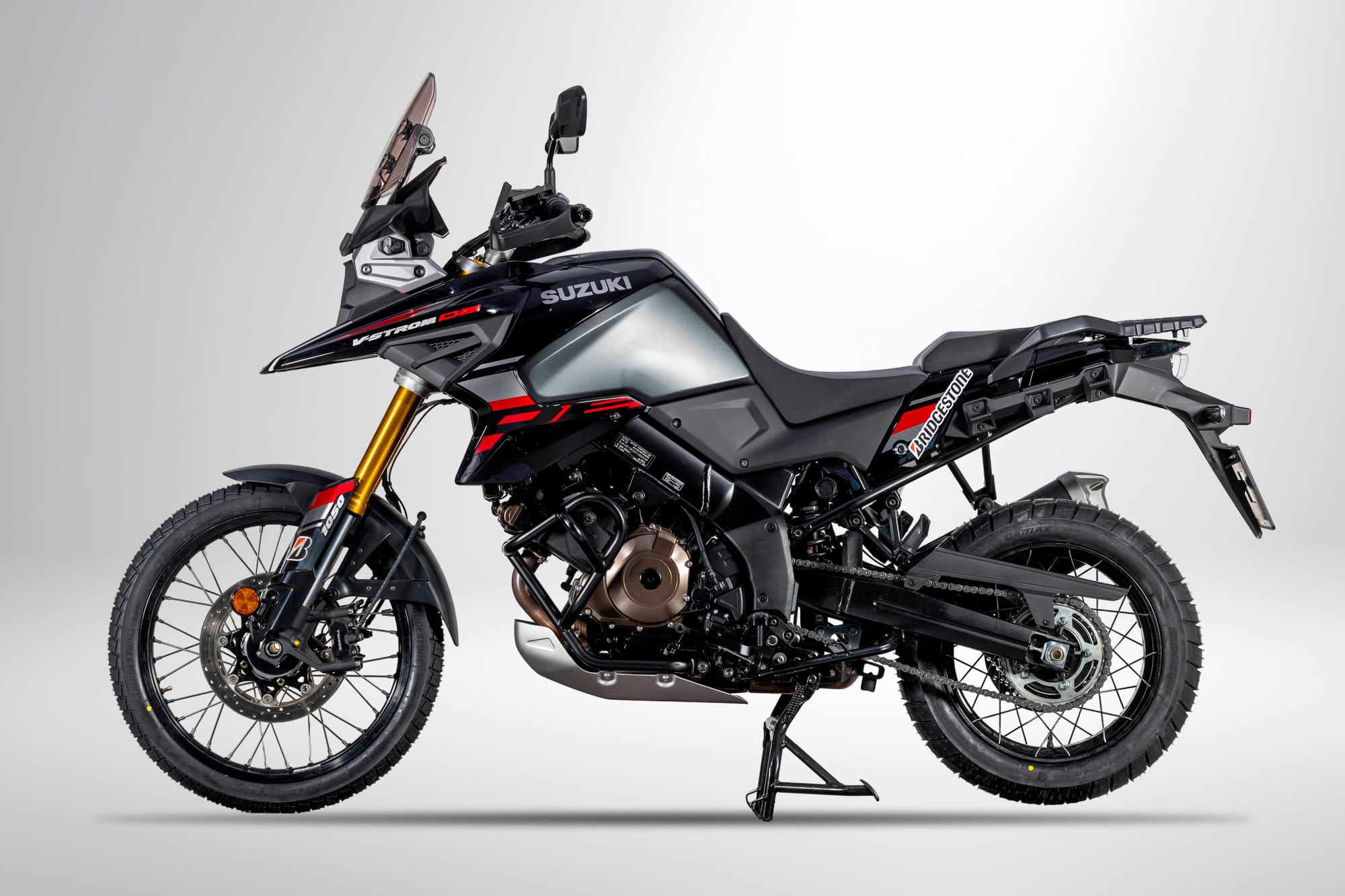
Distributor: Suzuki
MSRP: $16,449
Engine: liquid-cooled, 4-stroke, 2-cylinder, DOHC
Displacement: 1037ccPower: 106hp @8,500rpm; 74lb-ft @6,000rpm
Transmission: 6-speed, constant mesh, wet multiplate clutch, chain final drive
Rake/Trail: 27°/4.9in
Weight (Wet): 554lbs
Seat Height: 34.6in
Fuel Capacity: 5.3gal
Color: Pearl Tech White/Glass Sparkle Black