Wichita, Kansas Shamrock Tour®
Beef. It’s not only what’s for dinner, but the fuel this country was built with. The infant U.S. was a land of wide-open, grassy prairies that could be filled with grazing cattle to feed the burgeoning urban population. Although the great cattle drives took place for a mere 17 years, they became an element of the American national identity. Due to the century and a half separating us, the cowboys and lawmen of the past are part history, part dime novel pulp, and part celluloid. To begin to distinguish reality from fiction, you need to go to Kansas.
Wichita serves as the ideal headquarters for a cattle trail Shamrock Tour®. Not only was it a historical stop along cattle drives, but modern Wichita is also the state’s largest city and its de facto transportation, cultural, and industrial hub. Our tour begins in Wichita’s Old Cowtown, an open-air living history museum with 54 artifact-filled buildings spread over 23 acres.
Roaming Old Cowtown’s dusty streets, we encounter our first Texas Longhorns. Two of them linger in a pen by the railroad tracks, their massive horns dwarfing their gaunt and chiseled bodies. The Texas Longhorn breed descended from Spanish bulls that conquistadors brought to their Mexican colonies. What Longhorns lack in looks, they make up for in toughness. Able to survive virtually unaided, the rangy beasts could actually gain weight as they grazed their way through better pastureland on their long walk north. It is these routes that we are attempting to follow.
Motorcycle & Gear
2024 Can-Am Spyder RT Sea-To-Summit Edition
Helmets: Schuberth S3
Jackets: Klim Altitude, Joe Rocket Revolution
Pants: Klim Altitude, Klim Latitude
Boots: Cortech Apex RR, Altama Abootabad Trail
Gloves: Tourmaster Switchback, Klim Induction
Comm System: Schuberth SC2
Camera: Canon 7D Mk II, GoPro Hero 11
Prairie, Forts, and Railroads
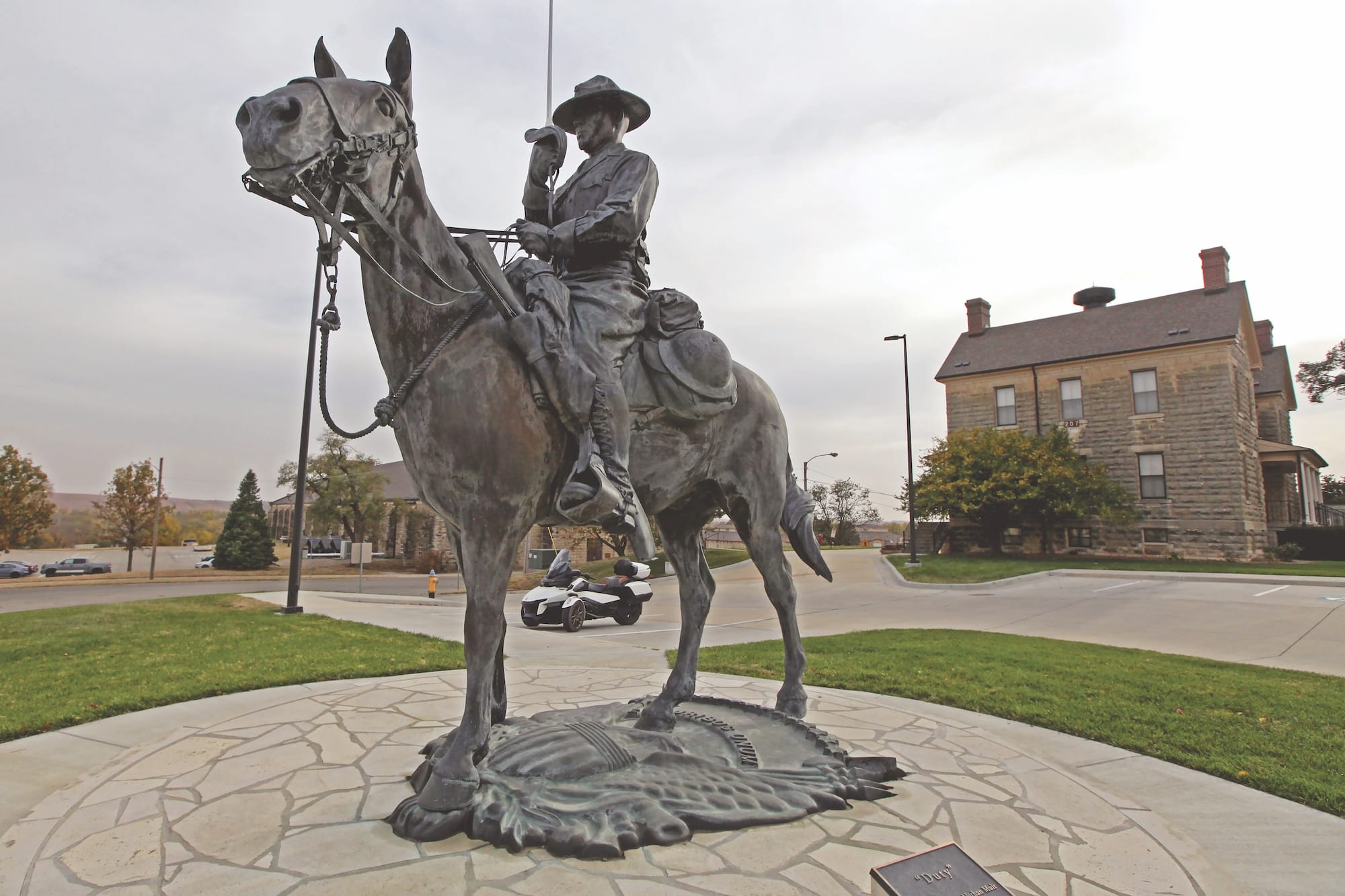
It’s hard to think of modern Kansas as the West or a frontier, but that is certainly what it was in the early part of the 19th century. As settlers pushed farther away from the East Coast, they encountered a place where rolling hills morphed into a tallgrass prairie. Migration routes, such as portions of the Oregon and Santa Fe trails, cut through the region. Along these east/west routes, forts were built to protect the travelers. Forts begat towns, and the railroad followed in their footsteps.