Riding the Edge of the Adriatic

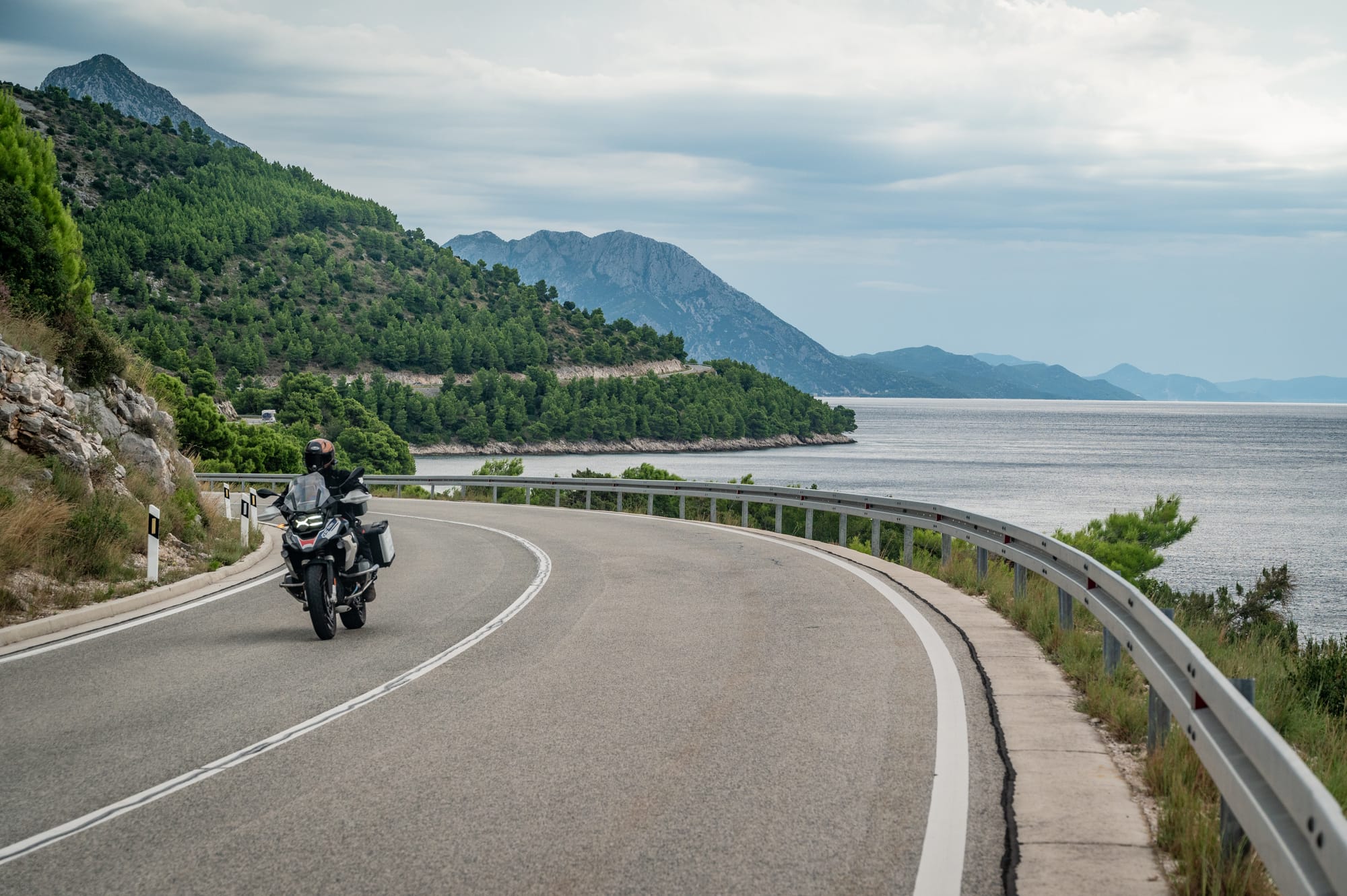
A couple of years ago, I found myself chasing curves and coastlines on one of the most unforgettable rides—a nine-day motorcycle tour through Germany, Austria, Slovenia, Italy, and Croatia. Organized by Lilli Tours, this trip was a finely tuned symphony of scenery, twisty roads, delicious food, and two-wheeled bliss.
The trip began a couple of days early as we made our way across the Atlantic on a sleepless red-eye to Munich, Germany. Jet-lagged and longing for a bed, we arrived at the hotel we’d call home for the next two nights. Knowing that napping would only throw us off for the rest of the trip, we decided to power through the day and sync up to local time.
It just so happened to be the first day of Oktoberfest, the world’s largest beer festival and folk celebration. Held annually in Munich at the beginning of fall, it draws more than six million people over the course of nearly three weeks.
The Germans, as we quickly learned, know how to party.
Oktoberfest
We wandered through the Theresienwiese fairgrounds in astonishment. Most attendees wore traditional attire—lederhosen for men and dirndls for women—while brass bands playing folk music blared from every direction.
The scent of sausage and fried food filled the air as roller coasters and Ferris wheels loomed overhead. Tents sold trinkets such as lebkuchenherzen, the iconic gingerbread hearts decorated with colorful icing and strung on ribbons to wear around your neck. They’re more keepsakes than snacks—the cookies are rock hard.
But the real heart of Oktoberfest lies in the beer tents. Well, if you can call these massive, elaborately decorated halls tents. Some seat more than 8,000 people inside, plus more outdoors. Each tent is tied to a Munich brewery and rebuilt every year.
Inside, we quickly realized we were out of our depth. Tables weren’t for sitting; they were for standing on.
Motorcycle & Gear
BMW F900 R, BMW F900 XR, BMW R1250 GS
Helmet: HJC RPHA 11 Pro
Jacket: Klim Marrakesh
Pants: Klim Marrakesh
Boots: Gaerne Balanced Oiled
Gloves: Klim Marrakesh
Comm System: Cardo Packtalk Edge
Camera: Nikon Z6II, 24-70mm F2.8, 28-300 F3.5
A live band played on the center stage while the crowd shouted along. Beer glasses clinked and foam sloshed. A friendly local noticed our wide-eyed expressions and explained the rules: tables are reserved, and you need a table to order beer—so your best bet is to make friends, fast.
After a few attempts at German-English conversation, we were welcomed onto a table. We sang, drank, and laughed late into the night. Welcome to Germany.
Into the Alps
The next day, after picking up a pair of rental BMWs, we eased out of Munich on familiar-feeling European roads before climbing into the Alps. One of my first observations was that German drivers are incredibly courteous to motorcyclists—a universally European attitude I wish Americans would adopt.
Our fearless guide for the next two weeks, Uwe, led us through the bustling city until we hit the Bavarian backroads. Farmland stretched to the horizon, dotted with turquoise lakes, as we headed for the Austrian border.
Crossing Borders
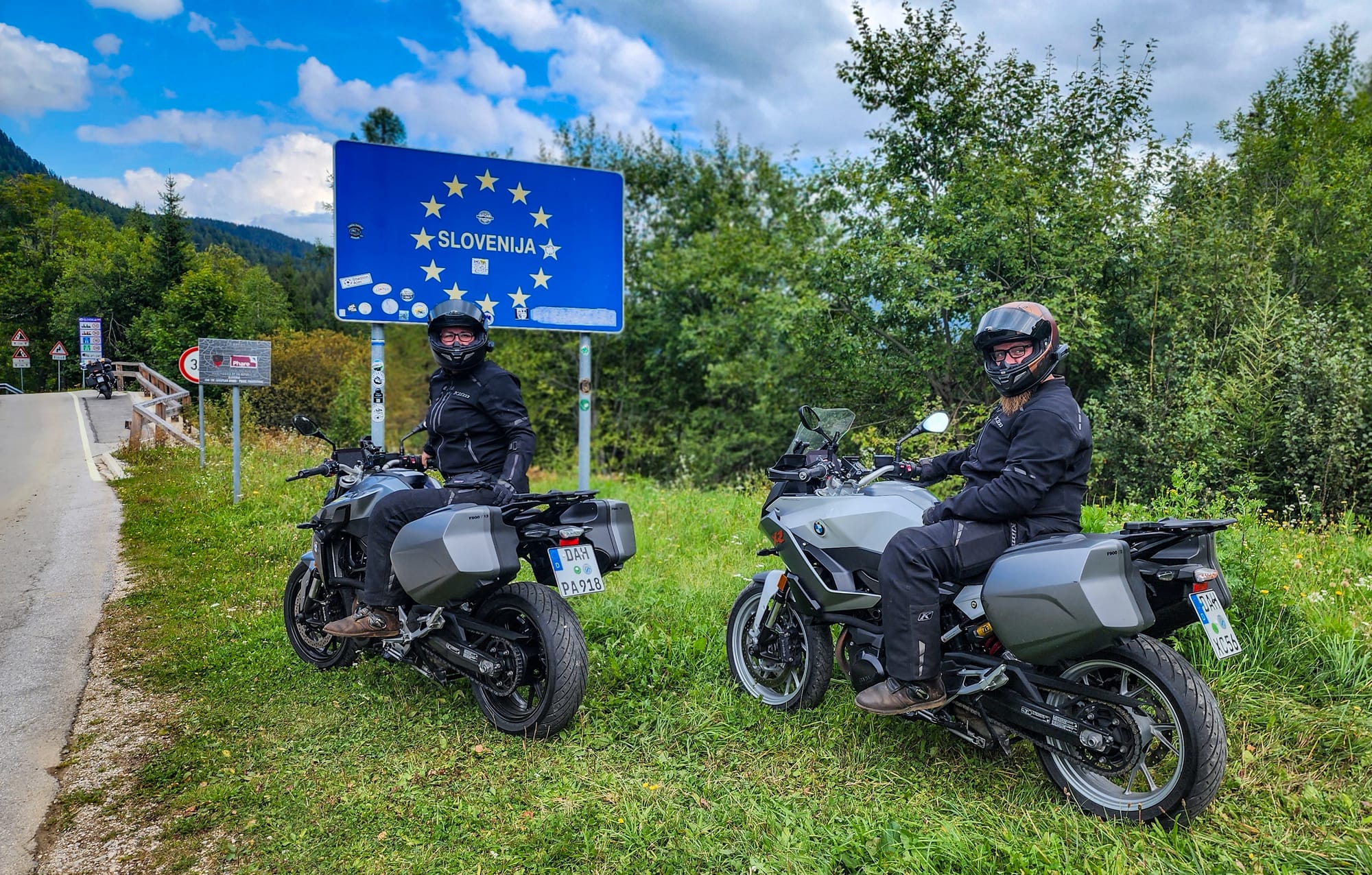
I’ll admit, I was excited to collect five stamps in my passport. Imagine my mild disappointment, then, when we rode straight through the Austrian border without a stop. Traveling freely between European Union countries was both anticlimactic and a relief.
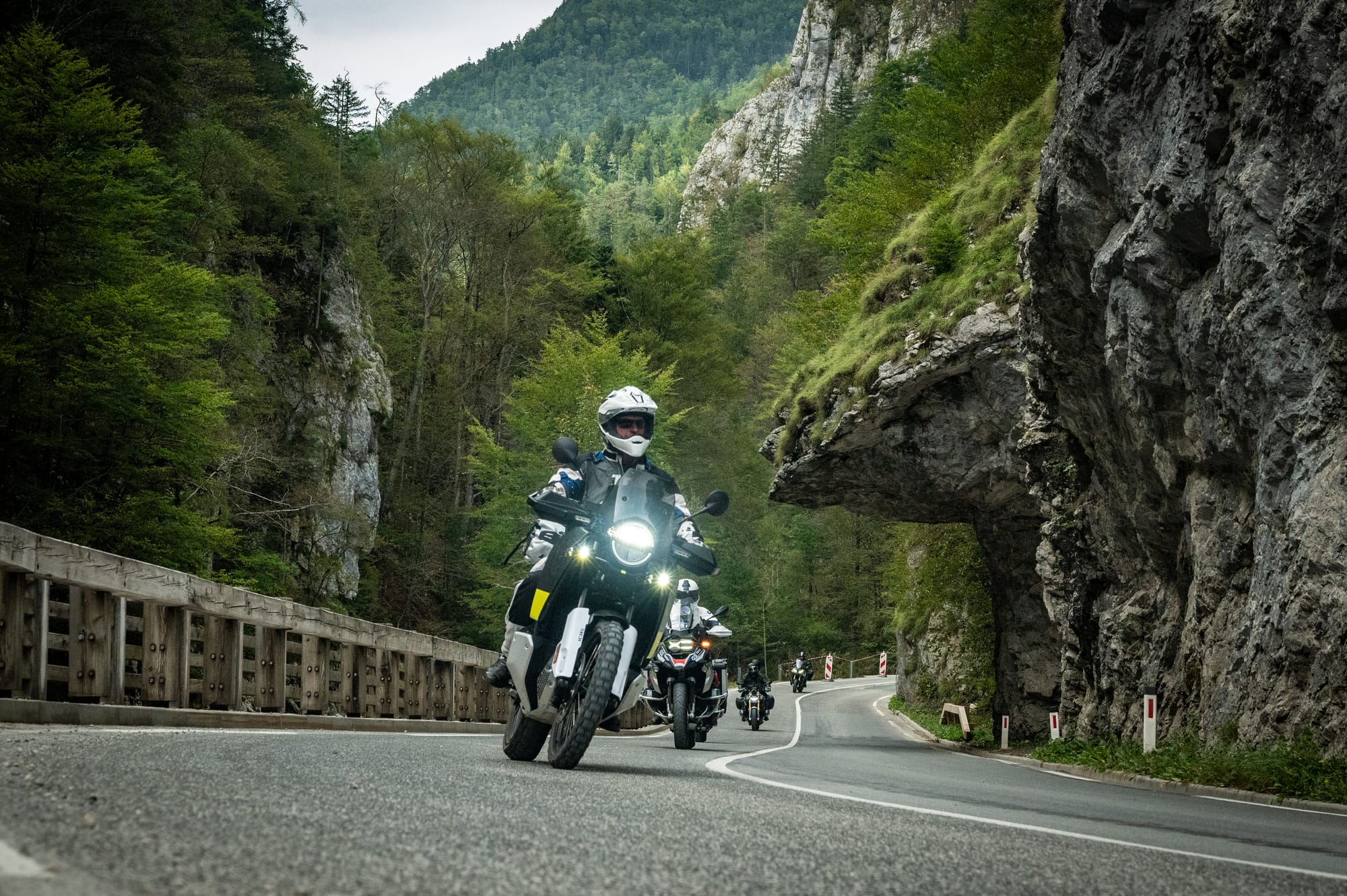
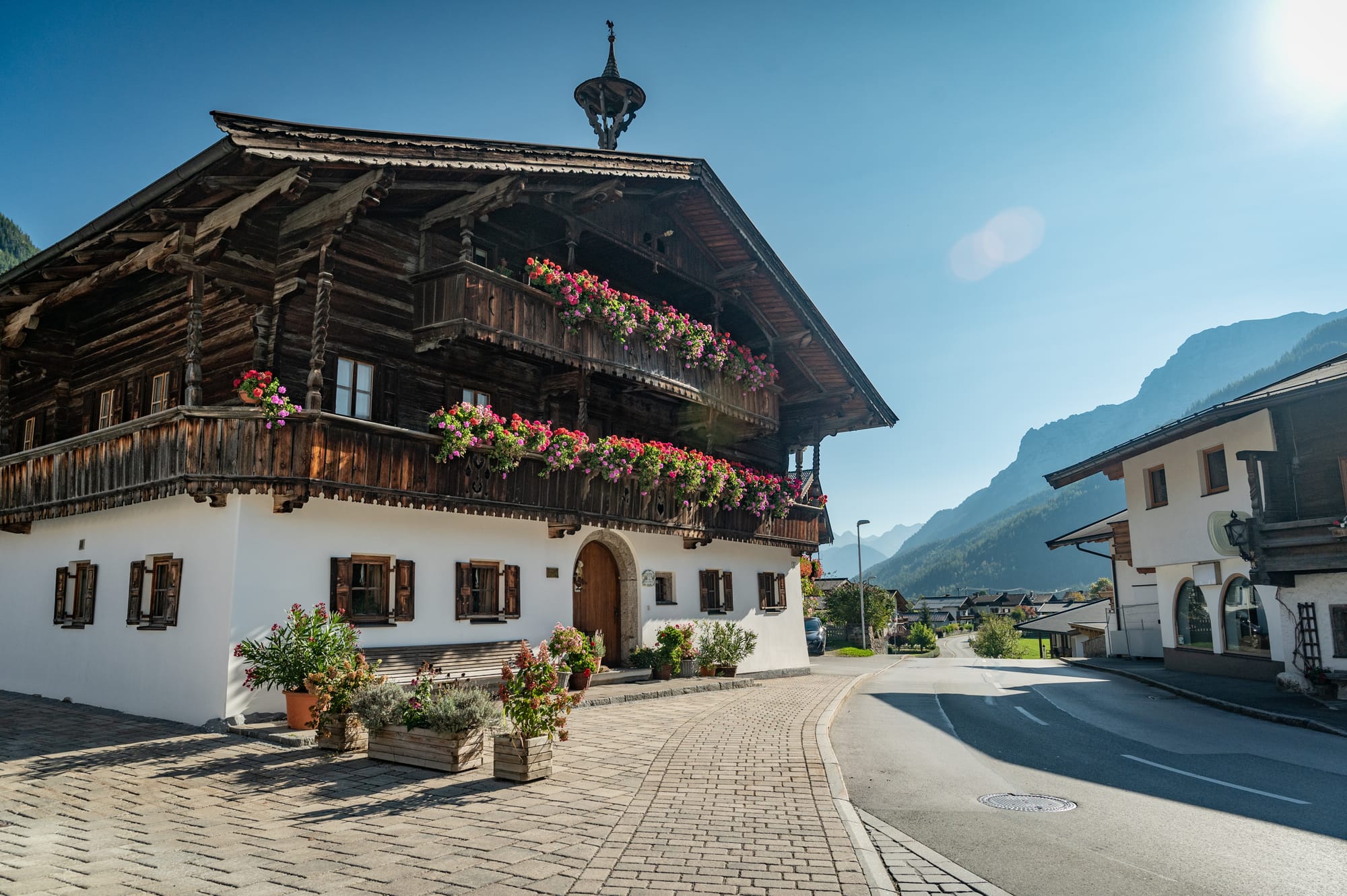
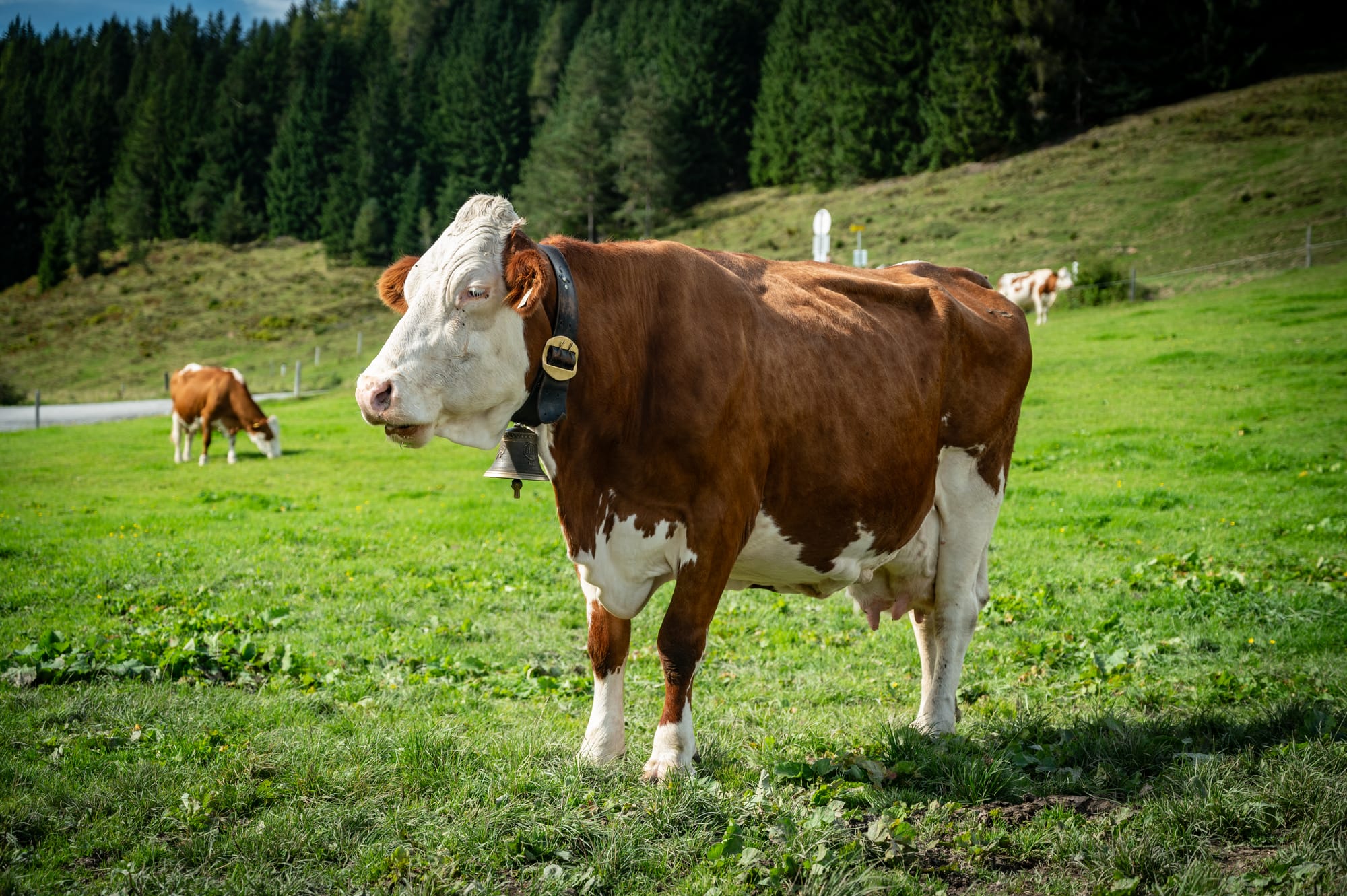
Austria’s mountain passes were the perfect warm-up for the next two weeks. We twisted through green landscapes with farms dotting the hillsides and cows grazing under crisp autumn skies.
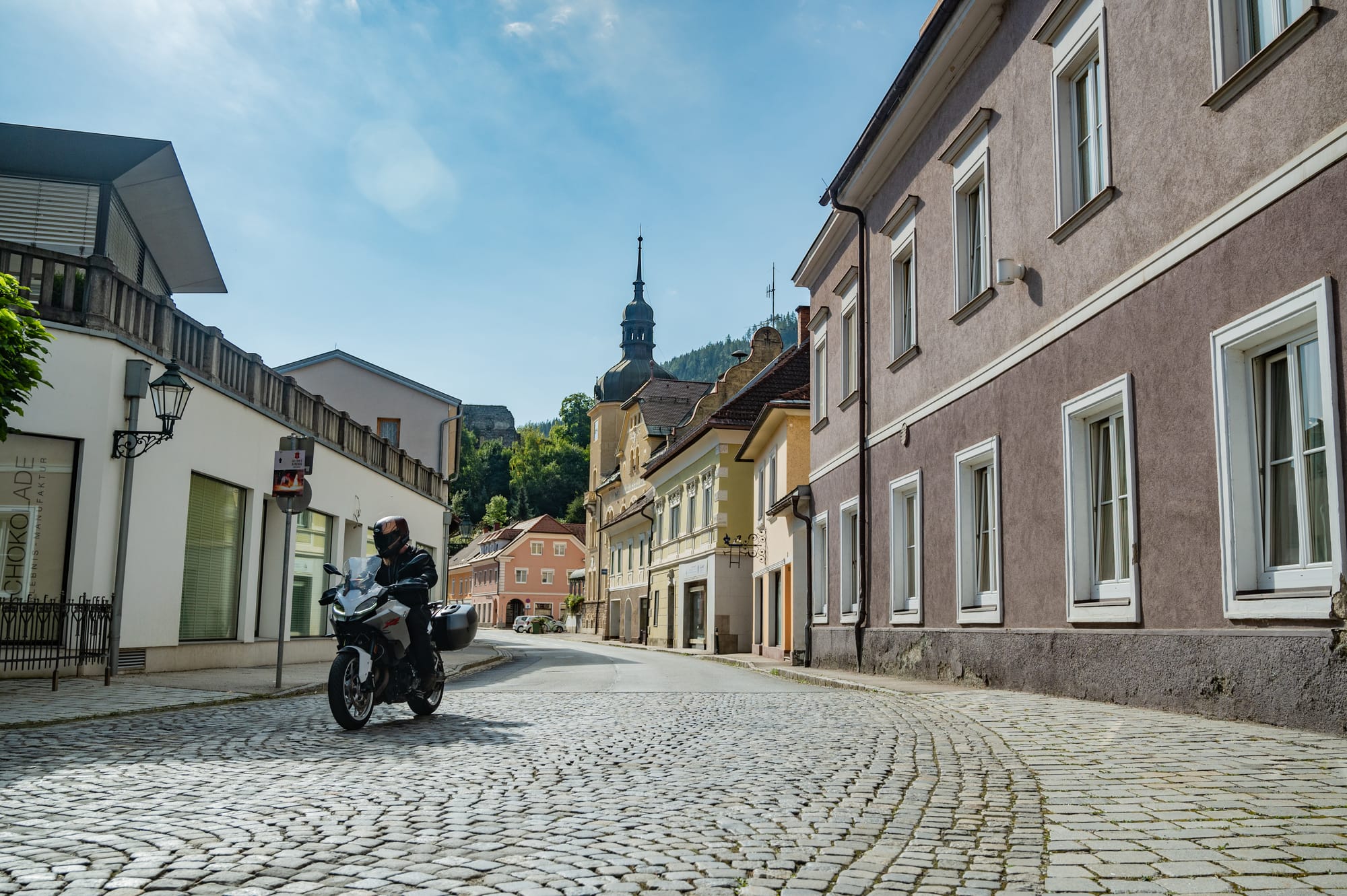
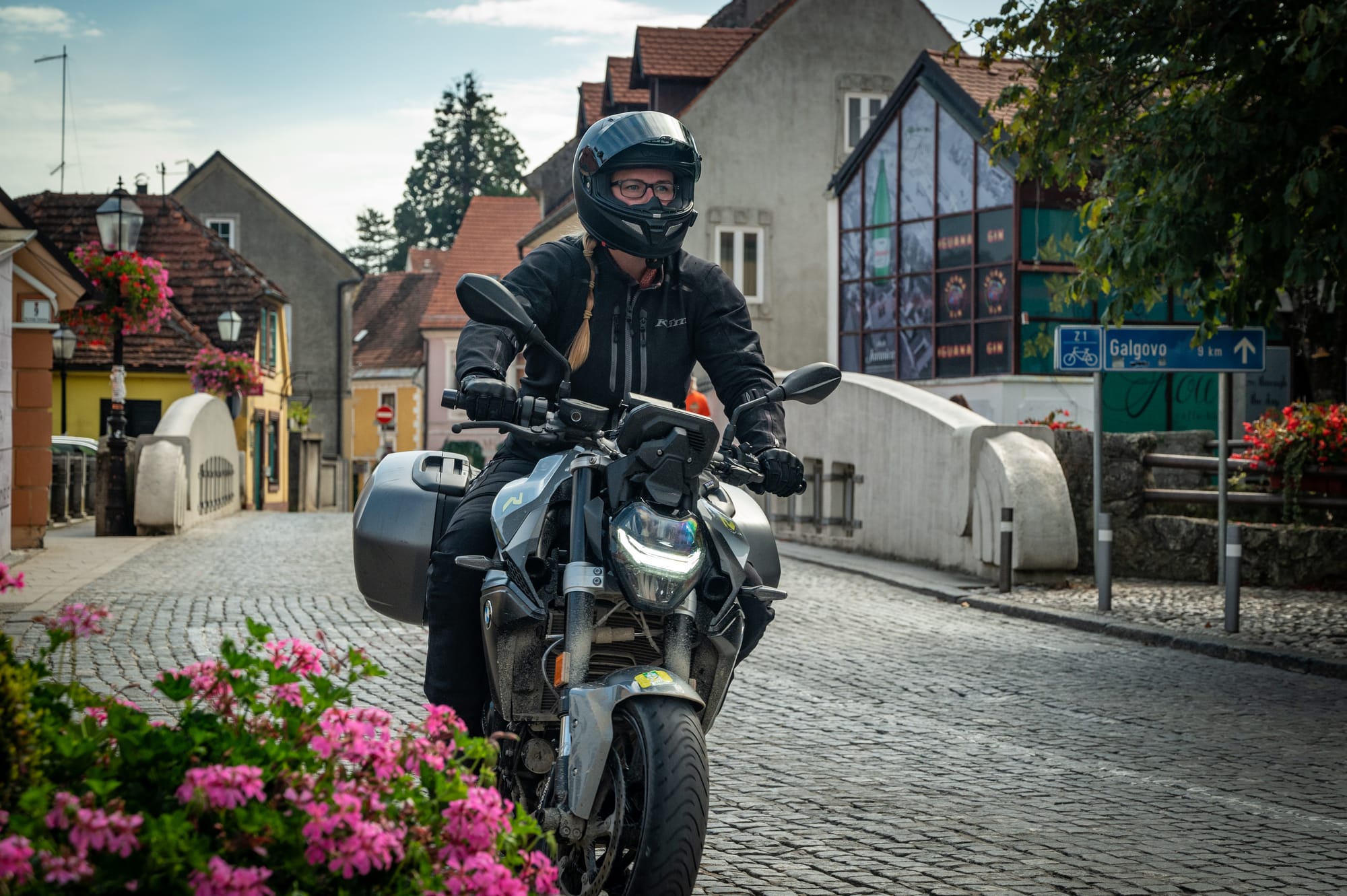
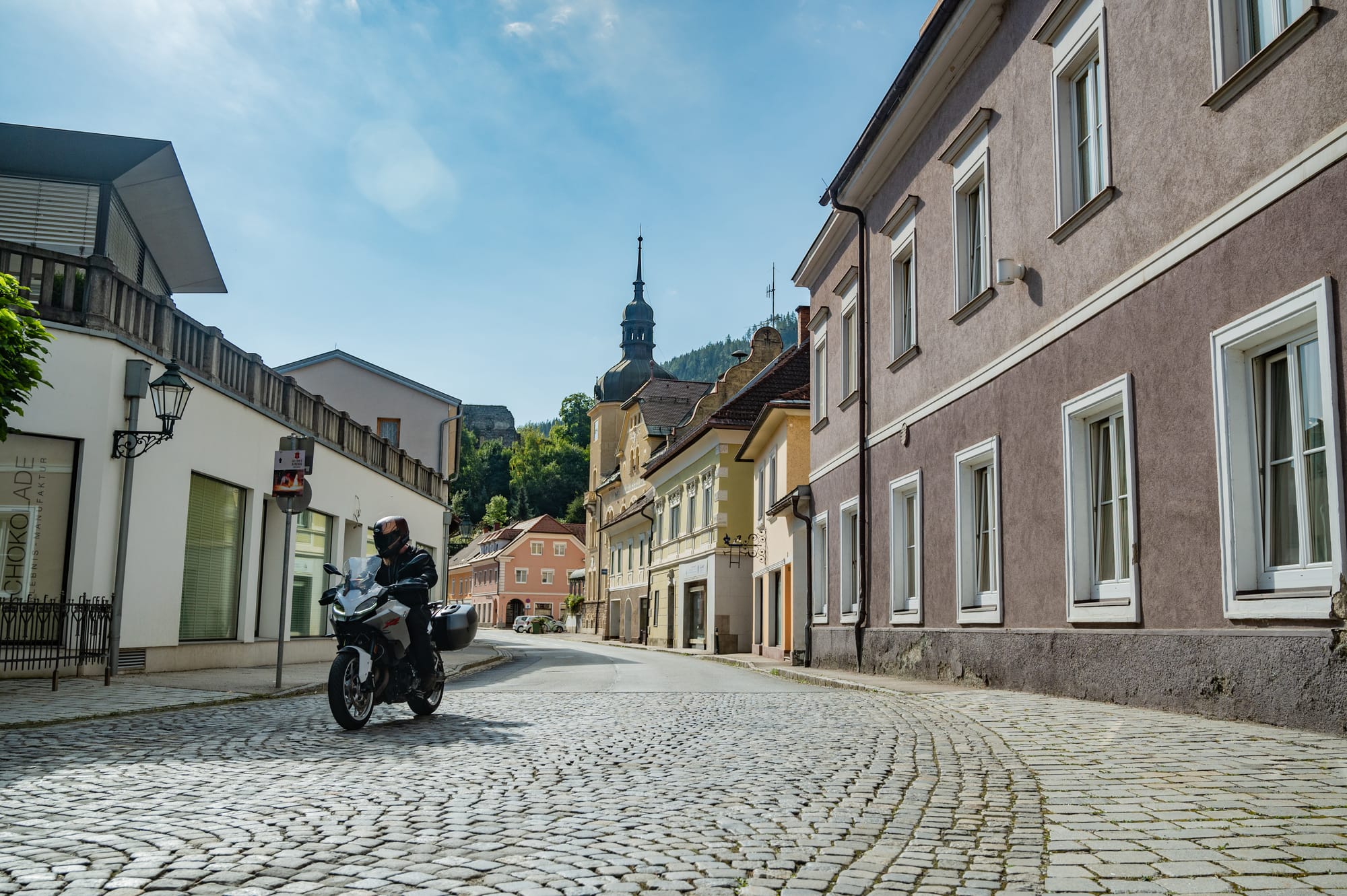
Every colorful village had cobblestone streets and corner cafes where we happily sampled strong European coffee that spoiled us for the rest of the trip.
The Slavic Shift
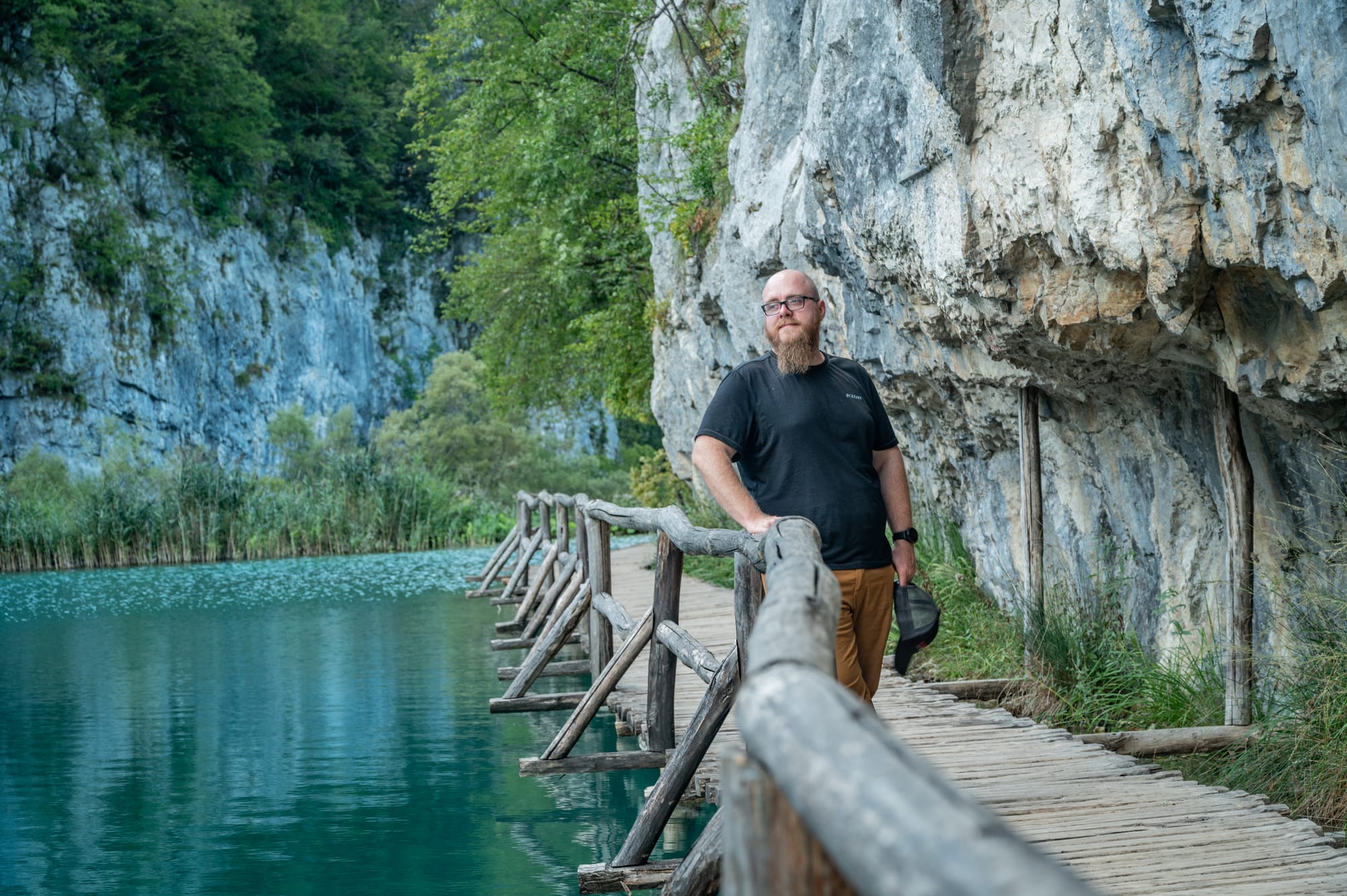
Despite sharing borders, the shift into the Slavic countries felt surprisingly dramatic. Where Austria had a polished, almost regal air with grand architecture, tidy streets, and a sense of historical formality, Slovenia and Croatia felt rawer and deeply authentic.
Slovenia, independent since 1991, is now one of the most prosperous former communist states, yet traces of its past remain—abandoned buildings, cracked roads, and stray animals wandering village edges. Croatia’s history is bloodier, with the scars of the Yugoslav Wars in the early ‘90s still visible today.
What struck me most was the warmth of the people. Many Slovenians and Croatians remember life under totalitarian control and, in some cases, their own role in fighting for freedom. That hard-earned liberty is still fresh enough to be deeply appreciated.
It’s a mindset I wish more Americans shared. Instead of searching for reasons to be offended, we should pause to acknowledge the abundance and freedoms we already have. Perhaps our current wave of “manufactured hardship” is just another turn in the cycle described by the old adage: Hard times make strong men. Strong men make easy times. Easy times make weak men. Weak men make hard times.
Travel has a way of opening your mind to these perspectives and reminding you to appreciate what’s waiting back home.
The Adriatic Sea
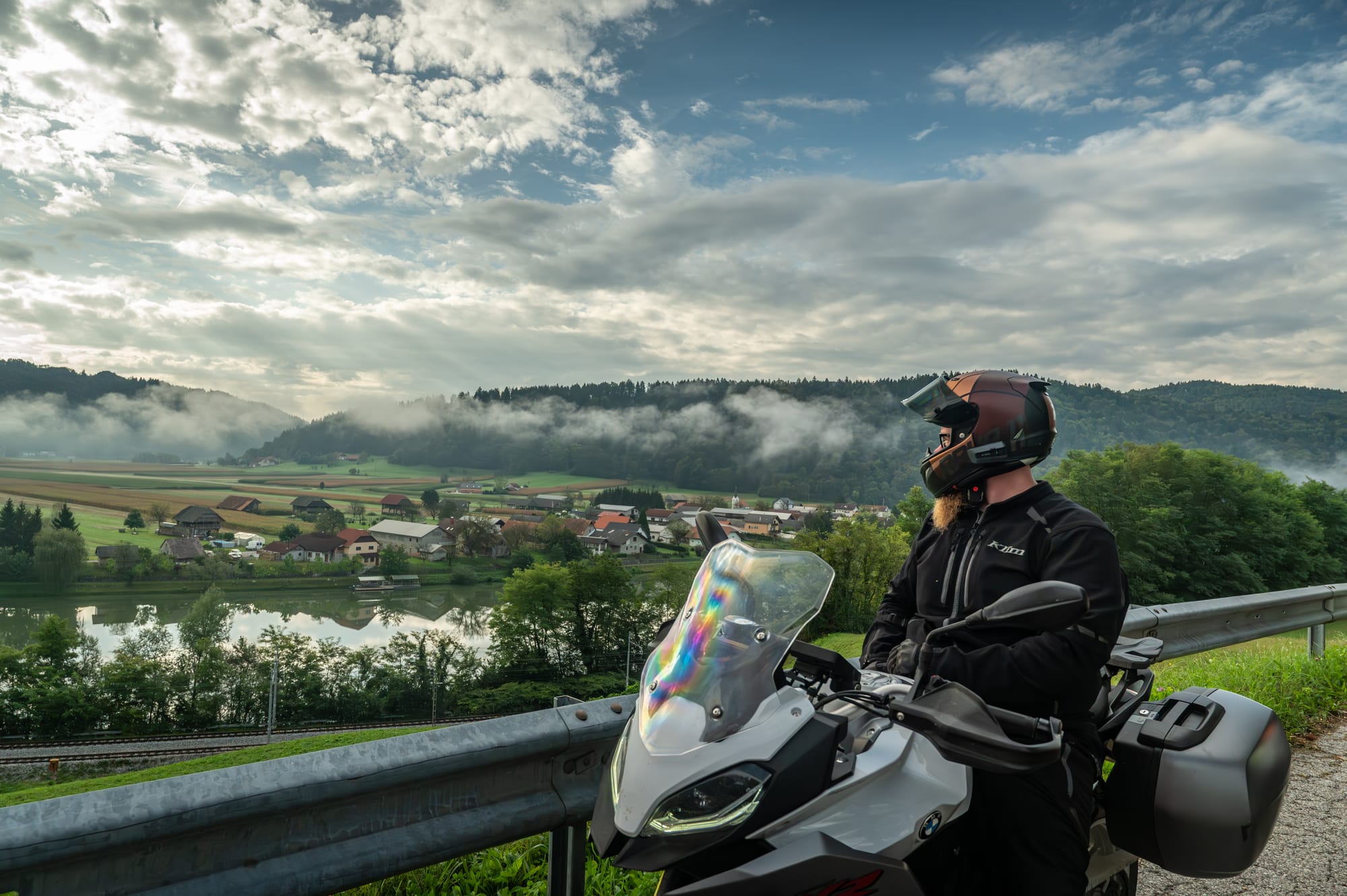
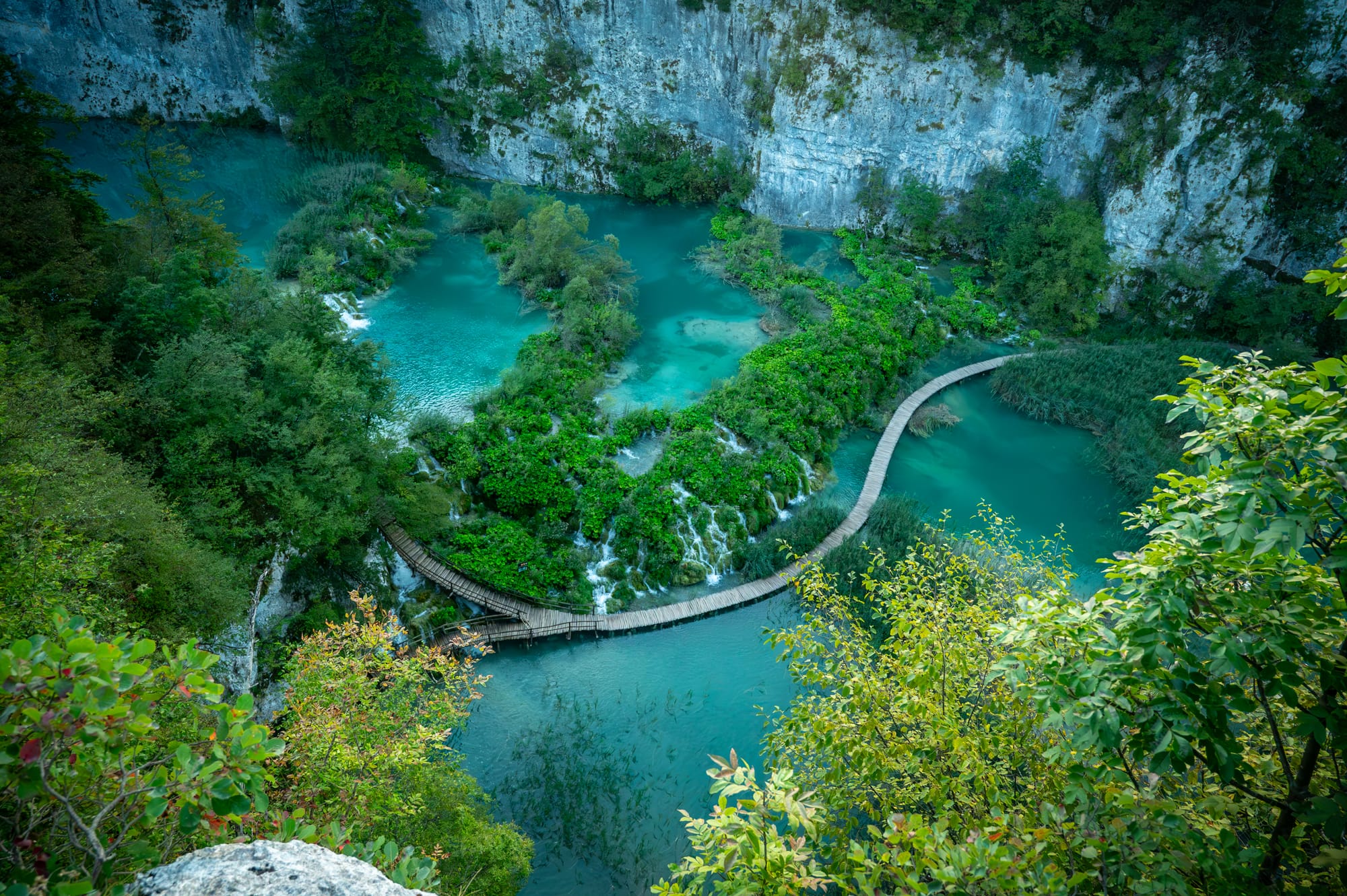
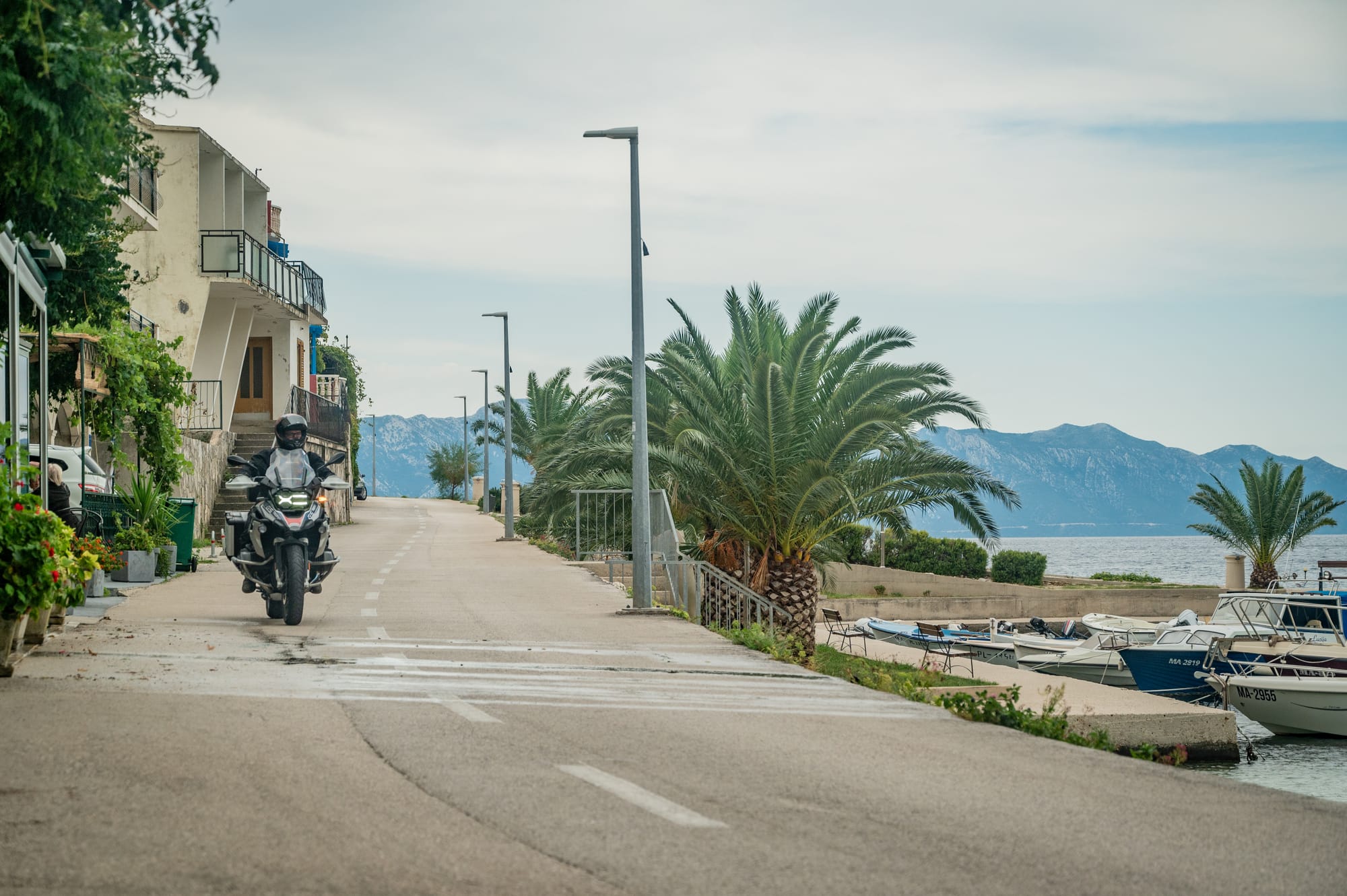
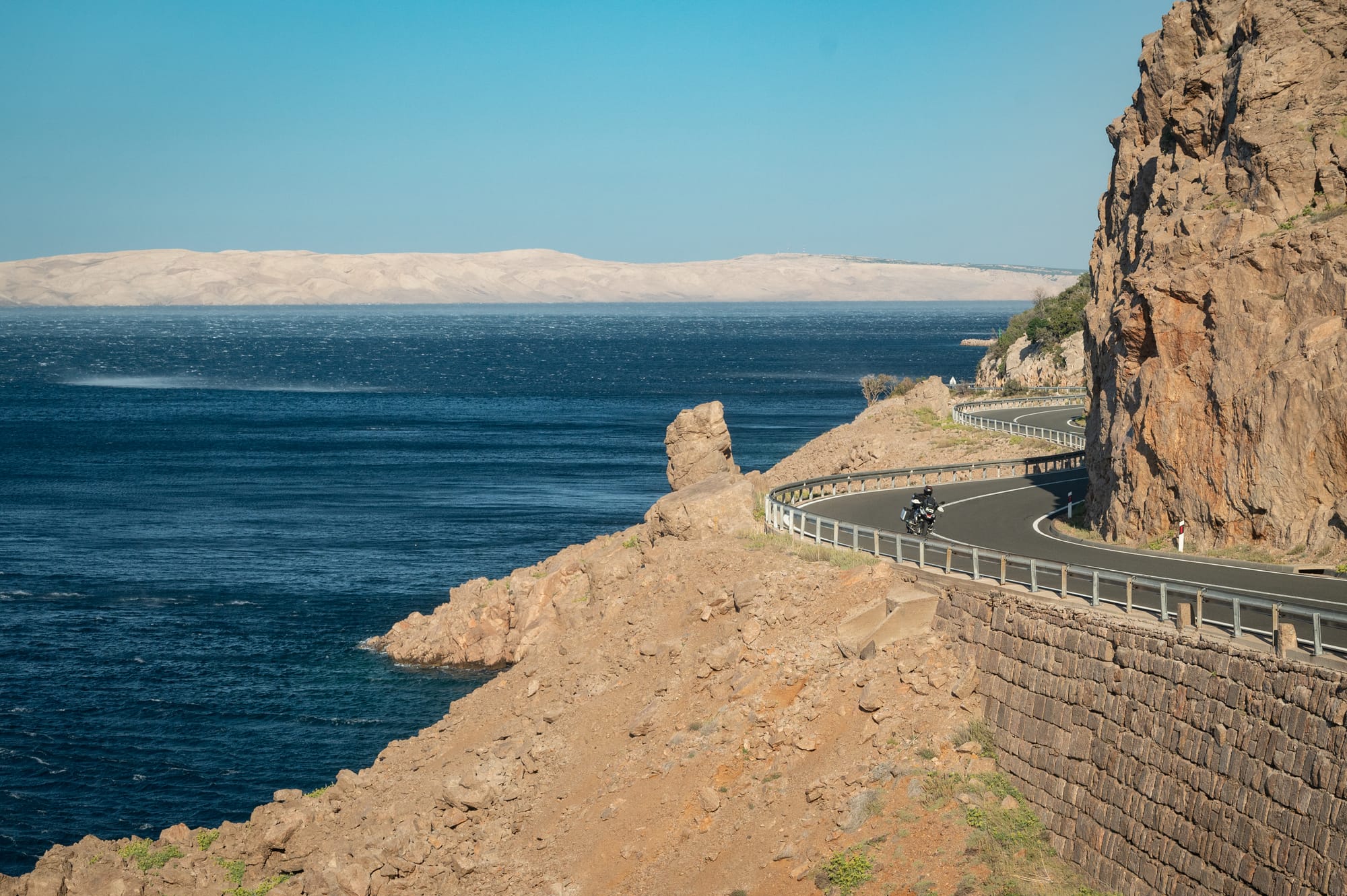
After we descended from the cool alpine peaks into sunlit Slovenia and then Croatia, the magic truly began. The Adriatic coast unfurled like a living postcard, with ancient stone towns rising above the turquoise waters, olive groves clinging to hillsides, and sinuous roads seemingly designed for motorcycles.
Finally laying eyes on the coast, I had one goal in mind—swim in the Adriatic Sea. As soon as our kickstands landed in Split, I headed for the chilly and refreshing water.
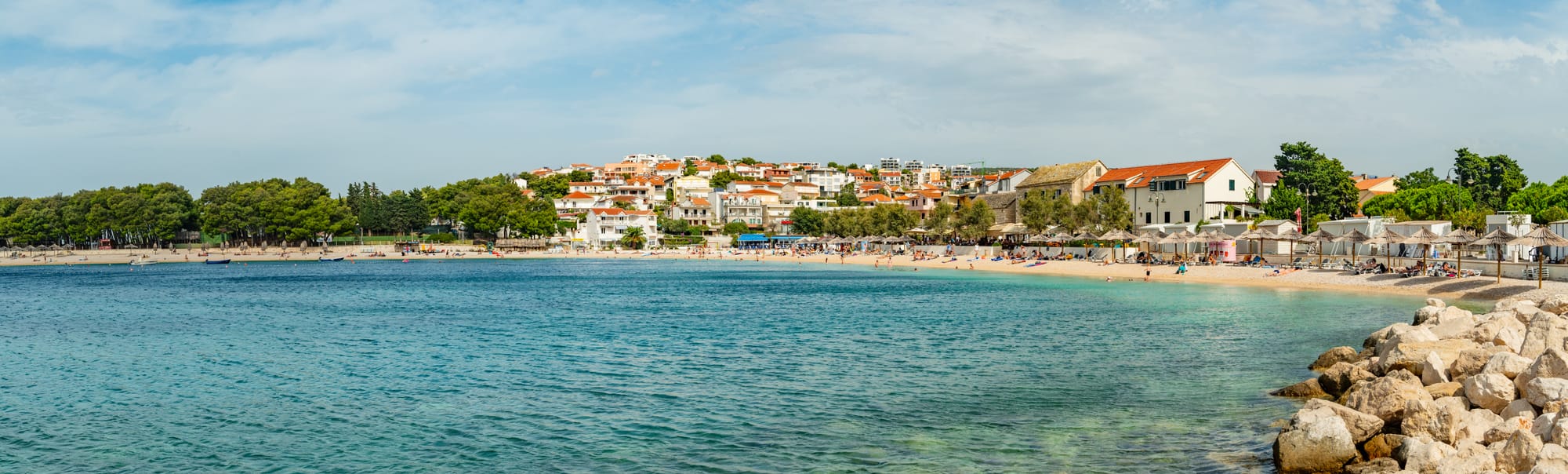
Afterward, we explored marble streets and Diocletian’s Palace before finding dinner in a basement restaurant. On the menu that night was a bucket-list dish: risotto al nero, a seafood risotto tinted black with cuttlefish ink, a specialty unique to this region. It was oh-so delicious.
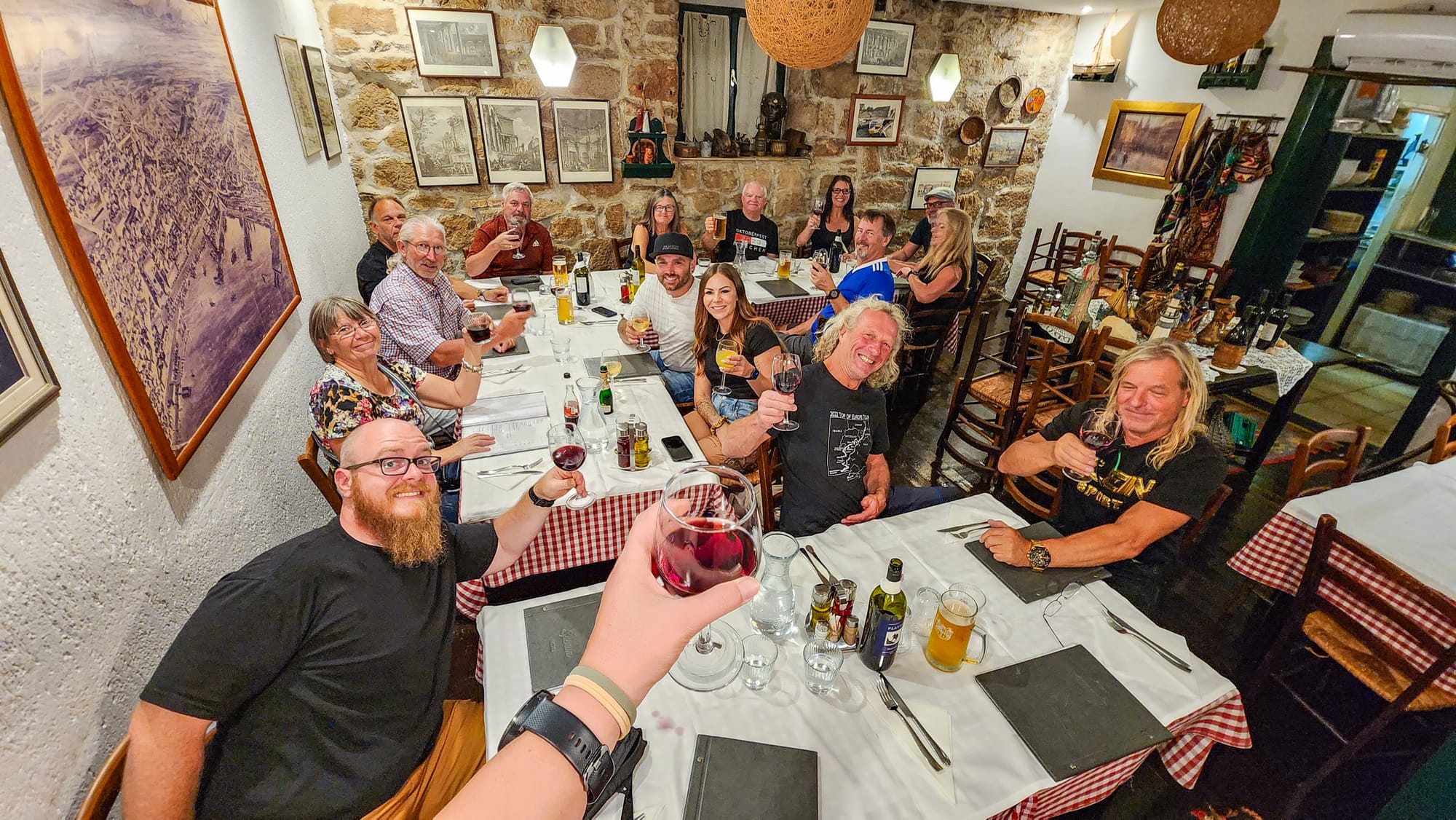
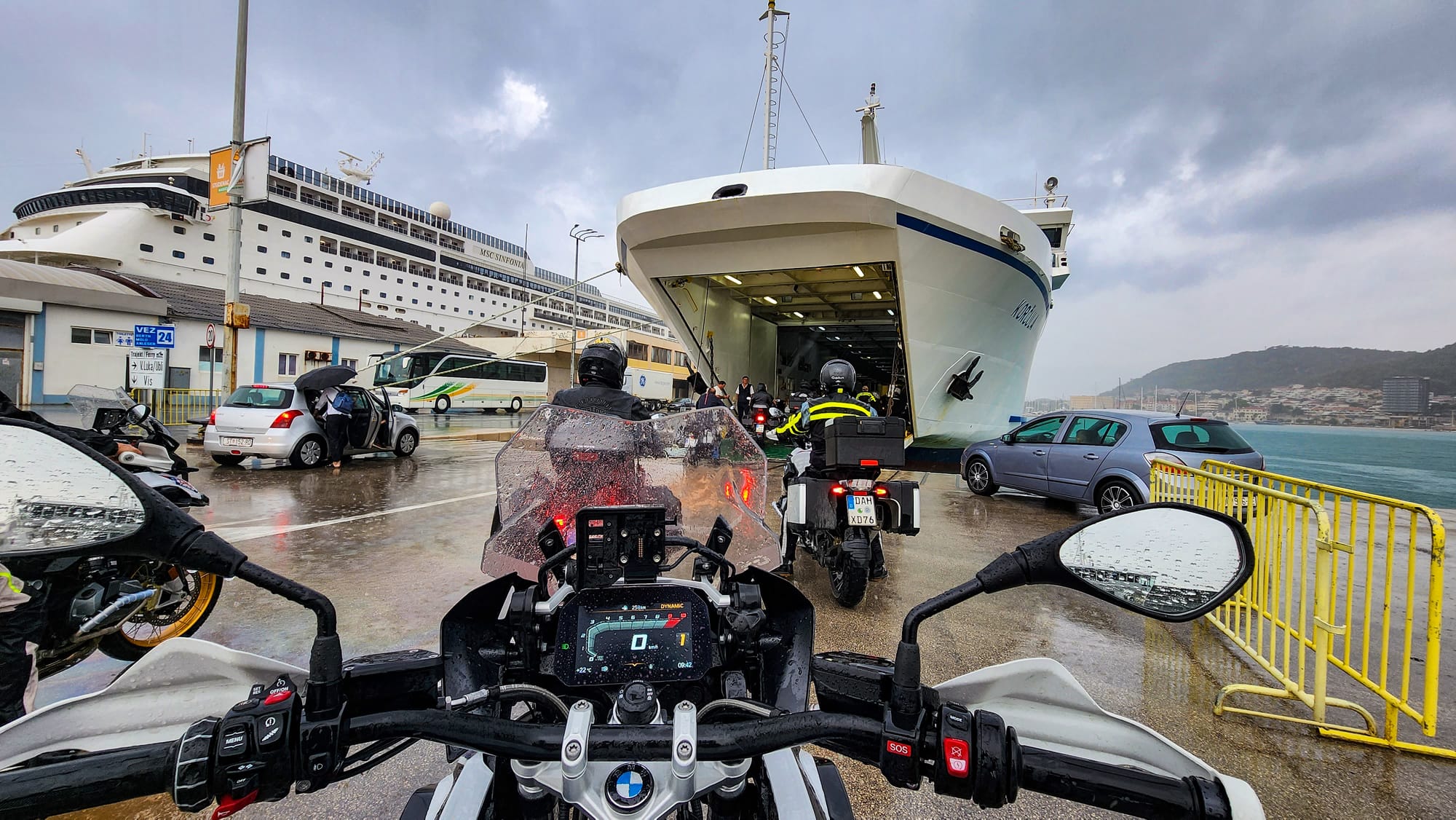
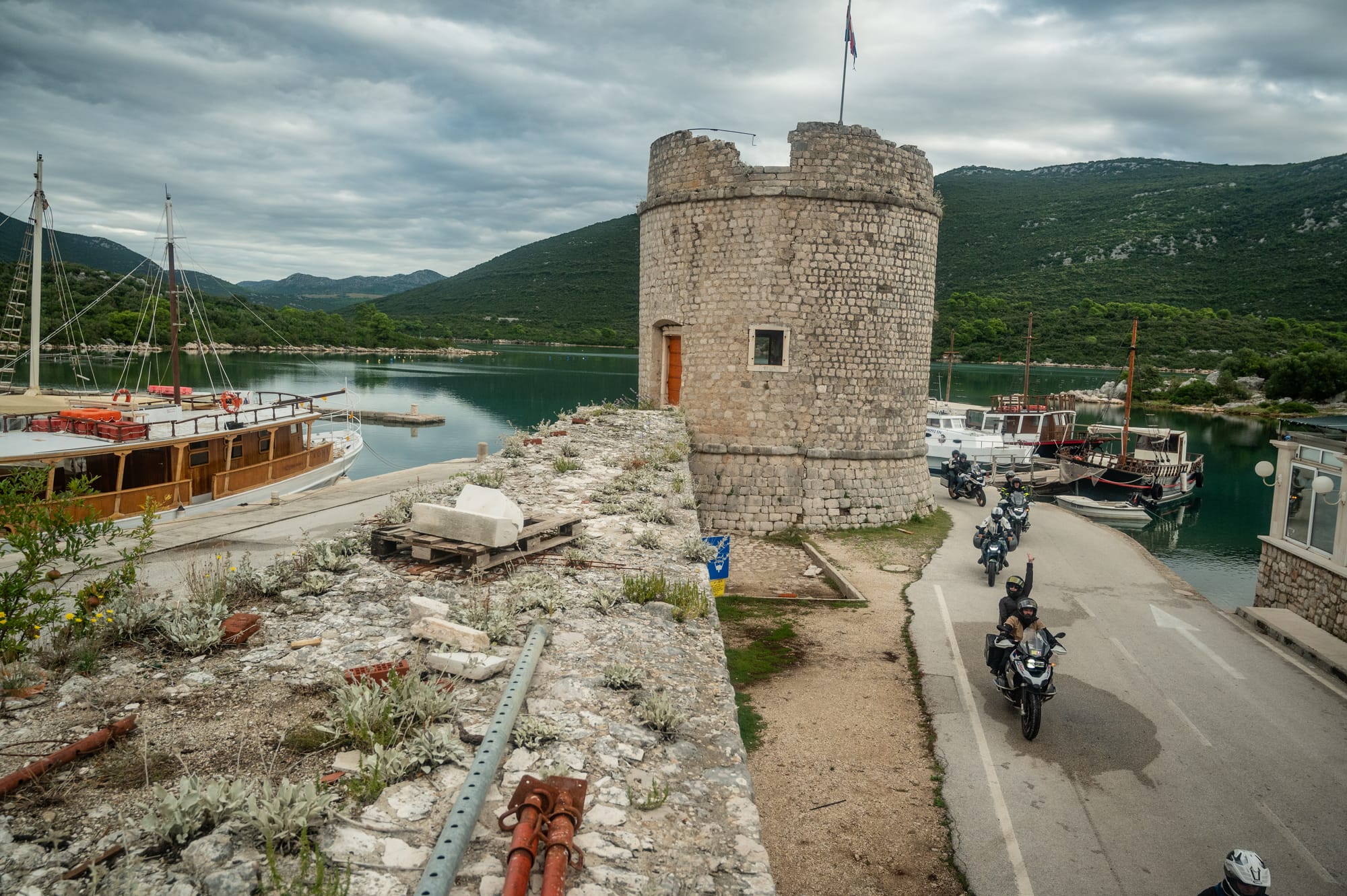
We hugged the Dalmatian Coast, staying in family-run inns, and ended each day with seafood feasts and sunset toasts with our riding companions, who were by now our friends. On the island of Korčula, we discovered hidden roads and endured a torrential downpour before gratefully finding shelter in a ferry-side coffee shop. Wet cappuccino, anyone?
Dubrovnik, renowned as the pearl of the Adriatic, was exactly what I had imagined Croatia to be. This walled city is crowned with terracotta rooftops and surrounded by views of the deep blue sea. We spent an entire day wandering its narrow cobblestone streets, climbing hundreds of steps, ducking into shops, and sipping drinks along the outer wall.
It was here where I found a stunning metallic painting, which traveled back to Munich in my saddlebag and now hangs in my home office.
Battling the Bura
The ride continued on along D8, the famed Adriatic Coastal Highway, as we headed back north. But before we turned inland, we had one last challenge to face.
North of Starigrad, the notorious bura wind awaited. This powerful northeasterly gust can top 120 mph and often closes sections of the coastal road. Advisories that night indicated a closure was possible the next morning, and I crossed my fingers as I fell asleep, hoping the next day would be suitable for riding.
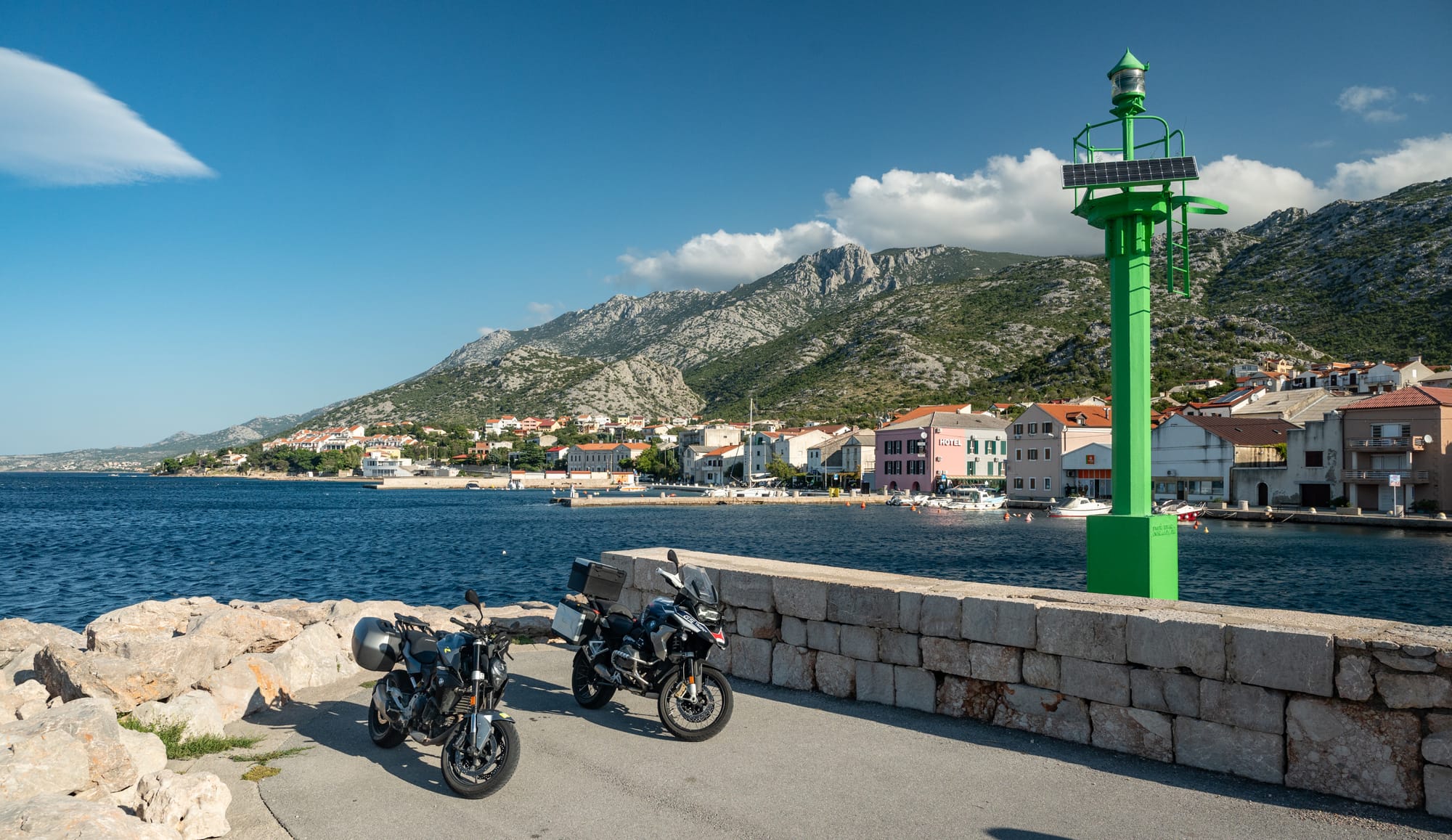
We were lucky and the road stayed open, although we battled the wind all morning, sand and salt stinging our eyes and gear. Riding took concentration, as every blast tried to shove us off our line. Fortunately, there was very little traffic to contend with.
Parking required strategy. We had to always set the kickstand opposite the wind, or risk watching our bikes topple. It was intense, exhausting, and absolutely thrilling.
Italian Pasta
We cruised quickly back through Slovenia and crossed into Italy. The warm rays of the sun filtered through the trees as we carved our way through the switchbacks.
In places, tunnels bored through the mountainside, but windows cut through the rock walls offered glimpses of the spectacular views beyond. We stopped at a small mountainside restaurant for lunch, where I ordered tagliatelle al cinghiale in bianco—pasta with wild boar.
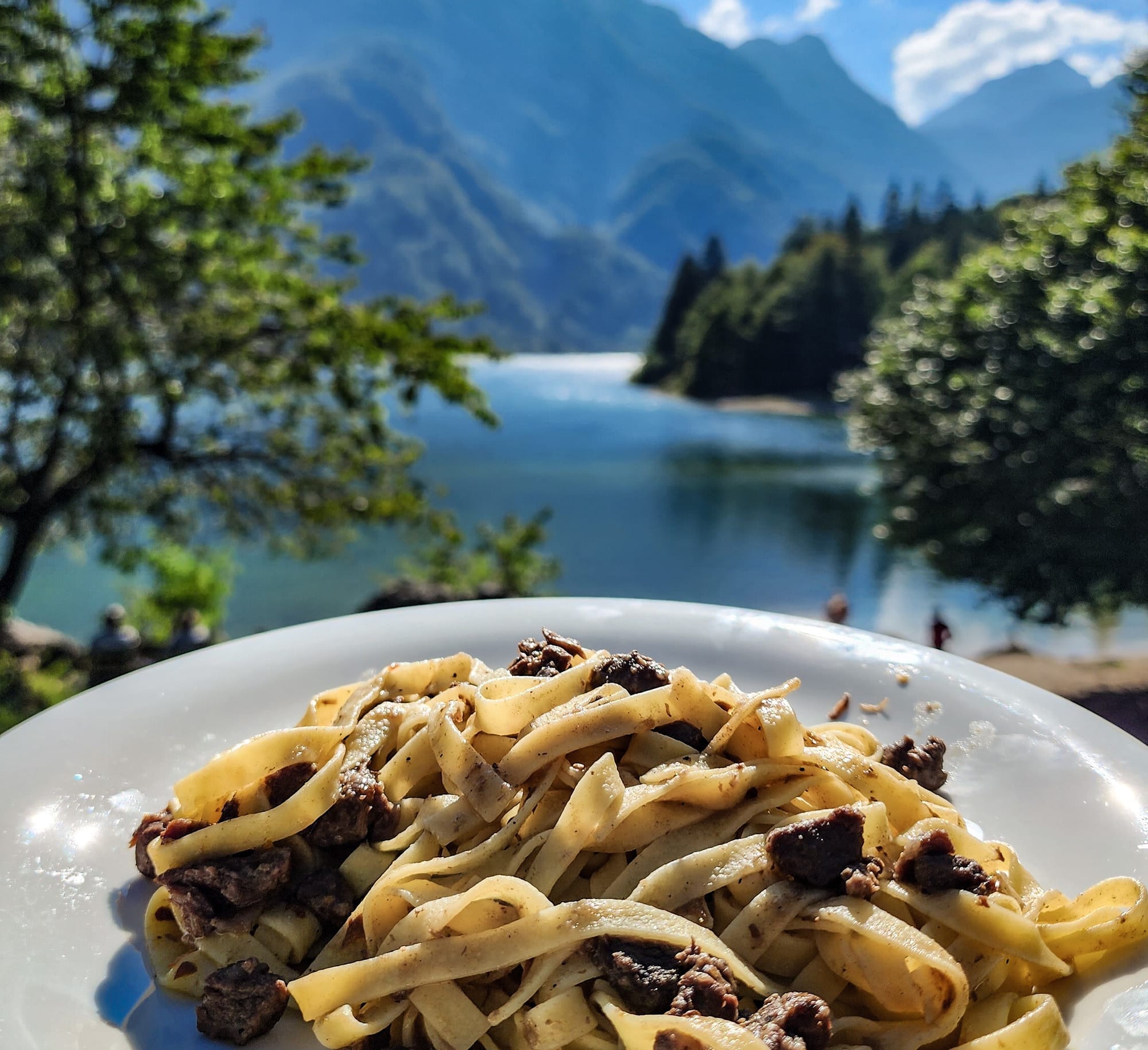
I ate slowly, savoring the delicate texture of the noodles and the earthy gaminess of the meat, while the sun danced on the teal-blue lake below. Once again, I felt the urge to swim.
This time, though, the water was brutally cold, stealing my breath the moment I submerged up to my chin.
The Highest Road
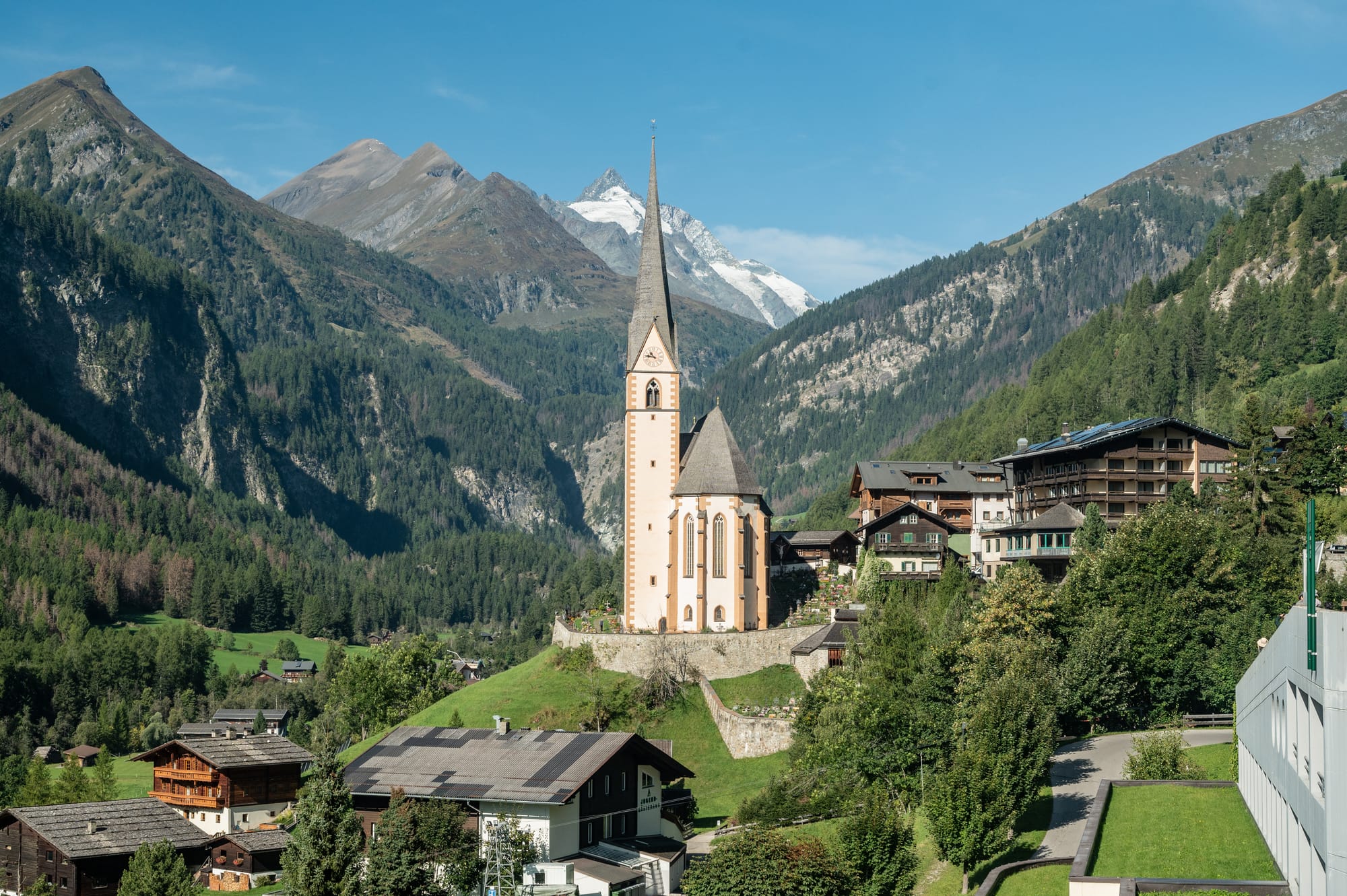
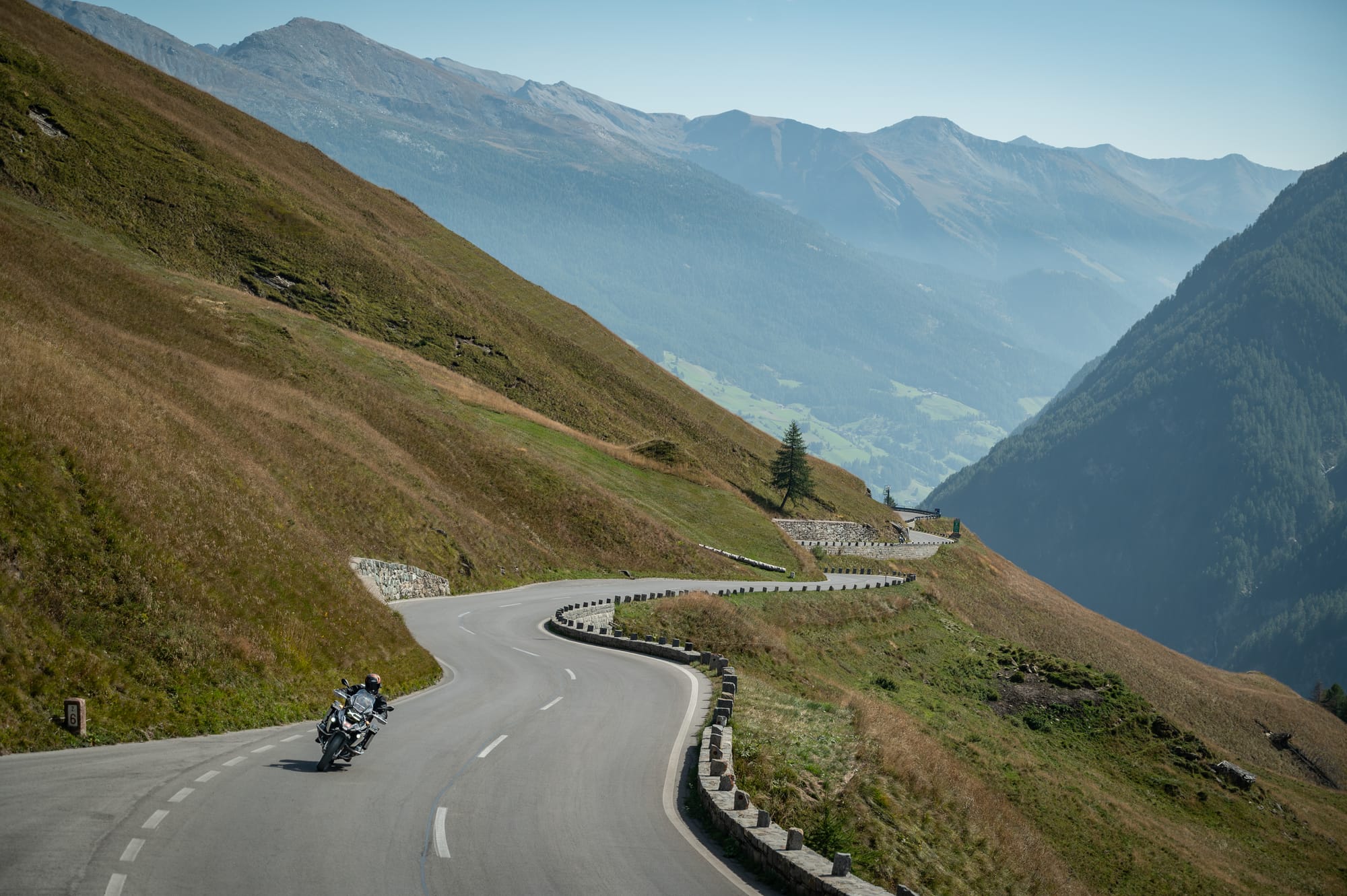
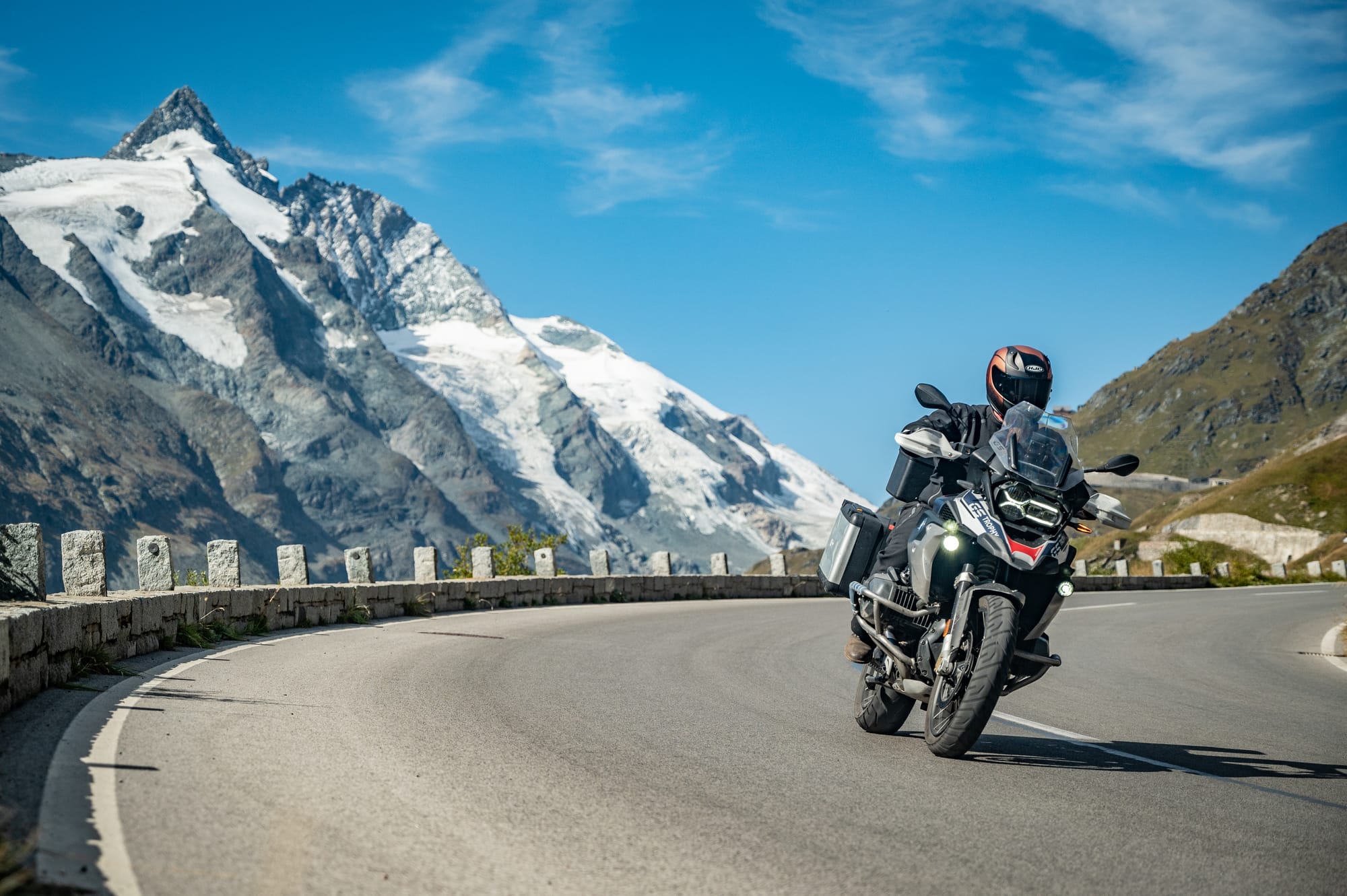
On the last full day of the tour, I checked a major road off my bucket list: the Grossglockner High Alpine Road, the highest paved mountain pass in Austria. Entry requires an admission fee, which helps maintain this remarkable route.
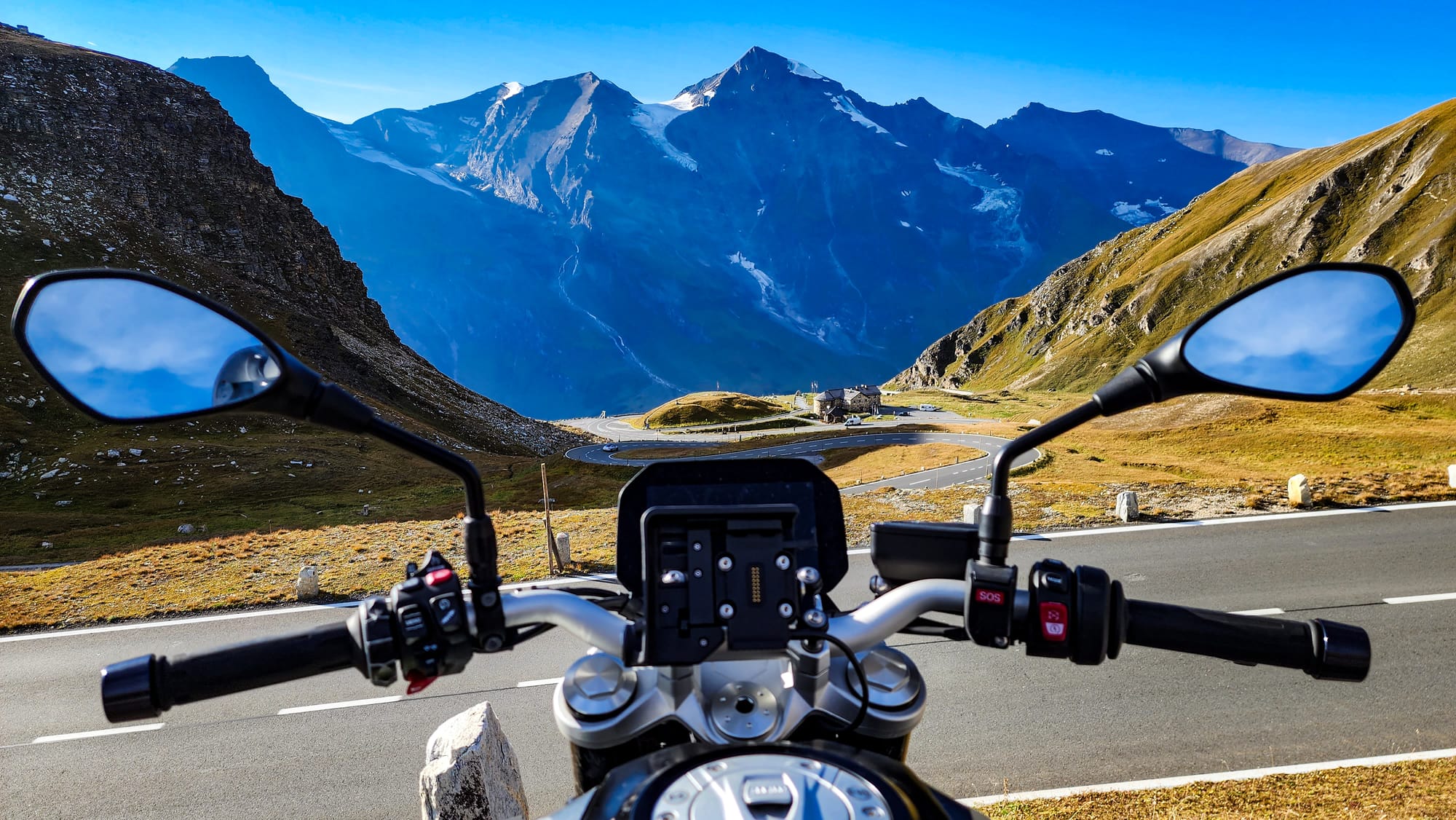
Riding through felt like skimming the sky—mile after mile of tight switchbacks framed by dramatic, jagged peaks. We made good time, so we doubled back more than once, catching new photos and views with each pass.
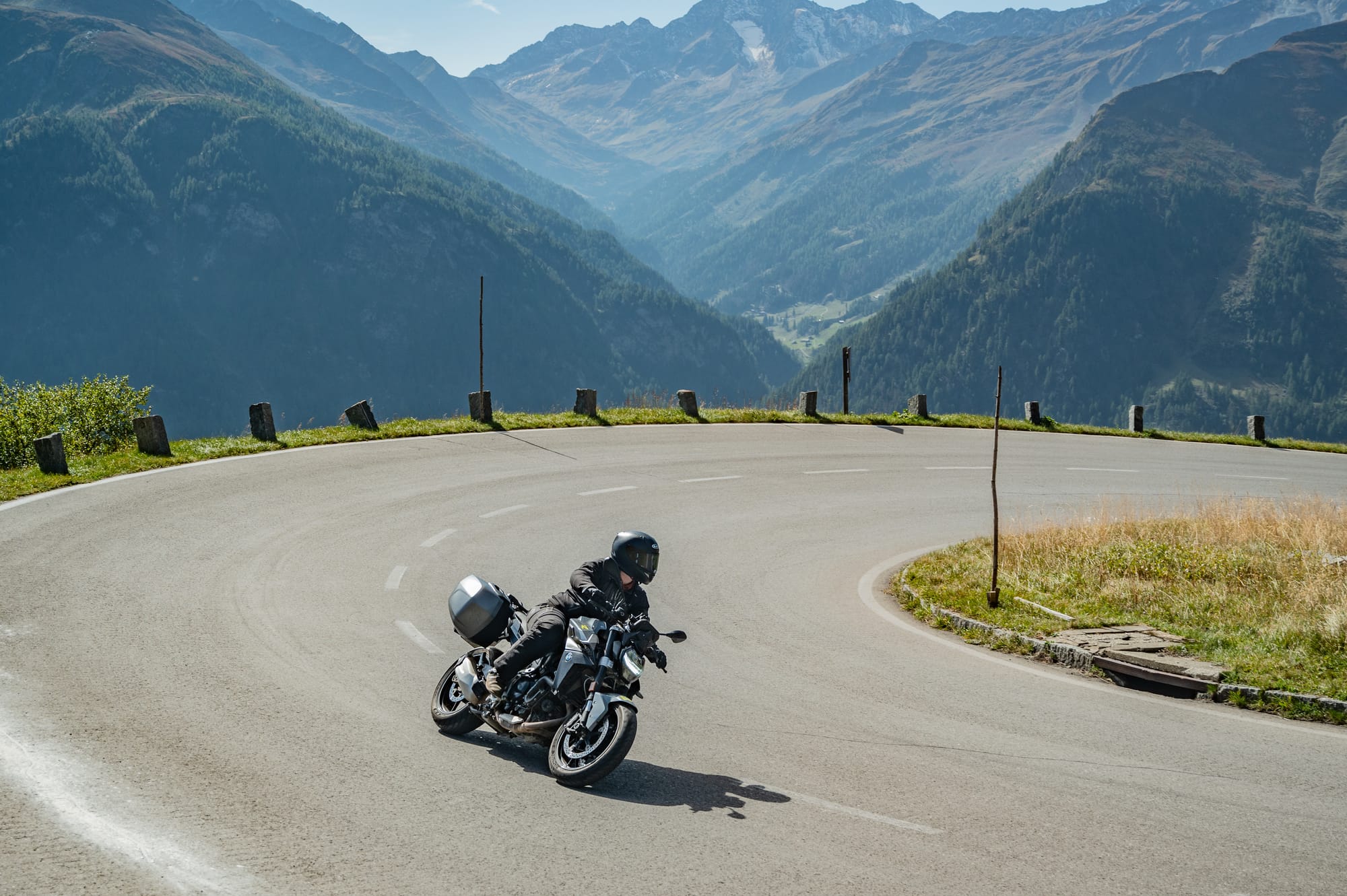
At the summit, a small mountain restaurant served up steaming bowls of frittatensuppe, or pancake soup. The savory broth thawed the chill from my bones, and the thin, dumpling-like strips of pancake added a hearty touch.
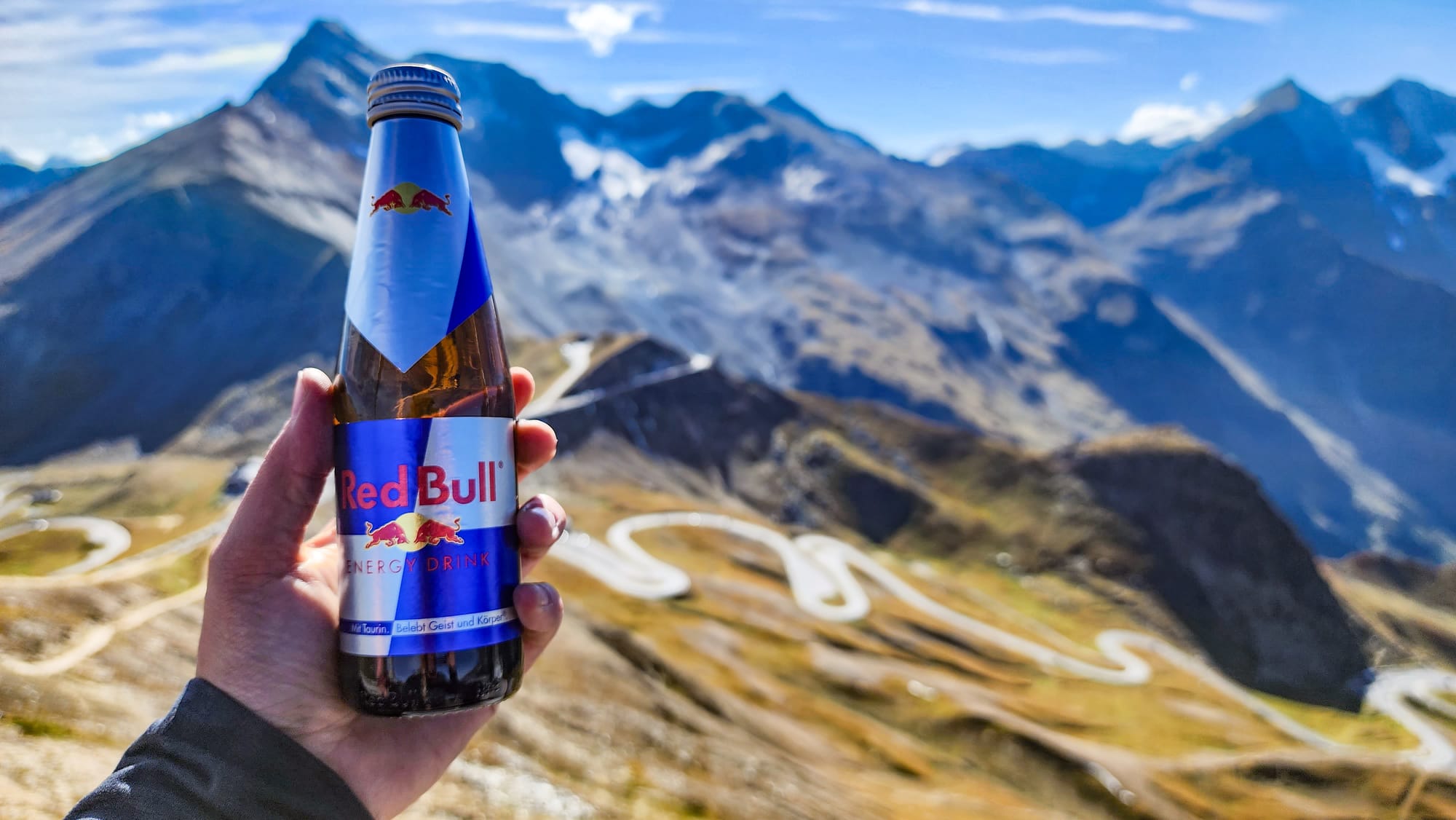
Before descending, we found a quiet pull-off and unpacked our Austrian Red Bull—in a glass bottle, no less—which had spent the morning tucked into the saddlebag. It felt like the perfect guilty pleasure for this setting.
We lingered there for a few minutes, sipping in silence, as the mountains sprawled endlessly around us. The past two weeks were settling in.
There’s nothing quite like a European motorcycle adventure, and we vowed then and there to come back as soon as possible.
Guided Tours with Lilli Tours
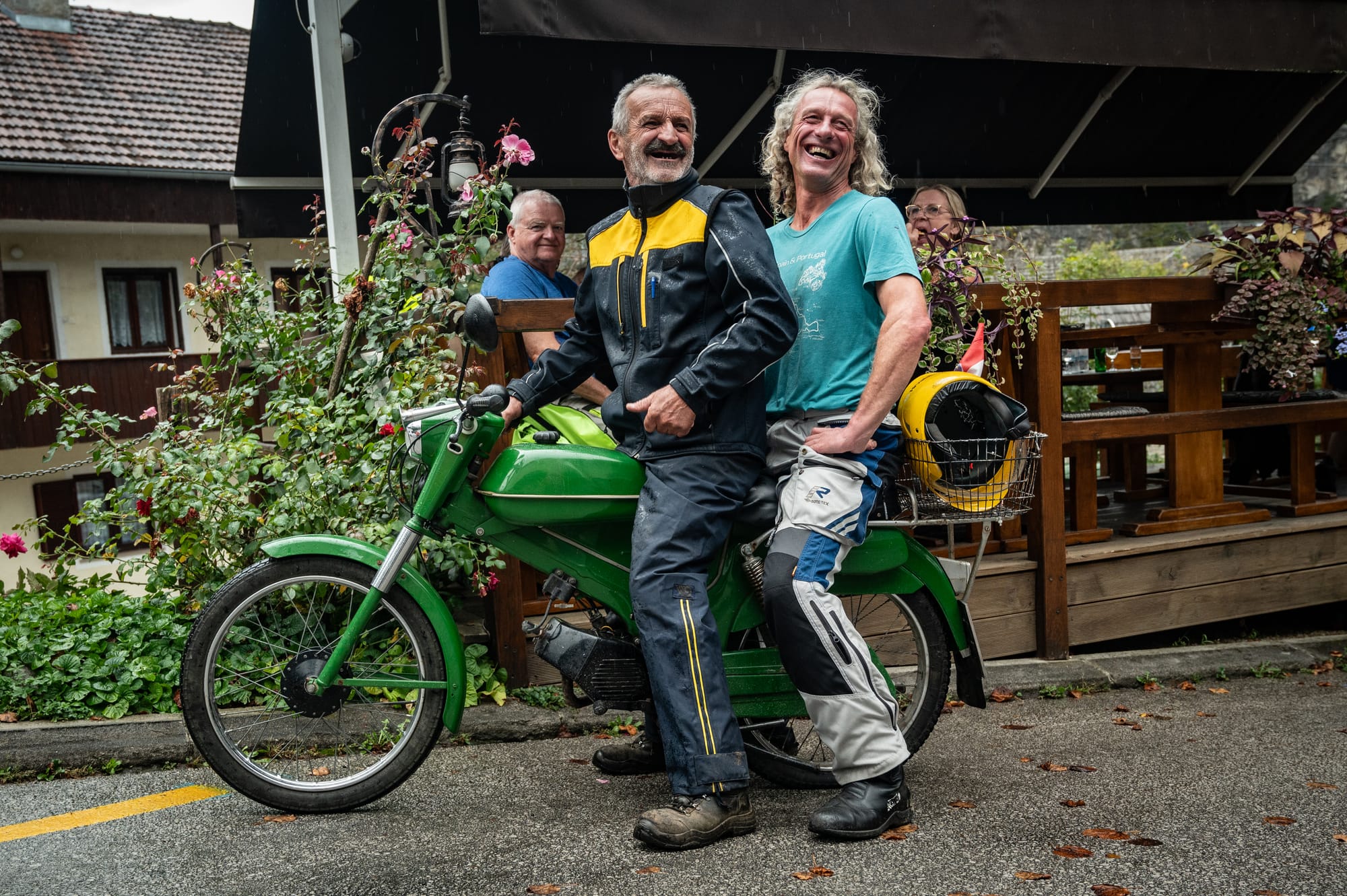
Lilli Tours handled every detail of this trip—bike rentals, luggage transfers, fuel stops, and food breaks—so we could focus entirely on the ride. Our guide, Uwe Krauss, navigated us effortlessly through cities, borders, and backroads, leaving me free to take in the scenery instead of staring at the GPS.
I’ll say it again: riding with a skilled local guide is one of the best ways to experience a new country. If you’re dreaming of a European motorcycle tour, start your search with Lilli Tours.
Facts & Information
Overview
The Croatia Coasts and Curves Tour offers a stunning blend of rugged mountain passes, winding coastal roads, and Adriatic Sea views. Expect warm, sunny weather from late May to early October, with peak summer bringing both heat and crowds. Spring and fall offer milder temperatures and lighter traffic.
Fresh seafood and Mediterranean cuisine are plentiful, and charming inns and seaside hotels are easy to find. Local culture leans relaxed, with long coffee breaks and late-night dining being common.
This tour with Lilli Tours generally happens in September. Cross an extra item off your bucket list by arriving early to attend Oktoberfest!
Roads & Riding
This tour is completely paved, with smooth asphalt winding along the Adriatic coast and through mountainous inland sections. Twisty coastal roads and alpine passes reward nimble handling, making sport-tourers, adventure bikes, or naked bikes ideal for this route.
Fuel is generally easy to find in towns, although the more remote stretches require some planning. Traffic is light to moderate outside major cities, with occasional tourist congestion in summer.