The Historic Brick Road
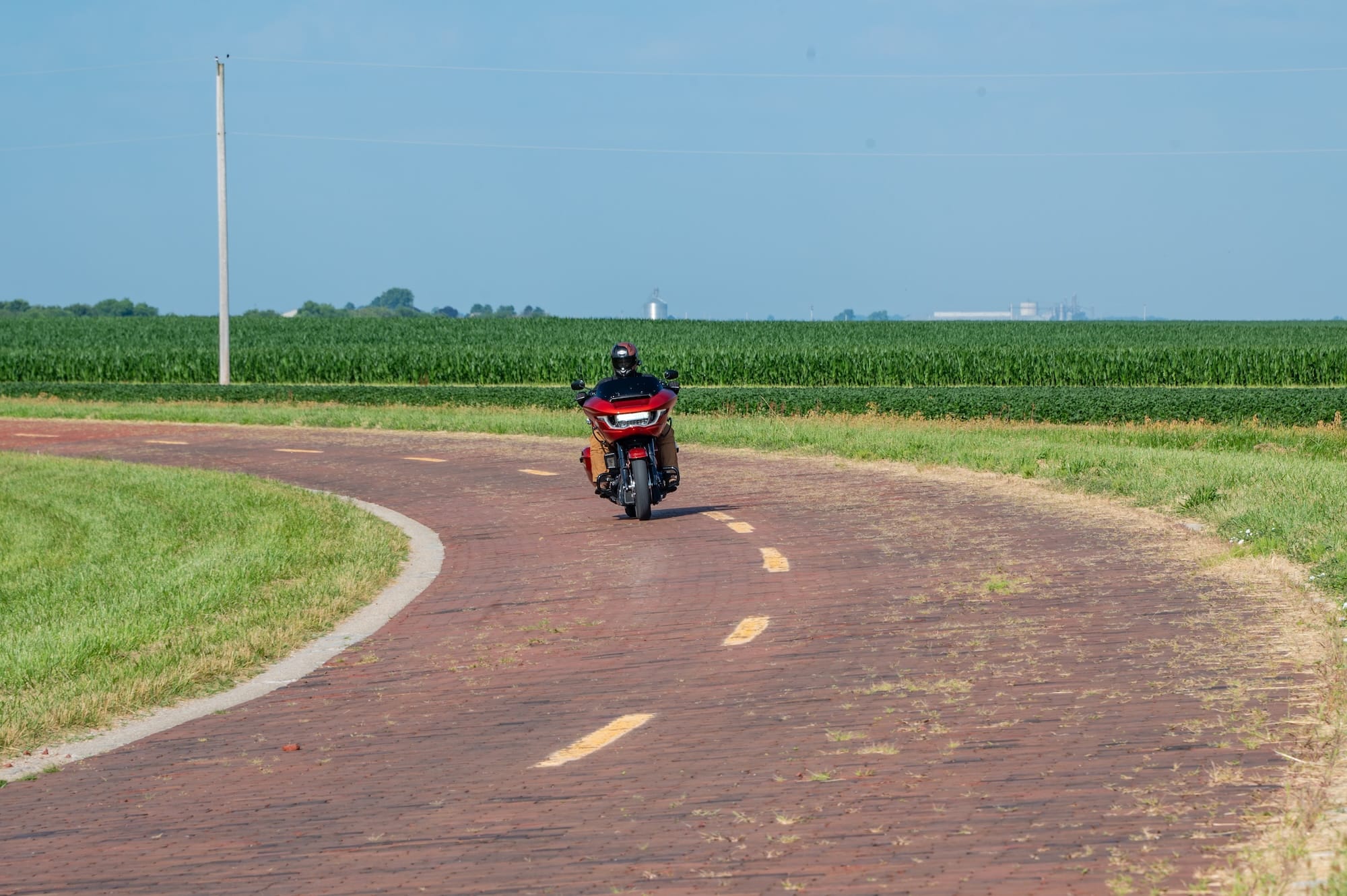
One of the most distinctive surviving stretches of Route 66 in Illinois is the hand-laid brick road south of Auburn, about 20 miles from Springfield. Known simply as the Brick Road, this 1.4-mile segment is a rare opportunity to experience the Mother Road much as travelers did nearly a century ago.
The road was first constructed in 1921 as part of Illinois SR 4, the paved highway that connected Chicago and St. Louis before Route 66 was officially commissioned in 1926. At the time, brick was considered a durable, modern paving material.
Workers laid down sand and concrete before carefully setting each brick by hand, creating a sturdy ribbon through the rolling farmland of Sangamon County. When Route 66 was designated, the brick road became part of the new cross-country highway.
Despite its durability, brick quickly fell out of favor as paving methods advanced. Concrete and asphalt were faster and cheaper to lay, smoother to drive on, and required less maintenance.
By the 1930s, most of Illinois’ Route 66 had been paved over with more modern surfaces. Miraculously, this short Auburn section was bypassed rather than destroyed, leaving behind an authentic piece of early highway history.
Today, the Auburn Brick Road is listed on the National Register of Historic Places and is cherished by Route 66 travelers. Riding or driving this short stretch feels like stepping back in time. The rumble of bricks under your tires connects you directly with the millions who once journeyed west on the Mother Road.