Route 66: The Real-Life Inspiration Behind The Movie Cars
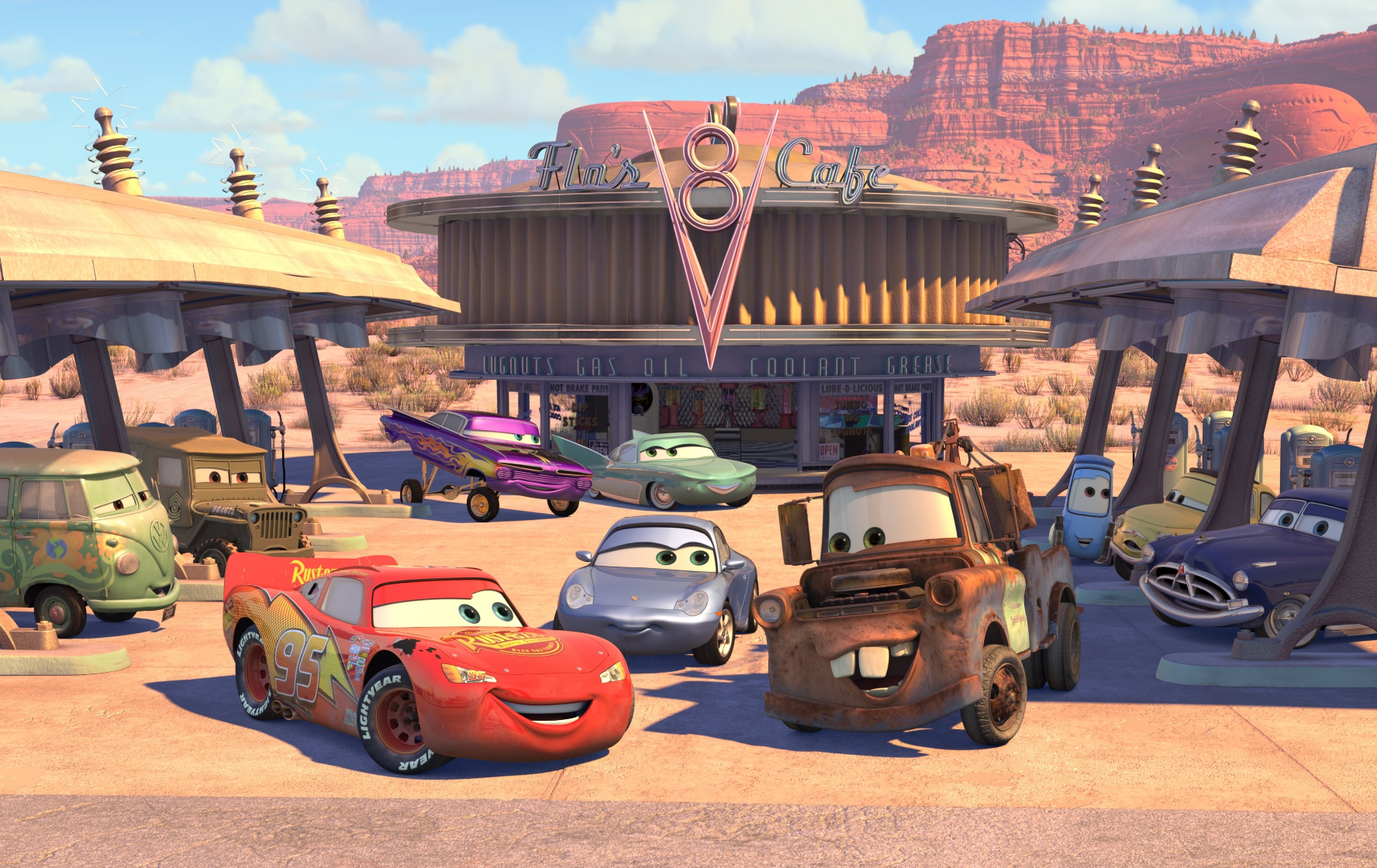
When Pixar released Cars in 2006, audiences of all ages fell in love with the quirky town of Radiator Springs, a place frozen in time where Route 66’s spirit thrived.
Although it’s a fictional town, every corner of Radiator Springs was inspired by the real-life communities that flourished along the Mother Road.
The ‘60s were a golden era for Route 66. Small towns along the highway were dotted with neon-lit diners, motels, and service stations, catering to the thousands of Americans exploring the country by motorcycle and car.
The Pixar team studied the architecture, signage, and roadside attractions that made these communities unique, drawing on their charm to craft a world that felt authentic yet whimsical. Here are the locations that inspired the classic cartoon movie.
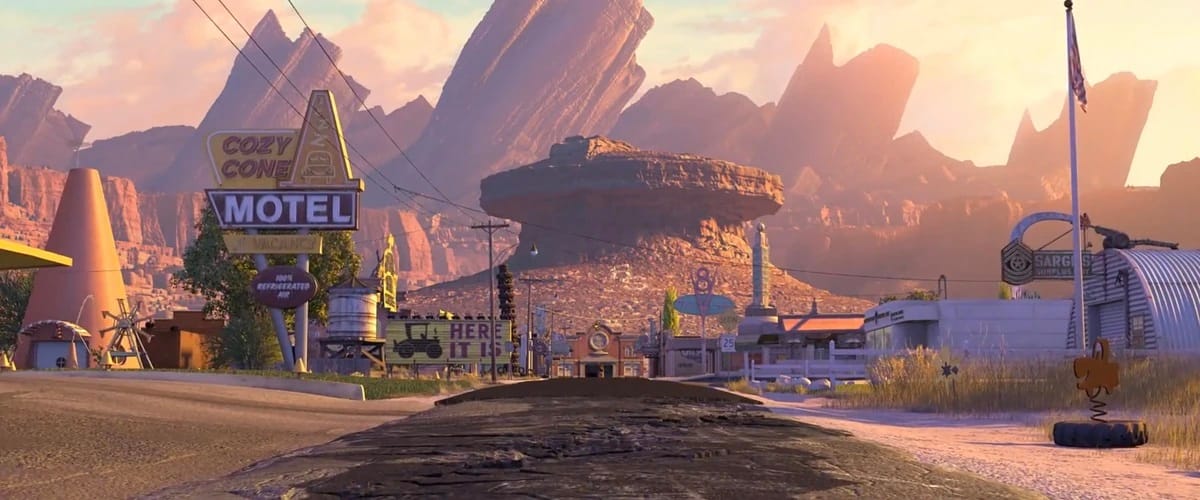
Radiator Springs
Radiator Springs was inspired by the many small towns along Route 66. Seligman, AZ, in particular, provided a model for the town’s nostalgic charm, with its collection of vintage signs, quirky shops, and Route 66 memorabilia. Seligman’s colorful characters and tight-knit community also helped shape the personalities and interactions of Radiator Springs’ residents.
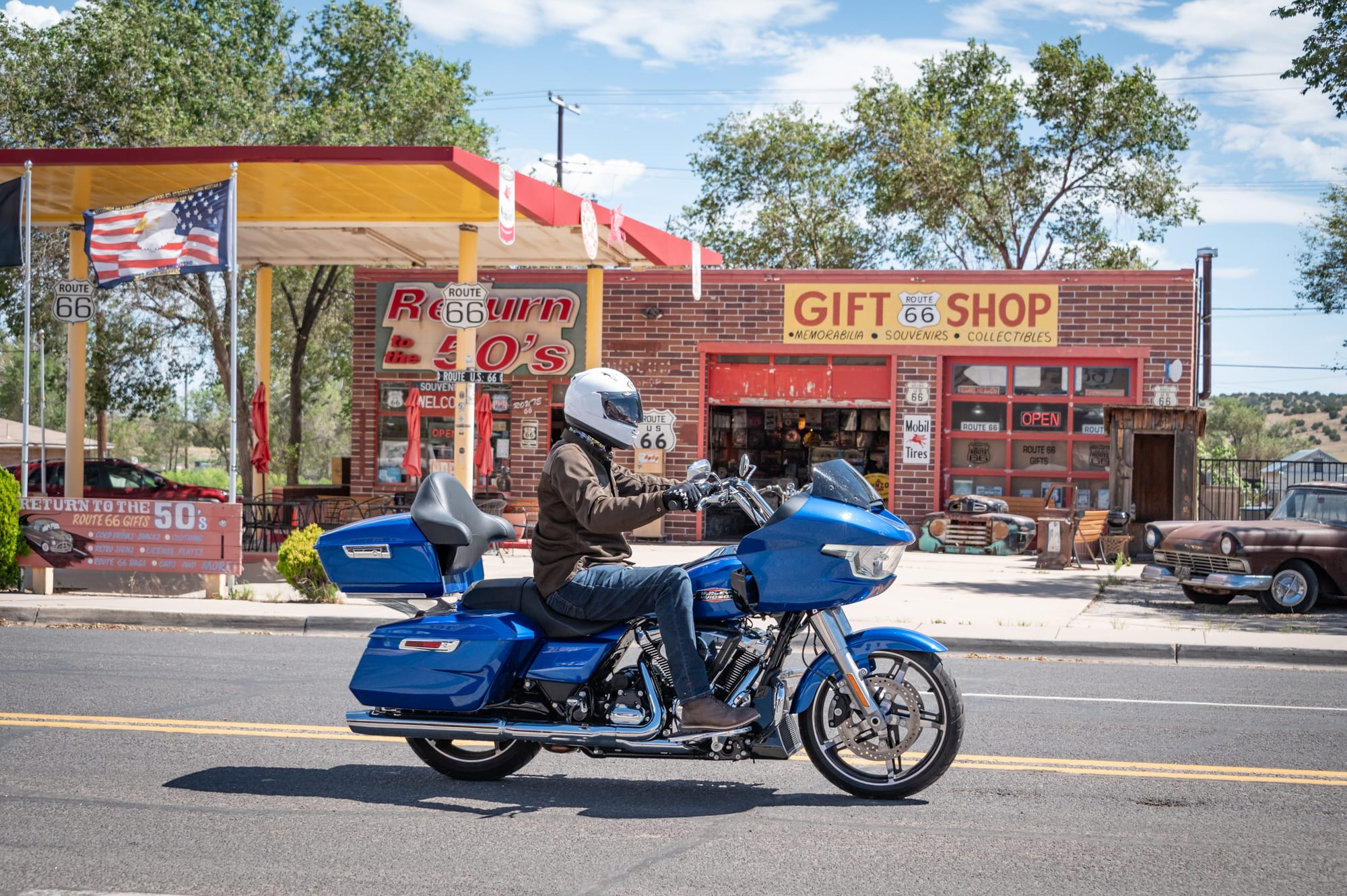
Pixar wanted Radiator Springs to capture the essence of the towns that Route 66 bypassed when the interstate system was built—places where life slowed down and roadside culture flourished. By blending elements from multiple real-life towns, the filmmakers created a fictional yet authentic locale that celebrates the history, spirit, and enduring appeal of Route 66.
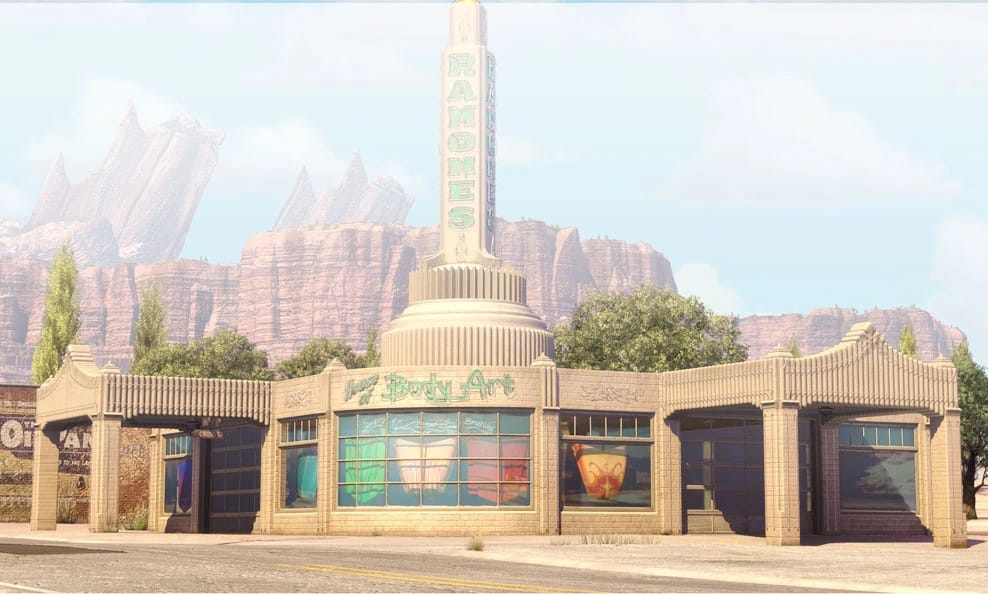
Ramone’s Body Shop
Ramones is an automotive body and paint shop located in Radiator Springs. It’s owned by Ramone, a lowrider Chevrolet Impala, who is the town’s resident artist and mechanic. Ramone’s shop serves as a central hub in Radiator Springs, offering custom paint jobs to cars passing through.
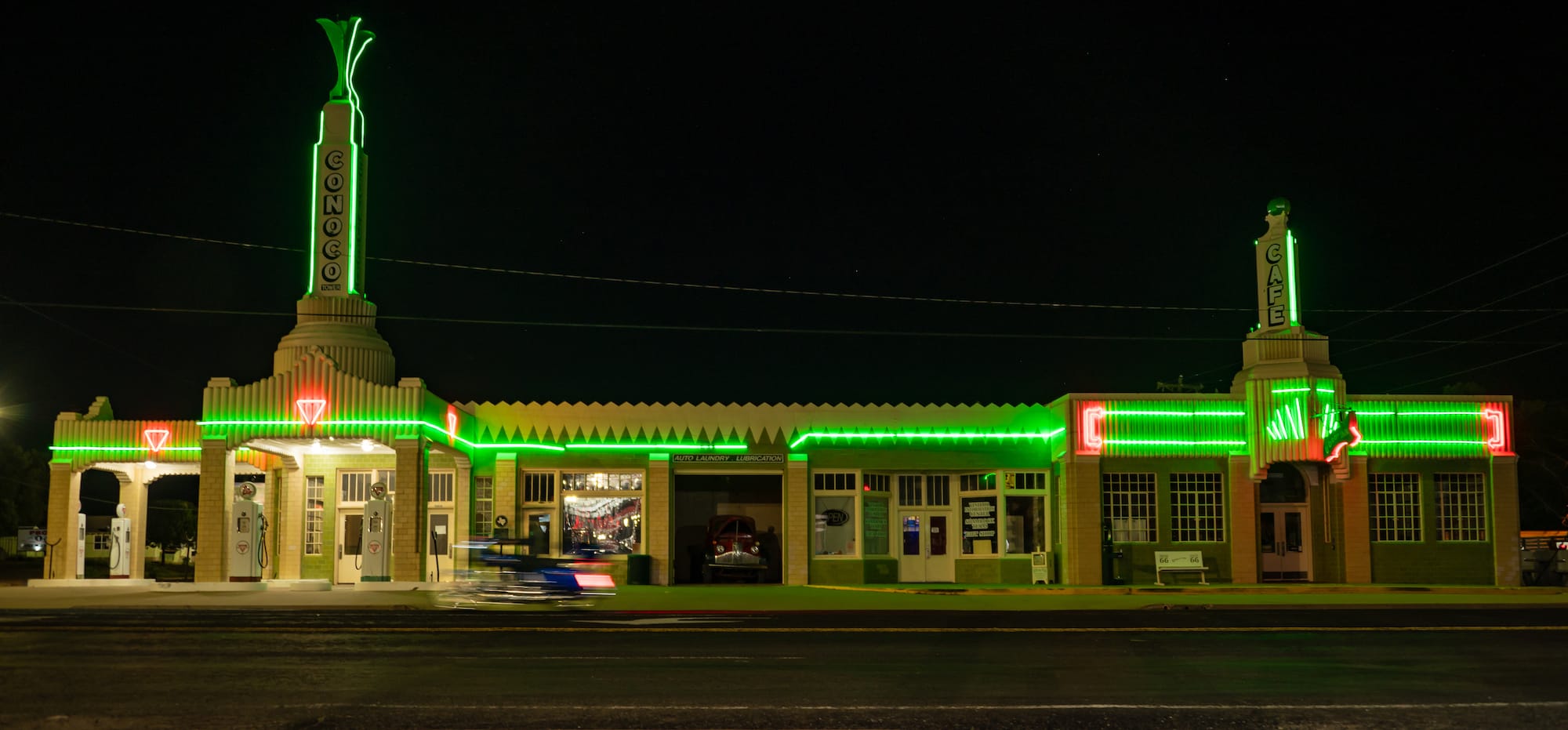
The design of Ramone’s Body Shop was influenced by the U-Drop Inn and Tower Station in Shamrock, TX. Built in 1936, the U-Drop Inn is a notable example of art deco architecture applied to a gas station and restaurant. Its distinctive features, including flared towers, geometric detailing, and neon accents, served as visual cues for Ramone’s Body Shop.
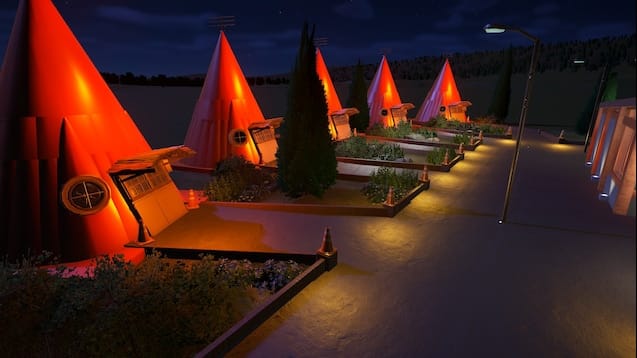
The Cozy Cone Motel
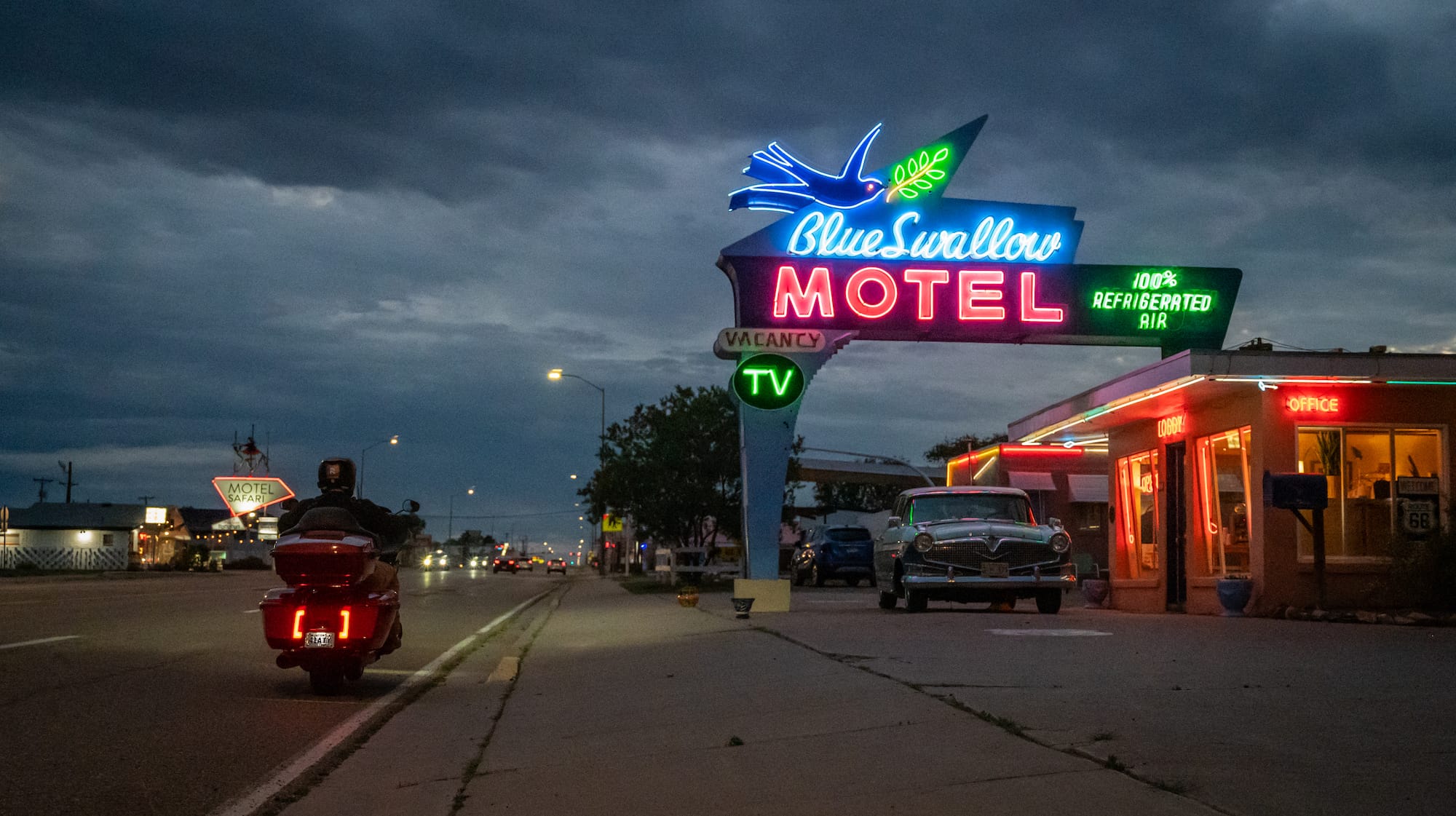
The Cozy Cone Motel is a playful and imaginative tribute to two of Route 66’s most iconic roadside motels: the Blue Swallow Motel in Tucumcari, NM, and the Wigwam Motels in Holbrook, AZ, and San Bernardino, CA.
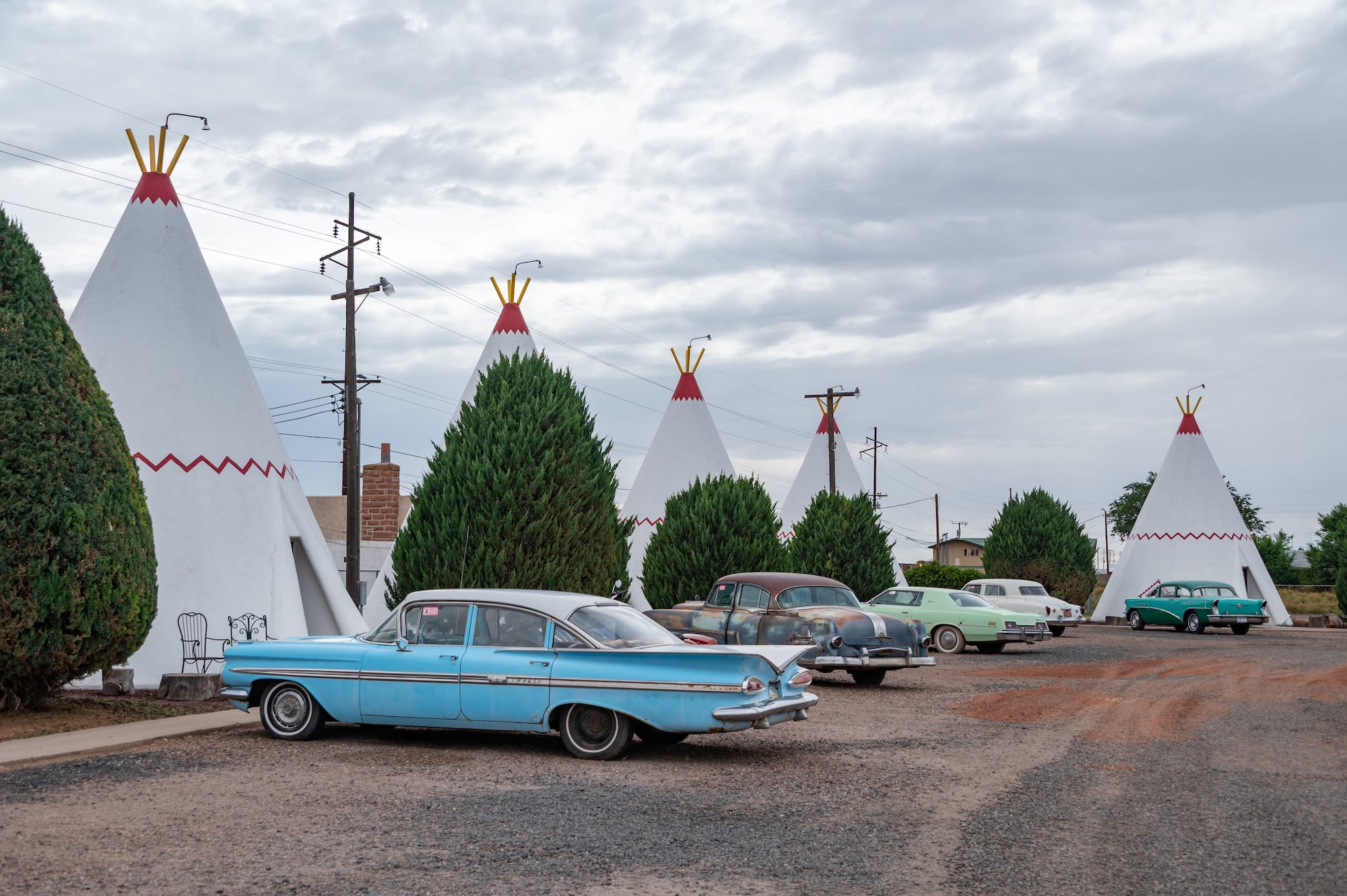
Like the Blue Swallow, the Cozy Cone evokes the charm of mid-century motor lodges with its vintage neon signage. At the same time, the Cozy Cone’s whimsical cone-shaped rooms are a direct nod to the Wigwam Motels, where guests can stay in individual concrete tipis.
In the movie, Pixar put a creative spin on the design by making the rooms shaped like road cones, giving the motel a playful automotive-themed twist that fits perfectly in the world of Cars.
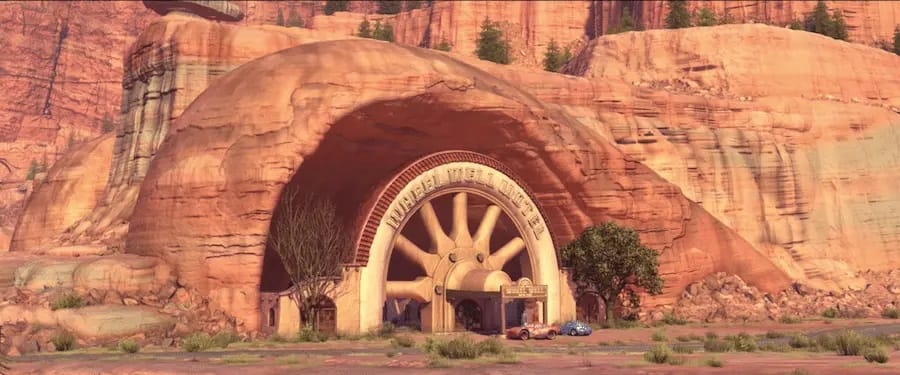
The Wheel Well Motel
The Wheel Well Motel in Cars takes its cues from the Wagon Wheel Motel in Cuba, MO, and the Yellowhorse Trading Post in Lupton, AZ.
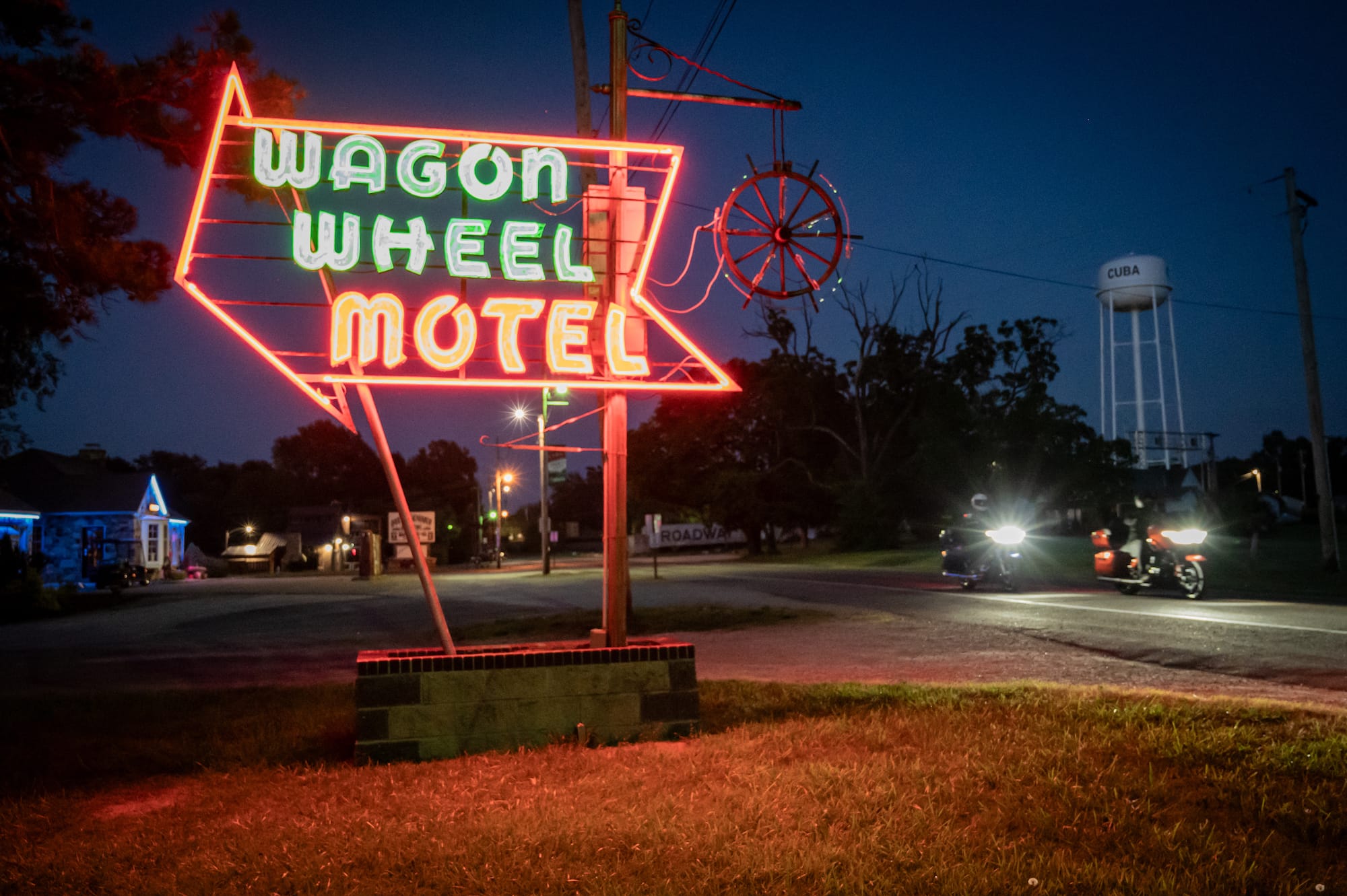
The Wagon Wheel Motel’s distinctive retro signage is echoed in the Wheel Well’s classic neon and wheel-themed aesthetic. Meanwhile, the Yellowhorse Trading Post contributes a Southwestern influence, inspiring the Wheel Well’s cliffside design and integration with the natural landscape.
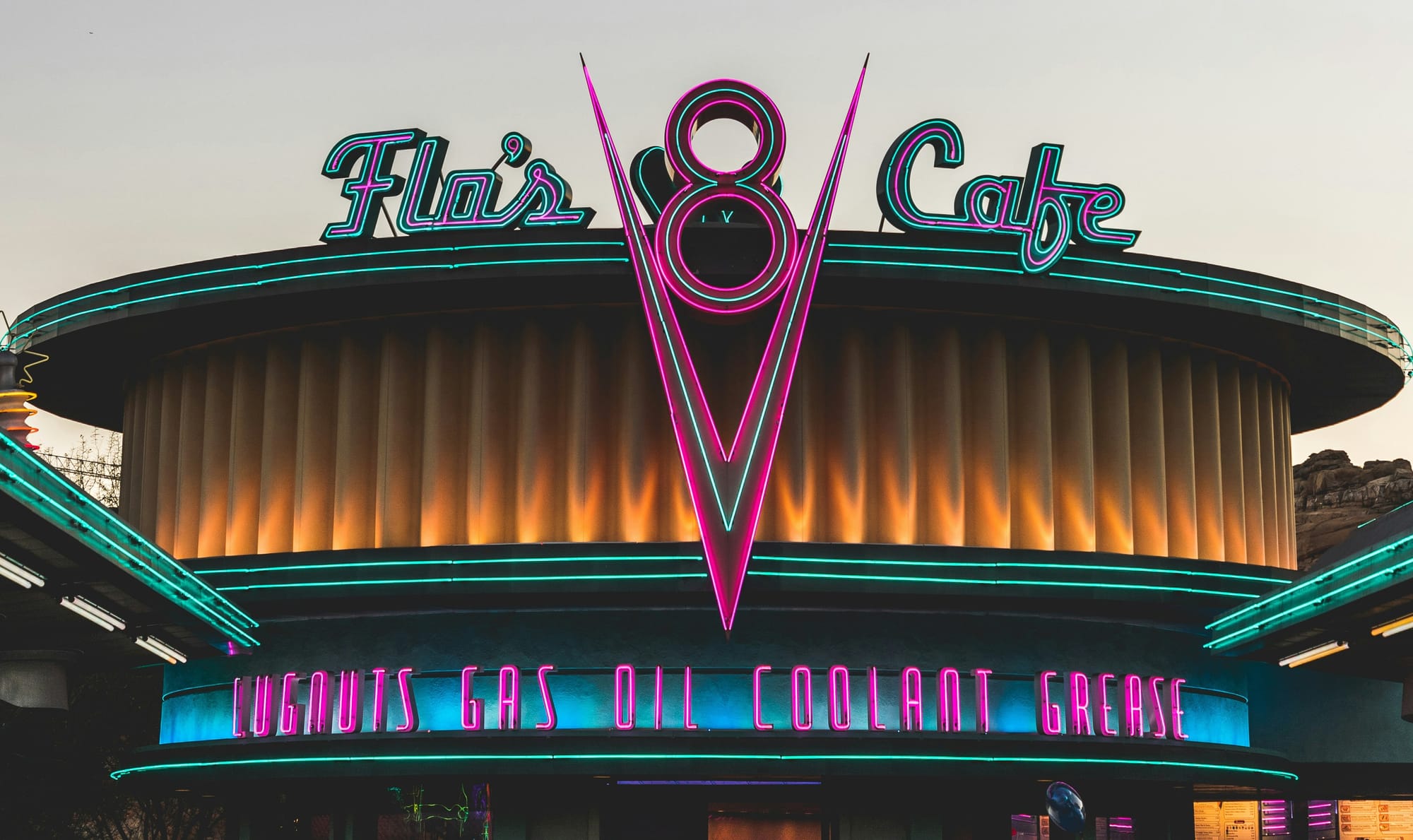
Flo’s V8 Cafe
Flo’s V8 Cafe is a loving nod to the diners that lined Route 66. Its bold neon signs, chrome accents, and 1950s-style architecture capture the spirit of roadside America at the height of car culture.
The cafe’s design draws heavily from real-life Route 66 establishments, especially the Snow Cap Drive-In in Seligman, AZ, run by Route 66 legend Angel Delgadillo. The automobile-themed decor at Flo’s, from hubcap accents to shiny chrome trim, reflects the central role cars played in shaping the Mother Road.
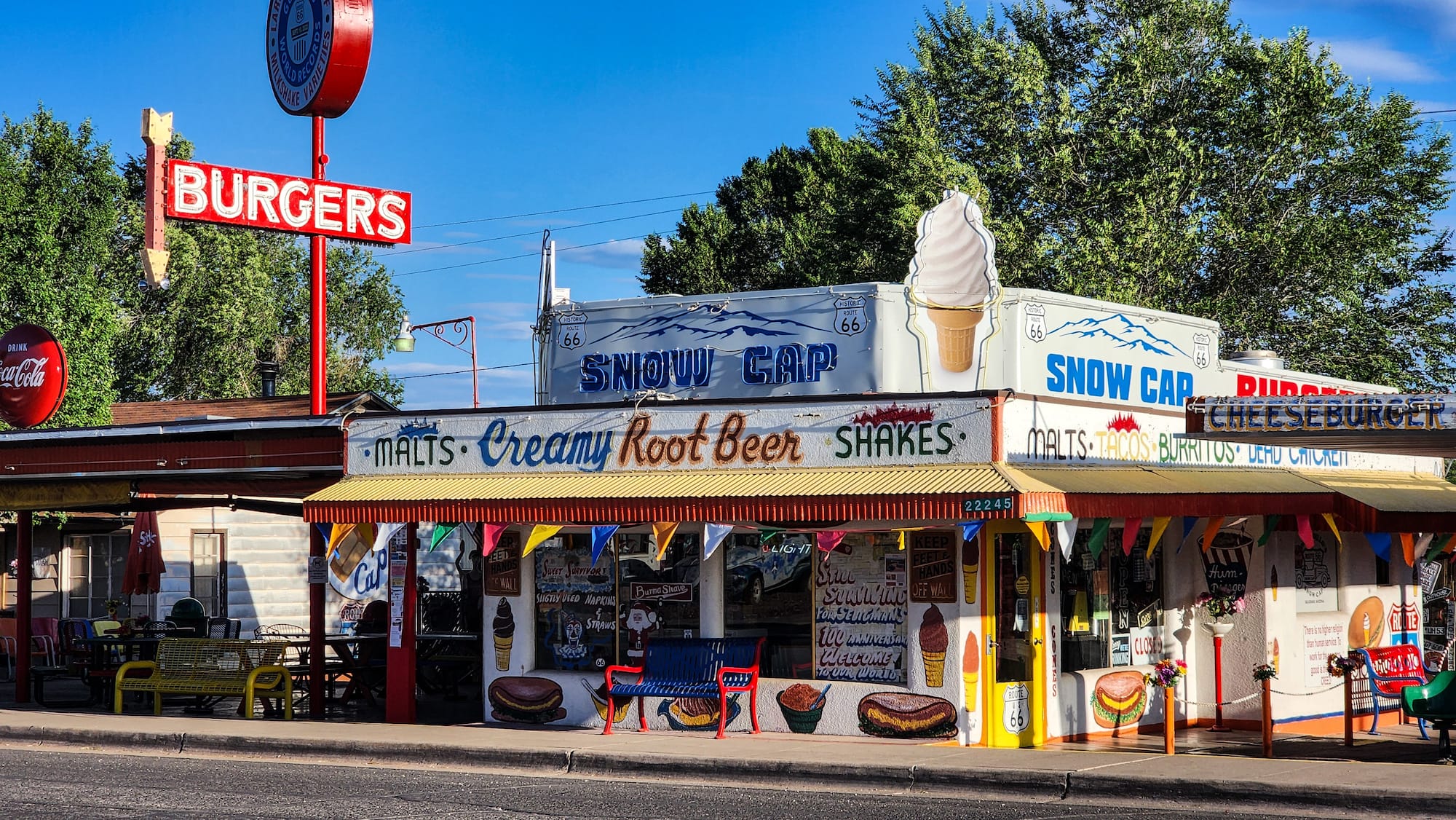
On Route 66, diners like this were pit stops for long-distance travelers, offering hearty food, a friendly smile, and a connection to small-town America. Flo’s captures that welcoming, nostalgic vibe perfectly, making it feel like a real place you’d stumble upon on a cross-country road trip.
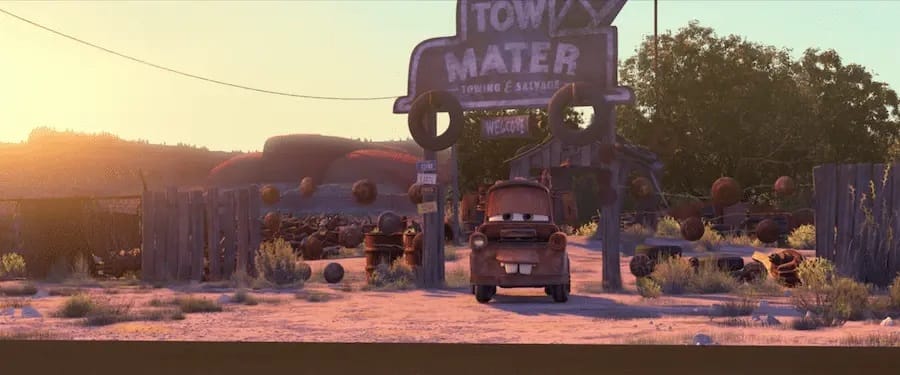
More Cars Inspiration
The abandoned mining town of Oatman, AZ, contributed to the film’s sense of a once-thriving town struggling to survive after the interstate bypassed it. Oatman’s famous wild burros even made their way into the film as Radiator Springs’ friendly tractor inhabitants.
Cadillac Ranch in Amarillo, TX, with its row of half-buried cars, inspired Pixar’s backdrop to Radiator Springs. Those jagged rocks look awfully familiar…
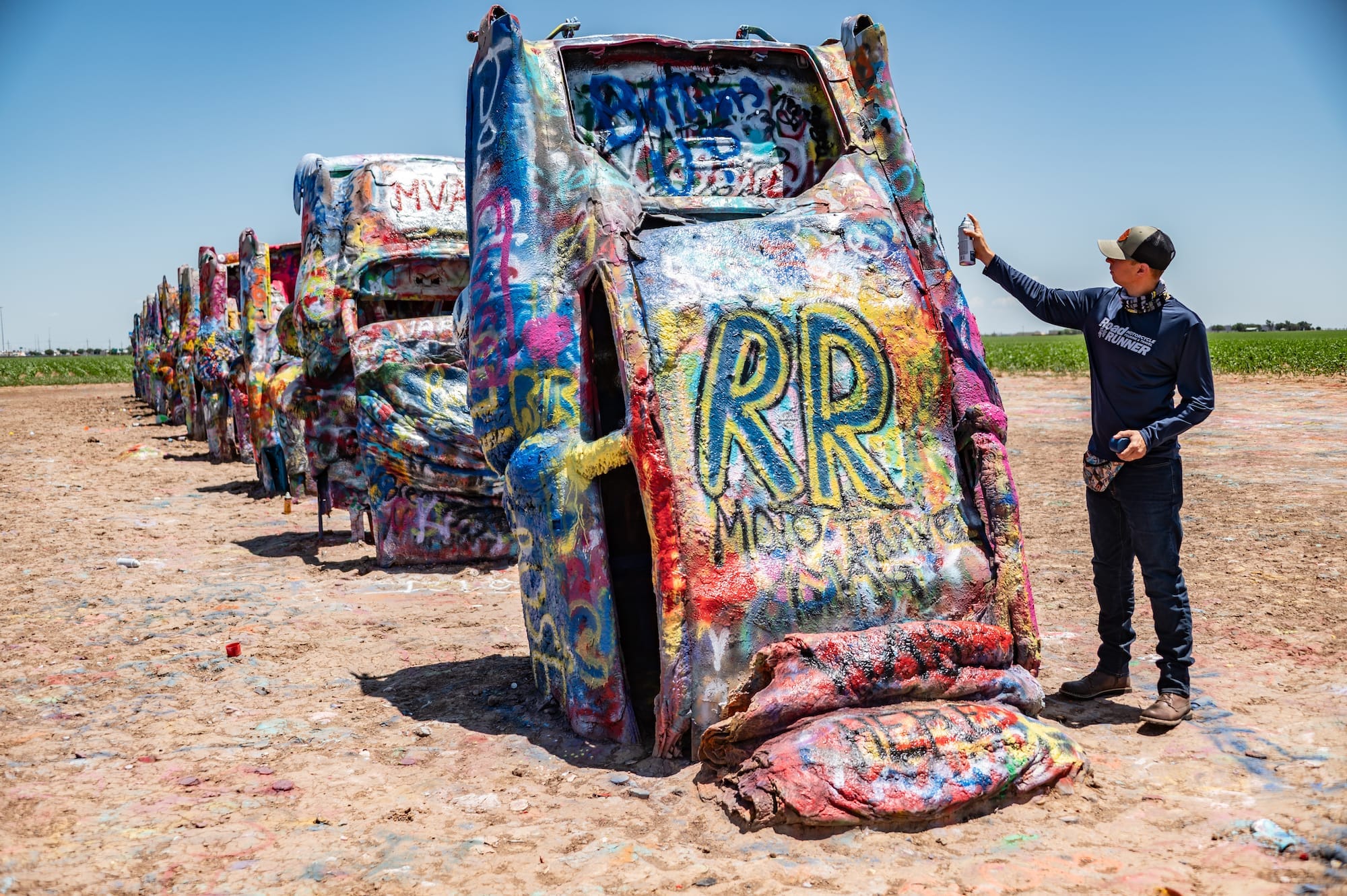
Even the signs along the road, like the Meadow Gold sign in Tulsa, OK, and countless quirky billboards along the Mother Road, shaped the movie’s atmosphere.
Beyond physical landmarks, Cars captures the heart of Route 66 culture: the sense of adventure, community, and Americana that thrived when the highway was the main artery connecting Chicago to Los Angeles.
Visiting these spots along Route 66 today is like stepping into a living movie set. For any fan of Cars, a Route 66 road trip offers a chance to see the real-life behind the film’ scenes and to experience the same vibe that Pixar captured on screen.
Cars is a loving tribute to the golden years of this American cultural icon.