Lanzarote, Spain: Volcanoes, Wind, and Camels

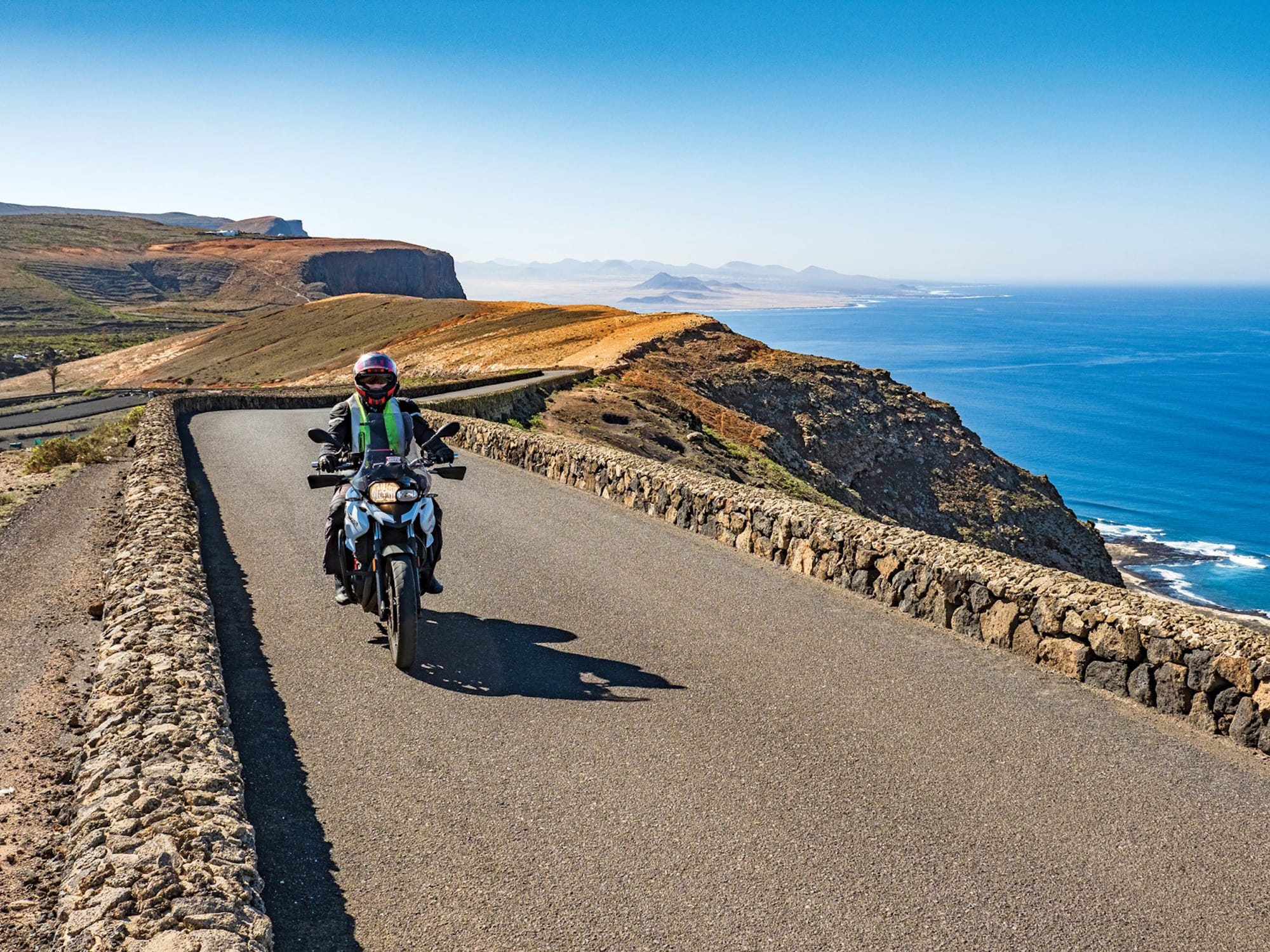
It’s early morning as my wife Liz and I leave our chalet in a resort village near the lighthouse of Playa Blanca in the southwest of the island of Lanzarote. Well, “chalet” is too upmarket a word for our abode, which consists of one bedroom and a bathroom in a ramshackle holiday complex—but it’s cheap! Our boots crunch over broken tiles and black sand as we walk between green succulents and cacti past a small pool and the breakfast restaurant.
We stash small overnight bags in the top boxes of our two 2018 BMW F 700 GSes, which we’ve parked just outside the hotel entrance. We will be sleeping in the north tonight as part of our planned clockwise circumnavigation of this beautiful island. A caressing sea breeze and the chattering of unseen birds break the stillness and bid us: “Bon voyage!”
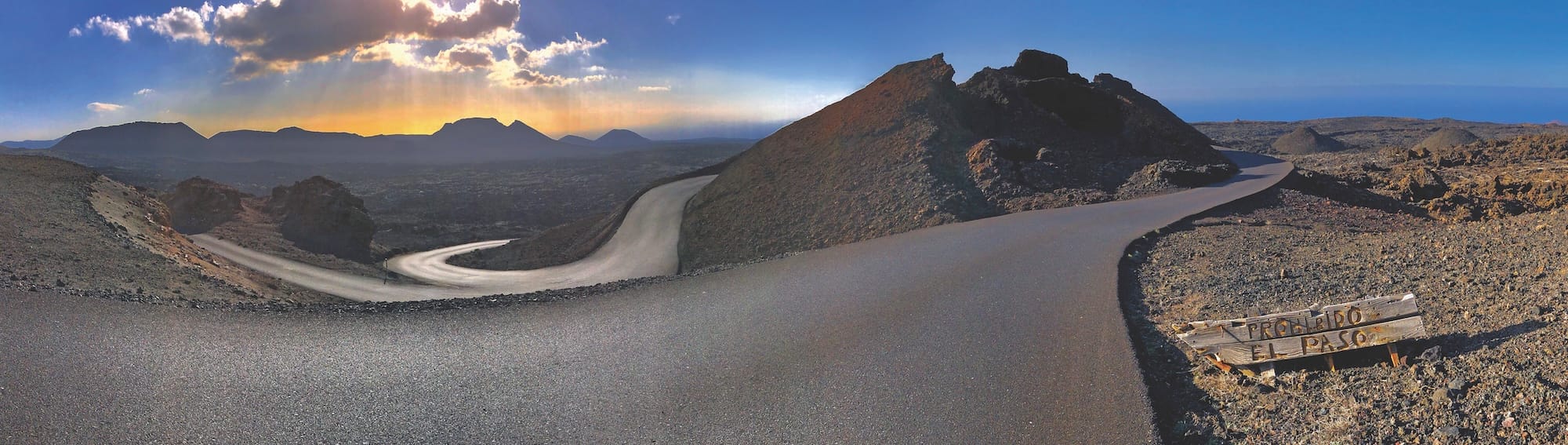
Lanzarote is the easternmost of the seven Canary Islands and the fourth-largest in the group. It’s smaller than Gran Canaria, Tenerife, and Fuerteventura, but bigger than La Palma. Known as the Island of Eternal Spring, it seldom rains here, but the hot desert climate can be very windy. When you consider how close to each other they are, it’s surprising how different all the Canary Islands are. Lanzarote is no exception.
Motorcycles & Gear
2018 BMW F 700 GS
Helmet: Shoei Neotec
Jacket: Held Cool System Leather, Helite airbag vest
Pants: ProBiker Textile
Boots: Alpinestars New Land Gore-Tex
Gloves: Vanucci Viscolab
Luggage: OEM top box
Comm System: Sena 50S
A Salty Starter
We head north on LZ-2. As we leave the perimeter of Playa Blanca, we’re straight into desert flatland. A huge scrubby median separates the road from LZ-701, both zipping laser straight to the horizon. For the next five miles, you would need a time-lapse video to perceive any change in the scenery. But then, a left turn to LZ-703 at a roundabout brings us to the coast and the salt flats of Salinas de Janubio. A pull-off provides a great view down on a natural lagoon, which volcanic rock walls divide into multicolored square pools. A seawater evaporation operation here yields from 2,000 to 15,000 tons of salt per year. You can take a 90-minute guided tour, and there is a shop where you can buy various sea salt products.
We continue on LZ-703 to the little fishing village of El Golfo. The main road runs along the coast and is lined with terraced seafood restaurants facing the bay. The rest of the tiny town has narrow streets with whitewashed, almost Greek-style houses, ice cream shops, decking built on the beach for al fresco dining, palm trees, and colorful boats on black sand. It’s definitely worth a visit. After taking a few photos, we leave El Golfo, promising ourselves to come back one evening to eat fish and watch the sunset.