Illinois Route 66
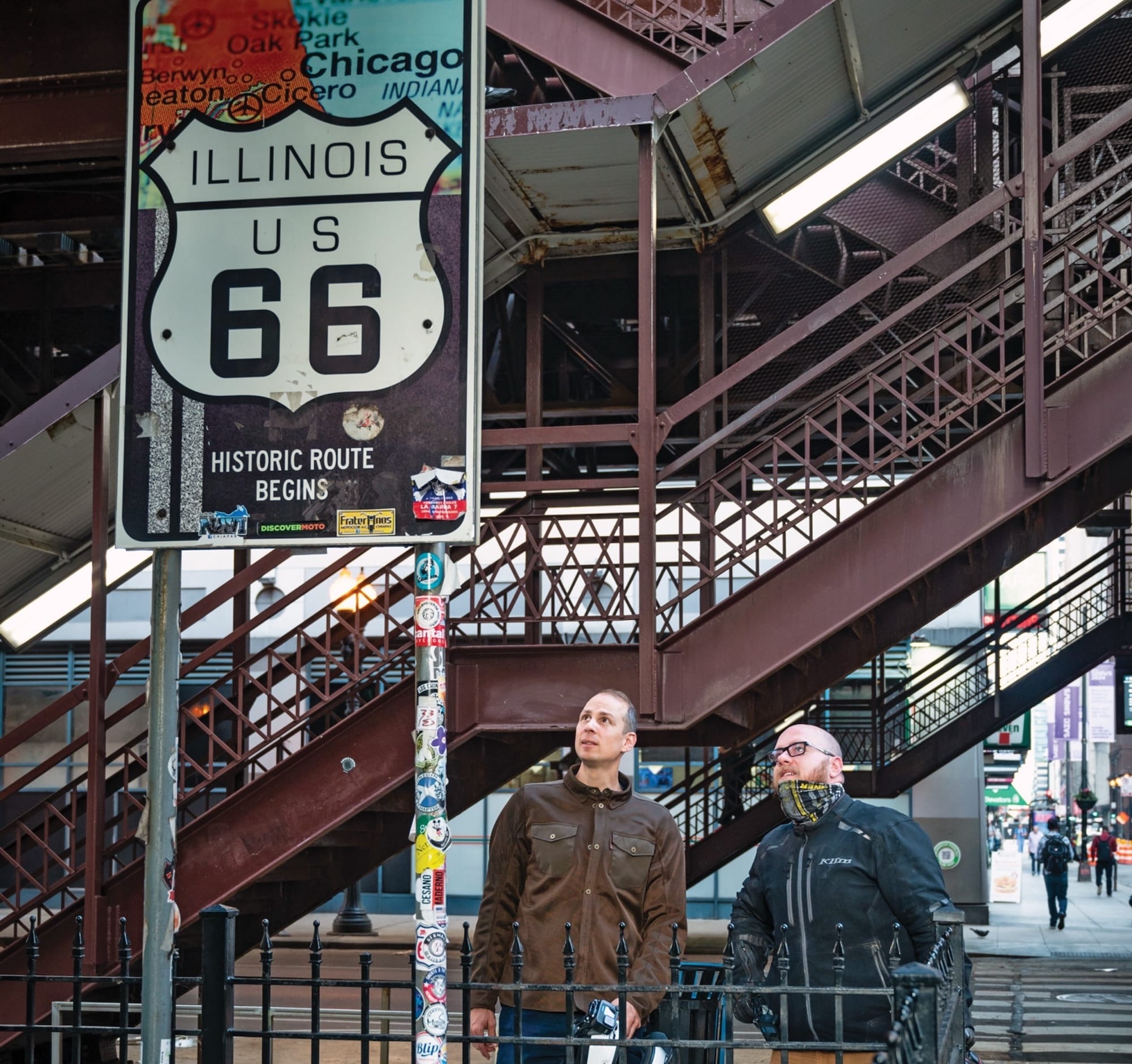
Route 66 Begins
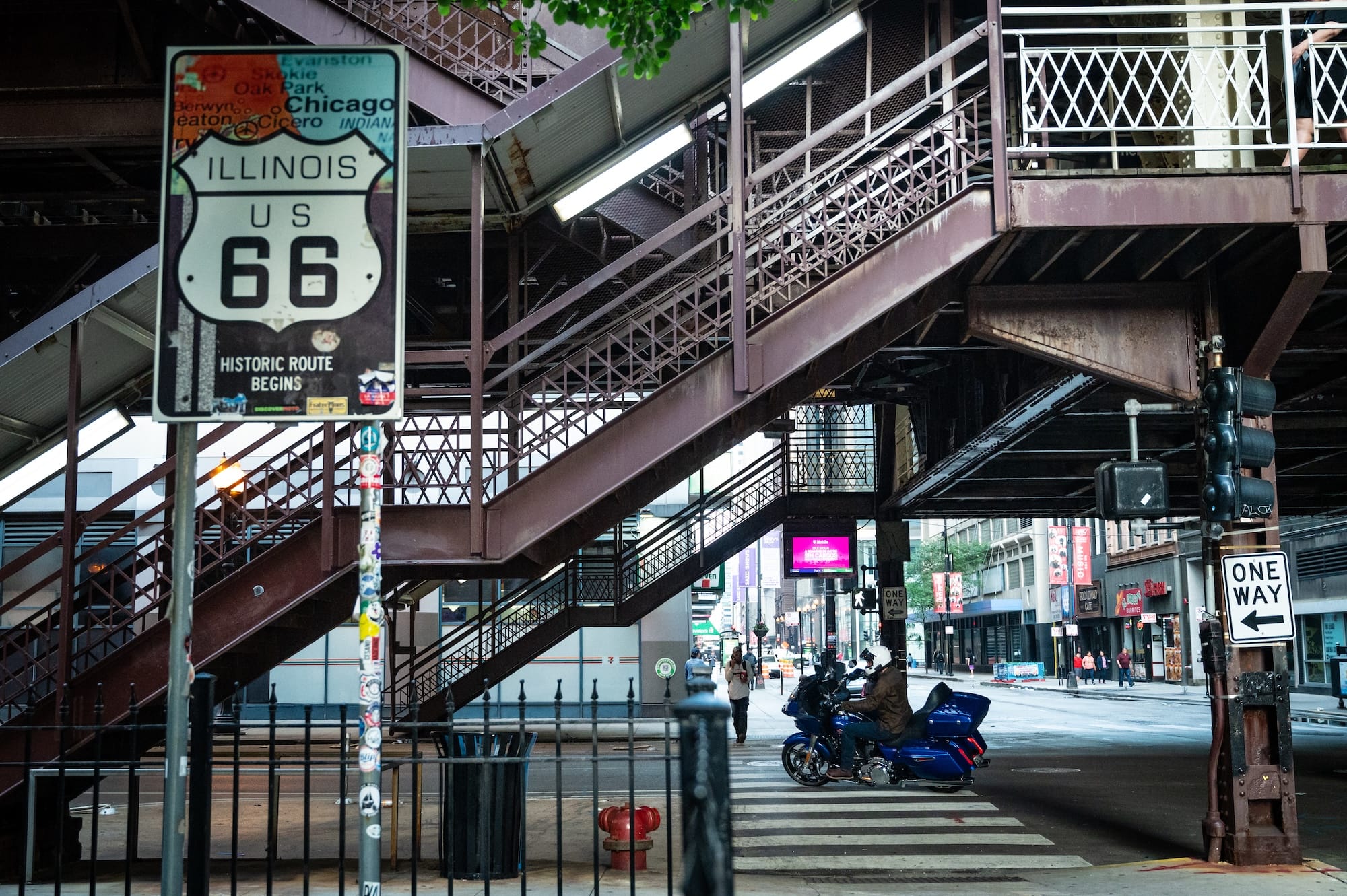
Illinois holds a special status as Route 66’s official starting point. The journey begins at the corner of Adams St and Michigan Ave in downtown Chicago, where you’ll find the iconic Begin Route 66 sign. From there, the road stretches southwest across 300 miles of prairie and small-town America, ending at the Mississippi River in East St. Louis before continuing into Missouri.
Route 66 originally provided a vital link between the industrial Midwest and the West, fueling migration, trade, and travel. The flat farmlands of Illinois made it ideal for some of the earliest paved stretches of highway in the country.
Travelers today can expect a mix of urban energy and nostalgic Americana. Chicago offers a vibrant send-off, while towns like Joliet, Pontiac, Springfield, and Litchfield showcase restored murals, classic diners, and vintage gas stations. Historical landmarks, such as the Gemini Giant in Wilmington and the preserved section of original brick road near Auburn, capture the spirit of Route 66’s glory days.
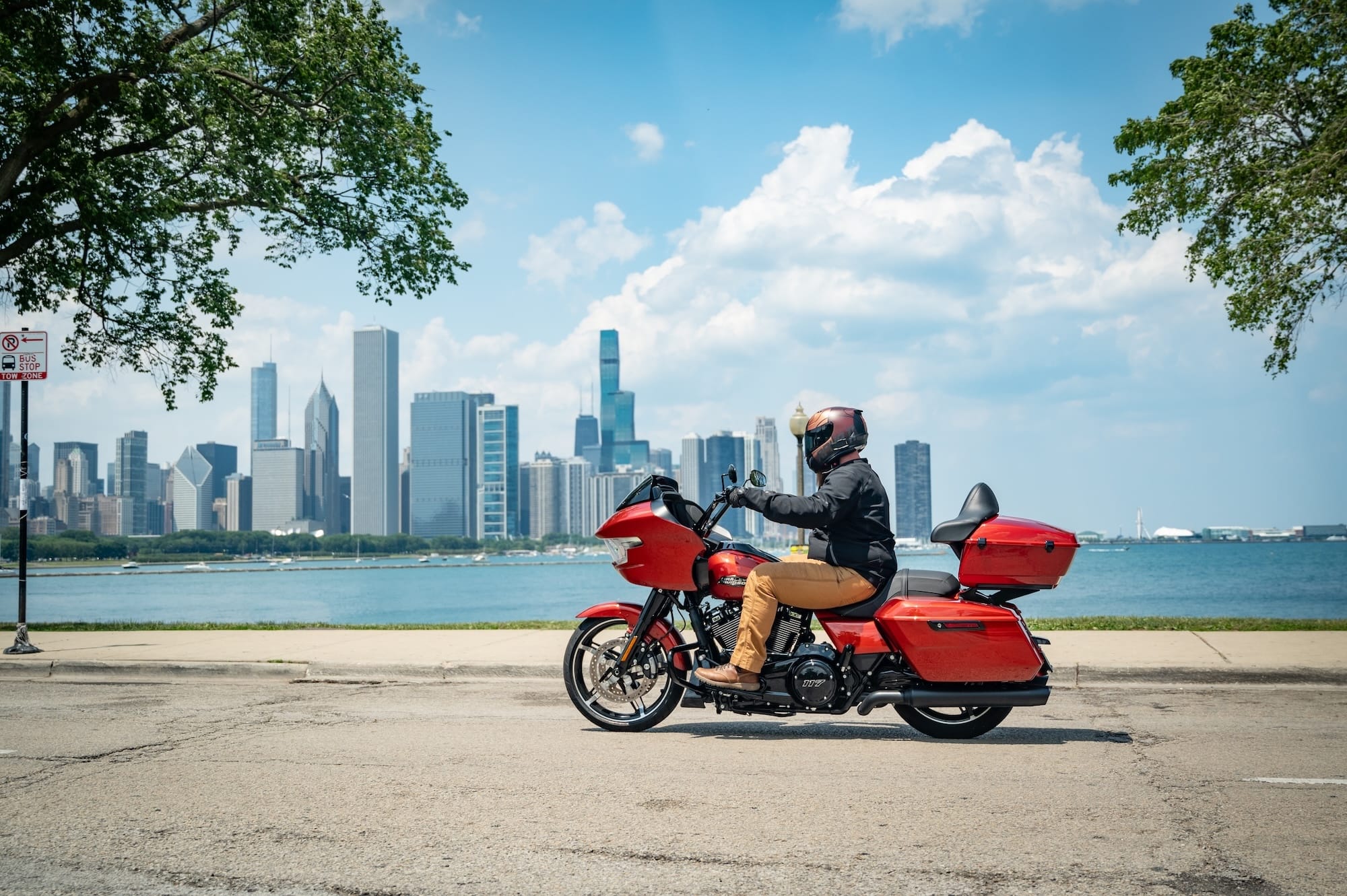
When riding Illinois’ portion of Route 66, spending two to three days in the saddle is ideal. This pace allows time to enjoy museums and photo-worthy stops without rushing.
Illinois maintains detailed signage along several historical alignments of the Mother Road. Earlier ones take you through small town centers, whereas later alignments tend to bypass towns. We suggest taking the time to follow the original alignment, if possible.
Starting Route 66 in Chicago
Every great Route 66 journey begins in downtown Chicago, where the official Begin Route 66 sign marks the starting point of America’s most iconic highway. Located at the corner of Adams St and Michigan Ave across from the Art Institute of Chicago, the sign is a must-see photo stop before setting off on the Mother Road. Millions of travelers, from the 1920s through today, have stood at this very spot to capture the moment of departure.
Chicago is more than just the road’s starting line, though. The city sets the stage for the adventure ahead. Chicago’s skyline, Lake Michigan, and lively streets provide a vibrant contrast to the rural landscapes that soon follow. Whether you’re traveling by motorcycle or car, pausing at the Begin sign connects you with nearly a century of history and tradition. It’s the symbolic gateway to the freedom, nostalgia, and discovery that Route 66 promises.
Traditions at Lou Mitchell’s
No Route 66 adventure truly begins without a meal at Lou Mitchell’s, the legendary diner in downtown Chicago. Located near the Begin Route 66 sign, the restaurant has been fueling travelers since 1923—three years before the Mother Road itself was commissioned. Often called the first stop on the road, it quickly became a tradition for motorcyclists and car drivers heading west to grab a hearty breakfast before hitting the highway.
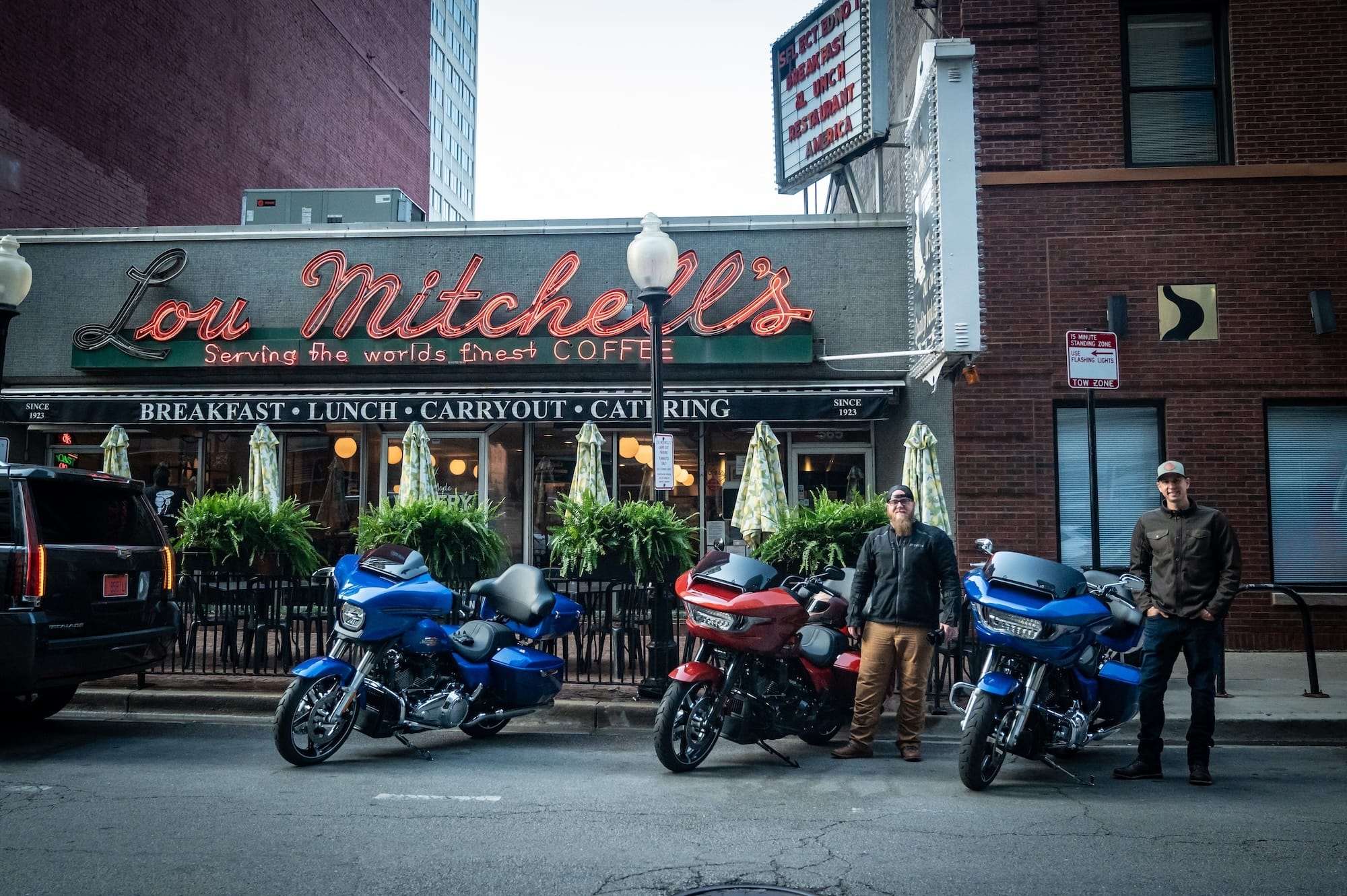
Lou Mitchell’s is as famous for its hospitality as it is for its food. Per a quirky custom that’s been around for decades, guests are greeted with complimentary Milk Duds or donut holes. Inside, the diner buzzes with energy, serving classic American breakfasts, strong coffee, and stories from travelers near and far.
Starting your Route 66 journey here isn’t just about a meal. It’s about joining a tradition that’s older than the road itself.
Murals, Museums, and Memories in Pontiac
About 100 miles southwest of Chicago, Pontiac is one of the most celebrated Route 66 towns in Illinois. Although it’s named after the legendary Odawa war chief, not the car brand, Pontiac has embraced its place in American road history. The city rose to prominence with the arrival of the Chicago-St. Louis railroad in the 1850s, followed by Route 66 itself in 1926. I-55 may have eventually replaced the Mother Road, but Pontiac never lost its spark and remains a vibrant stop.
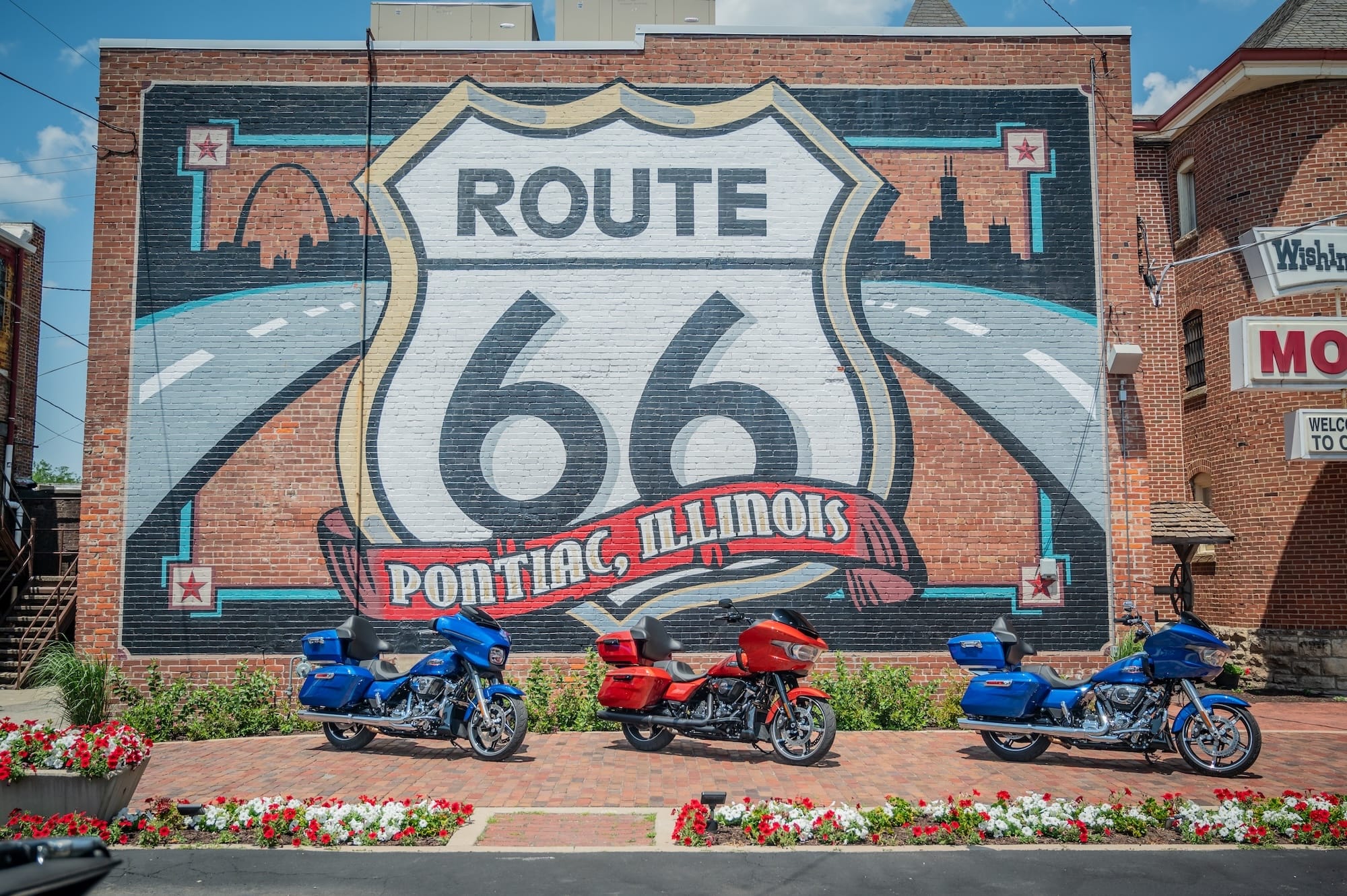
Visitors can wander through downtown to see more than 20 murals, pose at the massive Route 66 shield mural, or explore the Illinois Route 66 Hall of Fame and Museum. The Pontiac-Oakland Automobile Museum adds another layer of nostalgia with classic American cars. In addition to Route 66 history, you’ll find swinging pedestrian bridges, pretty parks, and a welcoming atmosphere that keeps Pontiac firmly on every rider’s map.
The Historic Brick Road
One of the most distinctive surviving stretches of Route 66 in Illinois is the hand-laid brick road south of Auburn, about 20 miles from Springfield. Known simply as the Brick Road, this 1.4-mile segment is a rare opportunity to experience the Mother Road much as travelers did nearly a century ago.
The road was first constructed in 1921 as part of Illinois SR 4, the paved highway that connected Chicago and St. Louis before Route 66 was officially commissioned in 1926. At the time, brick was considered a durable, modern paving material. Workers laid down sand and concrete before carefully setting each brick by hand, creating a sturdy ribbon through the rolling farmland of Sangamon County. When Route 66 was designated, the brick road became part of the new cross-country highway.
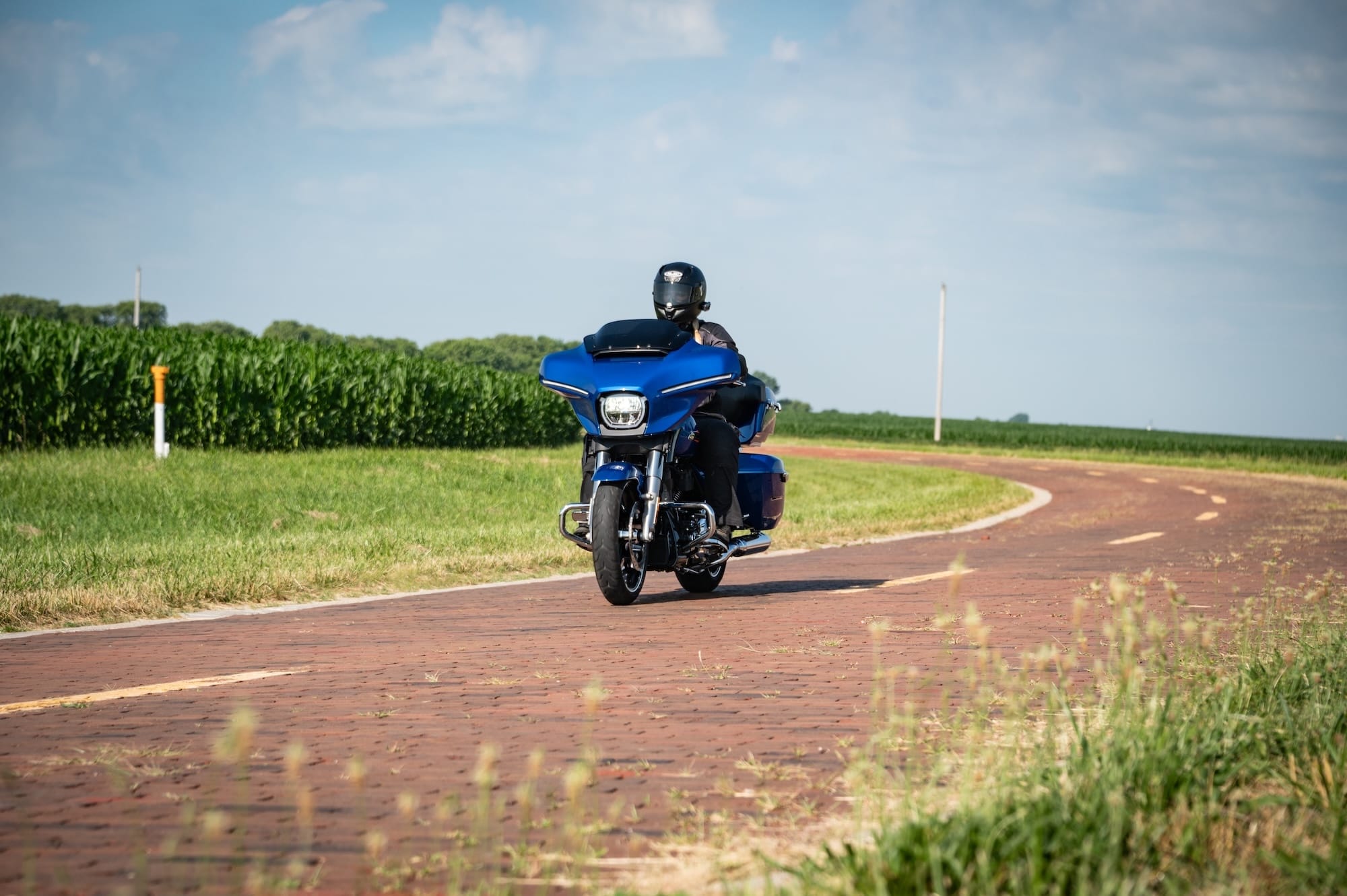
Despite its durability, brick quickly fell out of favor as paving methods advanced. Concrete and asphalt were faster and cheaper to lay, smoother to drive on, and required less maintenance. By the 1930s, most of Illinois’ Route 66 had been paved over with more modern surfaces. Miraculously, this short Auburn section was bypassed rather than destroyed, leaving behind an authentic piece of early highway history.
The Auburn Brick Road is listed on the National Register of Historic Places and is a cherished Route 66 relic. Riding or driving this short brick ribbon feels like motoring back decades. The rumble of bricks under your tires connects you directly with the millions who once journeyed west on the Mother Road.
A Glimpse of Old Route 66
Scattered across Illinois, hidden just off the main road, lie fragments of old Route 66. These strips of pavement are often cracked, broken, and tufted with grass pushing through. In the ‘20s and ‘30s, these lanes carried Dust Bowl migrants west in search of work. In the postwar boom, they echoed with the rumble of chromed sedans and the thunder of Harley-Davidsons.
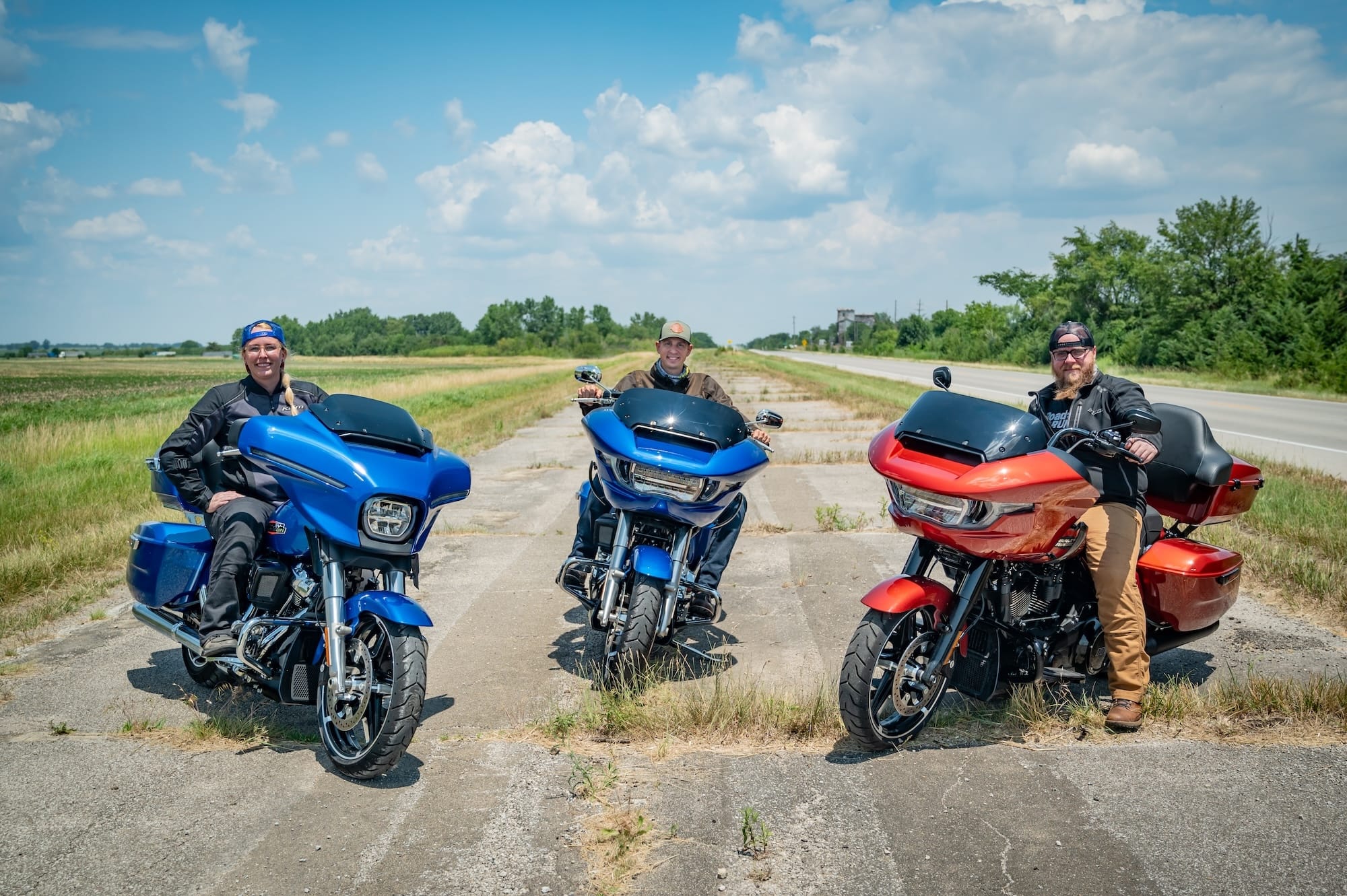
Now, they sit quietly in fields or alongside newer highways, bypassed by progress but not forgotten. Walking on them, you can almost hear the hum of whitewalls, the laughter from packed station wagons, and the steady drone of V-twins.
Dead Man’s Curve
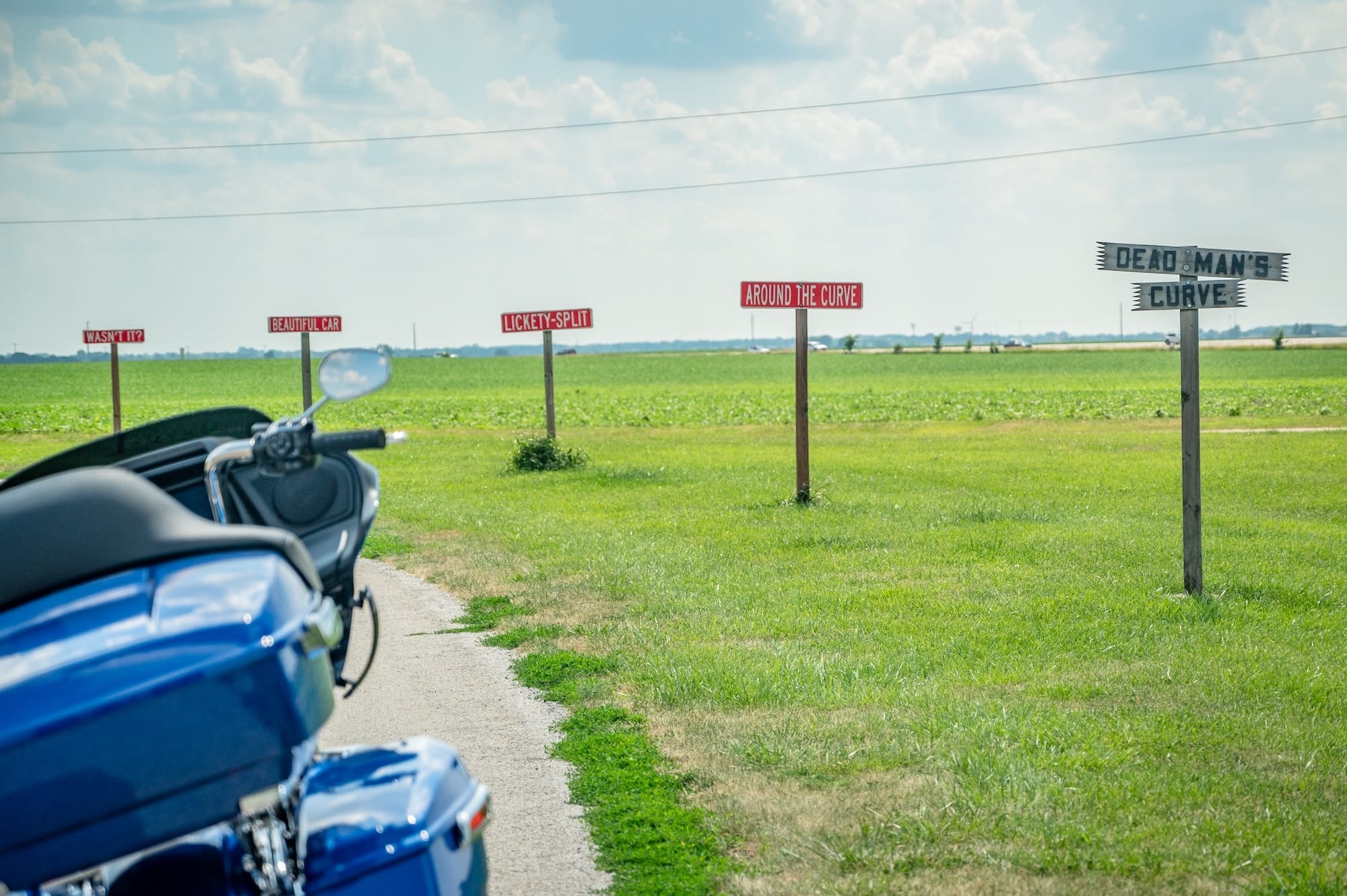
Just outside the town of Towanda, Route 66 once twisted through a notorious bend known as Dead Man’s Curve. Before later developments straightened the highway, this sharp, blind curve posed a real danger to motorists barreling along the Mother Road. Many accidents occurred here, giving the curve its ominous name and cementing its place in Route 66 lore. To lighten the mood, and maybe slow down motorists, advertisers made clever use of the roadside. The famous Burma-Shave signs, with their witty rhyming jingles spaced out in sequence, lined this stretch. Drivers would read them one by one as they approached the curve. It was an early form of highway advertising—part safety reminder, part entertainment.
Illinois Points of Interest
- Begin Route 66 Sign, Chicago
- Lou Mitchell’s, Chicago
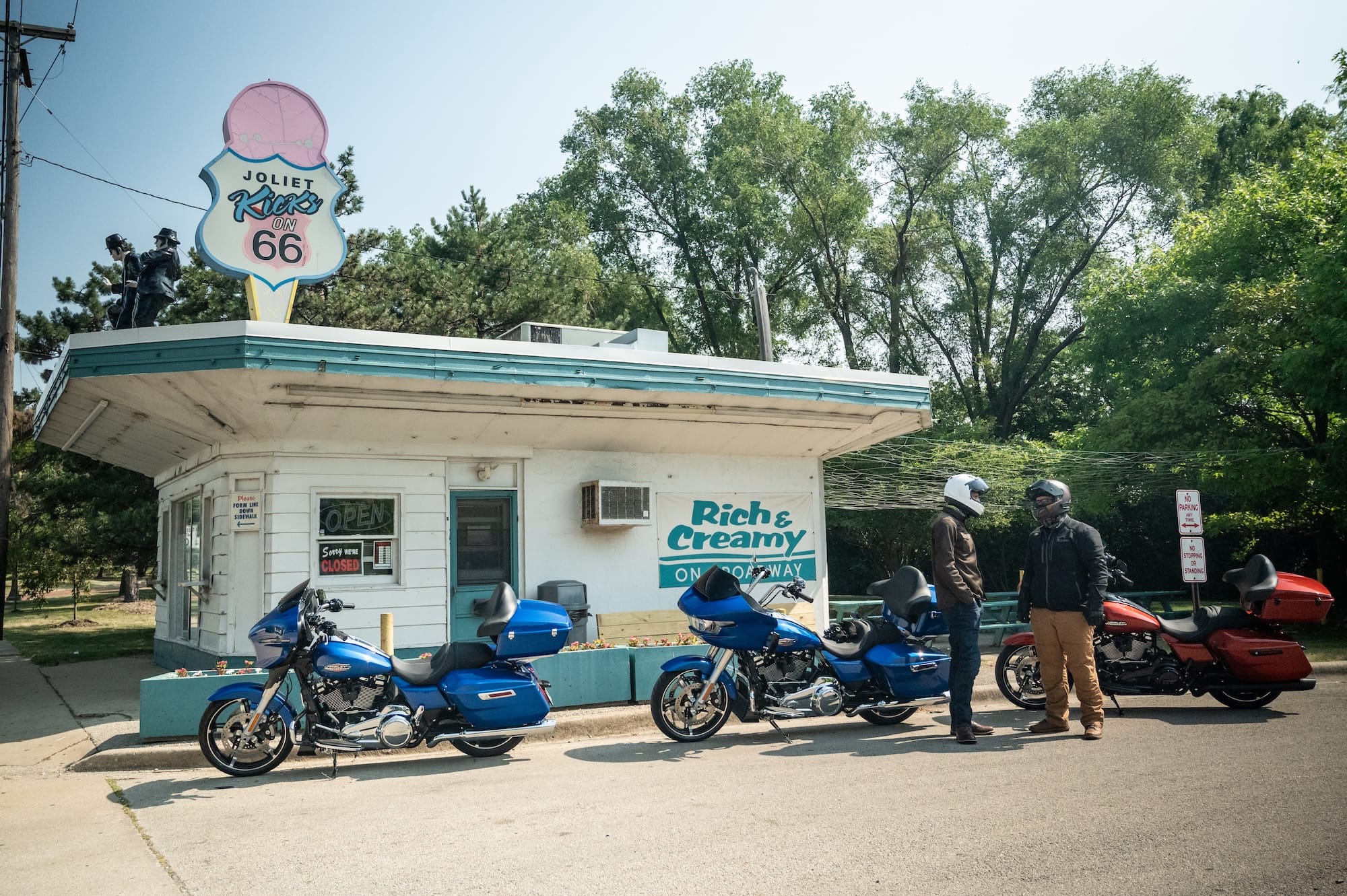
- Joliet Route 66 Diner, Joliet
- Rialto Square Theatre, Joliet
- Gemini Giant, Wilmington
- Ambler-Becker Texaco, Dwight
- The Route 66 Hall of Fame and Museum, Pontiac
- Murals on Main Street, Pontiac
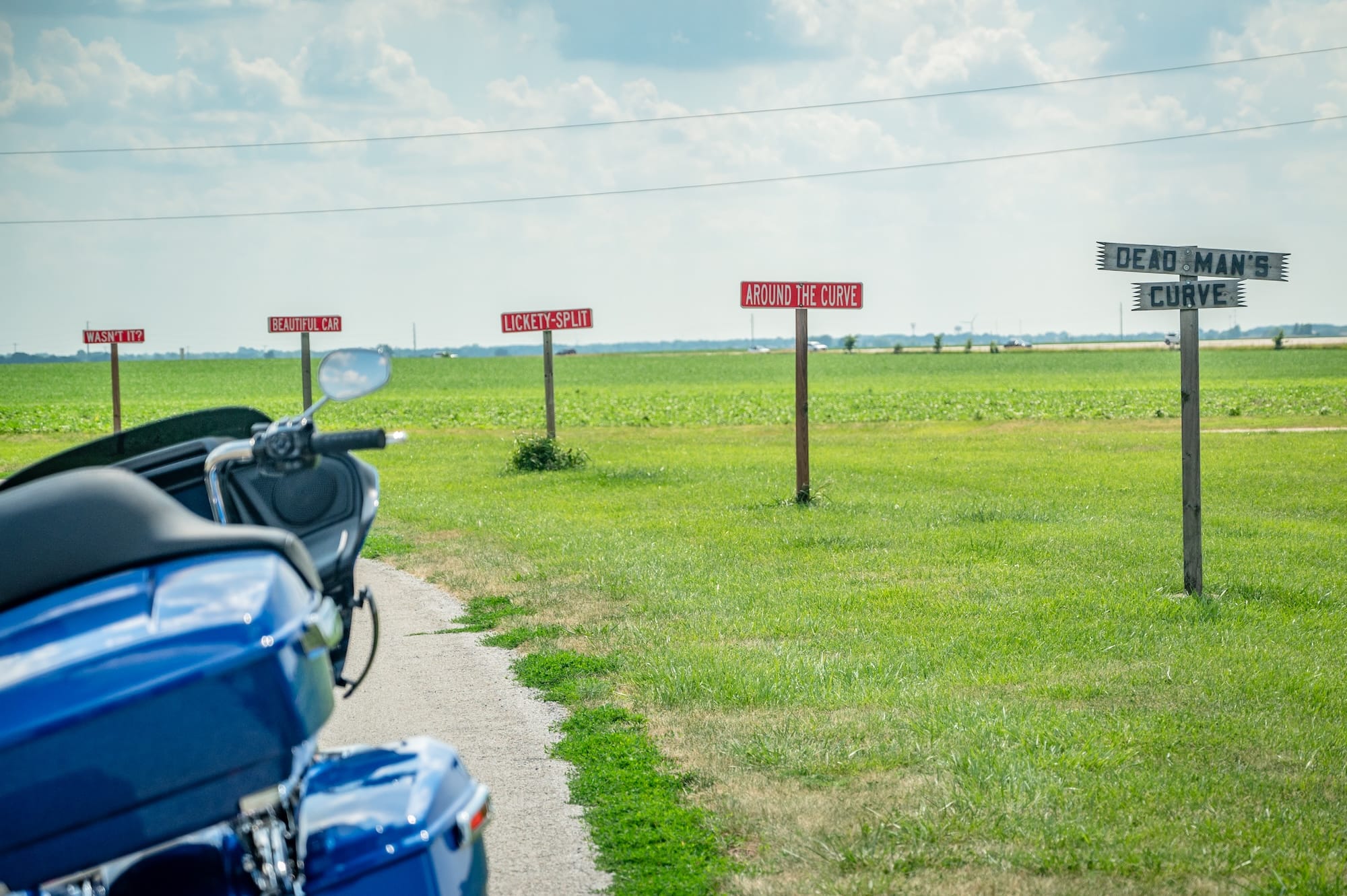
- Dead Man’s Curve, Towanda
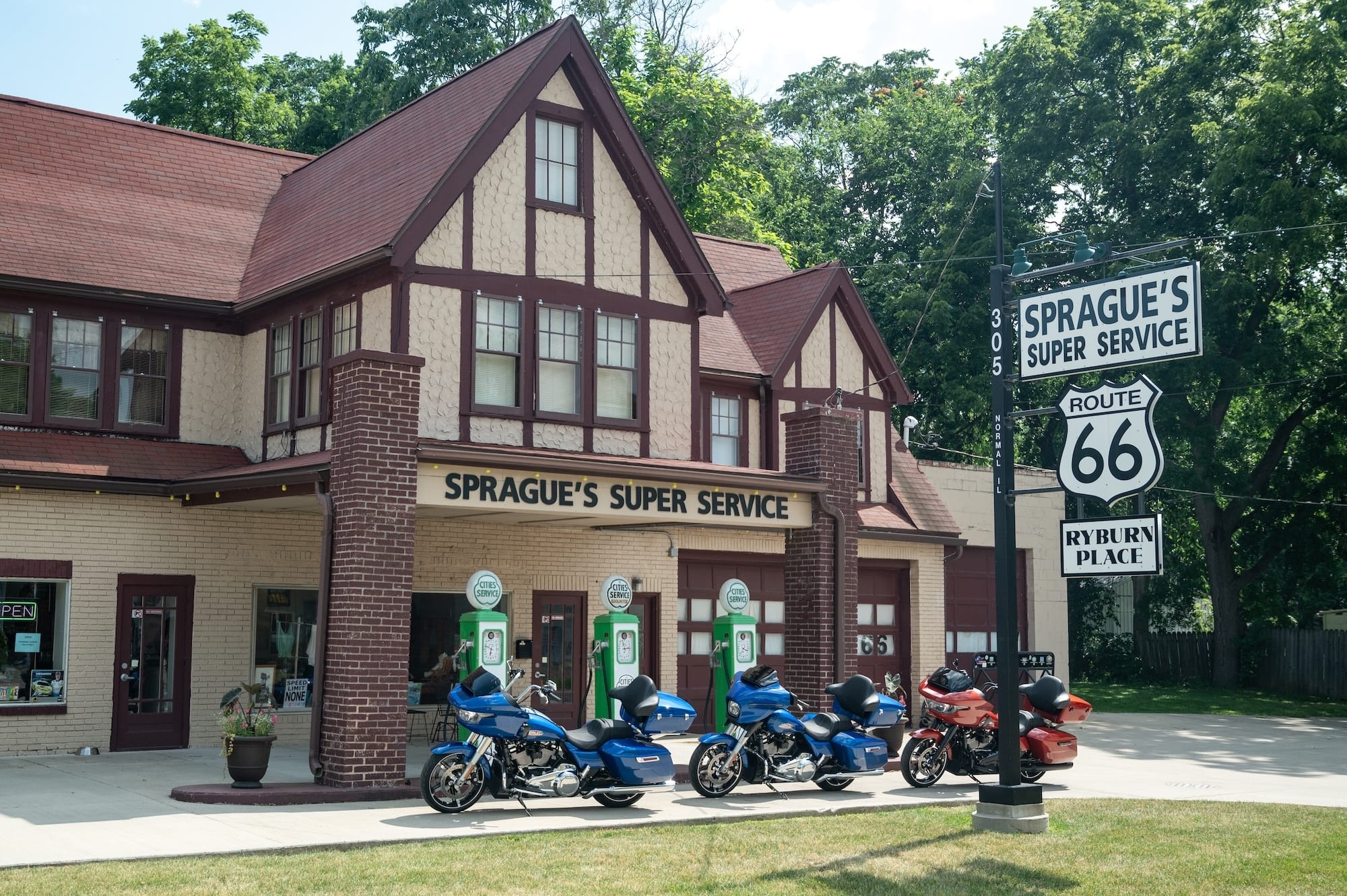
- Ryburn Place at Sprague’s Super Service, Bloomington-Normal
- American Giants Museum, Atlanta
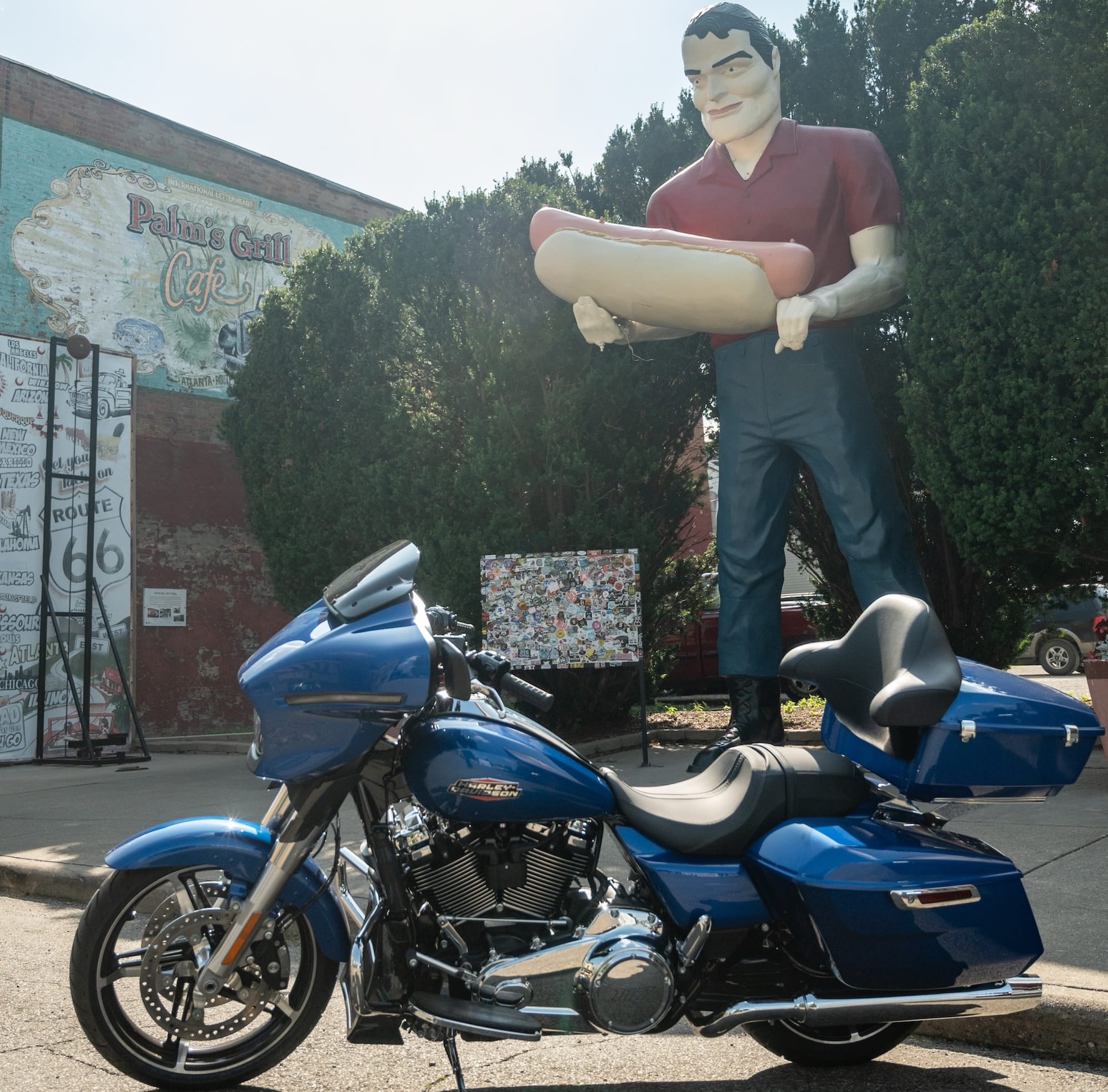
- Hot Dog Muffler Man, Atlanta
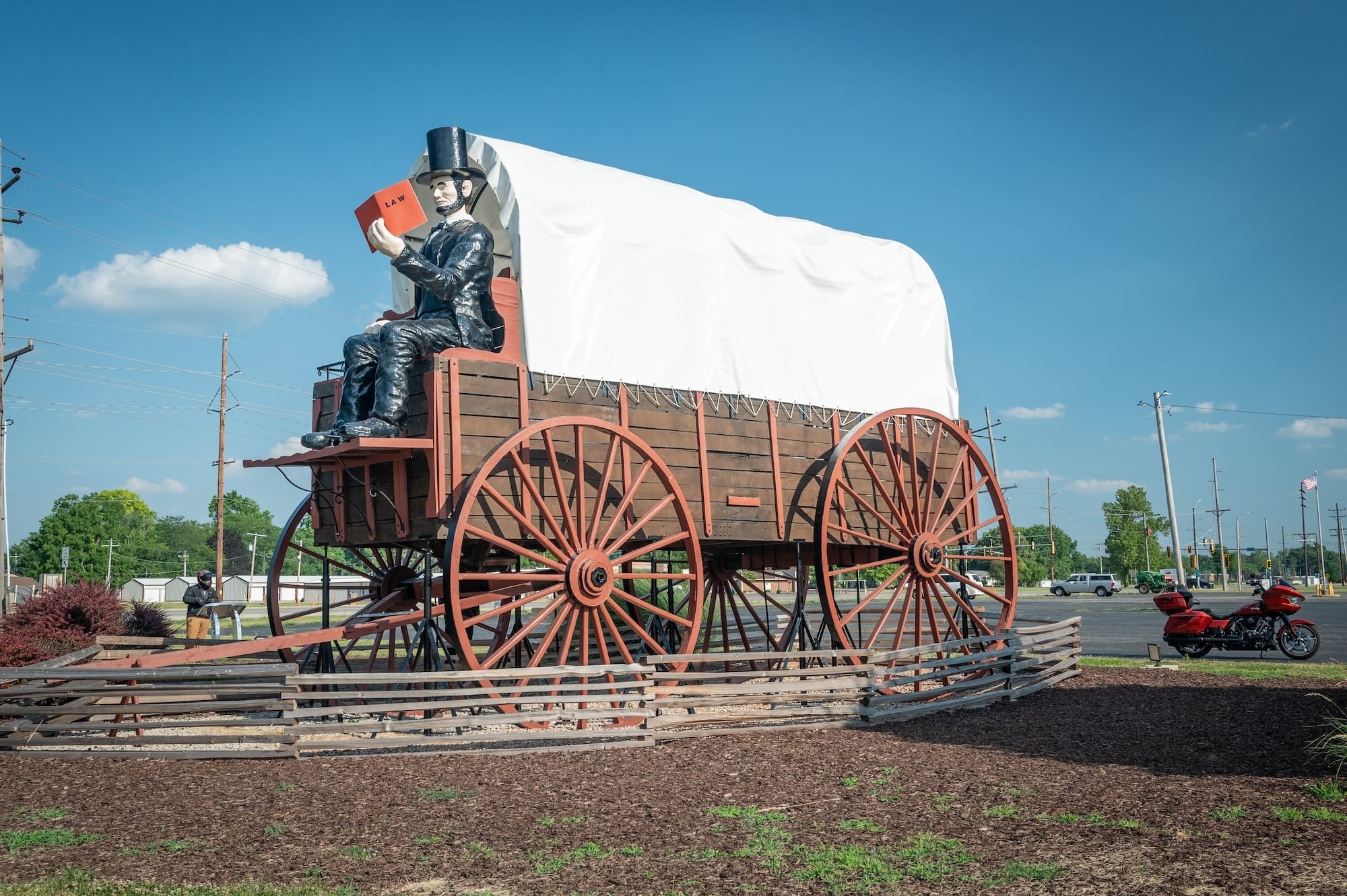
- World’s Largest Covered Wagon, Lincoln
- Cozy Dog Drive-In, Springfield
- Route 66 Drive-In Theatre, Springfield
- Original Brick Road, Auburn
- Doc’s Just Off 66 Soda Fountain and Pharmacy Lounge, Girard
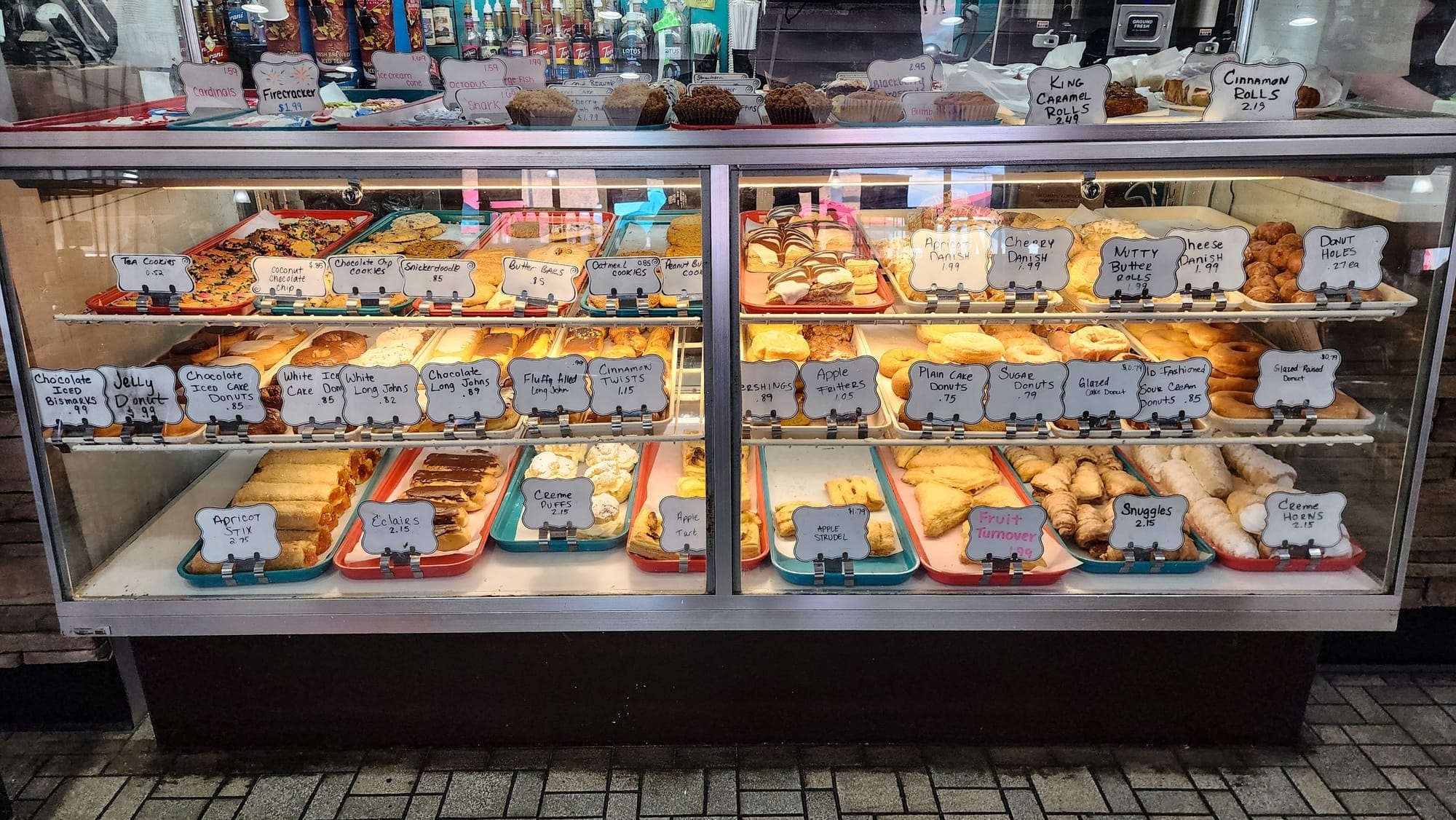
- Litchfield Museum and Route 66 Welcome Center & Jubelt’s Diner
- Pink Elephant Antique Mall and Twistee Treat Diner, Livingston
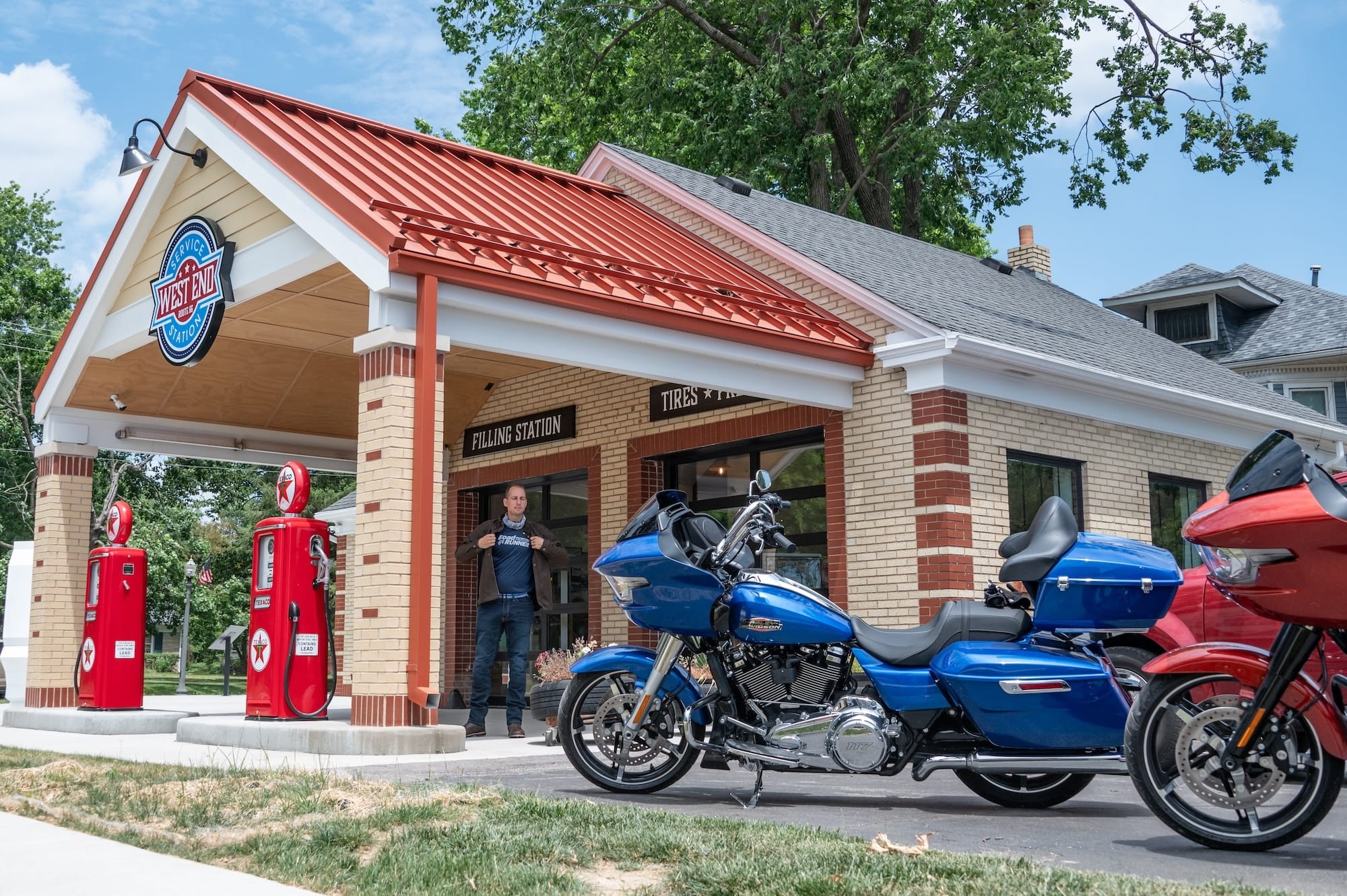
- West End Service Station, Edwardsville
- Brooks Catsup Bottle, Collinsville
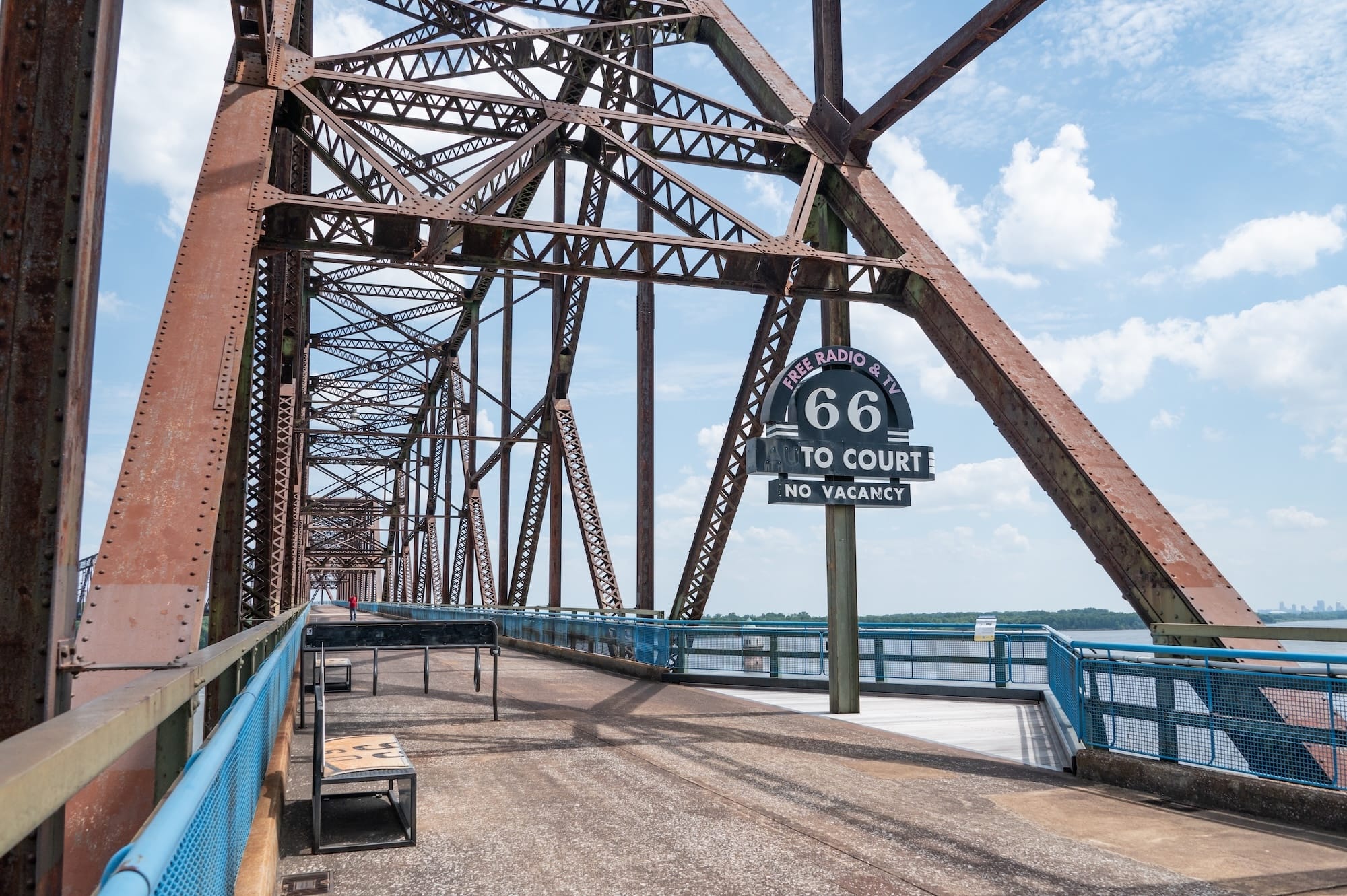
- The Old Chain of Rocks Bridge, St. Louis