Dead Man’s Curve: The Perils of Towanda’s Route 66
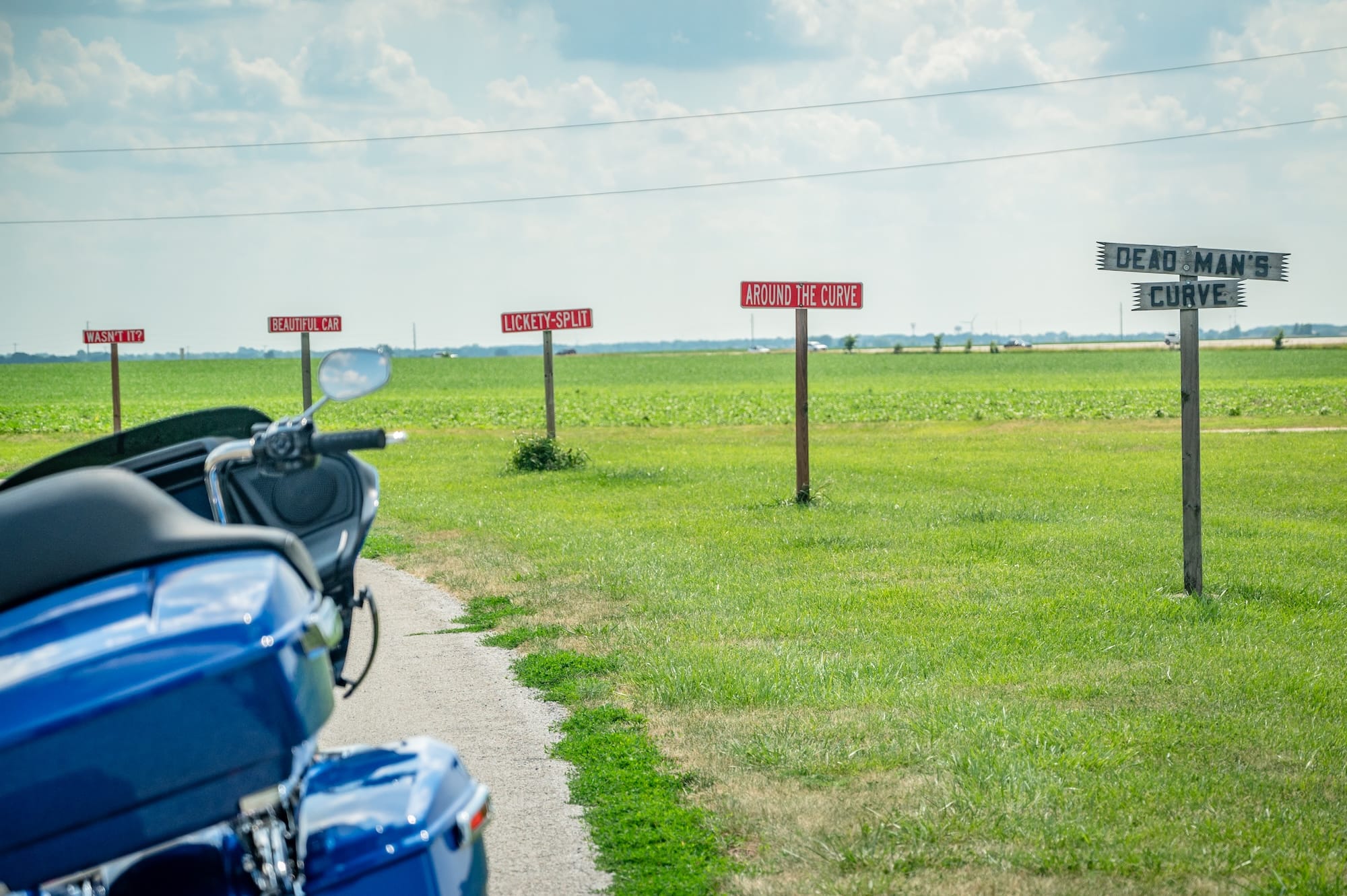
Dead Man’s Curve earned its name the hard way.
Long before Route 66 was widened and straightened, the highway squeezed through this tight, blind bend outside Towanda, catching countless drivers off guard. Cars approached at speed, met a sudden kink in the pavement, and too often ended up in the ditch—or worse.
Local officials knew it was a problem, but road engineering moved slowly in those days. Travelers simply had to stay alert, hope for luck, and keep both hands on the wheel.
This was also the golden age of roadside advertising, when companies used the highway itself as their canvas.
Burma-Shave became the master of the form. Instead of one billboard, the company planted six small red signs in a row, each carrying a short line of a jingle. Drivers would read them in rhythm as they rolled toward the curve:
One line at a time...
Closer to the danger...
Closer to the punchline...
The strategy worked on multiple levels. The signs were funny, memorable, and highly effective at catching attention well before modern distraction was a problem.
But on this stretch, their placement wasn’t only about selling shaving cream—they also happened to slow traffic as motorists read along. Whether by design or coincidence, Burma-Shave’s humor served as a gentle speed check at one of the road’s most treacherous spots.
Today, the recreated signs and preserved alignment stand as a small but telling reminder of early American road culture. Before guardrails, GPS, and highway standards, stretches like Dead Man’s Curve shaped the Mother Road’s reputation: unpredictable and sometimes dangerous, but always full of character. And those little red signs remain one of the most charming examples of how ingenuity, and a few clever rhymes, once helped keep travelers alive.