Review: 2026 Yamaha YZF-R7

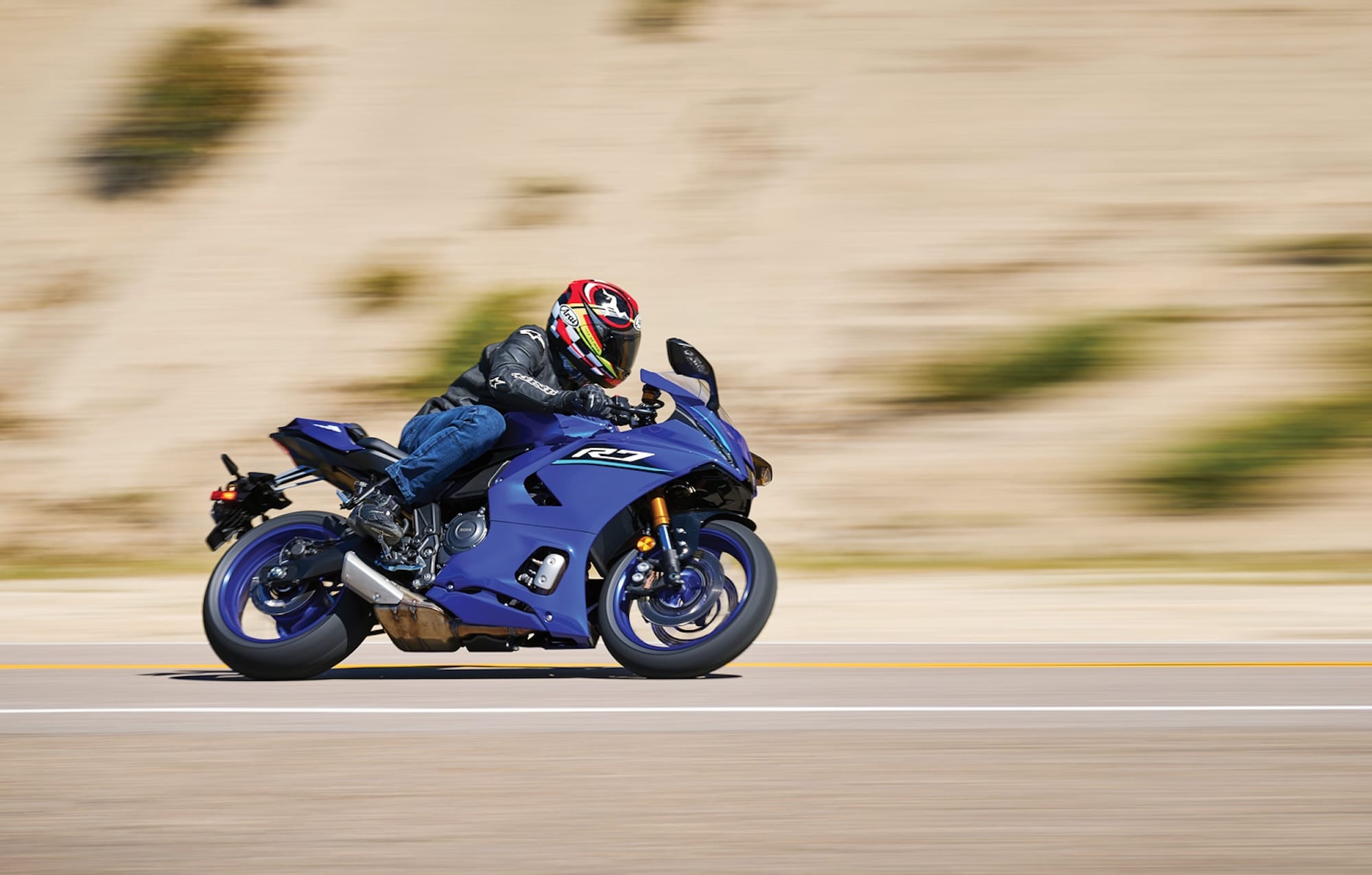
Yamaha brought electronic technologies once reserved for its flagship YZF-R1 sportbike to the 2025 YZF-R9. Now, the tech is making an appearance on the new YZF-R7. I’ll get into the nuts and volts in a moment, but for now, it’s important to know that all the upgrades the R7 received for 2026 amounted to an MSRP increase of only $200. That’s some supply-side economics I can get behind!
Beginning with the instrument cluster, last year’s LCD is gone, replaced by the same five-inch color TFT unit found on the R9. As with the R9, there are different Street themes from which to choose, as well as a dedicated Track theme. You can select a black or white background or let the system switch between them based on lighting conditions.
Using the switchgear on the right clip-on, you can quickly select between Rain, Street, Sport, and Custom ride modes in Street themes and the four configurations in the Track theme. The cable-operated throttle has been replaced with Yamaha’s Chip-controlled Throttle (YCC-T). Unlike a decade ago, when Yamaha first launched its ride-by-wire system, I’ve had no reason to complain of the electronic throttle’s performance during my street ride aboard the R7.
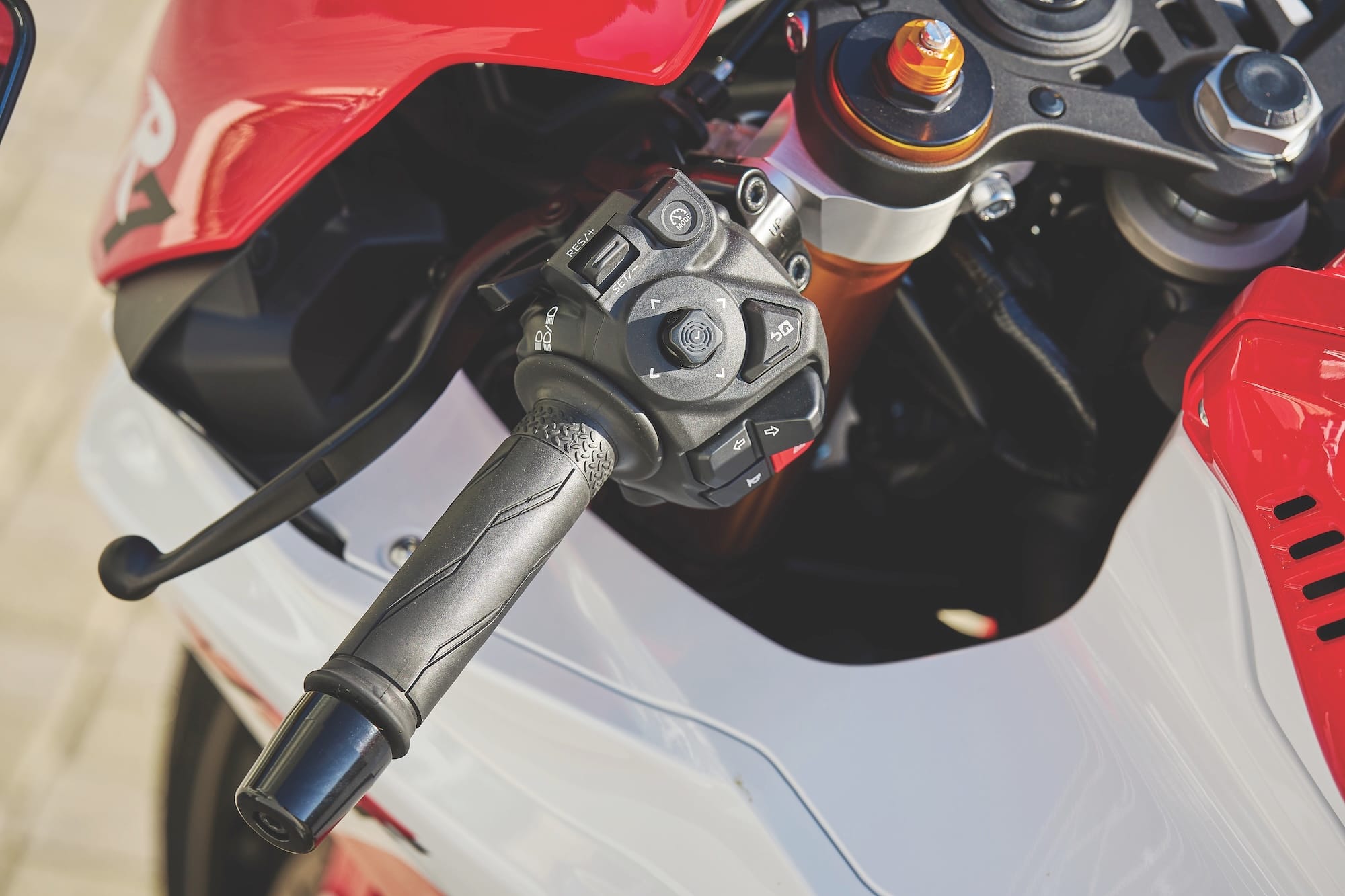
Switchgear on the left controls settings in Custom and Track ride modes, including power, lean-sensitive traction control, slide control, lift control, quickshifter, lean-sensitive brake control, engine braking, and launch control. It also houses a speed limiter, cruise control, and traditional buttons, including turn signals and the horn. These rider aids are made possible by the six-axis inertial measurement unit (IMU) now fitted to the R7.
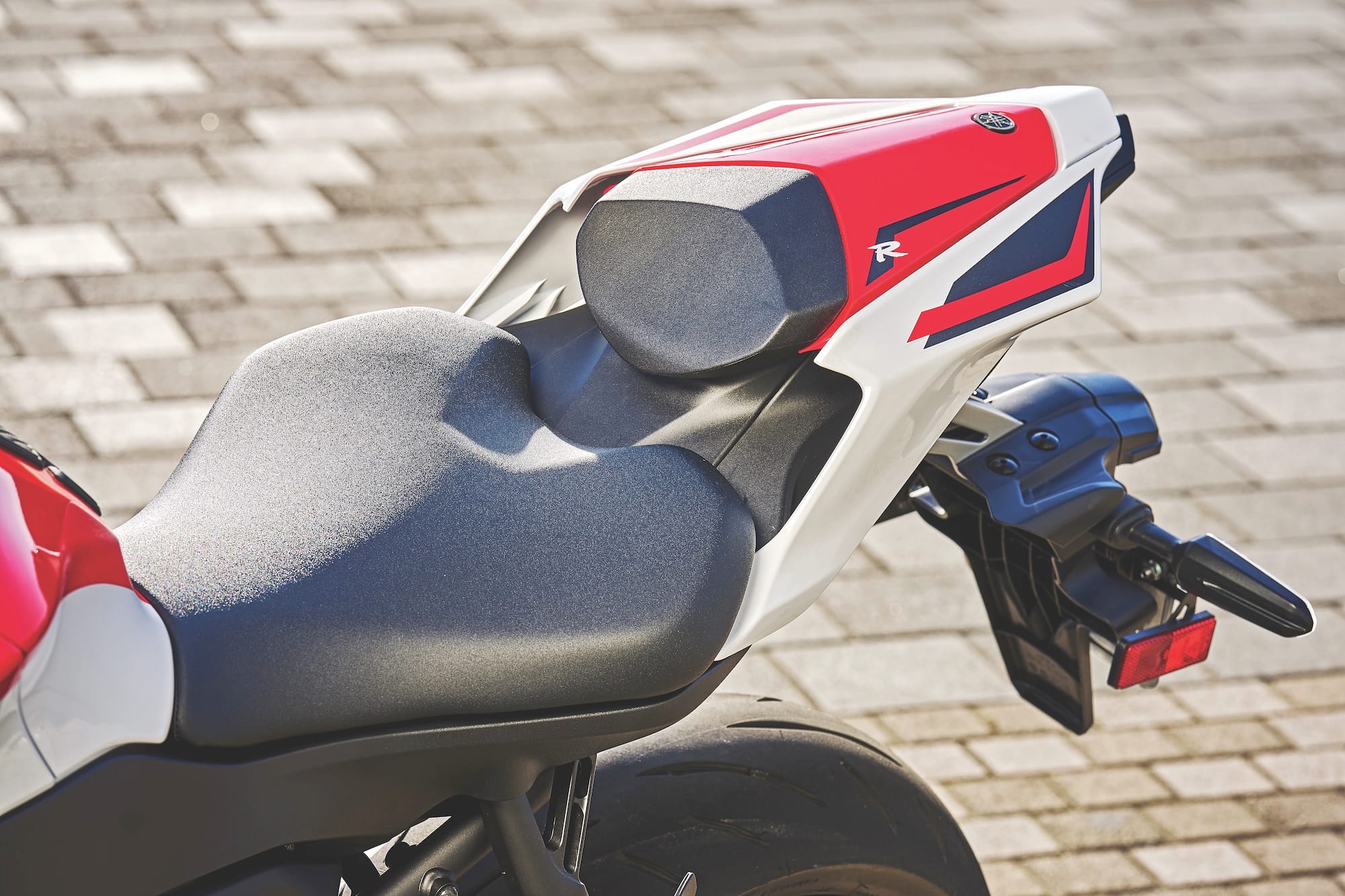
Yamaha’s third-generation quickshifter has been one of the best I’ve used when riding my R9 at the track. Aboard the R7 on the street, the quickshifter is functional at slower speeds and gets better the faster you ride, so I’m assuming that it’d be equally impressive at track speeds. The stock shifter comes with a pre-drilled (but untapped) hole for repositioning the shift linkage for an easy GP shift configuration.
Application Support
Yamaha’s Y-Connect, Garmin Street Cross, and Y-Trac Rev mobile apps are free to download. Once you’ve paired your phone to the R7 over Bluetooth, the Y-Connect app displays calls, texts, notifications, music, and weather reports on the TFT screen. It also allows access to the bike when not riding to view maintenance recommendations, last parking location, fuel consumption, malfunction notifications, and a personal riding log. You can also manipulate the Custom and Track settings in the app to be uploaded to the bike at a later time. The Garmin StreetCross app displays a map and provides turn-by-turn navigation and voice notifications through your helmet communication system.
For the go-fast crowd, the Y-Trac Rev app provides lap times, sector times, and a detailed riding analysis of your track days or races. The app will store up to 10 riding logs for free, while unlimited access to everything the app offers costs $6 per month. For the most accurate lap times, you’ll need an external GPS receiver. Yamaha recommends the Garmin Glo2 or Dual XGPS160, both of which are 10 times more accurate than your phone. I ran track tests on my R9, comparing the Y-Trac Rev with Garmin Glo2 and a trackside transponder, and the results differed by less than a second.
Non-Electronic Newness
Other notable updates on the R7 include a new frame, swingarm, spinforged wheels, slippier aerodynamics, dual-function self-canceling turn signals, an adjustable clutch lever, and improved ergonomics. There have also been numerous tweaks to suspension components, engine covers, fourth to sixth gears, and intake ducts.
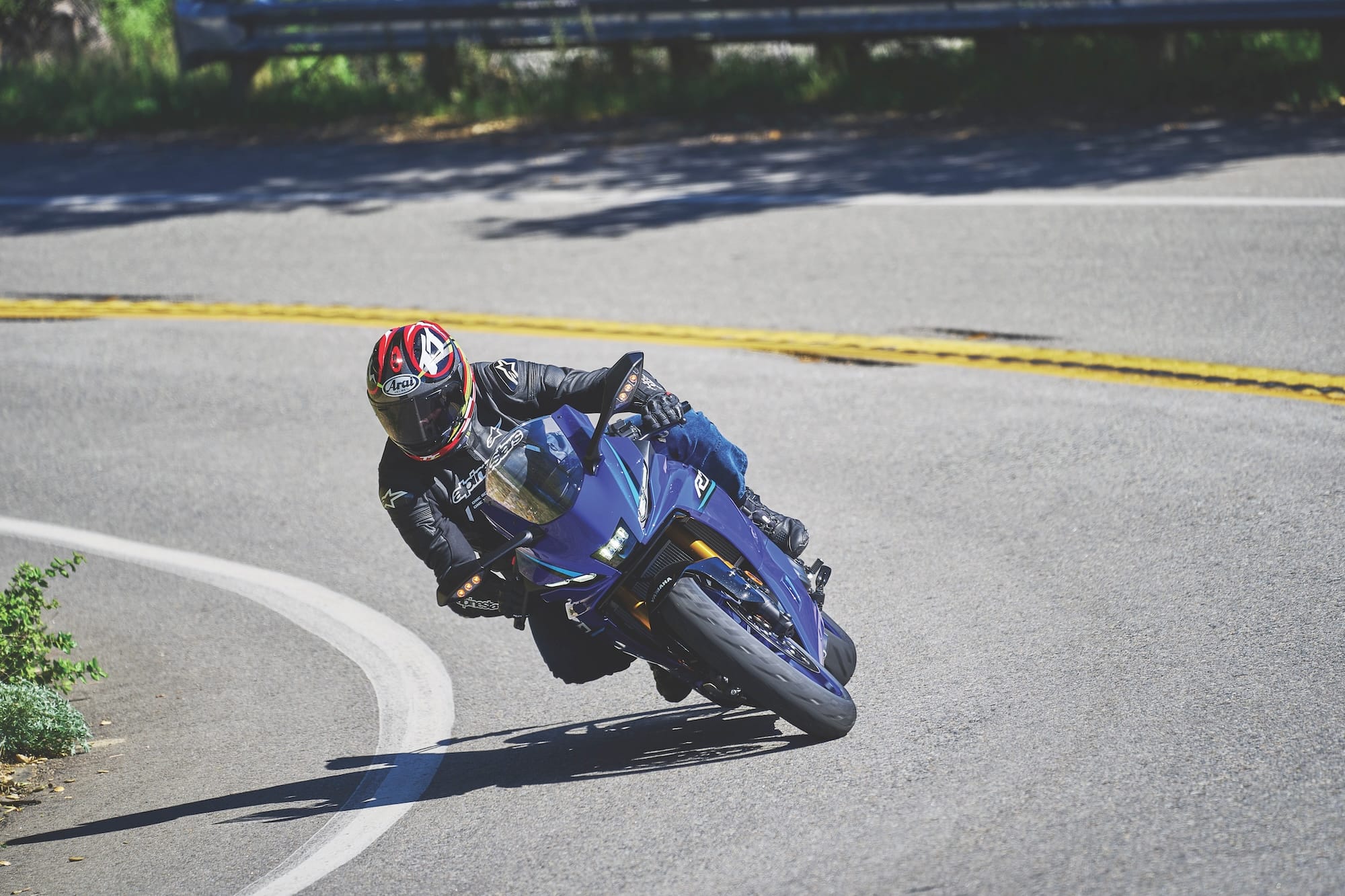
The R7’s high-tensile steel tubular frame was optimized for strength, resulting in a 12% increase in torsional, longitudinal, and lateral rigidity. The asymmetric swingarm is visually different, largely due to the loss of the donut hole on the right side. It also boasts increased rigidity, a revised linkage ratio, and a new chain adjuster shape. Equally important is the addition of Yamaha’s proprietary spinforged wheels, which reduce unsprung weight by 4%, or roughly a pound.
Since its inception, Yamaha has claimed that the R7 is the most aerodynamic of its R-series motorcycles. The new model has further reduced drag by shrinking the motorcycle’s front, removing the fairing-mounted turn signals, and integrating the blinkers into the rearview mirrors. Replacing the new mirror costs $44 more than replacing the old mirror ($80) and blinker ($76) combination.
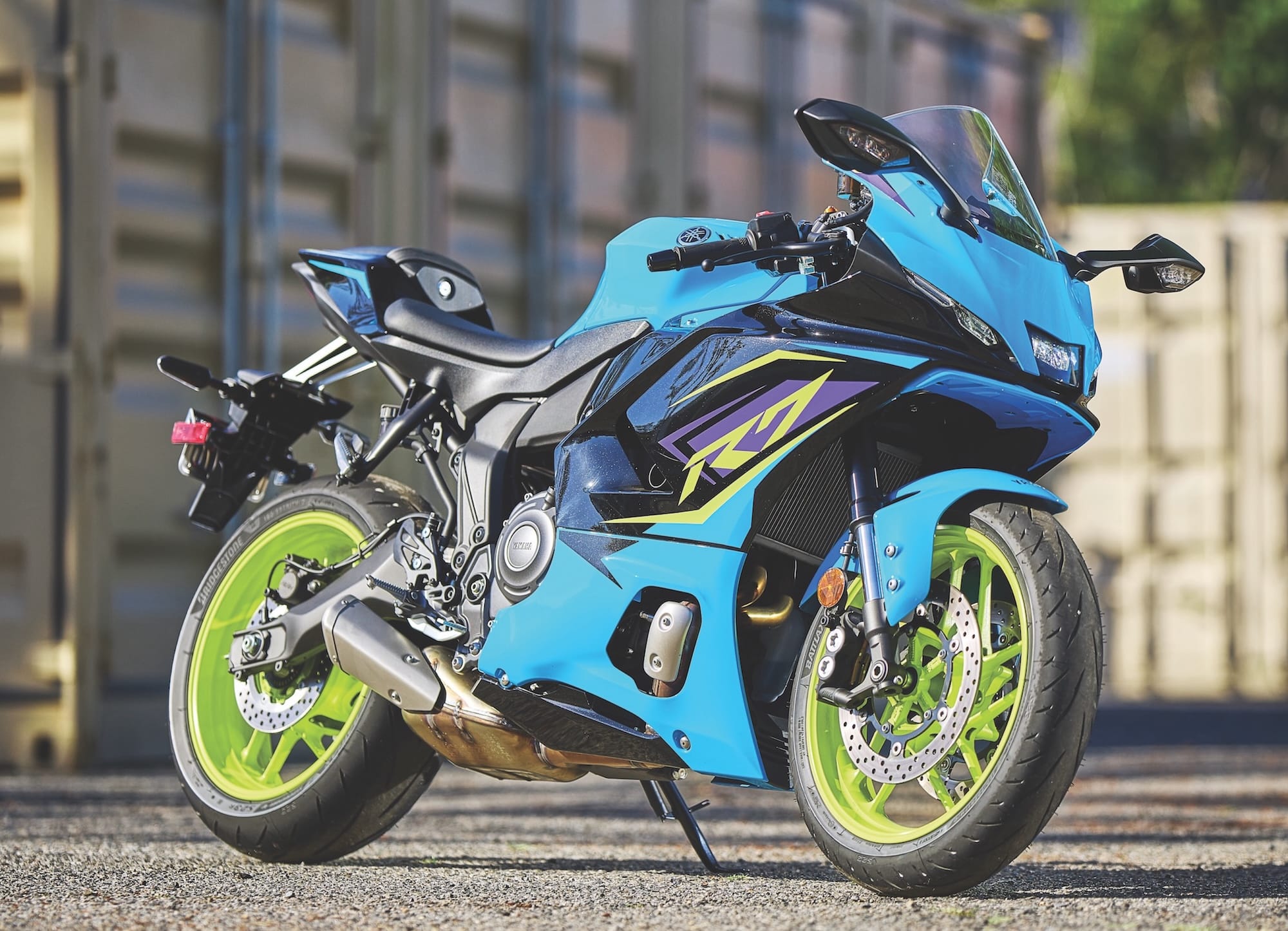
The front 41mm inverted KYB fork received tweaks to better suit the new frame, as did the rear KYB shock. Both suspension components retain the same adjustability as the old model R7: preload, compression, and rebound for the fork, and preload and rebound for the shock. However, the amount of travel went down at the same time from 5.1 to 4.7 inches at the front and from 5.1 to 4.8 inches at the rear. Not having an upgraded shock with compression adjustment is a little disappointing, as is the lack of the R9’s convenient hydraulic preload adjuster.
Street vs. Track
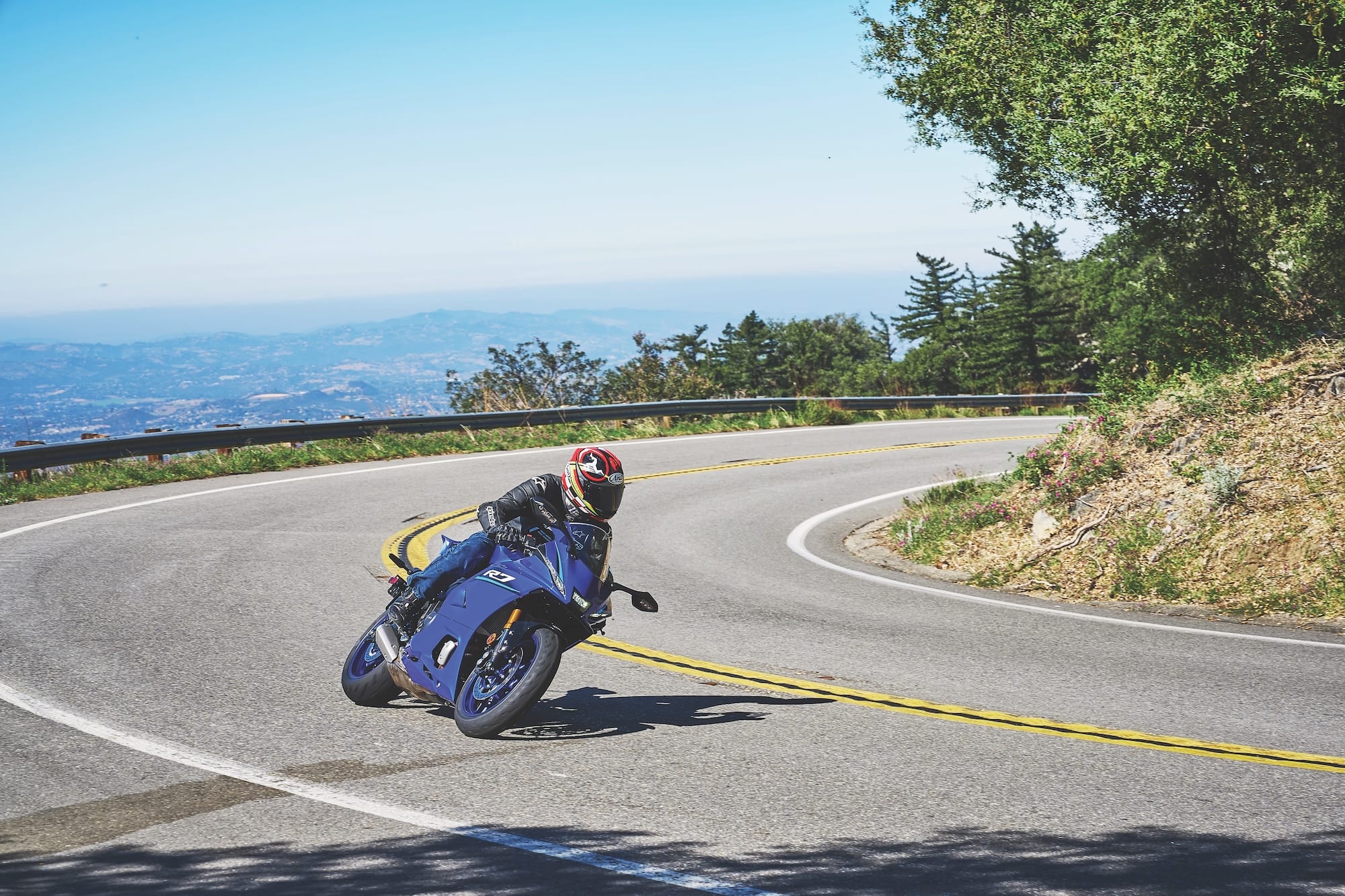
Before this outing on the 2026 R7, my only riding experience on this bike was aboard the previous generation at a racetrack. In that high-speed environment, it didn’t fail to impress. I quickly got up to speed, enjoying the CP2 parallel-twin’s power curve and the bike’s lightweight and precise handling. This time, I took the 2026 R7 on a street ride. As such, I can’t directly compare it to its predecessor, but I did get a chance to hustle the bike through some familiar, twisty, less-traveled roadways of San Diego County. The CP2 engine is every bit as enjoyable on the street, and the new chassis certainly retains, if not improves, the R7’s handling.
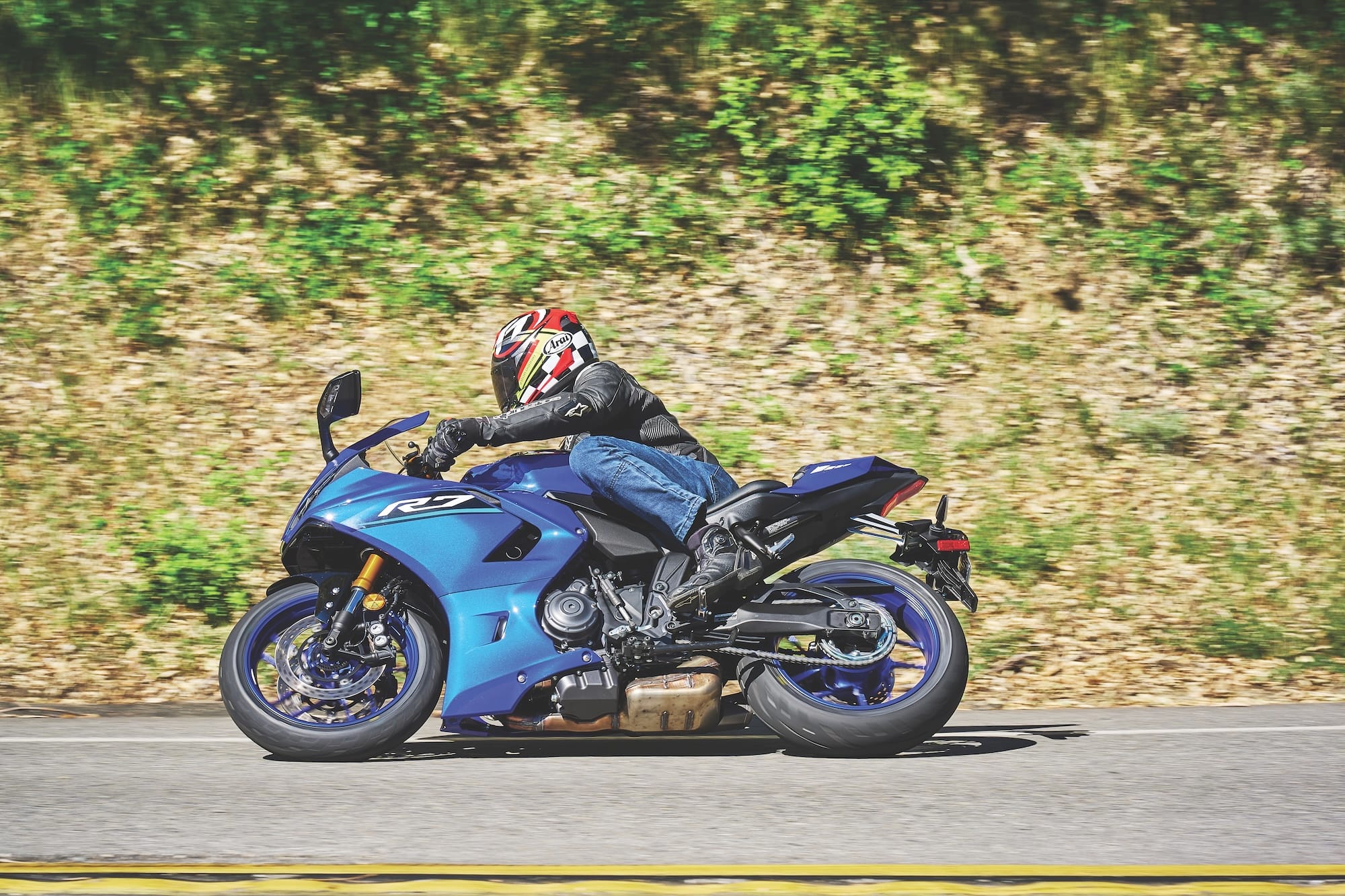
Similarly to the suspension, the brakes are carryovers from the 2025 model, only without any mechanical changes like the suspension components received. The aforementioned lean-sensitive brake control (which provides progressive brake force intervention and can be switched off in Track mode) complements the brakes, but the braking force and feedback pale in comparison to the R9’s Stylema setup.
The new R7’s handlebar is higher and taller, and has moved rearward. However, the clip-ons are still positioned below the triple-clamp, and it didn’t take long while riding on the street for my 55-year-old, 5-foot-11-inch frame to begin feeling the effects of the tight confines. At the track, I’m sure the seating position would be advantageous.
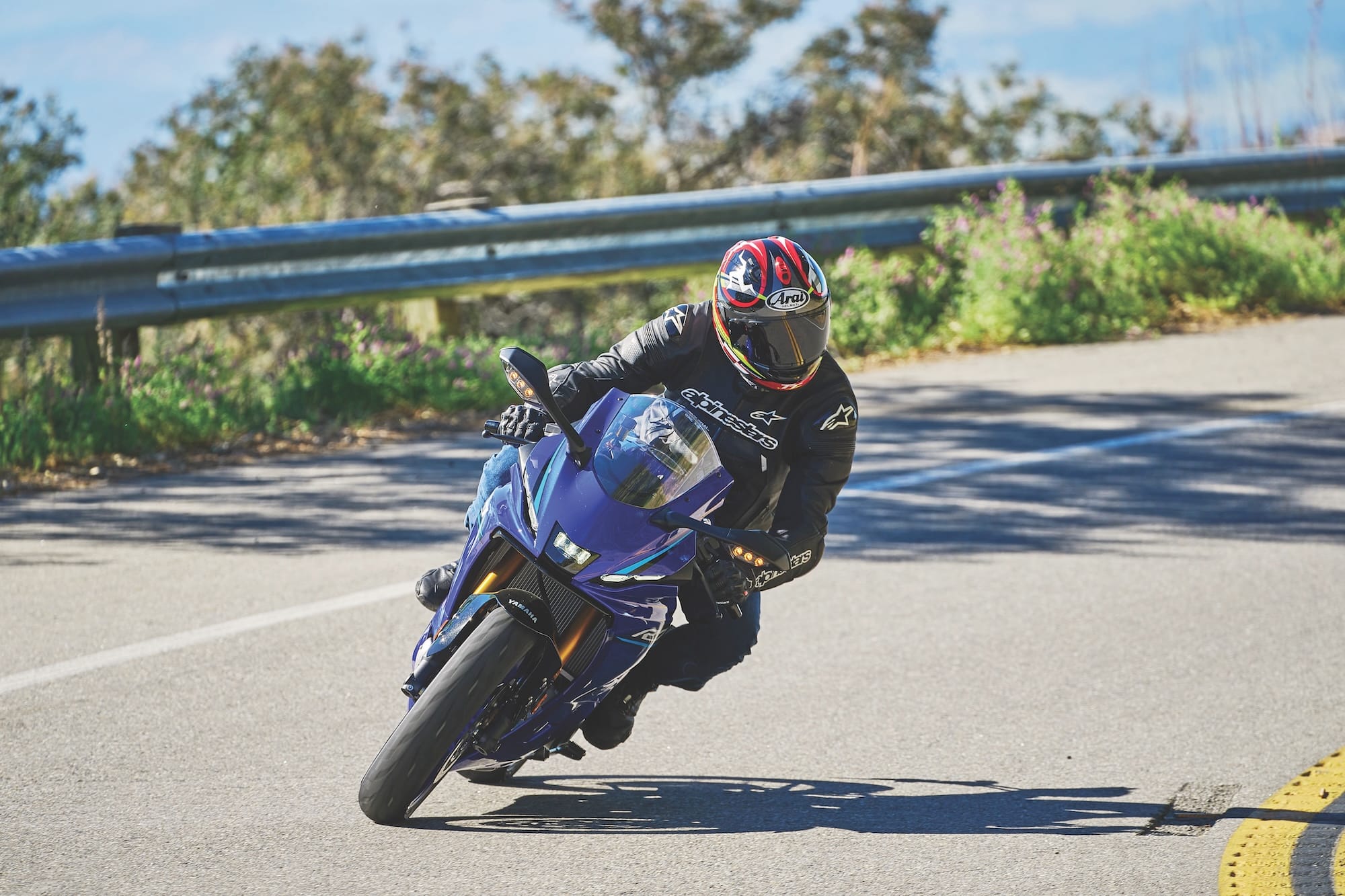
A new, wider fuel tank provides a quarter-gallon more fuel, which is good for more miles between fuel stops when street riding. However, the tradeoff of having your legs spread farther apart doesn’t lend to better body movement during quick corner transitions. Comparing spec sheets, the 2026 R7 is three pounds heavier than the outgoing 2025 model; 1.7 pounds of that weight is attributable to the increased fuel capacity. Still, with a curb weight of 417 pounds, the R7 is a nimble, lightweight competitor.
Considering all these tangible updates, combined with the pro-level electronics package, for an MSRP bump of only $200, the 2026 YZF-R7 may be the bargain of the year. There’s room for improvement (shock and front brake calipers), but it’s otherwise a complete package. The R7 is a competent sportbike for riding on the street and it’d be easy for performance enthusiasts to strip it down to a sub-400-pound track weapon.
Technical Specs
+electronics suite, minimal price increase, punches above its weight class
-tight confines, budget shock and front brake calipers
Distributor: Yamaha Motor Corp. USA
MSRP: $9,399
Engine: liquid-cooled, 4-stroke, DOHC, parallel-twin, 4-valve
Displacement: 689cc
Power: 73hp @8,750rpm; 50lb-ft @6,500rpm
Transmission: 6-speed, multiplate wet clutch, assist and slipper clutch, quickshifter, chain final drive
Rake/Trail: 24.0°/ 3.6in
Weight (Wet): 417lbs
Seat Height: 32.7in
Fuel Capacity: 3.7gal
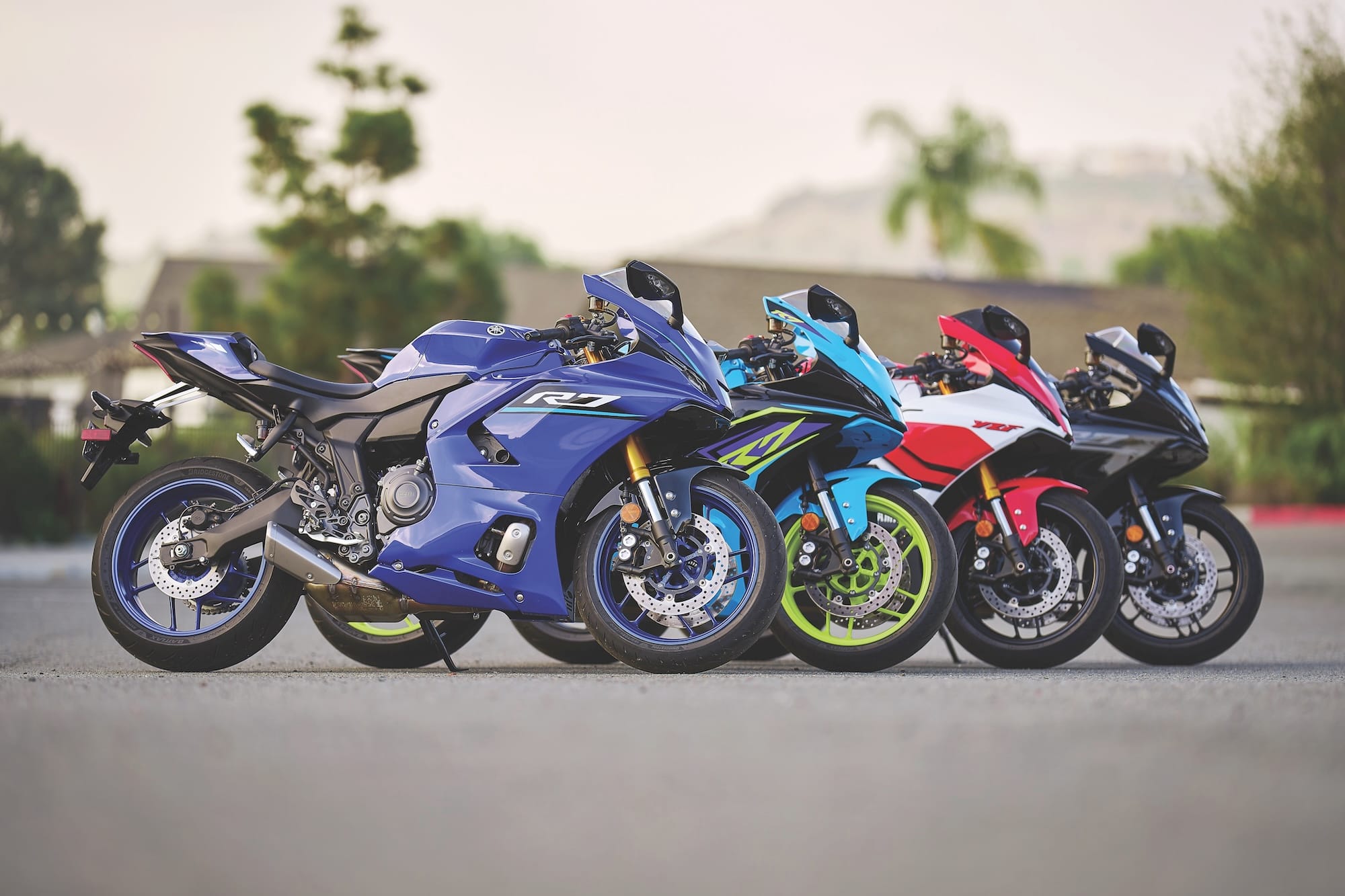
Colors: Team Yamaha Blue, Raven Black, Breaker Cyan/Raven, 70th Anniversary Edition