The Deep Roots Between Harley-Davidson and Route 66
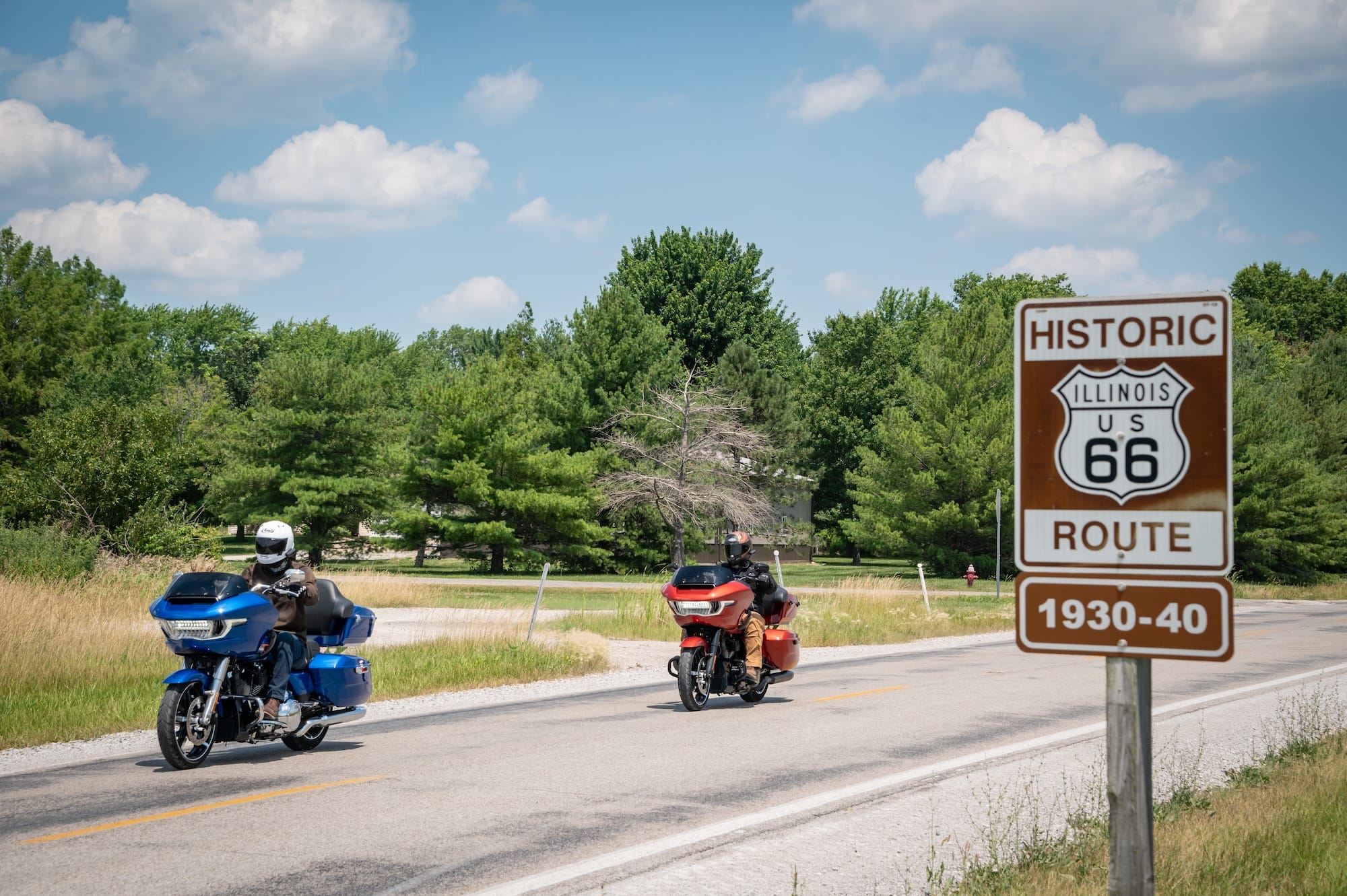
What comes to mind when you think about Harley-Davidson? The heavy V‑twin rumble. The wind beating your chest. Long highways and the freedom that comes with riding them.
For as long as motorcycles have roared across America, Harley-Davidson has symbolized independence and rebellion. That makes it a perfect companion for Route 66, the legendary highway that defines what it means to chase the horizon.
Harley-Davidson sold a dream to Americans. In the 1920s and 1930s, as the Great Depression tightened its grip, the company leaned into a message of escape and self-reliance. It introduced smaller, more affordable models, like the Model D and the RL 45, targeting people who couldn’t afford a car but still hungered for freedom. Believe it or not, owning a Harley back then was a practical and affordable choice.
Meanwhile, Route 66 became America’s first great transcontinental highway. In its early years, it served as a migration path for families fleeing the Dust Bowl and economic hardship. Just like Harley-Davidson’s Depression-era marketing, the road whispered of opportunity.