Route 66 and the Birth of the ‘Tourist Trap’
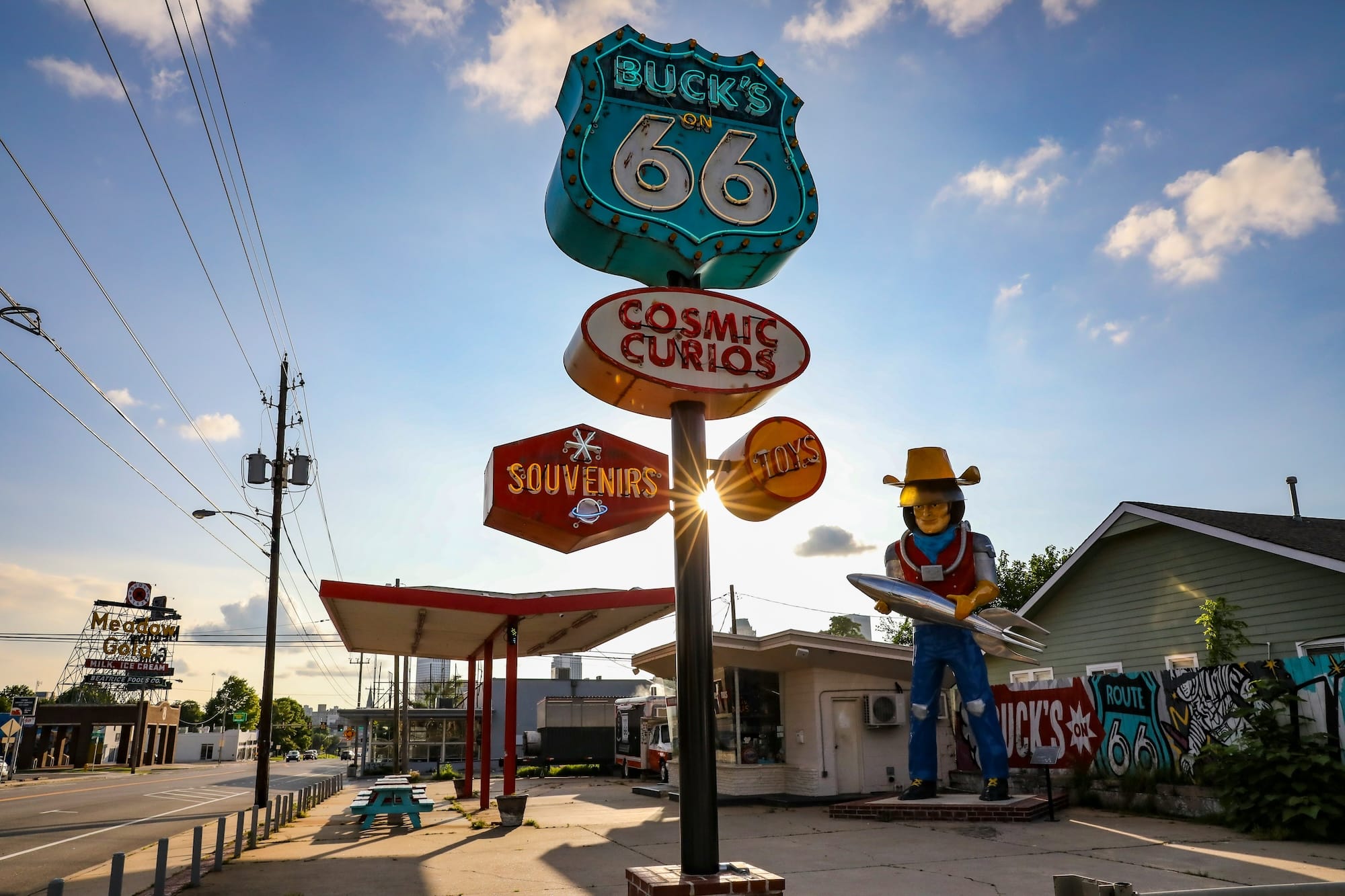
When Americans think of Route 66, they often picture endless asphalt, vintage diners, neon signs, and lots of quirky stops along the way. What many may not realize is that the Mother Road did more than just connect Chicago to Los Angeles.
The road helped invent an entirely new kind of American experience. The roadside attraction, sometimes not-so-affectionately called the “tourist trap,” became part of American travel culture.
The term “tourist trap” carries with it a bit of a sting, conjuring images of tacky souvenirs, huge crowds, and over-priced snacks. But, in its essence, a tourist trap is any destination designed to lure travelers off the highway long enough to make a memory (and spend money).
These spots can range from charmingly kitschy to shamelessly commercial, but all share the same goal: to turn a passing traveler into a visitor—ideally a paying one. On Route 66, tourist traps were born out of necessity and ingenuity.
In the mid 1900s, recreational travel in the U.S. was just beginning. Cars were becoming more accessible to middle-class families, and highways were expanding beyond main commercial routes.
Suddenly, simply the act of going somewhere became an experience in its own right. And the entrepreneurs noticed.
Mom-and-pop diners, gas stations, motels, and roadside curiosities sprang up along the Mother Road. They were advertised with eye-catching signs, oversized objects, or gimmicks like giant tipis, neon-lit dinosaurs, and the world’s largest ketchup bottle.
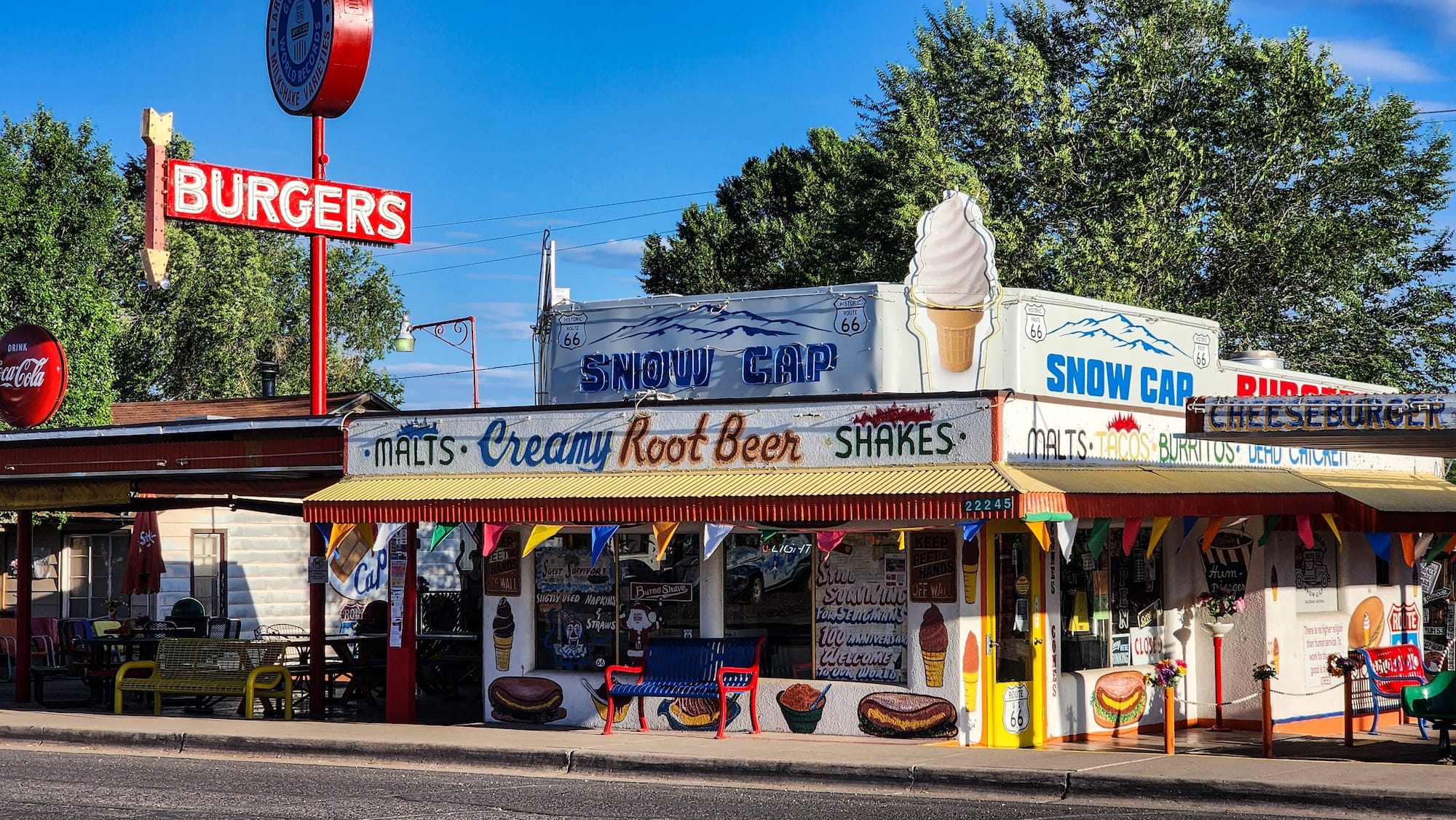
These attractions were a kind of performance, promising that if you pulled over, you would have a story to tell. Some were built right on the edge of the road, while others leveraged natural wonders, local history, or oddities farther away from the road to create a reason for motorists to pause.